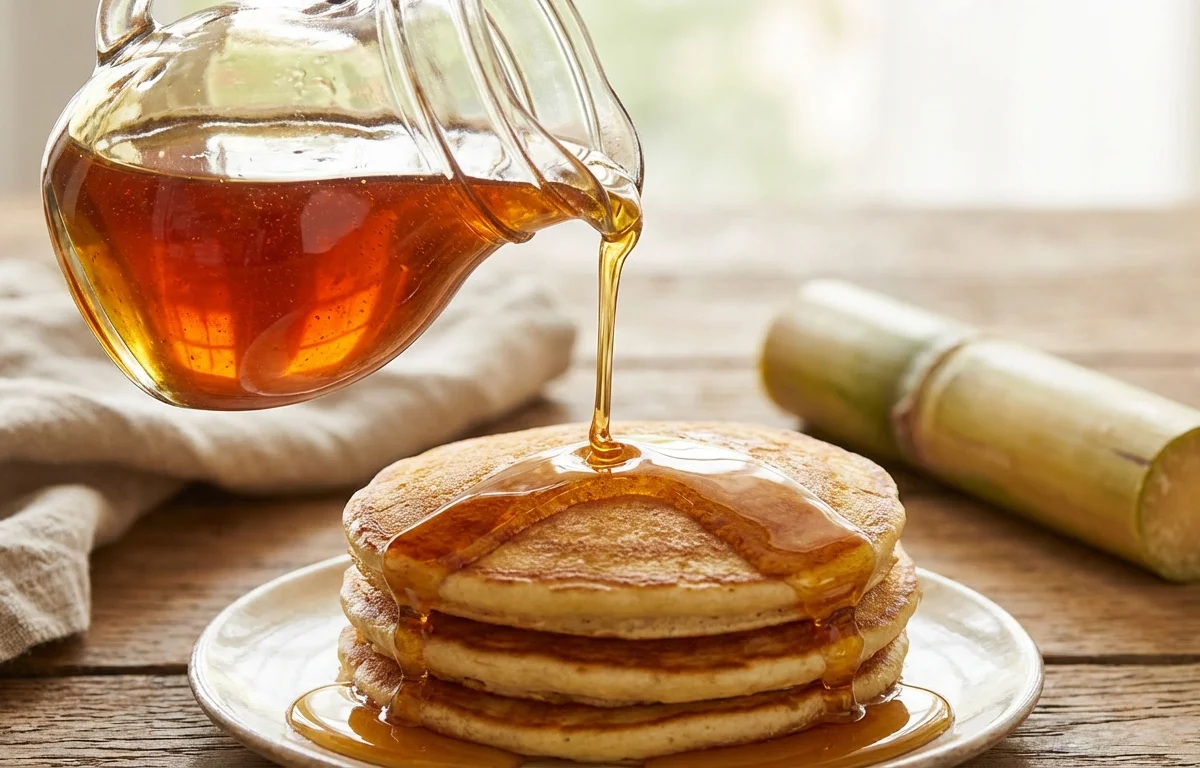
Cane Syrup
A thick, amber-hued Southern staple made by slowly reducing fresh sugarcane juice until it becomes a rich, pourable syrup with deep molasses-like notes. This old-fashioned Louisiana classic is a natural sweetener with a buttery, slightly smoky flavor that beats any pancake syrup from a bottle.
For 12 servings
- prep · ~15 min
Juice the sugarcane.
Peel the sugarcane stalks and chop them into 2-inch pieces. Feed them through a sugarcane juicer or a heavy-duty masticating juicer, collecting all the juice. If your juicer struggles with the dry fiber, add up to 1 cup of water in small splashes to help with extraction.
TIPWork in small batches. Overloading the juicer will strain the motor and produce less juice. - prep · ~5 min
Strain the fresh juice.
Pour the greenish-gray juice through a cheesecloth-lined fine-mesh strainer into a large heavy-bottomed pot. Squeeze the cheesecloth to extract every last drop. The juice should be free of fiber and sediment.
- boil · ~20 min
Bring the juice to a rolling boil and skim.
Place the pot over high heat and bring the juice to a boil. A thick layer of greenish foam and impurities will rise to the surface. Skim this off with a slotted spoon and discard. Reduce scum as it forms for about the first 15 minutes until the juice runs clear.
TIPDon't skip the skimming. The impurities will cloud the final syrup and give it a grassy flavor. - simmer · ~90 min
Simmer the juice until it thickens.
Once skimmed clean, reduce the heat to medium-low and maintain a steady, gentle simmer. Let the juice reduce for about 90 minutes, stirring occasionally. Do not walk away. The juice will darken from pale green to amber to a deep golden-brown.
TIPAs the syrup thickens, watch it closely. Sugarcane syrup can burn and boil over in seconds once it begins to reach the finish line. - simmer · ~10 min
Add lemon juice and finish the syrup.
When the bubbles begin to stack and the syrup looks like it can coat the back of a spoon, stir in the lemon juice. This prevents sugar crystals from forming as the syrup cools. Heat to 226°F (108°C) on a candy thermometer, or until a cold-plate test confirms a maple-syrup-like consistency.
TIPDip a metal spoon into the syrup and let it cool for a moment. It should drip off in a slow, thick sheet rather than fast, individual drops. - rest · ~30 min
Cool and bottle the syrup.
Remove the pot from heat immediately once the syrup is finished. Let the bubbling subside for 5 minutes, then carefully pour the hot syrup into a clean, heatproof glass jar or bottle. Let it cool to room temperature before sealing.
TIPLeave the jar lid off until the syrup is completely cool. Trapped steam will thin the syrup with condensation. - serve
Serve or store.
Drizzle warm cane syrup over pancakes, biscuits, cornbread, or use it as a sweetener for coffee and cocktails. Store sealed at room temperature for up to 3 months.
TIPIf the syrup crystallizes during storage, simply warm the opened jar in a pan of hot water and stir.
What to keep in mind.
7 tips from the recipe — small details that make a real difference to the final dish.
- 1Use only fresh sugarcane stalks; older stalks yield less juice and a darker, bitter syrup.
- 2If you don't have a juicer, crush the chopped cane with a mallet and simmer in water for 30 minutes, then strain.
- 3Skim the foam thoroughly in the first 15 minutes; leftover impurities create a cloudy, grassy-tasting syrup.
- 4Watch the syrup closely in the final 15 minutes—it can foam over or burn from a light amber to bitter black in seconds.
- 5For a candy thermometer test, aim for exactly 226°F (108°C); a few degrees over will make it too thick when cool.
- 6To prevent crystallization after opening, store the syrup in a warm cabinet and avoid refrigeration.
- 7Make ahead: the syrup keeps up to 3 months at room temperature; do not refrigerate or it may crystallize.
Adapt it for your goals.
Spiced Cane Syrup
Add 1 cinnamon stick, 2 star anise, and a vanilla bean split lengthwise to the juice at the start of simmering. Strain before bottling. This yields a warm, aromatic syrup perfect for holiday baking or spicing coffee.
Citrus Infused SyrupCitrus-Infused Syrup
Add the zest of 1 orange and 1 lime along with the lemon juice when finishing the syrup. This brightens the syrup's flavor, making it an excellent sweetener for iced tea or tropical cocktails.
Ginger Cane SyrupGinger Cane Syrup
Slice a 2-inch piece of fresh ginger into thin coins and add it to the strained juice before simmering. Remove the ginger after 30 minutes. The spicy kick complements stir-fries, glazes, and gingerbread.
Why this is on our healthy list.
Natural Unrefined Sweetener
Unlike refined white sugar, this cane syrup retains trace minerals from the sugarcane, including small amounts of calcium, magnesium, and potassium.
Contains Antioxidants
The dark amber color comes from polyphenols and flavonoids formed during simmering, which act as antioxidants in the body.
Low Glycemic Alternative
Because the syrup contains a mix of sucrose, glucose, and fructose, it has a slightly lower glycemic impact than pure table sugar.
Frequently asked questions
Yes: crush the peeled chopped cane with a heavy mallet or rolling pin, then simmer it in 2 cups of water for 30 minutes. Strain through cheesecloth, then reduce the liquid as directed.