Curd
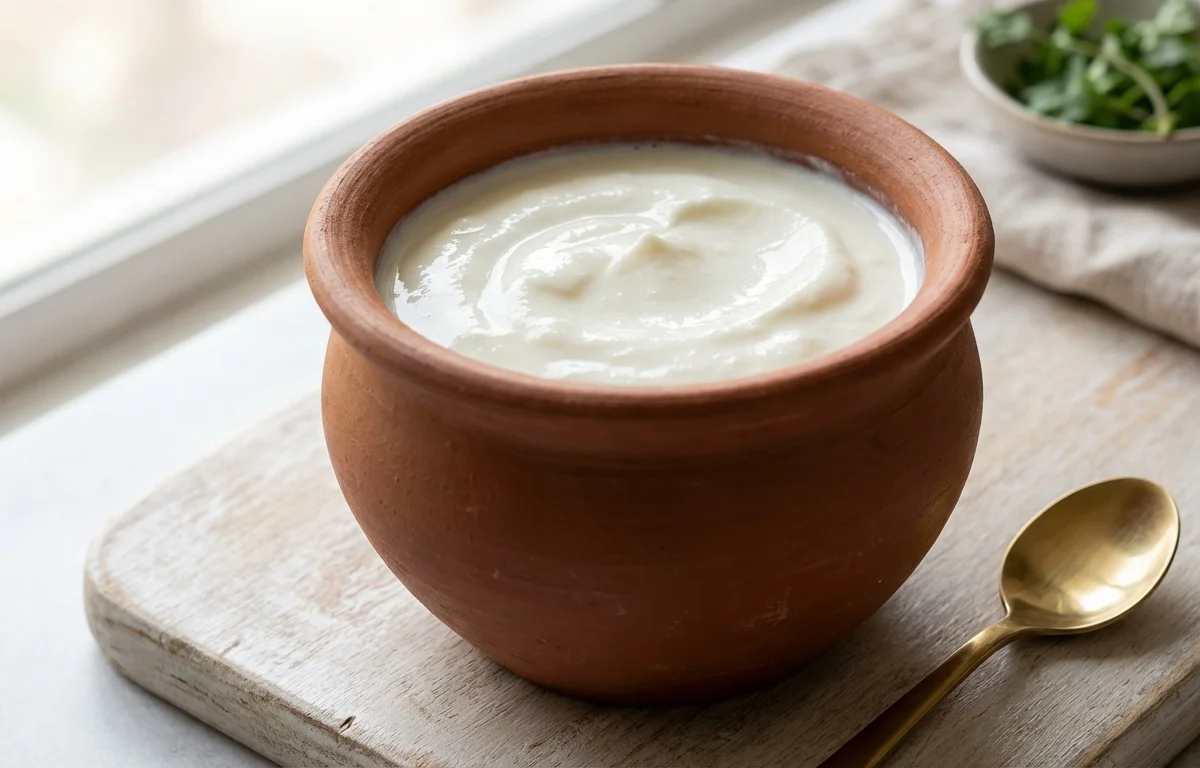
Homemade curd is set from warm milk and a little starter culture, giving you a smooth, mildly tangy bowl that works every day. It is simple to make, budget friendly, and tastes much fresher than store-bought dahi.
For 4 servings
- boil · ~10 min
Boil the milk.
Pour the milk into a saucepan and bring it to a gentle boil over medium heat, stirring now and then so it does not catch at the bottom. Once it rises, switch off the heat.
TIPA brief boil helps the curd set better and gives a thicker texture. - rest · ~30 min
Cool the milk until warm.
Let the milk cool until it is warm to the touch, not hot. It should feel comfortably warm when you dip a clean finger in for a couple of seconds.
TIPIf the milk is too hot, the starter can weaken and the curd may not set properly. - mix · ~2 min
Mix in the starter curd.
Place the starter curd in a clean bowl or container. Add a little warm milk and mix until smooth, then pour in the remaining milk and stir gently to combine.
- rest · ~480 min
Set the curd in a warm place.
Cover the container and keep it undisturbed in a warm spot for 6 to 8 hours, or until fully set. Once set, refrigerate for at least 1 hour before serving if you like it chilled.
TIPDo not move the bowl while it is setting, or the curd can turn grainy or loose. - serve
Serve the curd.
What to keep in mind.
7 tips from the recipe — small details that make a real difference to the final dish.
- 1Use a clean, dry container for setting; any leftover moisture or residue can interfere with a neat set.
- 2After the milk boils, let it cool only until comfortably warm; if it feels hot on your finger, wait longer before adding starter.
- 3Whisk the starter with a little warm milk first so it disperses evenly and prevents tiny lumps in the curd.
- 4For colder weather, place the covered bowl inside an unheated oven with the light on or wrap it in a kitchen towel.
- 5Do not disturb or shift the bowl while it sets, or the curd may turn loose instead of slicing cleanly with a spoon.
- 6If you prefer thicker curd, boil the milk a bit longer to reduce it slightly before cooling and inoculating.
- 7Save a spoonful of your best batch as the next starter, but refresh with a fresh culture if the curd starts turning too sour.
Adapt it for your goals.
Low-fat
Use toned or low-fat milk for a lighter everyday curd, though the final texture will be less rich and slightly thinner.
extra thickExtra-thick
Reduce the milk a little more before cooling, or strain the set curd briefly for a denser, creamier dahi.
buffalo milkBuffalo-milk
Make it with buffalo milk for a richer, firmer set that is ideal when you want very thick homemade dahi.
mild tangMild-tang
Use a little less starter or shorten the setting time in warm weather if you prefer a sweeter, less sour curd.
Why this is on our healthy list.
Naturally Fermented Dairy
Because it is cultured from milk with starter curd, this dish offers the benefits of a traditional fermented food.
Protein From Milk
Made entirely from milk, homemade curd provides dairy protein that can make meals more satisfying.
Calcium-Rich Everyday Food
Since the main ingredient is whole milk, curd is a practical way to include calcium-rich dairy in daily meals.
Frequently asked questions
The milk may have been too hot or too cool when the starter was added, the starter may have been weak, or the bowl may not have been kept warm enough.