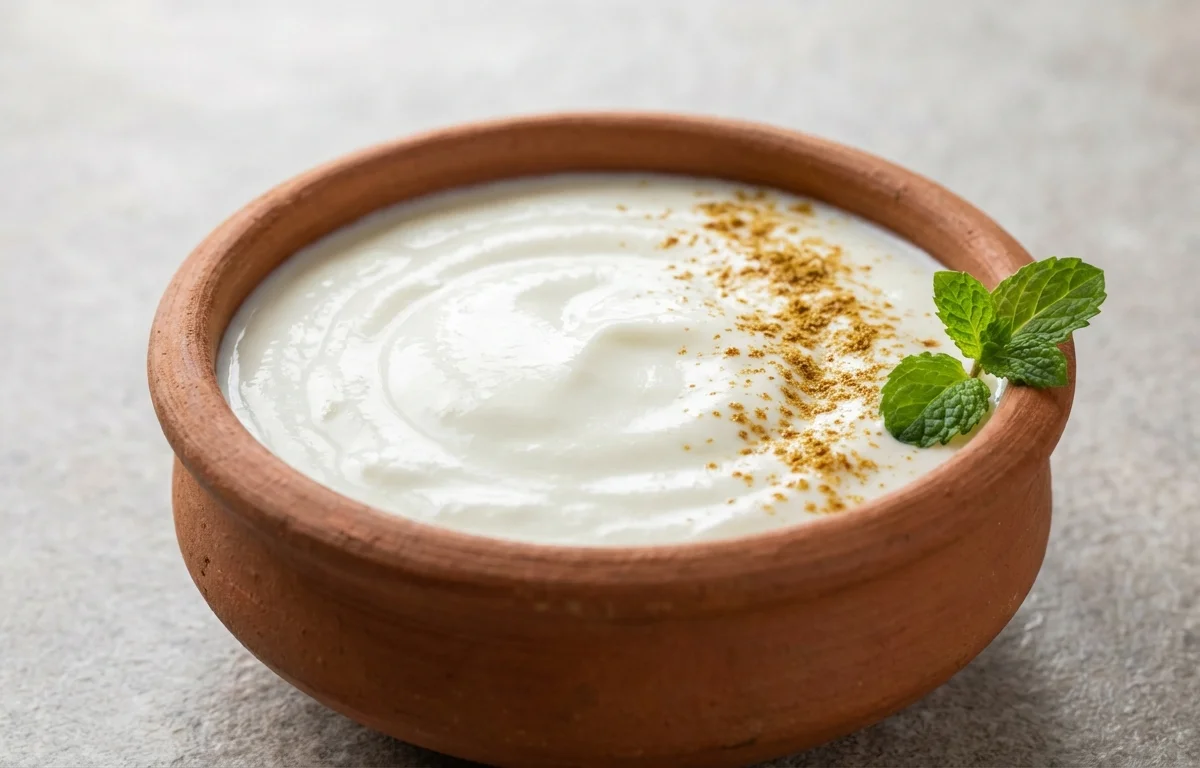
Dahi
Homemade dahi is smooth, mildly tangy, and far fresher than store-bought yogurt. With just milk and a little starter, it sets into a creamy bowl that works beautifully alongside Indian meals every day.
For 4 servings
- boil · ~15 min
Boil the milk.
Pour the milk into a heavy pan and bring it to a gentle boil over medium heat, stirring now and then so it does not catch at the bottom. Once it boils, cook for 2 to 3 minutes.
TIPA brief boil helps the dahi set thicker and cleaner. - rest · ~30 min
Cool the milk until warm.
Take the pan off the heat and let the milk cool until it feels warm, not hot, when touched with a clean finger. This usually takes 20 to 30 minutes depending on the weather.
TIPIf the milk is too hot, the starter can weaken and the dahi may not set well. - mix · ~3 min
Mix in the starter.
1.Place the starter dahi in a clean bowl or clay pot.2.Add 2 to 3 tablespoons of the warm milk and whisk until smooth.3.Pour in the remaining warm milk.4.Mix gently until the starter is fully blended. - rest · ~480 min
Set the dahi.
Cover the bowl and keep it undisturbed in a warm place for 6 to 8 hours, or until set. Once firm, refrigerate for at least 2 hours before serving for the best texture.
TIPIn cooler weather, keep the bowl inside an unheated oven or wrap it in a kitchen towel to help it set. - serve
Serve the chilled dahi.
What to keep in mind.
8 tips from the recipe — small details that make a real difference to the final dish.
- 1Use a heavy pan and stir while heating so the milk solids do not scorch, which can give the dahi a cooked taste.
- 2Let the milk cool to warm, not hot; if you can hold a clean finger in it for a few seconds, it is usually ready for the starter.
- 3Whisk the starter with a little warm milk first to remove lumps and help it spread evenly through the batch.
- 4Set the dahi in a ceramic or clay pot if possible; it holds gentle warmth well and often gives a firmer set.
- 5Do not move or shake the bowl while it is setting, or the curd can turn grainy and may release whey.
- 6In winter, place the covered bowl in an off oven with the light on or wrap it in a towel to maintain warmth.
- 7Chill the set dahi for at least 2 hours before serving so it firms up fully and tastes cleaner and less sharp.
- 8Save 2 tablespoons from a well-set batch as your next starter, but refresh with a fresh culture if future batches turn too sour.
Adapt it for your goals.
Matka-dahi
Set the dahi in a clay pot for a firmer texture and a more traditional, slightly earthy flavor.
buffalo milkBuffalo-milk
Use buffalo milk instead of whole milk for a richer, thicker dahi with a creamier top layer.
low fatLow-fat
Use toned or low-fat milk for a lighter everyday dahi, though the final set will be less creamy.
hung curdHung-curd
Drain the finished dahi in muslin to make thick hung curd for dips, raita, shrikhand, or sandwich spreads.
Why this is on our healthy list.
Natural Fermented Dairy
Because this dahi is cultured from milk, it offers the benefits of a traditional fermented food made with live starter.
Source of Calcium
Made entirely from milk, this dish provides calcium and other dairy nutrients that support everyday dietary needs.
Contains Protein
The milk base contributes protein, making dahi a simple, useful accompaniment to meals and snacks.
Frequently asked questions
The milk may have been too hot or too cool when the starter was added, the starter may have been weak, or the bowl may not have stayed warm long enough.