
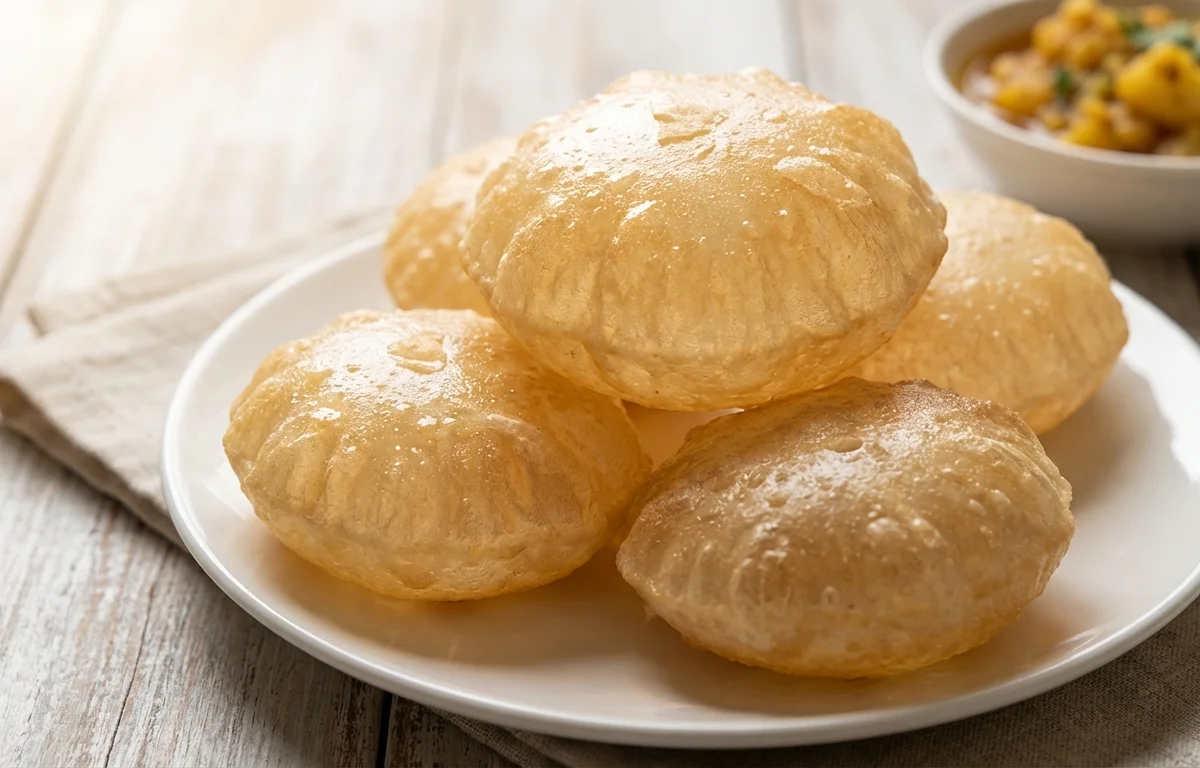
Phulko Luchi
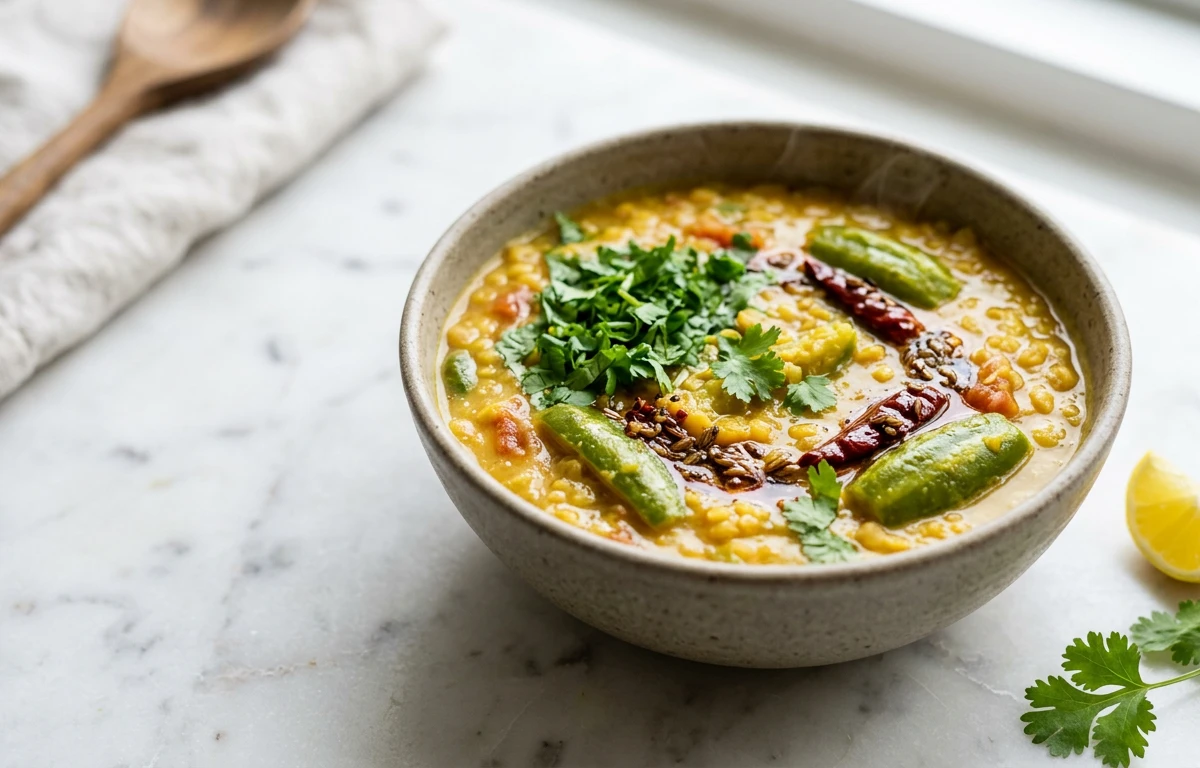
These Bengali deep-fried flatbreads puff into soft, airy rounds with a delicate bite and pale golden finish. Made with maida and a little ghee, they are best served hot with aloor dom or cholar dal.
For 8 servings
- mix · ~3 min
Mix the flour, ghee, and salt.
Add all-purpose flour, ghee, and salt to a wide bowl. Rub the ghee into the flour with your fingertips until the mixture looks sandy and holds shape when pressed.
- knead · ~6 min
Knead a firm, smooth dough.
Add water little by little and knead into a firm dough, not soft like roti dough. Knead for 5 to 6 minutes until smooth and even.
TIPA firm dough helps the luchis puff and keeps them from soaking up too much oil. - rest · ~15 min
Cover and rest the dough.
Cover the dough with a damp cloth and let it rest for 15 minutes so it relaxes slightly without becoming soft.
- prep · ~8 min
Divide and roll the luchis.
1.Divide the dough into 8 equal balls.2.Keep the dough balls covered so they do not dry out.3.Roll each ball into a smooth disc about 4 inches wide.4.Do not use dry flour while rolling; if needed, lightly grease the surface instead.TIPRoll each disc evenly. Thick edges or a thin center can stop the luchi from puffing fully. - fry · ~4 min
Heat the oil for frying.
Heat the oil in a deep kadai over medium-high heat until hot. A small bit of dough should rise quickly without browning at once.
- fry · ~5 min
Fry the luchis until puffed.
1.Slide one rolled disc into the hot oil.2.Press gently with a slotted spoon to help it puff.3.Flip as soon as it swells and fry the other side for a few seconds.4.Remove while still pale with just a faint hint of color.TIPDo not let the luchis turn brown; phulko luchi should stay light in color. - serve · ~5 min
Serve the luchis hot.
Fry the remaining discs the same way and serve immediately while fully puffed and soft.
What to keep in mind.
8 tips from the recipe — small details that make a real difference to the final dish.
- 1Rub the ghee into the flour thoroughly before adding water; that sandy texture helps create the delicate luchi bite.
- 2Keep the dough firmer than roti dough, or the luchis may absorb more oil and fail to hold a full puff.
- 3Rest only until the dough relaxes slightly; over-resting can make it too soft for classic phulko texture.
- 4Roll each disc evenly with no thin center or thick rim, since uneven thickness is the main reason luchis puff patchily.
- 5Avoid dusting with dry flour while rolling, because loose flour burns in the oil and can darken the luchis.
- 6Fry one at a time in properly hot oil and press gently with the slotted spoon as soon as it rises to encourage a full balloon.
- 7Take each luchi out while still pale; once golden brown, it loses the soft Bengali phulko style.
- 8For short make-ahead prep, roll a few discs and keep them covered with a cloth so the surface does not dry out before frying.
Adapt it for your goals.
Atta-luchi
Use part whole wheat flour for a nuttier flavor and slightly heartier texture, though the luchis may puff a little less dramatically.
veganVegan
Replace the ghee with neutral oil for the moyan if you want a fully dairy-free version with a similar puff and texture.
mini luchiMini-luchi
Divide into smaller balls and roll thinner, bite-size luchis for festive spreads or easier serving with cholar dal and vegetable sides.
low gheeLow-ghee
Reduce the moyan slightly for a plainer dough if you prefer a leaner bread to pair with rich curries.
Why this is on our healthy list.
Quick Source of Energy
Made mainly with flour, luchi provides fast-digesting carbohydrates that pair well with protein- or vegetable-based Bengali sides.
Moderate Ingredient Simplicity
This recipe uses just flour, water, salt, and a little ghee, keeping the ingredient list straightforward and free of heavy add-ins.
Frequently asked questions
The most common causes are dough that is too soft, uneven rolling, or oil that is not hot enough when the disc goes in.




-curry.webp)
.webp)