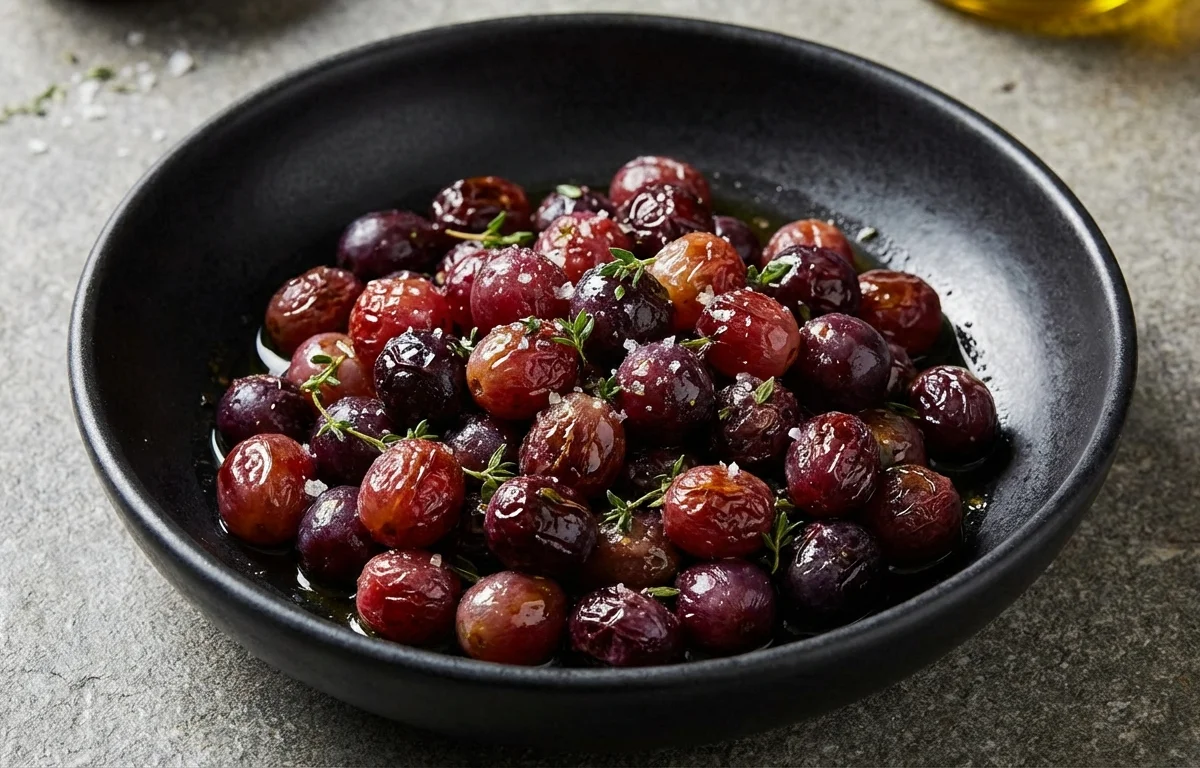
Raisins
Sweet, chewy dried grapes that are intensely flavorful and naturally rich in energy. A simple homemade pantry staple that far surpasses store-bought versions in taste and texture. Perfect for snacking, baking, or adding to cereals and trail mixes.
For 8 servings
- prep
Preheat the oven.
Set the oven to the lowest possible temperature, ideally 170°F (75°C) to 200°F (90°C). Line two large baking sheets with parchment paper.
TIPThe lowest oven setting is crucial. Higher heat bakes the grapes instead of drying them. - prep
Wash and prepare the grapes.
Remove all stems and discard any shriveled or damaged grapes. Wash the grapes thoroughly in cool water and drain well.
- boil · ~5 min
Blanch the grapes to crack the skins.
Bring a large pot of water to a rolling boil. Drop the grapes in small batches and boil for 30 to 60 seconds, until the skins just begin to split. Remove immediately with a slotted spoon and transfer to an ice water bath to stop the cooking.
TIPCracking the skins allows moisture to escape during drying, significantly speeding up the process. - prep
Drain and pat the grapes completely dry.
Drain the grapes from the ice bath. Spread them out on clean kitchen towels and pat them very dry. Any remaining surface water will steam the grapes in the oven.
TIPThe drier the grapes are before entering the oven, the faster and more evenly they will dehydrate. - bake
Arrange the grapes in a single layer on the baking sheets.
Place the grapes on the parchment-lined sheets, ensuring they do not touch. Crowding creates steam and prevents proper drying.
- bake · ~480 min
Dry the grapes in the oven until shriveled.
Place the trays in the oven. Prop the oven door open slightly with a wooden spoon handle to allow air circulation. Dry for 6 to 10 hours, rotating the trays halfway through. Grapes are done when they are pliable, leathery, and no liquid remains inside.
TIPStart checking for doneness after 5 hours. Over-dried raisins become hard and brittle. - rest
Cool and condition the raisins.
Remove from the oven and let them cool completely on the trays. Once cool, transfer to an airtight container and shake daily for a week to redistribute moisture evenly among all raisins.
TIPConditioning prevents mold and ensures a uniform chewy texture.
What to keep in mind.
7 tips from the recipe — small details that make a real difference to the final dish.
- 1Use seedless grapes only: seeds become bitter during drying and affect the final texture.
- 2Weigh grapes before and after drying: raisins lose about 80% of their original weight when done.
- 3Blanch grapes in small batches so the water stays at a rolling boil and skins crack evenly.
- 4Pat grapes bone-dry after blanching — any moisture on the surface will steam them instead of drying.
- 5Prop the oven door open at least 1 inch to allow moist air to escape; a closed door traps humidity.
- 6Rotate trays front to back and top to bottom halfway through drying for even dehydration.
- 7Condition finished raisins in an airtight container for a full week to prevent mold and equalize texture.
Adapt it for your goals.
Thick-skinned grape mix
Use a mix of red and green seedless grapes (e.g., Crimson + Thompson). The red grapes retain more tartness, the green bring sweetness, creating a complex flavor reminiscent of sun-dried Mediterranean raisins.
spiced raisinsSpiced raisins
After blanching and drying, toss the grapes with 1 tsp of cinnamon and ½ tsp of allspice before oven-drying. Great for baking or adding to spiced rice dishes.
sous vide methodSous-vide method
Place blanched grapes in a vacuum bag and dehydrate in a sous-vide bath at 140°F (60°C) for 24 hours. This yields a plumper, more tender raisin with a nearly raw-fruit sweetness.
Why this is on our healthy list.
High in Natural Sugars
Raisins are a concentrated source of fructose and glucose, providing quick energy for athletes or anyone needing a rapid blood sugar lift.
Rich in Boron
The grapes used in this recipe contain boron, a trace mineral that supports bone health and may help maintain calcium balance in the body.
Contains Iron
Raisins provide a small but meaningful dose of iron, which helps carry oxygen through the blood and can aid in preventing fatigue.
Frequently asked questions
Not recommended. Seeds become hard and bitter after drying; seedless varieties give a clean, sweet eating experience.