
Ruti
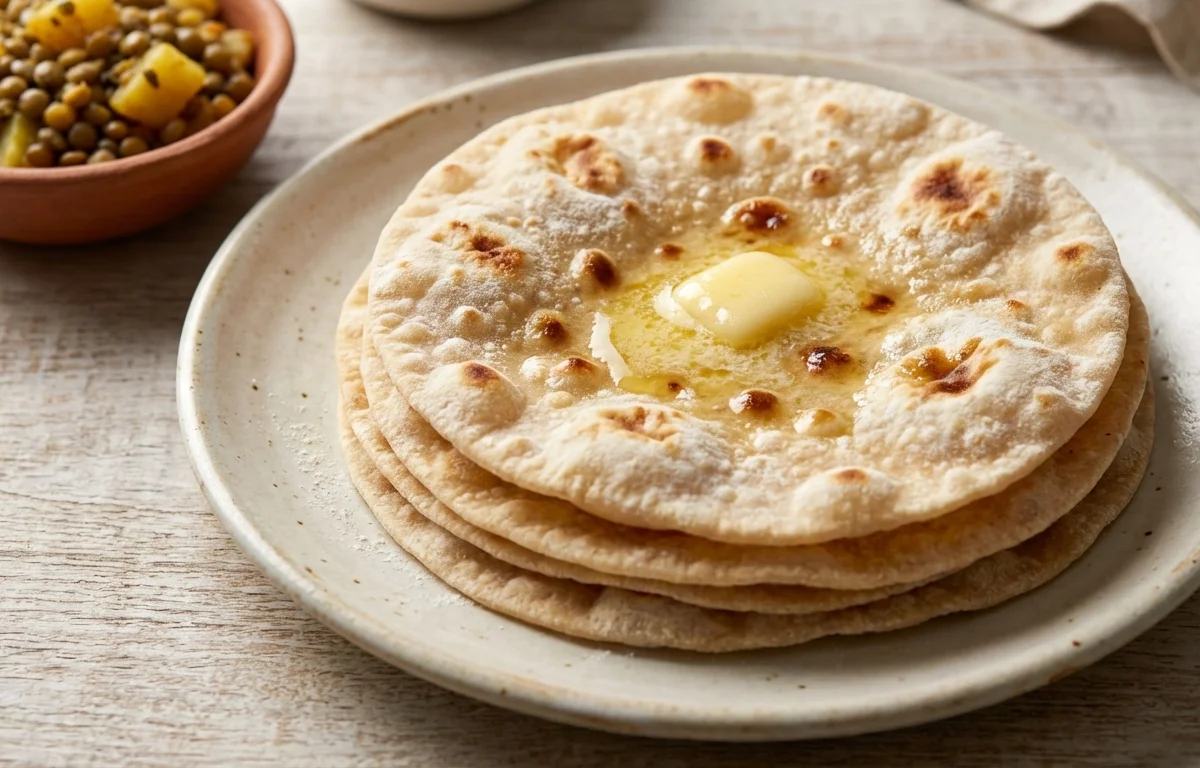
Everyday Bengali-style flatbread made with whole wheat flour, water, and a little oil. Soft in the center with light brown spots, it is perfect for scooping up sabzi, dal, or a simple curry.
For 4 servings
- knead · ~7 min
Knead the dough.
1.Add whole wheat flour and salt to a bowl and mix well.2.Pour in oil and rub it lightly through the flour.3.Add water little by little and knead to a soft, smooth dough.4.Cover and knead once more for 1 minute until supple.TIPThe dough should feel soft, not stiff. A softer dough gives softer ruti. - rest · ~10 min
Let the dough rest.
Cover the dough and let it rest for 10 minutes. This relaxes the gluten and makes rolling easier.
- prep · ~5 min
Divide and roll the ruti.
1.Divide the dough into 4 equal balls.2.Flatten one ball lightly with your fingers.3.Roll it into a thin, even circle about 6 to 7 inches wide.4.Repeat with the remaining dough balls.TIPKeep the rolled ruti even in thickness so it cooks uniformly. - fry · ~8 min
Cook the ruti on a hot tawa.
1.Heat a tawa or flat pan over medium-high heat.2.Place one rolled ruti on the hot tawa and cook until small bubbles appear.3.Flip and cook the second side until light brown spots form.4.Brush or drizzle a little oil, flip again, and cook both sides until lightly spotted and cooked through.TIPDo not cook on low heat or the ruti can turn dry and hard. - serve
Serve the ruti hot.
What to keep in mind.
7 tips from the recipe — small details that make a real difference to the final dish.
- 1Add the water gradually; this dough should feel soft and slightly tacky, not dry or tight.
- 2After the 10-minute rest, knead briefly again to smooth the dough and make rolling easier.
- 3If the dough springs back while rolling, let that ball rest 5 minutes more before trying again.
- 4Roll each ruti evenly, especially at the edges, so the center and rim cook at the same rate.
- 5Make sure the tawa is properly hot before the first ruti; weak heat makes them dry instead of soft.
- 6Stack cooked ruti in a cloth-lined container and cover right away to trap steam and keep them pliable.
- 7For make-ahead use, half-cook the ruti without much color, cool, then finish on the tawa just before serving.
Adapt it for your goals.
Low-oil
Skip the oil while cooking and dry-roast on the tawa for a lighter everyday ruti that still works well with dal and sabzi.
ghee brushedGhee-brushed
Replace the finishing oil with a light brush of ghee for a richer aroma and softer texture, especially good with simple curries.
atta multigrainAtta-multigrain
Swap part of the whole wheat flour with multigrain atta for a nuttier taste and slightly heartier texture.
Why this is on our healthy list.
Whole Grain Goodness
Made with whole wheat flour, this ruti provides bran and germ that add fiber and a more sustained, hearty base to the meal.
Light and Simple
With only flour, water, salt, and a little oil, this flatbread is a straightforward side that avoids heavy enrichments.
Pairs Well With Balanced Meals
Ruti is ideal with dal, vegetable sabzi, or curry, making it easy to build a filling meal with legumes and vegetables.
Frequently asked questions
The usual causes are a stiff dough, too little resting time, or cooking on low heat for too long. Keep the dough soft and use a properly hot tawa.




-curry.webp)
.webp)