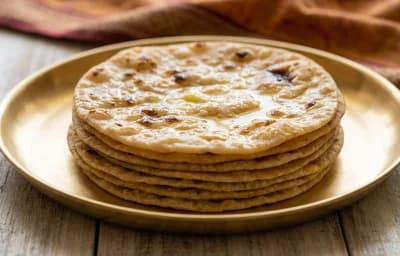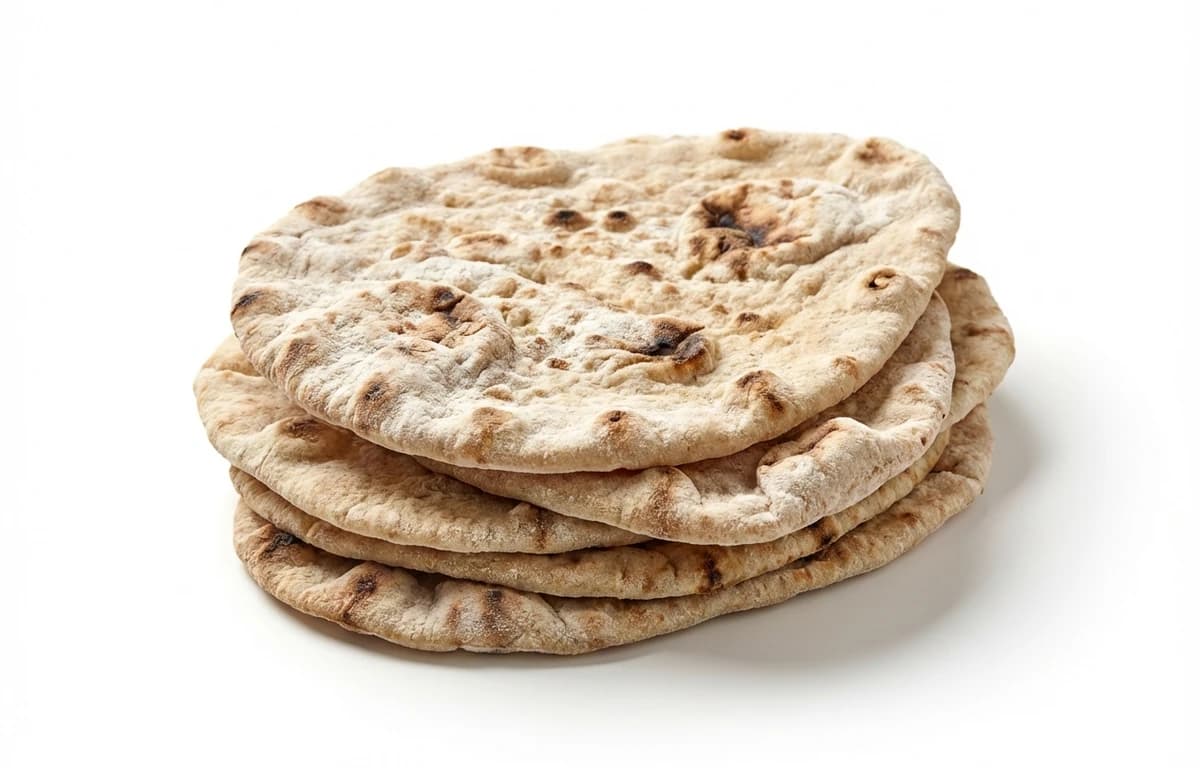
flatbreads
Also known as: tortilla, pita bread, naan, roti, lavash, chapati
Loading...
Also known as: tortilla, pita bread, naan, roti, lavash, chapati
Per 100g
Nutrition data source: USDA FoodData Central
Common measurement equivalents in grams
Wonderfully soft whole wheat flatbreads infused with fresh herbs and garlic. This simple recipe is perfect for scooping up curries and dals, offering a flavorful twist on the classic chapati. Ready in just over 30 minutes!
A vibrant and easy weeknight meal! Crispy whole wheat flatbreads are topped with a simple homemade tomato sauce, melted mozzarella, and a colorful mix of fresh vegetables. Ready in about 30 minutes.

A savory Malabar specialty featuring delicate, layered flatbreads stuffed with a spicy egg scramble. Perfect as a hearty snack or for a special Iftar meal, these golden-fried pockets are full of flavor.

A creamy, tangy, and nutty dip from the heart of Kashmir. Made with walnuts, yogurt, and fresh herbs, this chutney is a delightful accompaniment to kebabs, rice, or flatbreads.
Flatbreads can be a healthy part of a balanced diet, especially whole-wheat varieties which offer dietary fiber for digestive health and blood sugar regulation. They provide carbohydrates for energy and serve as a versatile base for nutrient-rich toppings like lean proteins and vegetables. If made with fortified flour, they can also be a source of B vitamins and iron.
On average, 100g of flatbread contains approximately 249 calories and 35.82g of carbohydrates. It also provides about 8.77g of protein and 7.89g of fat. The exact nutritional content can vary based on ingredients, size, and preparation method.
Flatbreads can be included in a weight loss diet when consumed in moderation and as part of a balanced meal. Opt for whole-wheat versions for added fiber, which promotes satiety, and pair them with lean proteins and vegetables to increase nutrient intake and keep calorie density in check.
Most traditional flatbreads, made from wheat flour, are not gluten-free. However, many gluten-free flatbread options are available today, made from alternative flours like rice, corn, almond, or chickpea. Always check the ingredient list if you have a gluten sensitivity or celiac disease.
Many flatbreads are naturally vegan, made from simple ingredients like flour, water, salt, and oil. However, some recipes might include dairy products (like milk or yogurt) or eggs, so it's essential to check the ingredients list if you follow a vegan diet.
Diabetics can eat flatbreads, but it's crucial to choose whole-grain varieties, which have a lower glycemic index due to their fiber content. Portion control is also key to managing blood sugar levels, and pairing them with protein and healthy fats can further help stabilize glucose response.
flatbreads is a versatile ingredient found in cuisines around the world. With 291 calories per 100g and 8.1 grams of protein, it's a nutritious addition to many dishes.
Explore more ingredients in the grain category with complete nutrition information.
View all grain →Flatbreads are typically cooked on a griddle, in a hot pan (like a cast-iron skillet), or baked in an oven until lightly browned and puffed. They can be served warm as a side, used as a base for pizzas, or filled with various ingredients to make wraps and sandwiches.
Flatbreads are incredibly versatile and used in cuisines worldwide. They are commonly used as wraps for sandwiches, a base for quick pizzas, a dipping tool for hummus, curries, or stews, or simply as an accompaniment to meals.
Store freshly made flatbreads at room temperature in an airtight container for 1-2 days, or in the refrigerator for up to a week to maintain freshness. For longer storage, flatbreads can be frozen for several months, ideally separated by parchment paper to prevent sticking.
Homemade flatbreads typically last 1-2 days at room temperature or up to a week when refrigerated. Store-bought flatbreads often have a longer shelf life due to preservatives; always check the 'best by' date on the packaging for specific guidance.