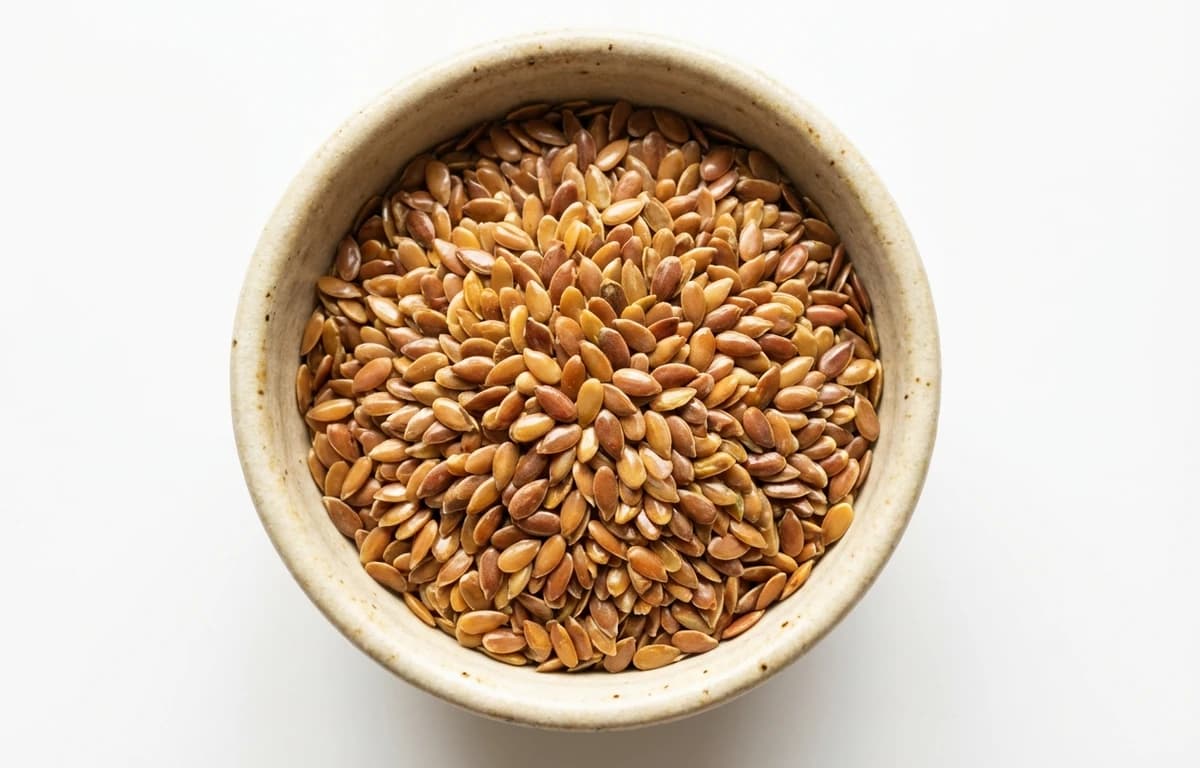
flaxseed
Also known as: linseed, alsi, jawas, tishi, aksebija, common flax
Loading...
Also known as: linseed, alsi, jawas, tishi, aksebija, common flax
Per 100g
Nutrition data source: USDA FoodData Central
Common measurement equivalents in grams
A quick, refreshing, and nutrient-dense breakfast or snack. This bowl features creamy Greek yogurt topped with a vibrant mix of antioxidant-rich berries and the nutty, fibrous crunch of ground flaxseeds. It's a perfectly balanced and delicious way to start your day or refuel post-workout.
Layers of creamy Greek yogurt, sweet mixed berries, and nutty ground flaxseed create a beautiful and healthy parfait. It's a perfect no-cook breakfast or snack that's ready in minutes and packed with protein and fiber.
A simple yet elegant bowl of creamy Greek yogurt topped with a burst of fresh mixed berries and a sprinkle of nutty flaxseeds. It's a powerhouse of protein and fiber, perfect for a quick breakfast or a refreshing, healthy snack.
Brighten your morning with this vibrant Greek Yogurt Parfait! Layers of creamy, protein-packed Greek yogurt, sweet mixed berries, and wholesome ground flaxseeds come together for a super easy, gut-friendly, and satisfying breakfast or snack.
It is best to eat them ground. Whole flaxseeds often pass through the digestive tract undigested, meaning you won't absorb the healthy fats and nutrients.
Ground flaxseed oxidizes quickly. It lasts about 6 months in the refrigerator or up to a year in the freezer if stored in an airtight container.
Chia seeds or hemp hearts are the best substitutes as they offer similar healthy fats and fiber profiles.
Yes, mix 1 tablespoon of ground flaxseed with 3 tablespoons of water and let it sit for 5 minutes to create a 'flax egg' for vegan baking.
Nutritionally they are very similar. Brown flaxseeds have a slightly nuttier flavor, while golden flaxseeds are milder and blend more easily into light-colored baked goods.
Most health experts recommend 1 to 2 tablespoons of ground flaxseed per day to reap the health benefits without excessive fiber intake.
No, flaxseed is naturally gluten-free, making it a great addition to gluten-free diets and baking.
Flaxseed oil has a very low smoke point and should not be used for frying or high-heat cooking. Use it in salad dressings or drizzle it over finished dishes.
flaxseed is a versatile ingredient found in cuisines around the world. With 534 calories per 100g and 18.3 grams of protein, it's a nutritious addition to many dishes.
Explore more ingredients in the nut seed category with complete nutrition information.
View all nut seed →