Protein10 recipes
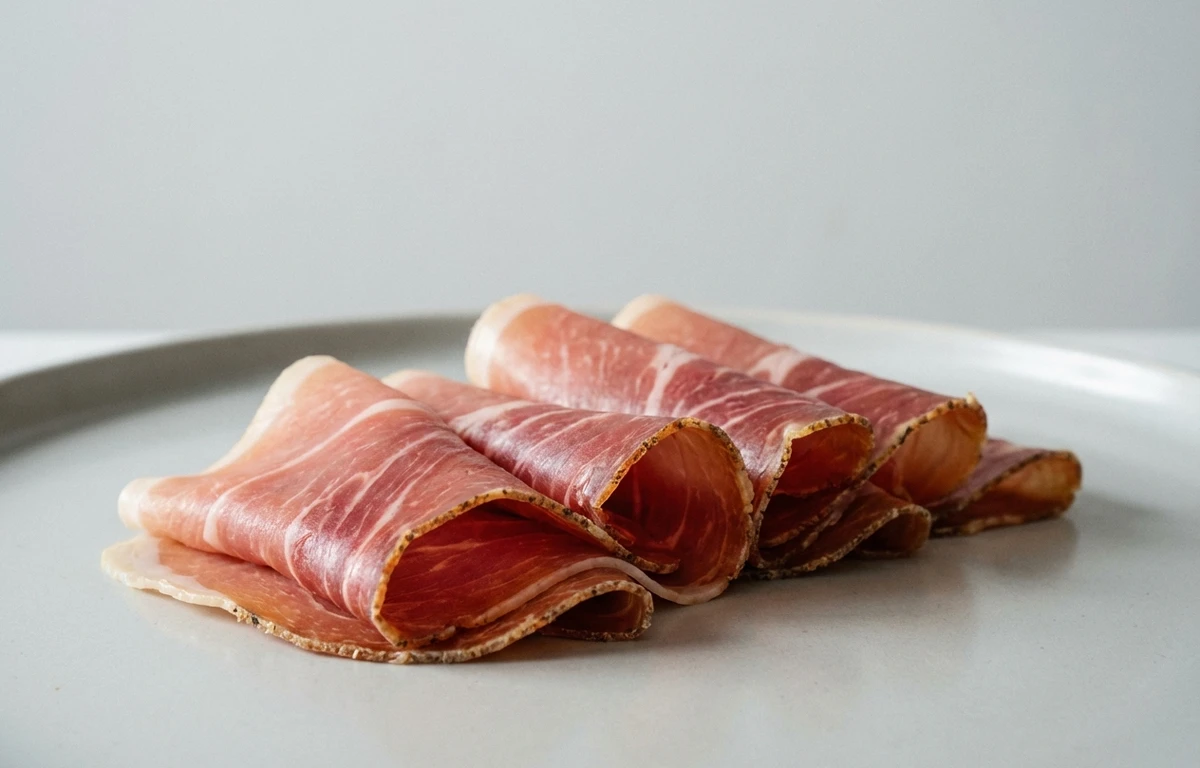
ham.
VegetarianVeganGluten-freeDairy-freeNut-freePeanut-freeSoy-freeEgg-freeShellfish-freeHoney-freeAlcohol-freeHalalKosher
ALSO KNOWN AS
uncured hampork legfresh ham
SERVING
CALORIES
263
PROTEIN
16.3g
CARBS
1.8g
FAT
20.7g
FIBER
0g
NUTRITION PROFILE · per 100 g
Everything in this ingredient.
MACRONUTRIENTS
Calories263kcal—
Protein16.3g33%
Carbohydrates1.8g1%
Fiber0g0%
Sugar0g0%
Total fat20.7g27%
Saturated fat7.2g36%
Cholesterol70mg23%
Water57.4g—
MINERALS
Sodium1245mg54%
Potassium311mg7%
Calcium10mg1%
Iron0.79mg4%
Magnesium16mg4%
Phosphorus157mg13%
Zinc1.9mg17%
Copper0.08mg9%
Manganese0.03mg1%
Selenium20µg36%
VITAMINS
Vitamin A0µg0%
Vitamin C0mg0%
Vitamin D0.70µg3%
Vitamin E0.27mg2%
Vitamin K0µg0%
Thiamin (B1)0.71mg59%
Riboflavin (B2)0.19mg15%
Niacin (B3)4.2mg26%
Pantothenic acid (B5)0.18mg4%
Vitamin B60.26mg15%
Folate (B9)1.0µg0%
Vitamin B120.95µg40%
%DV based on a 2,000 cal diet. Source: USDA FoodData Central. A dash in the %DV column means there’s no established Daily Value for that nutrient.
HEALTH BENEFITS
Why eat it.
- ✓Excellent source of high-quality, complete protein, essential for muscle building, repair, and overall body function.
- ✓Rich in B vitamins, particularly thiamine (B1), niacin (B3), and cobalamin (B12), which support energy metabolism, nervous system health, and red blood cell formation.
- ✓Provides key minerals such as selenium, a powerful antioxidant that protects cells from damage, and phosphorus, which is vital for bone and tooth health.
- ✓A good source of zinc, which plays a crucial role in immune function, wound healing, and cell growth.
COOKING TIPS
In the kitchen.
- 1To keep a baked ham moist, cook it low and slow (around 325°F or 160°C) in a roasting pan with a small amount of liquid, covering it with foil for most of the cooking time.
- 2Score the fat cap in a diamond pattern before baking. This allows the fat to render beautifully and helps glazes penetrate the meat for better flavor.
- 3Apply glazes (like brown sugar, mustard, or pineapple) during the last 20-30 minutes of baking to prevent the sugars from burning.
- 4Always let a large cooked ham rest for 15-20 minutes before carving. This allows the juices to redistribute, resulting in a more tender and flavorful slice.
STORAGE
Keep it fresh.
- Refrigerate uncooked ham in its original packaging at 40°F (4°C) or below; check the 'use-by' date. Cured, vacuum-sealed ham can last for weeks, while fresh ham should be used within 3-5 days.
- Store leftover cooked ham tightly wrapped or in an airtight container in the refrigerator for 3-5 days. For longer storage, freeze slices for up to 2 months.
FAQ
Frequently asked questions.
Is ham healthy?
Ham is an excellent source of high-quality protein, essential B vitamins (thiamine, niacin, B12), and minerals like selenium, phosphorus, and zinc. These nutrients support muscle health, energy metabolism, and immune function. However, ham can be high in sodium and saturated fat, so it's best consumed in moderation as part of a balanced diet.
How much protein and calories are in ham?
Per 100g, ham contains approximately 16.28g of protein and 263 calories. It also provides about 20.68g of fat and 1.84g of carbohydrates. This makes it a significant source of protein and energy.
Is ham good for weight loss?
While ham is high in protein, which can aid satiety and muscle preservation during weight loss, its calorie and fat content (263 calories, 20.68g fat per 100g) means portion control is crucial. Opt for leaner cuts and be mindful of added sugars or glazes often found in processed hams to support weight management goals.
Is ham gluten-free?
Plain, unprocessed ham is naturally gluten-free. However, some processed hams, especially those with glazes, marinades, or fillers, may contain gluten-containing ingredients. Always check the ingredient label to ensure it meets gluten-free dietary requirements.
Can diabetics eat ham?
Ham is generally low in carbohydrates (1.84g per 100g), making it a suitable protein source for diabetics. However, it's important to choose lower-sodium options and be aware of any added sugars in cured or glazed hams, as high sodium intake can impact blood pressure.
Is ham keto-friendly?
Yes, ham can be a good fit for a ketogenic diet due to its high fat and protein content and very low carbohydrate count (1.84g per 100g). As with other diets, opt for less processed varieties to avoid hidden sugars or excessive sodium, which can be a concern for some keto dieters.
How do you cook ham?
Ham can be cooked in various ways depending on whether it's fresh or cured. Cured hams are often baked whole, glazed, or sliced and pan-fried. Fresh ham (uncured pork leg) requires thorough cooking, similar to a pork roast, often roasted slowly until tender.
What does ham taste like?
Ham typically has a savory, salty, and often smoky flavor, characteristic of cured pork. The taste can vary based on the curing process, smoking method, and any glazes or seasonings used, ranging from mildly sweet to intensely salty and smoky.
How do you store ham?
Unopened, pre-packaged ham should be stored in the refrigerator according to its 'use-by' date. Once opened, or for freshly cooked ham, store it in an airtight container in the refrigerator and consume within 3-5 days. For longer storage, ham can be frozen for up to 1-2 months.
Is ham halal or kosher?
No, ham is not halal or kosher. Both Islamic (halal) and Jewish (kosher) dietary laws prohibit the consumption of pork and pork products, including ham.
RECIPES
Cook with ham.
10 recipes · sorted by what’s quick
.webp)