Pan-Fried Ham Slices
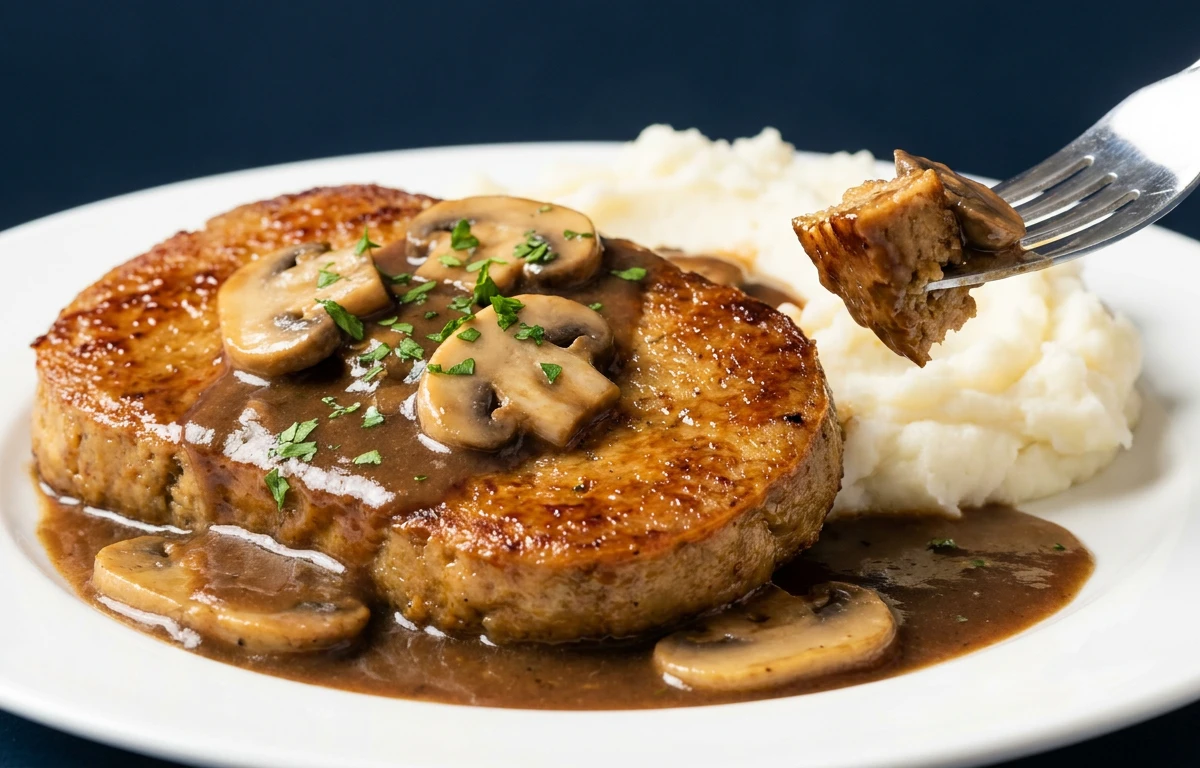
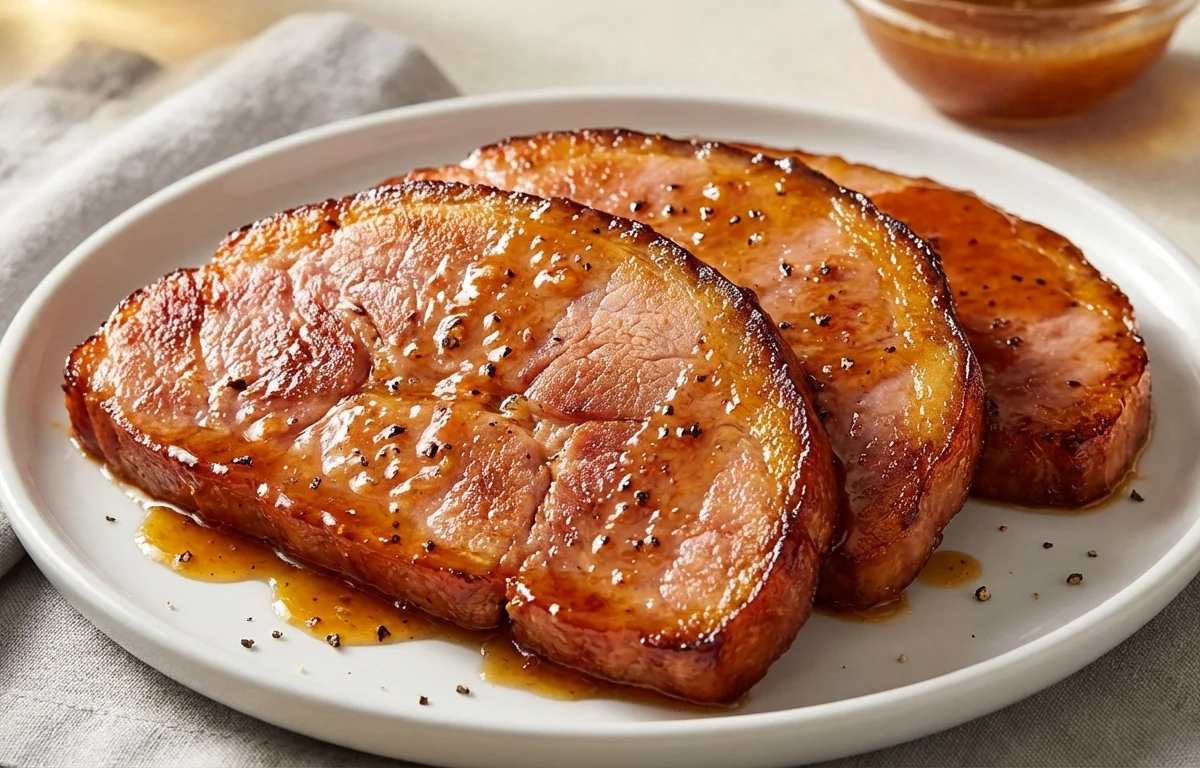
Thick, juicy ham slices seared in a hot skillet until beautifully caramelized on the outside while staying tender within. A quick, satisfying protein that comes together in under 10 minutes — perfect alongside eggs for breakfast or with mashed potatoes and a simple salad for an effortless dinner.
For 4 servings
- prep · ~1 min
Pat the ham slices dry.
Remove ham slices from packaging and pat thoroughly dry on both sides with paper towels. This helps achieve a better sear.
- prep · ~1 min
Score the fat edges if desired.
If your ham slices have a thick fat cap along the edge, make shallow cuts at 1-inch intervals through the fat to prevent curling during cooking.
TIPScoring stops the slices from buckling up in the hot skillet. - fry · ~2 min
Heat the skillet and melt the butter.
Place a cast iron or heavy-bottomed skillet over medium-high heat. Add the butter and let it melt and foam, swirling to coat the pan. The butter should be sizzling but not browning.
TIPMedium-high heat gives a golden-brown crust without burning the butter. - fry · ~6 min
Pan-fry the ham slices until caramelized.
1.Place ham slices in the hot skillet in a single layer.2.If using brown sugar, sprinkle a tiny pinch on the top side of each slice as the first side cooks.3.Cook for 3 minutes without moving until the underside is golden and caramelized.4.Flip with tongs and cook for another 2-3 minutes until the second side is browned.TIPDon't crowd the pan — cook in two batches if needed. Overcrowding steams the ham instead of searing it. - prep · ~1 min
Crack black pepper over the hot ham.
Transfer ham slices to a plate and immediately crack fresh black pepper over the top while they're still glistening with pan butter.
- serve
Serve immediately with pan drippings.
Drizzle any buttery pan drippings from the skillet over the ham slices and serve hot.
What to keep in mind.
6 tips from the recipe — small details that make a real difference to the final dish.
- 1Patting the ham slices dry is essential for a deep golden crust — any surface moisture turns to steam and prevents browning.
- 2Score the fat edge every inch to stop the slices from curling up in the hot pan; skip this for boneless ham steaks with little fat.
- 3Use a cast-iron or heavy-bottomed skillet for even, steady heat; avoid non-stick if you want the best caramelization.
- 4Leave at least 1 cm of space between slices in the pan — overcrowding traps steam and gives you pale, soggy ham instead of a sear.
- 5A tiny pinch of brown sugar per slice boosts caramelization without making the ham sweet; skip it if you prefer a purely savory crust.
- 6Rest the ham slices for 1 minute after cooking so the juices reabsorb; serve immediately while the crust is still crisp.
Adapt it for your goals.
Spiced Maple Glaze
Swap brown sugar for 1 tbsp maple syrup and add a pinch of cayenne or smoked paprika to the butter for a sweet-spicy finish that complements ham's saltiness.
Pineapple HamPineapple Ham
Deglaze the pan with 2 tbsp pineapple juice after flipping, then simmer for 30 seconds; the acidity cuts the richness and adds tropical brightness.
Garlic Herb ButterGarlic Herb Butter
Add one crushed garlic clove and 1 tsp chopped thyme or rosemary to the butter before frying for an aromatic, savory twist.
Lower Sodium OptionLower-Sodium Option
Use a low-sodium ham steak and skip the brown sugar; the natural saltiness of the ham is enough, and the butter provides clean browning.
Why this is on our healthy list.
High-Quality Protein
Each serving provides a substantial amount of complete protein from the ham, supporting muscle maintenance and satiety.
Rich in B Vitamins
Ham is a good source of B vitamins, especially B6 and B12, which aid energy metabolism and nervous system function.
Moderate in Saturated Fat
Using 2 tbsp butter across 4 servings keeps saturated fat moderate; trimming visible fat on the ham further reduces it.
Naturally Low in Carbohydrates
With minimal added sugar, this dish is nearly carb-free, fitting well into low-carb or keto meal plans.
Frequently asked questions
Yes, a heavy stainless-steel or carbon steel skillet works well. Avoid thin non-stick pans — they won't get hot enough for a good sear.