Condiment10 recipes
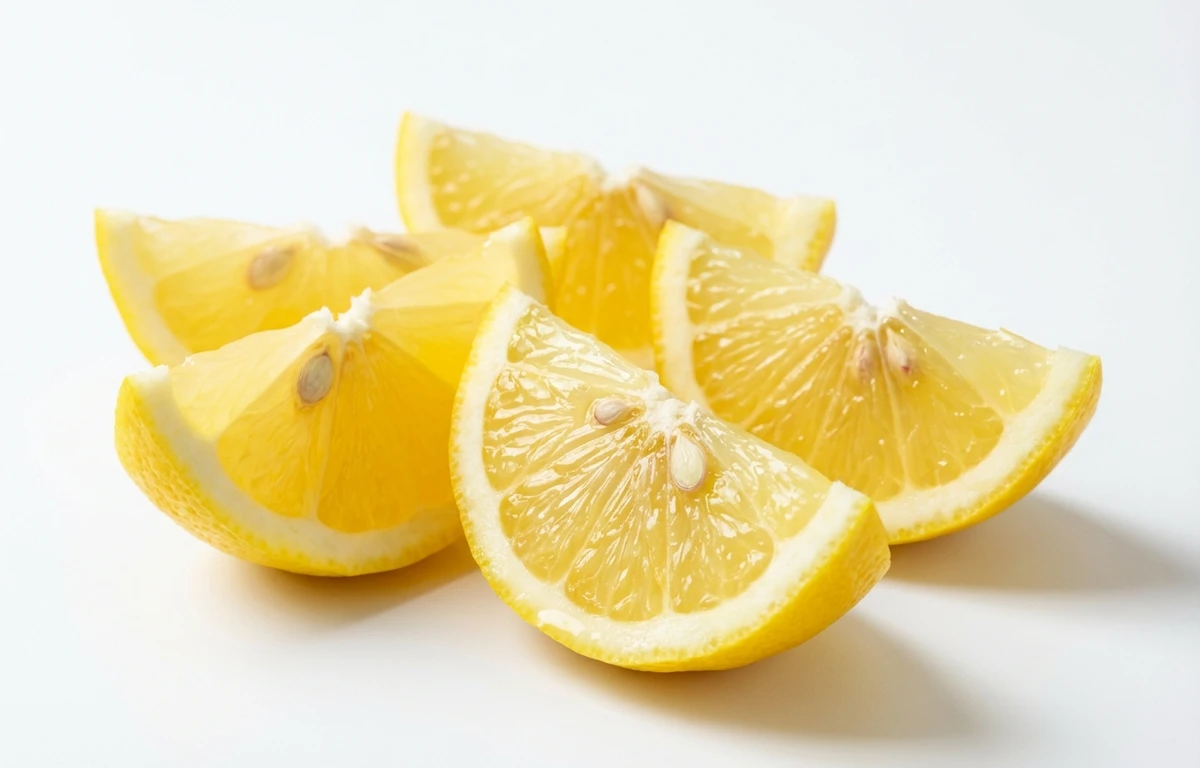
lemon wedges.
VegetarianVeganGluten-freeDairy-freeNut-freePeanut-freeSoy-freeEgg-freeShellfish-freeHoney-freeAlcohol-freeHalalKosher
ALSO KNOWN AS
Lemon Wedgelemon slicesnimbu ki phankcitrus wedgeslemon quartersnimbu slices
SERVING
CALORIES
44
PROTEIN
1.1g
CARBS
9.3g
FAT
0.30g
FIBER
2.8g
NUTRITION PROFILE · per 100 g
Everything in this ingredient.
MACRONUTRIENTS
Calories44.3kcal—
Protein1.1g2%
Carbohydrates9.3g3%
Fiber2.8g10%
Sugar2.5g5%
Total fat0.30g0%
Saturated fat0.04g0%
Trans fat0g—
Cholesterol0mg0%
Water88.9g—
MINERALS
Sodium2.0mg0%
Potassium138mg3%
Calcium26mg2%
Iron0.60mg3%
Magnesium8.0mg2%
Phosphorus16mg1%
Zinc0.06mg1%
Copper0.04mg4%
Manganese0.03mg1%
Selenium0.40µg1%
VITAMINS
Vitamin A1.0µg0%
Vitamin C53mg59%
Vitamin D0µg0%
Vitamin E0.15mg1%
Vitamin K0µg0%
Thiamin (B1)0.04mg3%
Riboflavin (B2)0.02mg2%
Niacin (B3)0.10mg1%
Pantothenic acid (B5)0.19mg4%
Vitamin B60.08mg5%
Folate (B9)11µg3%
Vitamin B120µg0%
%DV based on a 2,000 cal diet. Source: USDA FoodData Central. A dash in the %DV column means there’s no established Daily Value for that nutrient.
MEASUREMENT CONVERSIONS
How much is what.
1 cup158g
1 tablespoon10g
1 teaspoon3.3g
1 oz28.4g
1 lb453.6g
1 piece15g
HEALTH BENEFITS
Why eat it.
- ✓Excellent source of Vitamin C for immune support
- ✓Contains antioxidants that protect cells from damage
- ✓Citric acid may help prevent kidney stones
- ✓Aids in iron absorption when consumed with plant-based iron sources
- ✓Low calorie way to add flavor and promote hydration
COOKING TIPS
In the kitchen.
- 1Roll the lemon on a counter before cutting to maximize juice yield
- 2Remove seeds before serving as a garnish to prevent them falling into food
- 3Squeeze over seafood or greens just before serving to brighten flavors
STORAGE
Keep it fresh.
- Store cut wedges in an airtight container in the refrigerator
- Use within 2-3 days for maximum freshness and juice content
- Keep away from strong-smelling foods as they can absorb odors
FAQ
Frequently asked questions.
How long do lemon wedges last in the fridge?
Once cut, lemon wedges should be stored in an airtight container or wrapped tightly in plastic wrap and used within 2 to 3 days.
Can you freeze lemon wedges?
Yes, you can freeze them on a tray and then transfer to a bag. They are excellent for use as ice cubes in drinks, though the texture will soften upon thawing.
What is the best way to pick a lemon for wedges?
Choose lemons that are heavy for their size, have thin skin, and a bright yellow color. These are typically the juiciest.
What can I use if I don't have lemon wedges?
Lime wedges are the best substitute. For acidity in cooking, a splash of white wine vinegar or apple cider vinegar can work.
Should I wash lemons before cutting them into wedges?
Yes, always scrub the outer peel under running water before cutting, as bacteria on the surface can be transferred to the flesh by the knife.
Are lemon wedges high in sugar?
No, lemons are very low in sugar compared to other fruits, containing only about 2.5g per 100g.
How many wedges are usually in one lemon?
A standard medium lemon is typically cut into 6 to 8 wedges.
Why are lemon wedges served with seafood?
The citric acid in the lemon helps neutralize the amines (fishy odors) in seafood and cuts through the richness of fatty fish.
Can I eat the peel on the lemon wedge?
Yes, the peel is edible and contains high concentrations of fiber and antioxidants, though it has a bitter flavor.
RECIPES
Cook with lemon wedges.
10 recipes · sorted by what’s quick