Other
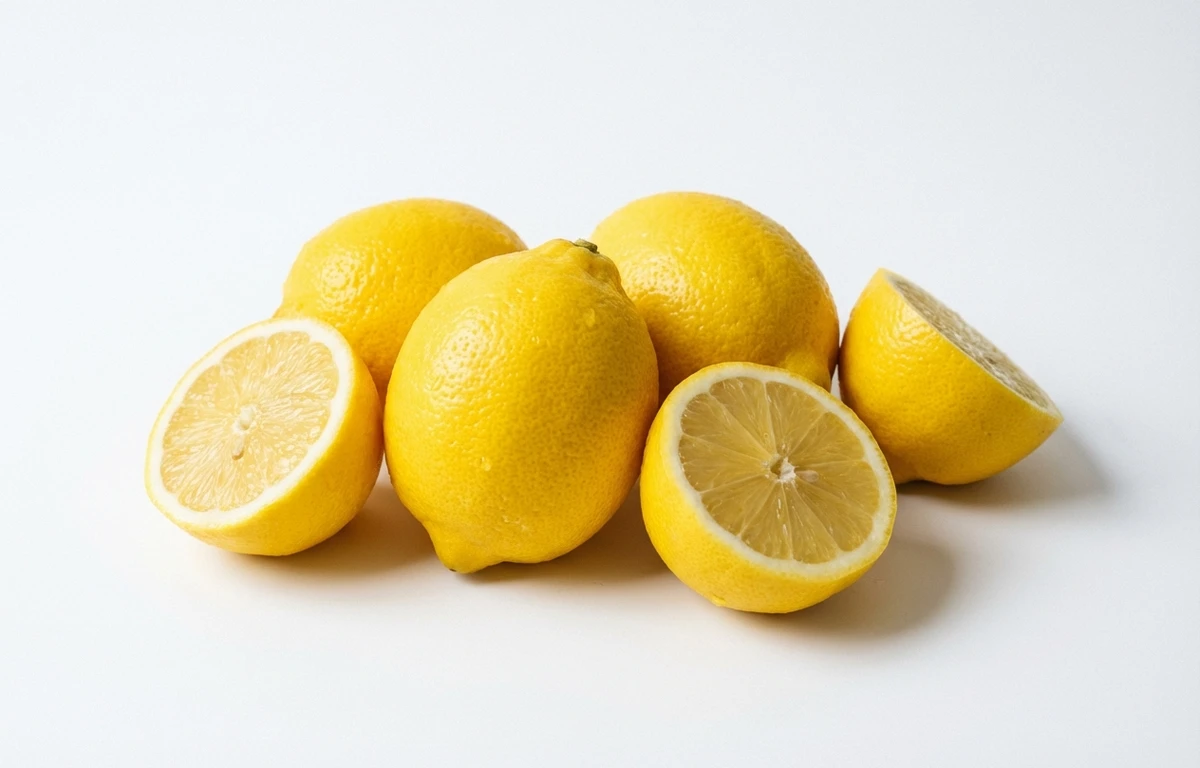
lemons.
VegetarianVeganGluten-freeDairy-freeNut-freePeanut-freeSoy-freeEgg-freeShellfish-freeHoney-freeAlcohol-free
ALSO KNOWN AS
nimbulimoncitrus limonyellow lemon
SERVING
CALORIES
44
PROTEIN
1.1g
CARBS
9.3g
FAT
0.30g
FIBER
2.8g
This ingredient is flagged as naturally gluten-free. Per 100 g, it provides 0 µg of vitamin K.
NUTRITION PROFILE · per 100 g
Everything in this ingredient.
MACRONUTRIENTS
Calories44.3kcal—
Protein1.1g2%
Carbohydrates9.3g3%
Fiber2.8g10%
Sugar2.5g5%
Total fat0.30g0%
Saturated fat0.04g0%
Trans fat0g—
Cholesterol0mg0%
Water89g—
MINERALS
Sodium2.0mg0%
Potassium138mg3%
Calcium26mg2%
Iron0.60mg3%
Magnesium8.0mg2%
Phosphorus16mg1%
Zinc0.06mg1%
Copper0.04mg4%
Manganese0.03mg1%
Selenium0.40µg1%
VITAMINS
Vitamin A1.0µg0%
Vitamin C53mg59%
Vitamin D0µg0%
Vitamin E0.15mg1%
Vitamin K0µg0%
Thiamin (B1)0.04mg3%
Riboflavin (B2)0.02mg2%
Niacin (B3)0.10mg1%
Pantothenic acid (B5)0.19mg4%
Vitamin B60.08mg5%
Folate (B9)11µg3%
Vitamin B120µg0%
%DV based on a 2,000 cal diet. Source: USDA FoodData Central. A dash in the %DV column means there’s no established Daily Value for that nutrient.
MEASUREMENT CONVERSIONS
How much is what.
1 cup140g
1 oz28.4g
1 lb453.6g
1 piece58g
HEALTH BENEFITS
Why eat it.
- ✓Soluble fiber (pectin) can help improve digestive health
- ✓May aid in iron absorption from plant-based foods
COOKING TIPS
In the kitchen.
- 1Roll the lemon on a counter with firm pressure before juicing to maximize yield
- 2Use the zest (outer yellow layer) for intense citrus flavor without the acidity
- 3Add lemon juice at the end of cooking to maintain its bright flavor and Vitamin C content
STORAGE
Keep it fresh.
- Store at room temperature for up to one week
- Refrigerate in a sealed plastic bag to keep fresh for up to a month
- Freeze lemon juice in ice cube trays for long-term use
FAQ
Frequently asked questions.
How long do lemons last?
Lemons last about 1 week at room temperature and up to 4 weeks if stored in a sealed bag in the refrigerator.
How can I tell if a lemon is juicy?
Look for lemons that feel heavy for their size, have thin skin, and a bright yellow color without green tinges.
What is a good substitute for lemon juice?
Lime juice is the best substitute. For acidity in cooking, vinegar or white wine can also work depending on the recipe.
Can you freeze whole lemons?
Yes, you can freeze whole lemons, though they will be soft when thawed. They are best used for juicing after freezing.
Is lemon zest different from the peel?
Zest is only the thin, colorful outer layer of the peel. The white part underneath (pith) is bitter and should be avoided.
How much juice is in one medium lemon?
A medium lemon typically yields about 2 to 3 tablespoons (30-45ml) of juice.
Are lemons alkaline or acidic?
Lemons are acidic in their natural state (pH 2-3), but they have an alkalizing effect on the body once metabolized.
Why should I wash lemons before zesting?
Many lemons are coated in food-grade wax or may have pesticide residue; washing with warm water helps remove these.
RECIPES
Cook with lemons.
0 recipes · sorted by what’s quick