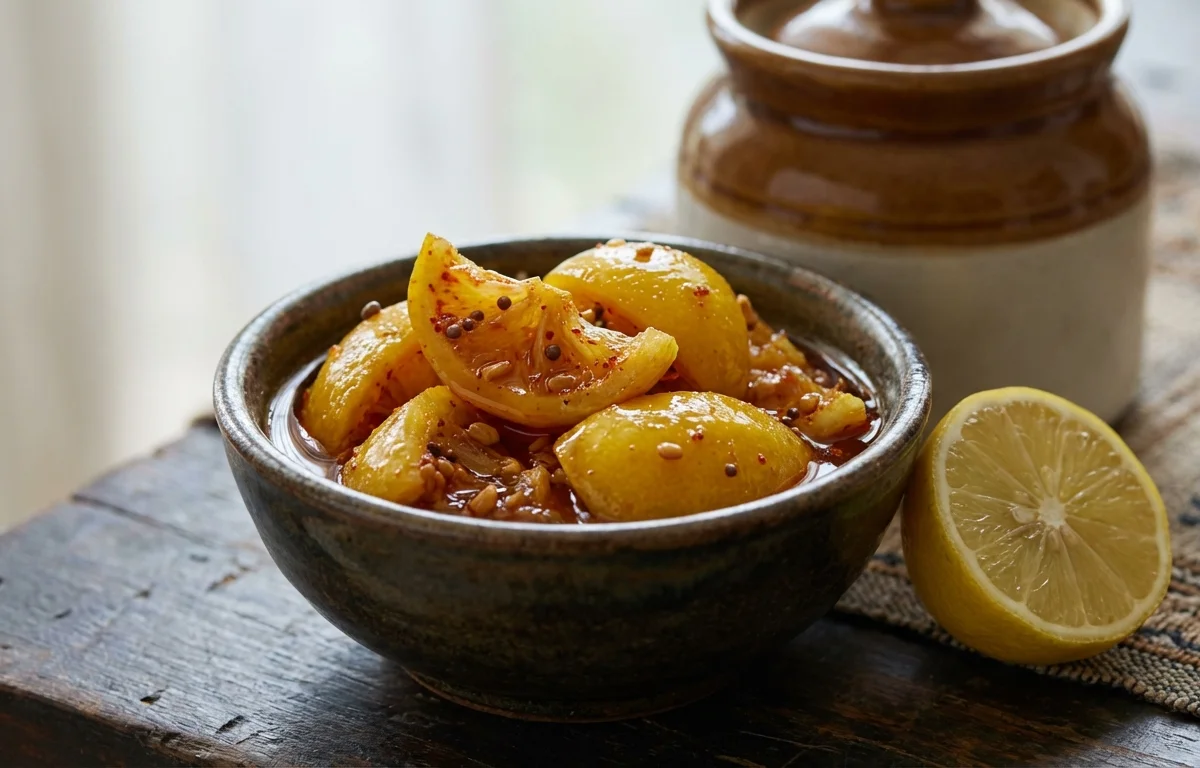
Lemon Pickle
Sharp, salty, and warmly spiced, this classic Indian lemon pickle turns simple lemons into a bold table condiment. A little time helps the peel soften and the flavors deepen into something wonderfully tangy and complex.
For 8 servings
- prep · ~10 min
Prepare the lemons.
1.Wash the lemons well and wipe them completely dry.2.Cut each lemon into small wedges.3.Remove as many seeds as possible to avoid bitterness.TIPAny moisture on the lemons can shorten the shelf life, so keep everything very dry. - mix · ~3 min
Mix the lemons with salt and spices.
1.Place the lemon wedges in a clean dry bowl.2.Add salt, turmeric powder, and red chili powder.3.Mix well so the lemon pieces are evenly coated. - roast · ~2 min
Roast and crush the fenugreek.
Dry roast the fenugreek seeds on low heat until lightly fragrant, then cool and crush them coarsely.
TIPDo not darken the fenugreek too much or it will taste bitter. - temper · ~2 min
Make the tempering.
1.Heat sesame oil in a small pan over medium-low heat.2.Add mustard seeds and let them crackle.3.Add asafoetida and switch off the heat.TIPLet the oil cool slightly before adding it to the lemons so the pickle keeps a fresh citrus taste. - mix · ~2 min
Combine everything.
Add the crushed fenugreek and the warm tempering to the lemon mixture. Mix well until the spices and oil coat every piece.
- rest · ~10080 min
Rest the pickle to mature.
Transfer the pickle to a clean dry glass jar and close tightly. Leave it in a cool spot for 7 days, shaking or stirring once daily, until the lemon peel softens.
TIPUse only a clean dry spoon every time you handle the pickle. - serve
Serve in small amounts with everyday meals.
What to keep in mind.
7 tips from the recipe — small details that make a real difference to the final dish.
- 1Dry the lemons, bowl, knife, and jar completely before starting; even a little moisture can shorten the pickle's life.
- 2Remove as many lemon seeds as you can, because they turn more bitter as the pickle sits.
- 3Roast fenugreek only until aromatic and slightly deeper in color; over-roasting makes the pickle noticeably harsh.
- 4Let the mustard tempering cool for a minute before mixing it in so the lemon stays bright and fresh-tasting.
- 5Shake or stir the jar once a day during the 7-day rest so the salt and spices coat every wedge evenly.
- 6Wait until the peels look softer and less rigid before serving; that is the best sign the pickle has matured well.
- 7Always use a clean, dry spoon to serve, and keep the rim of the jar free from oily drips.
Adapt it for your goals.
Extra-spicy
Increase the red chili powder slightly for a hotter achar that stands up well to plain dal-rice or curd rice.
low oilLow-oil
Use a little less sesame oil for a lighter pickle, though the texture will be less glossy and the spice coating slightly drier.
milderMilder
Reduce the chili powder to make a gentler lemon pickle that still keeps the salty-tangy character.
no hingNo-hing
Skip the asafoetida if needed; the pickle will still be bright and punchy, with mustard and fenugreek leading the flavor.
Why this is on our healthy list.
Citrus-Based Condiment
Made primarily with lemon, this pickle brings the bright qualities of citrus in a small, flavorful serving.
Digestive Spice Support
Fenugreek, mustard seeds, turmeric, and asafoetida are traditional Indian spices often used to add depth and aid hearty meals.
Portion-Friendly Flavor
Because it is served in small amounts, a little pickle can add strong taste to simple meals like rice, dal, or curd rice.
Frequently asked questions
Any moisture left on the fruit or in the jar can encourage spoilage and reduce how long the pickle keeps well.