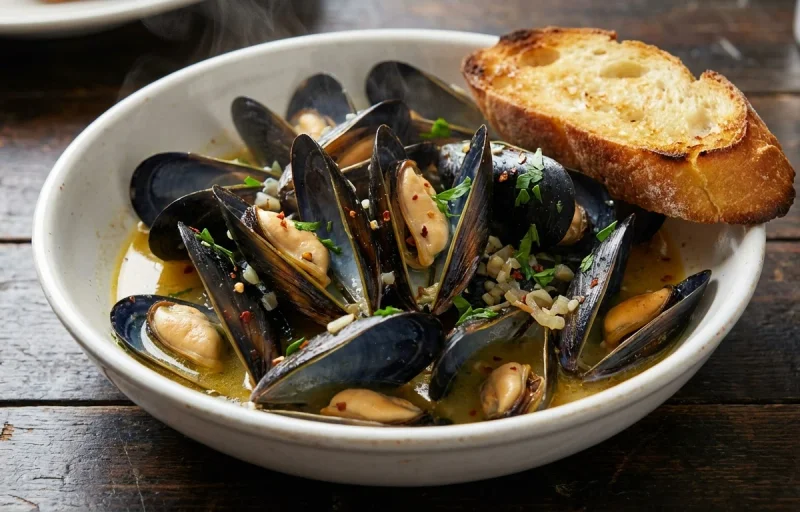
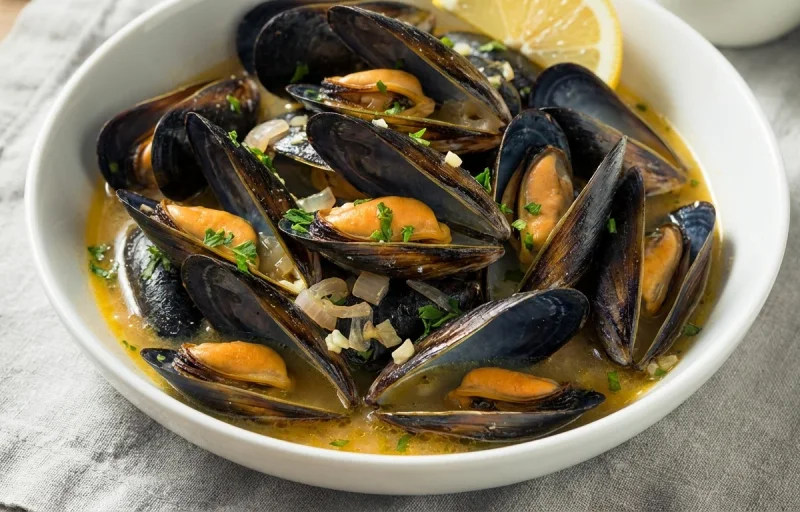
Other10 recipes
mussels.
VegetarianVeganGluten-freeDairy-freeNut-freePeanut-freeSoy-freeEgg-freeShellfish-freeHoney-freeAlcohol-freeKosher
ALSO KNOWN AS
Fresh Mussels
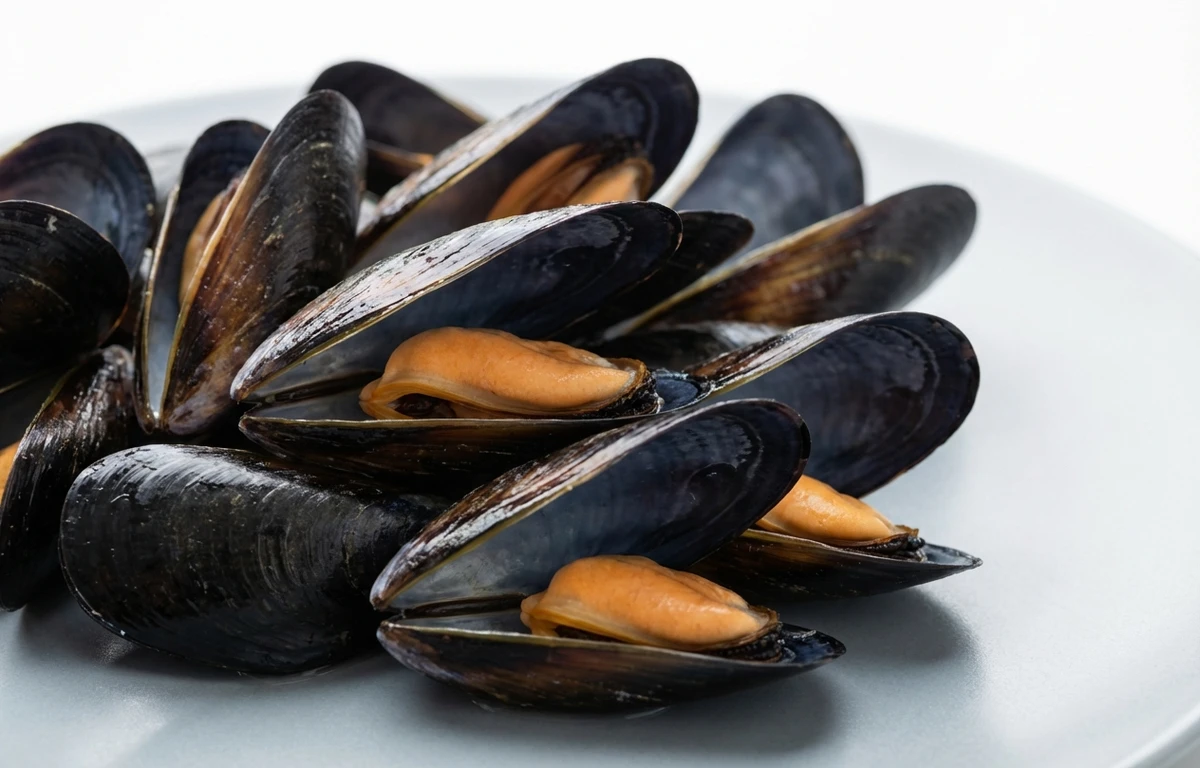
SERVING
CALORIES
86
PROTEIN
11.9g
CARBS
3.7g
FAT
2.2g
FIBER
0g
This ingredient is flagged as naturally gluten-free. Per 100 g, it provides 0.10 µg of vitamin K.
NUTRITION PROFILE · per 100 g
Everything in this ingredient.
MACRONUTRIENTS
Calories86kcal—
Protein11.9g24%
Carbohydrates3.7g1%
Fiber0g0%
Sugar0g0%
Total fat2.2g3%
Saturated fat0.40g2%
Trans fat0g—
Cholesterol28mg9%
Water80.6g—
MINERALS
Sodium286mg12%
Potassium268mg6%
Calcium26mg2%
Iron4.0mg22%
Magnesium34mg8%
Phosphorus197mg16%
Zinc1.6mg15%
Copper0.09mg10%
Manganese3.4mg148%
Selenium44.8µg81%
VITAMINS
Vitamin A48µg5%
Vitamin C8.0mg9%
Vitamin D0µg0%
Vitamin E0.55mg4%
Vitamin K0.10µg0%
Thiamin (B1)0.16mg13%
Riboflavin (B2)0.21mg16%
Niacin (B3)1.6mg10%
Pantothenic acid (B5)0.50mg10%
Vitamin B60.05mg3%
Folate (B9)42µg11%
Vitamin B1212µg500%
%DV based on a 2,000 cal diet. Source: USDA FoodData Central. A dash in the %DV column means there’s no established Daily Value for that nutrient.
MEASUREMENT CONVERSIONS
How much is what.
1 cup150g
1 oz28.4g
1 lb453.6g
1 piece10g
HEALTH BENEFITS
Why eat it.
- ✓Extremely high in Vitamin B12 for nerve function
- ✓Excellent source of Omega-3 fatty acids for heart health
- ✓Low-calorie source of high-quality protein
COOKING TIPS
In the kitchen.
- 1Discard any mussels with cracked shells or those that don't close when tapped
- 2Remove the 'beard' (byssal threads) by pulling it toward the hinge of the shell
- 3Discard any mussels that remain tightly closed after cooking
STORAGE
Keep it fresh.
- Store live mussels in a bowl covered with a damp cloth in the fridge
- Never store in an airtight container or submerged in fresh water as they will die
- Consume within 1 to 2 days of purchase for maximum freshness
FAQ
Frequently asked questions.
How can I tell if mussels are fresh?
Fresh mussels should have tightly closed shells and smell like the fresh sea. If a shell is open, tap it; if it doesn't close, the mussel is dead and should be discarded.
Can I freeze mussels?
Yes, you can freeze cooked mussel meat in its juice for up to 3 months. Freezing live mussels in the shell is not recommended as it kills them and affects texture.
What is the best way to clean mussels?
Scrub the shells under cold running water with a stiff brush to remove grit and pull off the hairy 'beard' sticking out from the shell.
What are good substitutes for mussels?
Clams, cockles, or even small scallops can be used as substitutes in most recipes like pasta or seafood stews.
Are mussels high in mercury?
No, mussels are filter feeders and are generally very low in mercury compared to larger predatory fish.
How long do they take to cook?
Mussels cook very quickly, usually taking 5 to 7 minutes to steam open over medium-high heat.
What is the 'beard' on a mussel?
The beard, or byssus, is a clump of fibers the mussel uses to attach itself to rocks. It is edible but tough and usually removed for better texture.
Are mussels sustainable?
Yes, farmed mussels are considered one of the most sustainable seafood options as they require no feed and actually clean the water they live in.
RECIPES
Cook with mussels.
10 recipes · sorted by what’s quick