
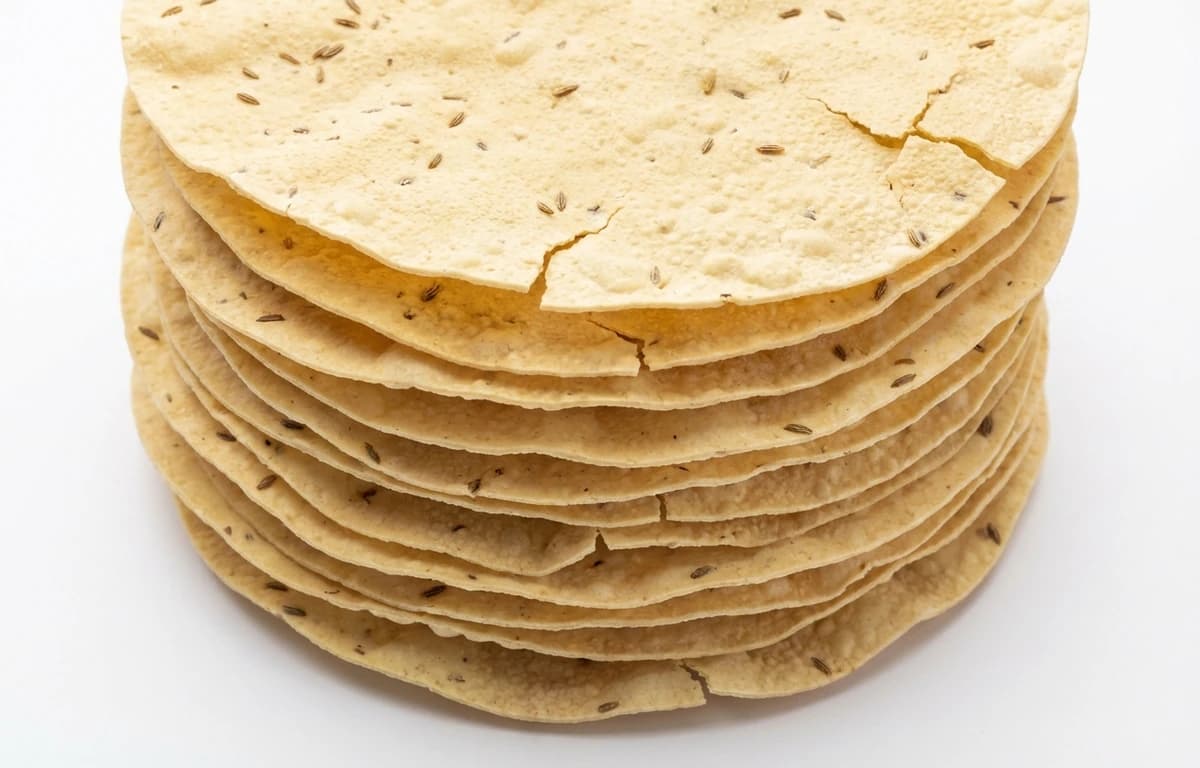
papadum
Also known as: papad, pappadum, lentil cracker, Indian crispbread
Loading...
Also known as: papad, pappadum, lentil cracker, Indian crispbread
Per 100g
Nutrition data source: USDA FoodData Central
Common measurement equivalents in grams

A crunchy, tangy, and spicy Indian appetizer made from roasted or fried papadums topped with a fresh mix of onions, tomatoes, and spices. The perfect quick snack to whet your appetite before a meal.

A delightful twist on the classic omelette! Fluffy eggs are mixed with crunchy, roasted papadum, onions, and spices for a savory breakfast or quick snack that's full of texture and flavor.
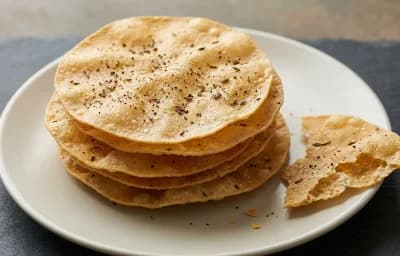
Crispy, crunchy lentil wafers that are a staple in Indian cuisine. This guide shows you how to perfectly cook store-bought papadums by frying, roasting, or microwaving them in just a few minutes.
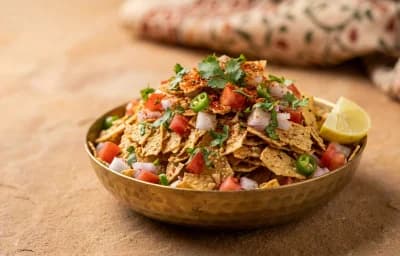
A crunchy, tangy, and savory Rajasthani snack made by crushing roasted papadums and tossing them with onions, tomatoes, and spices. This quick and easy dish is ready in just 15 minutes and is perfect as a side or a light snack.
Papadum can be a healthy snack, especially when roasted or microwaved, as it's low in calories and fat. It's a good source of protein and dietary fiber from lentil flour, aiding digestion and satiety. The spices used also offer digestive and antioxidant benefits.
Per 100g, papadum contains approximately 326 calories, 20.5g protein, 58g carbohydrates, and 1.2g fat. These values can vary slightly based on ingredients and preparation method, with deep-frying significantly increasing fat and calorie content.
When prepared by roasting or microwaving, papadum can be a low-calorie, low-fat snack option that provides protein and fiber, which can contribute to satiety. However, deep-fried papadums are high in calories and fat, making them less suitable for weight loss.
Traditionally, papadum is made from lentil or chickpea flour, making it naturally gluten-free. However, some commercial varieties may contain wheat flour or be processed in facilities with gluten, so always check the ingredient label if you have celiac disease or gluten sensitivity.
Yes, papadum is typically vegan as it's made from plant-based ingredients like lentil flour, spices, and salt. It does not contain any dairy, eggs, or other animal products.
Papadum can be cooked in several ways: dry roasting over an open flame until crisp, microwaving for 30-60 seconds until puffed, or deep-frying in hot oil for a few seconds until golden and crispy. Roasting or microwaving are healthier options.
Papadum has a thin, crispy texture and a savory, slightly spicy flavor, often with notes of cumin or black pepper. It's commonly served as an accompaniment to Indian meals, used as a scoop for curries, or enjoyed as a standalone snack with chutneys and pickles.
papadum is a versatile ingredient found in cuisines around the world. With 326 calories per 100g and 20.5 grams of protein, it's a nutritious addition to many dishes.
Explore more ingredients in the other category with complete nutrition information.
View all other →Uncooked papadums should be stored in an airtight container in a cool, dry place away from moisture to prevent them from becoming soft or brittle. Cooked papadums are best consumed immediately as they can quickly lose their crispness.
Uncooked papadums have a long shelf life, typically lasting for several months to a year when stored properly in an airtight container. Once cooked, papadums are best eaten within a few hours to maintain their crisp texture.
Papadum is primarily made from various lentil flours, such as urad dal (black gram), moong dal (green gram), or chickpea flour. These flours are mixed with water, salt, and spices like black pepper, cumin, or chili, then rolled thin and dried.