
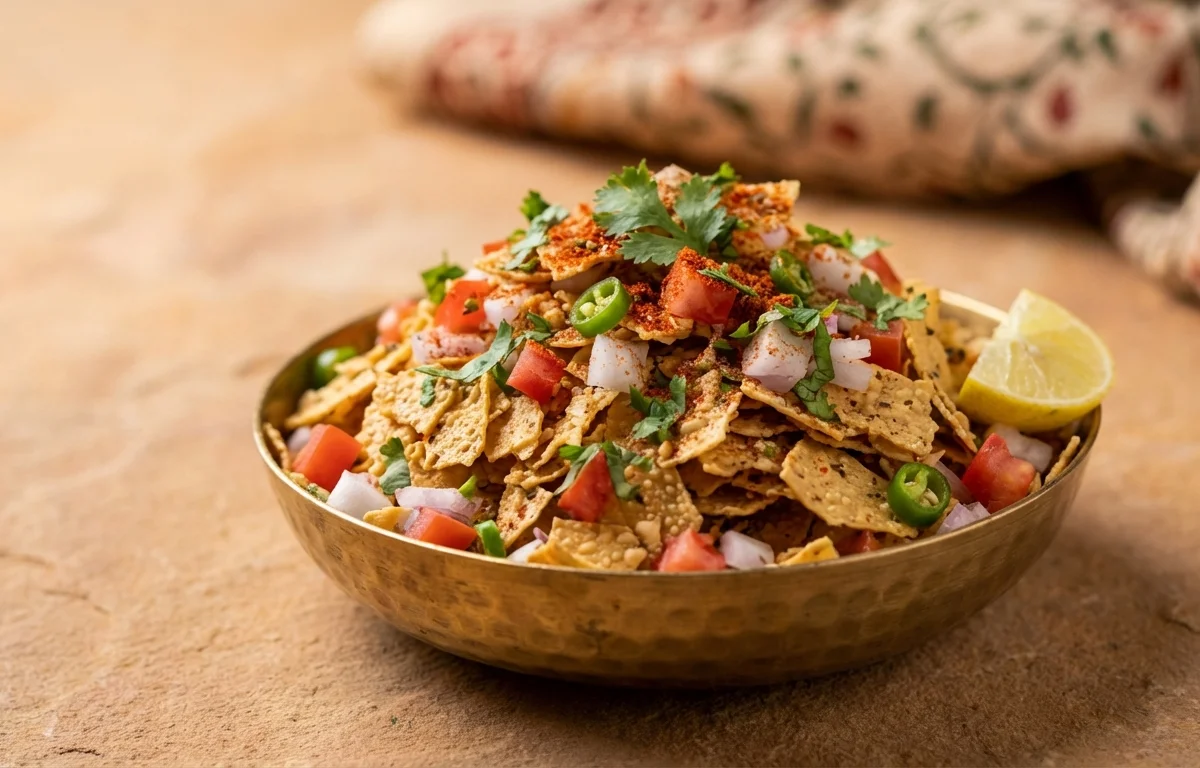
Papad ki Churi
A rustic Rajasthani side dish where roasted papads are crushed into a coarse crumble and tossed with ghee, spices, and fresh herbs. This quick, crunchy mix adds a delightful crisp texture and smoky flavor, making it the perfect companion to simple dal-rice or khichdi meals.
For 4 servings
- roast · ~2 min
Roast the papads until crisp.
Roast the papads directly over a medium flame using tongs, flipping frequently, or dry-roast them on a hot tawa. They should puff up, turn light brown, and become evenly crisp. This takes about 1-2 minutes per papad.
TIPKeep the papad constantly moving; it burns in seconds if left still over a flame. - prep · ~1 min
Crush the roasted papads into a coarse crumble.
Once cool enough to handle, break the roasted papads into a bowl and crush them with your hands or a rolling pin into coarse, uneven crumbs. Small bite-sized pieces and some finer crumbs create the best texture.
TIPDon't crush them into powder — the churi needs a mix of coarse bits for crunch. - mix · ~1 min
Toss with ghee and dry spices.
Add ghee to the crushed papad and toss well. Sprinkle red chili powder, roasted cumin powder, and a tiny pinch of salt. Mix everything gently with your fingertips or a spoon until the crumbs are evenly coated.
- mix · ~1 min
Add fresh onion, green chili, cilantro, and lemon juice.
Fold in the finely chopped onion, green chili, and coriander leaves. Squeeze fresh lemon juice over the top and give it a final gentle mix to combine everything without crushing the papad further.
TIPAdd the lemon juice and fresh ingredients right before serving, or the papad will lose its crunch. - serve
Serve immediately in small bowls.
Divide the papad ki churi into small individual katoris. It should be eaten right away while the papad is still crisp and crunchy.
TIPServe alongside a simple meal of khichdi, dal-rice, or kadhi-chawal for a classic Rajasthani touch.
What to keep in mind.
6 tips from the recipe — small details that make a real difference to the final dish.
- 1Roast papads over a medium flame and keep them moving constantly to avoid burning.
- 2Let the roasted papads cool completely before crushing to ensure maximum crunch.
- 3Crush the papads into coarse crumbs with a mix of bite-sized pieces and finer bits for texture.
- 4Add lemon juice and fresh ingredients only at serving time to prevent sogginess.
- 5Adjust salt sparingly since papads are already salty; taste before adding more.
- 6Use roasted cumin powder for a deeper, smokier flavor in the spice mix.
Adapt it for your goals.
No-onion no-garlic (jain)
Omit the onion and skip the green chili if avoiding root vegetables; replace with extra coriander leaves and a pinch of asafoetida (hing) for a Jain-friendly version that still bursts with freshness.
spicy masala churiSpicy masala churi
Add 1/4 teaspoon chaat masala, a pinch of black salt, and extra green chili for a tangy, spicy chaat-style twist that works well as a standalone snack.
nutty crunchNutty crunch
Mix in 2 tablespoons of crushed roasted peanuts or cashews along with the spices for extra protein, texture, and a nutty richness that complements the ghee.
herb and garlicHerb and garlic
Add 1/2 teaspoon of finely minced garlic (briefly sautéed in the ghee) and a tablespoon of chopped mint leaves for a fresh, pungent variation.
Why this is on our healthy list.
High in Plant Protein
Urad dal papads are made from black gram flour, which is naturally rich in plant-based protein and dietary fiber, supporting muscle maintenance and digestive health.
Digestive Support from Spices
Roasted cumin powder and asafoetida (if used) are traditional digestive aids; cumin helps stimulate enzyme secretion and reduce bloating.
Low-Fat Option with Ghee
Using just 2 teaspoons of ghee for the entire dish keeps the fat content moderate while providing conjugated linoleic acid (CLA) and fat-soluble vitamins from clarified butter.
Antioxidants from Fresh Herbs
Coriander leaves and lemon juice supply vitamin C and antioxidants that help reduce oxidative stress and boost immunity.
Frequently asked questions
No, this dish is best made fresh. Once the papad crumbs mix with onion and lemon juice, they soften within 10-15 minutes. Prep the papads and chop the toppings separately, then combine just before serving.


