Other10 recipes
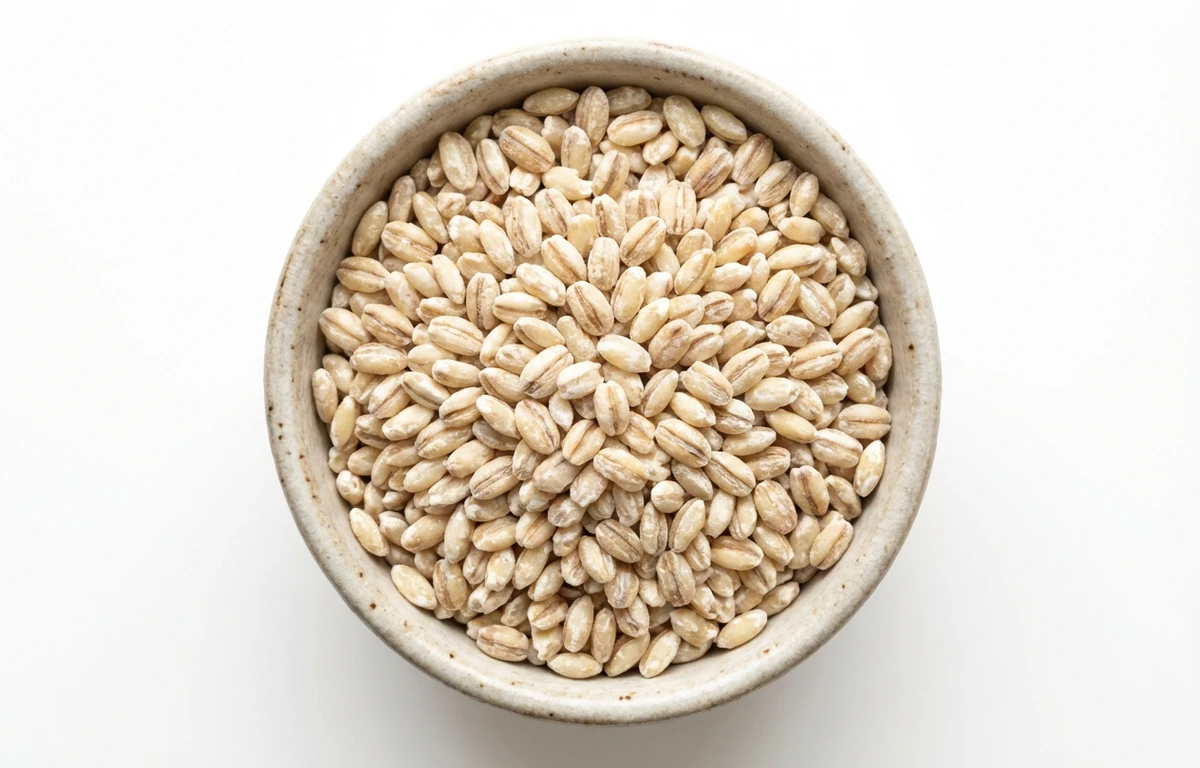
pearl barley.
VegetarianVeganGluten-freeDairy-freeNut-freePeanut-freeSoy-freeEgg-freeShellfish-freeHoney-freeAlcohol-free
ALSO KNOWN AS
pearled jau
SERVING
CALORIES
352
PROTEIN
9.9g
CARBS
77.7g
FAT
1.2g
FIBER
15.6g
NUTRITION PROFILE · per 100 g
Everything in this ingredient.
MACRONUTRIENTS
Calories352kcal—
Protein9.9g20%
Carbohydrates77.7g28%
Fiber15.6g56%
Sugar0.80g2%
Total fat1.2g2%
Saturated fat0.24g1%
Trans fat0g—
Cholesterol0mg0%
Water10.1g—
MINERALS
Sodium9.0mg0%
Potassium280mg6%
Calcium33mg3%
Iron2.5mg14%
Magnesium79mg19%
Phosphorus221mg18%
Zinc2.1mg19%
Copper0.40mg44%
Manganese1.3mg57%
Selenium37.7µg69%
VITAMINS
Vitamin A1.0µg0%
Vitamin C0mg0%
Vitamin D0µg0%
Vitamin E0.02mg0%
Vitamin K2.2µg2%
Thiamin (B1)0.19mg16%
Riboflavin (B2)0.11mg8%
Niacin (B3)4.6mg29%
Pantothenic acid (B5)0.28mg6%
Vitamin B60.26mg15%
Folate (B9)23µg6%
Vitamin B120µg0%
%DV based on a 2,000 cal diet. Source: USDA FoodData Central. A dash in the %DV column means there’s no established Daily Value for that nutrient.
MEASUREMENT CONVERSIONS
How much is what.
1 cup200g
1 tablespoon12g
1 teaspoon4g
1 oz28.4g
1 lb453.6g
1 liter800g
HEALTH BENEFITS
Why eat it.
- ✓High in beta-glucan fiber which helps lower cholesterol
- ✓Supports digestive health and regular bowel movements
- ✓Low glycemic index helps in managing blood sugar levels
- ✓Rich in selenium which supports skin elasticity and immune function
- ✓Contains antioxidants that help reduce inflammation
COOKING TIPS
In the kitchen.
- 1Rinse thoroughly under cold water before cooking to remove dust and excess starch
- 2Use a 1:3 ratio of barley to liquid (water or broth) for a tender texture
- 3Toast the dry grains in a pan for a few minutes before adding liquid to enhance the nutty flavor
STORAGE
Keep it fresh.
- Store in an airtight container in a cool, dry, and dark place
- Can be kept in the pantry for up to 12 months
- For extended shelf life, store in the refrigerator or freezer
FAQ
Frequently asked questions.
How long does pearl barley take to cook?
Pearl barley typically takes 30 to 45 minutes to cook when simmered in liquid.
Is pearl barley gluten-free?
No, barley is a gluten-containing grain and is not suitable for those with celiac disease or gluten sensitivity.
What is the difference between pearl barley and hulled barley?
Hulled barley is a whole grain with only the outermost husk removed, while pearl barley has been polished to remove the bran layer, making it cook faster but with slightly less fiber.
Can I freeze cooked pearl barley?
Yes, cooked pearl barley freezes very well. Store it in airtight bags or containers for up to 3 months.
What are the best substitutes for pearl barley?
Farro, spelt, or brown rice are the best substitutes in terms of texture and cooking time.
Does pearl barley need to be soaked before cooking?
Soaking is not strictly necessary for pearl barley, but it can reduce the cooking time by about 10-15 minutes.
How do I know if pearl barley has gone bad?
Check for an off-smell (rancidity), signs of mold, or the presence of pantry pests like weevils.
Is pearl barley good for weight loss?
Yes, its high fiber content promotes satiety, helping you feel full for longer periods.
RECIPES
Cook with pearl barley.
10 recipes · sorted by what’s quick