
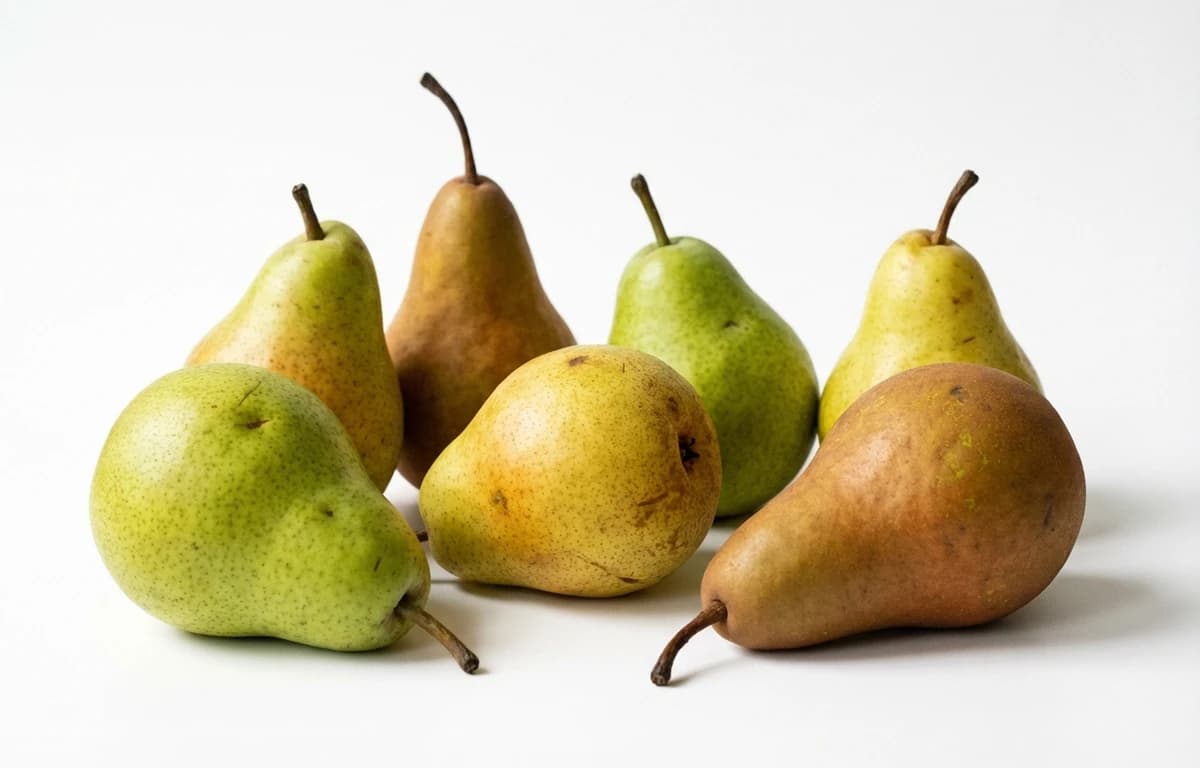
pears
Also known as: Nashpati
Loading...
Also known as: Nashpati
Per 100g
Nutrition data source: USDA FoodData Central
Common measurement equivalents in grams
A quick, refreshing, and healthy snack combining crisp pears, creamy yogurt, and warm cinnamon. Ready in just 5 minutes, it's perfect for a light breakfast or an afternoon pick-me-up.
A thick, creamy, and vibrant smoothie bowl that's as delicious as it is beautiful. Sweet pears and tangy mixed berries are blended to perfection with Greek yogurt for a protein-packed, refreshing breakfast that will keep you energized all morning.
Start your day right with three fluffy, wholesome pancakes made from a blend of whole wheat and all-purpose flour. Served with fresh, sweet pear slices and a side of creamy low-fat yogurt, this is a balanced and satisfying breakfast plate.
A simple, refreshing bowl of creamy Greek yogurt topped with sweet, crisp pear and a warm hint of cinnamon. This quick and healthy breakfast or snack is ready in minutes and packed with protein.
A refreshingly simple and heart-healthy snack. Creamy non-fat Greek yogurt is topped with sweet, crisp pear slices and a sprinkle of crunchy walnuts. Ready in minutes, it's a perfect protein-packed boost for any time of day.
Yes, pears are very healthy. They are rich in dietary fiber, especially pectin, which aids digestion and gut health. Pears also provide antioxidants like Vitamin C and flavonoids, contributing to reduced inflammation and cell protection. Their high water content helps with hydration.
A medium-sized pear (around 178g) contains approximately 5-6 grams of dietary fiber, which is a significant portion of the daily recommended intake. This fiber, particularly pectin, supports digestive health, promotes regular bowel movements, and can help manage blood sugar levels.
Yes, pears can be beneficial for weight loss. They are relatively low in calories (57 calories per 100g) and high in water and fiber, which helps you feel full and satisfied, potentially reducing overall calorie intake. Their natural sweetness can also help curb sugar cravings.
Pears can be a good choice for diabetics in moderation. While they contain natural sugars (15.23g carbs per 100g), their high fiber content helps slow sugar absorption, preventing rapid spikes in blood glucose. Always monitor portion sizes and consult with a healthcare professional.
Yes, pears are naturally gluten-free and vegan. As a whole fruit, they contain no gluten-containing grains or animal products, making them suitable for individuals following these dietary restrictions.
Pears ripen from the inside out. To check for ripeness, gently press near the stem; if it yields slightly, the pear is ready. Pears are best eaten fresh and raw, either whole or sliced, but can also be added to salads or desserts.
pears is a versatile ingredient found in cuisines around the world. With 57 calories per 100g and 0.36 grams of protein, it's a nutritious addition to many dishes.
Explore more ingredients in the other category with complete nutrition information.
View all other →Yes, pears are excellent for cooking. They can be baked, poached, grilled, or roasted. Common culinary uses include pear tarts, crumbles, sauces, chutneys, and even savory dishes with cheese or pork.
Unripe pears can be stored at room temperature to ripen. Once ripe, or if you buy them ripe, store pears in the refrigerator's crisper drawer to slow down the ripening process and extend their freshness for several days to a week.
No, pears do not need to be peeled. The skin is edible and contains a significant amount of fiber and antioxidants. Washing the pear thoroughly before eating is recommended if you choose to eat the skin.
Pears are a good source of antioxidants, primarily Vitamin C and various flavonoids. Red varieties also contain anthocyanins. These compounds help protect the body's cells from damage caused by free radicals, reducing oxidative stress and inflammation.