Grain10 recipes
quinoa.
VegetarianVeganGluten-freeDairy-freeNut-freePeanut-freeSoy-freeEgg-freeShellfish-freeHoney-freeAlcohol-freeWhole grain
ALSO KNOWN AS
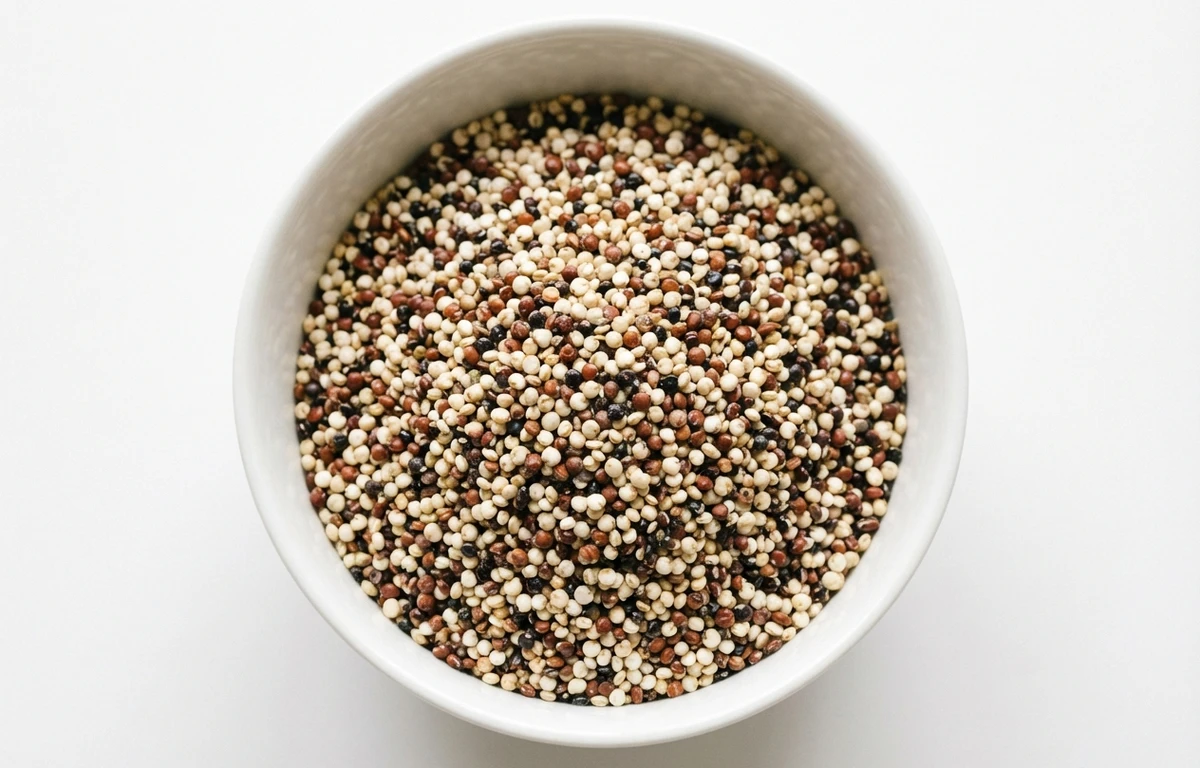
keenwahkinwaquinoa rawquinoauncooked quinoa
SERVING
CALORIES
328
PROTEIN
13.1g
CARBS
53.6g
FAT
5.5g
FIBER
14.7g
NUTRITION PROFILE · per 100 g
Everything in this ingredient.
MACRONUTRIENTS
Calories328kcal—
Protein13.1g26%
Carbohydrates53.6g20%
Fiber14.7g52%
Sugar1.4g3%
Total fat5.5g7%
Saturated fat0.57g3%
Trans fat0g—
Cholesterol0mg0%
Water10.4g—
MINERALS
Sodium4.5mg0%
Potassium474mg10%
Calcium198mg15%
Iron7.5mg42%
Magnesium119mg28%
Phosphorus212mg17%
Zinc3.3mg30%
Copper0.48mg53%
Manganese1.8mg77%
Selenium7.8µg14%
VITAMINS
Vitamin A5.1µg1%
Vitamin C0mg0%
Vitamin D0µg0%
Vitamin E2.1mg14%
Vitamin K2.0µg2%
Thiamin (B1)0.83mg69%
Riboflavin (B2)0.22mg17%
Niacin (B3)1.7mg11%
Pantothenic acid (B5)0.62mg12%
Vitamin B60.21mg12%
Biotin (B7)0.62µg2%
Folate (B9)173µg43%
Vitamin B120µg0%
%DV based on a 2,000 cal diet. Source: USDA FoodData Central. A dash in the %DV column means there’s no established Daily Value for that nutrient.
MEASUREMENT CONVERSIONS
How much is what.
1 cup170g
1 tablespoon10.6g
1 teaspoon3.5g
1 ml0.7g
1 liter708.3g
HEALTH BENEFITS
Why eat it.
- ✓Provides complete protein, containing all nine essential amino acids, making it an excellent plant-based protein source.
- ✓High in dietary fiber, which supports digestive health, helps regulate blood sugar levels, and promotes satiety.
- ✓Rich in antioxidants and anti-inflammatory compounds like quercetin and kaempferol, which help combat oxidative stress.
- ✓A good source of important minerals such as magnesium, iron, manganese, and phosphorus, which are vital for bone health and energy metabolism.
COOKING TIPS
In the kitchen.
- 1Rinse quinoa thoroughly under cold water before cooking to remove the natural saponin coating, which can impart a bitter or soapy taste.
- 2Use a standard ratio of 1 part quinoa to 2 parts liquid (water or broth). Bring to a boil, then reduce heat, cover, and simmer for about 15 minutes until the liquid is absorbed.
- 3For enhanced flavor, toast the dry, rinsed quinoa in a saucepan for a few minutes until fragrant before adding the cooking liquid.
- 4After cooking, let the quinoa stand covered for 5 minutes, then fluff with a fork to achieve a light, separated texture.
STORAGE
Keep it fresh.
- Store uncooked quinoa in an airtight container in a cool, dark place like a pantry, where it can last for up to 2-3 years.
- Keep cooked quinoa in a sealed container in the refrigerator for up to one week.
FAQ
Frequently asked questions.
Is quinoa healthy and what are its main benefits?
Yes, quinoa is highly nutritious, often called a "superfood." It's a complete protein, providing all nine essential amino acids, which is rare for a plant food. It's also rich in fiber, antioxidants, and essential minerals like magnesium, iron, and manganese, supporting overall health, digestion, and energy.
What is the nutritional content of quinoa?
Per 100g (dry weight), quinoa contains approximately 328.39 calories, 13.11g of protein, 53.65g of carbohydrates, and 5.5g of fat. It is also a good source of dietary fiber, contributing to digestive health and satiety.
Is quinoa good for weight loss?
Yes, quinoa can be beneficial for weight loss. Its high protein and fiber content promote satiety, helping you feel full longer and potentially reducing overall calorie intake. It also has a relatively low glycemic index, which can help manage blood sugar levels and prevent cravings.
Is quinoa gluten-free?
Yes, quinoa is naturally gluten-free. It is a pseudocereal, not a true grain, and is safe for individuals with celiac disease or gluten sensitivity. However, always check labels for certified gluten-free products to avoid potential cross-contamination during processing.
Is quinoa vegan?
Yes, quinoa is 100% vegan. It is a plant-based seed and contains no animal products or by-products. It serves as an excellent complete protein source for those following a vegan diet.
Is quinoa keto-friendly or low-carb?
No, quinoa is generally not considered keto-friendly or low-carb due to its relatively high carbohydrate content. With approximately 53.65g of carbs per 100g (dry weight), it typically exceeds the daily carb limits for a ketogenic diet. Individuals on low-carb diets usually opt for alternatives like cauliflower rice.
How do you cook quinoa?
To cook quinoa, combine one part rinsed quinoa with two parts water or broth in a pot. Bring to a boil, then reduce heat to low, cover, and simmer for 15 minutes, or until all liquid is absorbed and the quinoa is fluffy. Let it sit for 5 minutes off the heat before fluffing with a fork.
Do I need to rinse quinoa before cooking?
Yes, it is highly recommended to rinse quinoa thoroughly before cooking. Quinoa seeds are naturally coated with saponins, a bitter, soap-like compound that can give cooked quinoa an unpleasant taste. Rinsing under cold running water removes these saponins.
How should I store quinoa?
Uncooked quinoa should be stored in an airtight container in a cool, dark, and dry place, where it can last for up to 2-3 years. Cooked quinoa can be stored in an airtight container in the refrigerator for 3-5 days or frozen for up to 2 months.
What does quinoa taste like?
Quinoa has a mild, slightly nutty flavor with a somewhat earthy undertone. When cooked, it has a fluffy yet slightly chewy texture. The taste is generally neutral enough to absorb flavors from other ingredients, making it versatile for both savory and sweet dishes.
RECIPES
Cook with quinoa.
10 recipes · sorted by what’s quick