Spice10 recipes
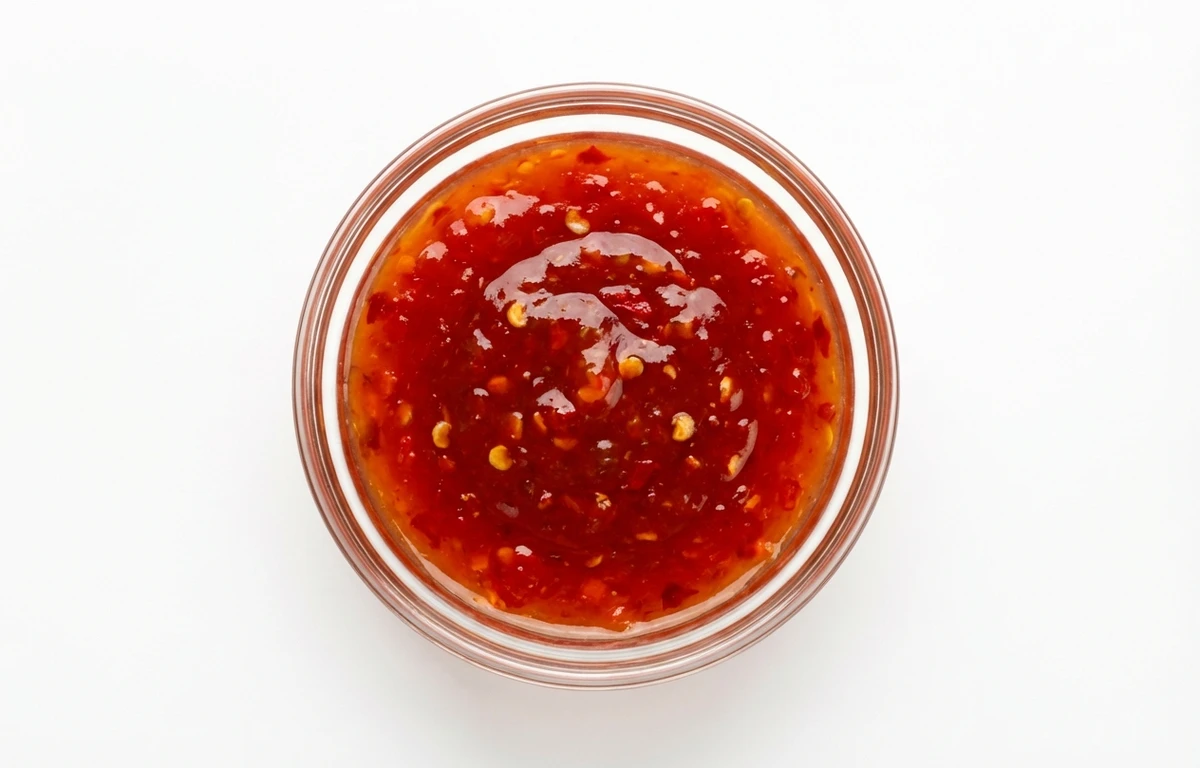
red chili sauce.
VegetarianVeganGluten-freeDairy-freeNut-freePeanut-freeSoy-freeEgg-freeShellfish-freeHoney-freeAlcohol-freeFermented
ALSO KNOWN AS
lal mirch saucepepper saucechili saucehot saucechilli sauceRed Chilli Sauce
SERVING
CALORIES
95
PROTEIN
1.8g
CARBS
21.5g
FAT
0.60g
FIBER
1.5g
NUTRITION PROFILE · per 100 g
Everything in this ingredient.
MACRONUTRIENTS
Calories95kcal—
Protein1.8g4%
Carbohydrates21.5g8%
Fiber1.5g5%
Sugar18.2g36%
Total fat0.60g1%
Saturated fat0.10g1%
Trans fat0g—
Cholesterol0mg0%
Water70.5g—
MINERALS
Sodium2850mg124%
Potassium240mg5%
Calcium25mg2%
Iron1.2mg7%
Magnesium15mg4%
Phosphorus35mg3%
Zinc0.30mg3%
Copper0.10mg11%
Manganese0.20mg9%
Selenium0.50µg1%
VITAMINS
Vitamin A180µg20%
Vitamin C35mg39%
Vitamin D0µg0%
Vitamin E0.80mg5%
Vitamin K4.5µg4%
Thiamin (B1)0.05mg4%
Riboflavin (B2)0.06mg5%
Niacin (B3)1.2mg8%
Pantothenic acid (B5)0.20mg4%
Vitamin B60.30mg18%
Folate (B9)8.0µg2%
Vitamin B120µg0%
%DV based on a 2,000 cal diet. Source: USDA FoodData Central. A dash in the %DV column means there’s no established Daily Value for that nutrient.
MEASUREMENT CONVERSIONS
How much is what.
1 cup270g
1 tablespoon16.8g
1 teaspoon5.6g
1 oz28.4g
1 lb453.6g
1 ml1.1g
1 liter1120g
HEALTH BENEFITS
Why eat it.
- ✓Contains capsaicin which may boost metabolism
- ✓Rich in Vitamin C to support immune function
- ✓May help in temporary appetite suppression
- ✓Capsaicin has potential anti-inflammatory properties
- ✓Can help clear nasal congestion due to heat
COOKING TIPS
In the kitchen.
- 1Add towards the end of cooking to preserve the vibrant red color
- 2Mix with mayonnaise or yogurt to create a creamy spicy dip
- 3Use as a marinade for proteins to infuse heat and tanginess
STORAGE
Keep it fresh.
- Refrigerate after opening to maintain flavor and color
- Store in a cool, dark place away from direct sunlight before opening
- Ensure the cap is tightly sealed to prevent oxidation and drying
FAQ
Frequently asked questions.
How long does red chili sauce last after opening?
When refrigerated, most commercial red chili sauces last for 6 to 12 months. Check for changes in smell or mold before use.
Can I freeze red chili sauce?
Yes, you can freeze it in ice cube trays for portioning, though the texture may become slightly watery upon thawing.
What is a good substitute for red chili sauce?
Sriracha, Harissa, or a paste made from rehydrated dried red chilies and vinegar are excellent alternatives.
Is red chili sauce gluten-free?
Most brands are naturally gluten-free, but some use wheat-based thickeners, so always check the label for 'distilled vinegar' or 'starch' sources.
How can I reduce the spiciness if I added too much?
Add a sweetener like sugar or honey, or incorporate a dairy product like cream or yogurt to neutralize the capsaicin.
What should I look for when buying red chili sauce?
Look for a vibrant red color and a short ingredient list. Avoid sauces with excessive artificial colors or preservatives if possible.
Is red chili sauce high in sodium?
Yes, commercial red chili sauces are typically very high in sodium, often containing over 2000mg per 100g.
Does red chili sauce contain garlic?
Most standard commercial varieties include garlic and sometimes onion for depth of flavor.
Is it suitable for a Jain diet?
Standard commercial red chili sauce is usually not Jain-compliant as it typically contains garlic.
RECIPES
Cook with red chili sauce.
10 recipes · sorted by what’s quick