Pork Tamales
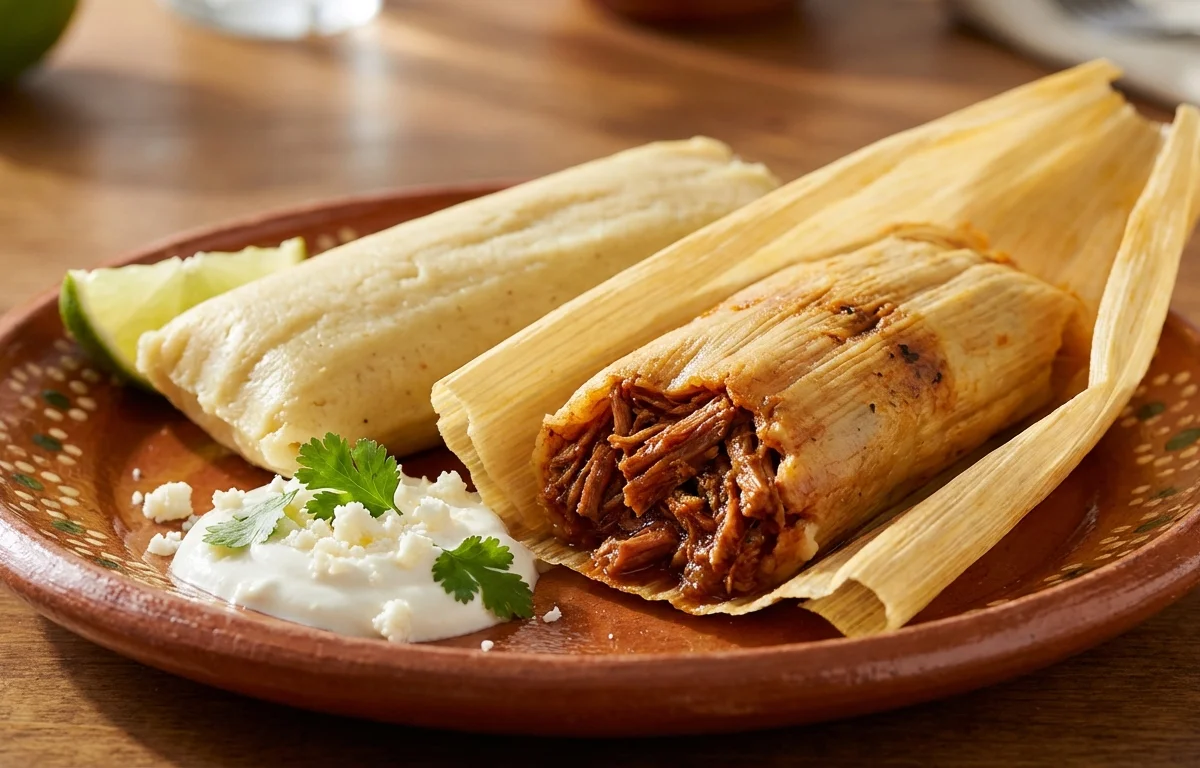
Tender, slow-cooked pork shoulder seasoned with a rich red chile sauce, wrapped in soft masa dough and steamed inside corn husks until perfectly set. These traditional Mexican tamales are a labor of love that fills the kitchen with an earthy, smoky aroma, perfect for holidays and family gatherings.
For 12 servings
- rest · ~30 min
Soak the corn husks.
Place dried corn husks in a large bowl and cover with warm water. Weigh them down with a plate and soak until pliable, about 30 minutes.
- boil · ~90 min
Cook the pork.
1.Place pork shoulder chunks in a large pot with onion, 2 garlic cloves, and a pinch of salt.2.Add 4 cups water and bring to a boil over high heat.3.Reduce heat to low, cover, and simmer until meat is fork-tender, about 1 hour 30 minutes.4.Remove pork, reserving the cooking liquid. Shred the meat with two forks when cool enough to handle.TIPKeep the cooking liquid — it adds depth to the sauce. - boil · ~10 min
Rehydrate the chiles.
1.Bring a small pot of water to a simmer.2.Add stemmed and seeded guajillo and ancho chiles and simmer for 10 minutes until softened.3.Drain and transfer chiles to a blender.TIPDon't discard the chile soaking water completely — use a splash to thin the blended sauce if needed. - mix · ~2 min
Make the red chile sauce.
1.To the blender with chiles, add remaining 2 garlic cloves, cumin seeds, oregano, 1 pinch salt, black pepper, and 1 cup of the reserved pork cooking liquid.2.Blend until completely smooth, about 2 minutes.3.Taste and adjust salt if needed — it should be vibrant but not salty. - saute · ~10 min
Combine pork and sauce.
1.Heat oil in a large pan over medium heat.2.Pour in the blended chile sauce — it will sizzle and darken.3.Add shredded pork and stir to coat evenly.4.Cook for 10 minutes, stirring occasionally, until flavors meld and sauce thickens slightly.TIPThe filling should be moist but not runny. If too thick, add a splash of cooking liquid. - mix · ~10 min
Prepare the masa dough.
1.In a stand mixer or large bowl, beat lard with salt and baking powder until light and fluffy, about 3 minutes.2.Add masa harina in two batches, alternating with warm water.3.Beat until the dough is smooth and spreadable — it should feel like thick hummus.4.Test for readiness: drop a small ball of masa into cold water; it should float.TIPWhip the lard until aerated — this gives the tamales a light, tender texture. - assemble
Spread masa on corn husks.
Drain a corn husk and pat dry. Hold it in your palm, smooth side up. Spread about 3 tablespoons of masa dough onto the upper two-thirds of the husk, leaving a 1-inch border on the sides and bottom. Aim for an even layer about ¼-inch thick.
- assemble
Add filling and fold.
1.Spoon about 2 tablespoons of the pork filling down the center of the masa.2.Fold one long side of the husk over the filling, then the other side, overlapping them.3.Fold the empty bottom flap up toward the seam.4.Set tamales upright, folded side down, in the steamer basket.TIPDon't overfill — stuffing strains the masa and leaks during steaming. - steam · ~60 min
Steam the tamales.
1.Arrange tamales upright in the steamer basket, open ends facing up.2.Add water to the steamer pot below, cover, and bring to a boil.3.Reduce heat to medium, cover with a damp towel and then the lid, and steam for 60 minutes.4.Check occasionally and add boiling water as needed to prevent drying out.TIPTamales are done when the masa pulls away easily from the husk. - rest · ~10 min
Rest before serving.
Remove tamales from heat and let them rest, covered, for 10 minutes. This allows the masa to firm up.
- serve
Serve warm with your favorite accompaniments.
Unwrap the husks or let guests peel their own. Serve as is or with crema, salsa verde, or pickled jalapeños on the side.
What to keep in mind.
7 tips from the recipe — small details that make a real difference to the final dish.
- 1Whip the lard until light and fluffy for a tender, airy masa texture.
- 2Test masa readiness by dropping a small ball into cold water; if it floats, it's ready.
- 3Reserve the pork cooking liquid to add depth to both the chile sauce and masa if needed.
- 4Don't overfill tamales — about 2 tablespoons of filling prevents leaks during steaming.
- 5Place a damp towel under the steamer lid to catch condensation and prevent soggy tamales.
- 6Tamales are done when the masa easily pulls away from the husk without sticking.
- 7Let tamales rest 10 minutes after steaming so the masa sets and holds its shape.
Adapt it for your goals.
Chicken Tamales
Substitute boneless chicken thighs for pork shoulder; simmer with onion and garlic until tender, then shred and mix with the red chile sauce for a leaner, quicker-cooking filling.
Vegetarian TamalesVegetarian Tamales
Replace pork with a mixture of sautéed mushrooms, zucchini, and black beans seasoned with the red chile sauce for a hearty, plant-based version.
Green Chile & Cheese TamalesGreen Chile & Cheese Tamales
Swap the red chile sauce for roasted poblano or Hatch green chiles mixed with shredded Monterey Jack cheese for a mild, creamy filling.
Sweet TamalesSweet Tamales
Add 1/2 cup sugar and 1 teaspoon cinnamon to the masa, and fill with sweetened pineapple or strawberry jam for a dessert-style tamale.
Why this is on our healthy list.
High in Protein
Pork shoulder provides a rich source of complete protein, essential for muscle repair and satiety.
Rich in Iron from Chiles
Guajillo and ancho chiles are naturally high in iron, which supports healthy blood oxygen transport.
Contains Antioxidants
Dried chiles are packed with capsaicin and vitamin C, offering antioxidant properties that help combat inflammation.
Gluten-Free Base
Masa harina is made from corn, making these tamales naturally gluten-free when prepared without cross-contamination.
Frequently asked questions
The masa likely wasn't whipped enough—be sure to beat the lard until fluffy and test a small ball in water to check if it floats before assembling.