nut2 recipes
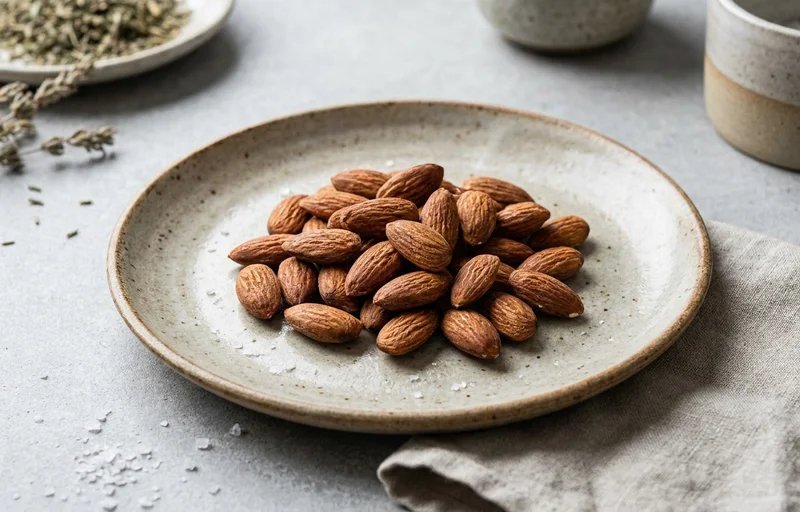
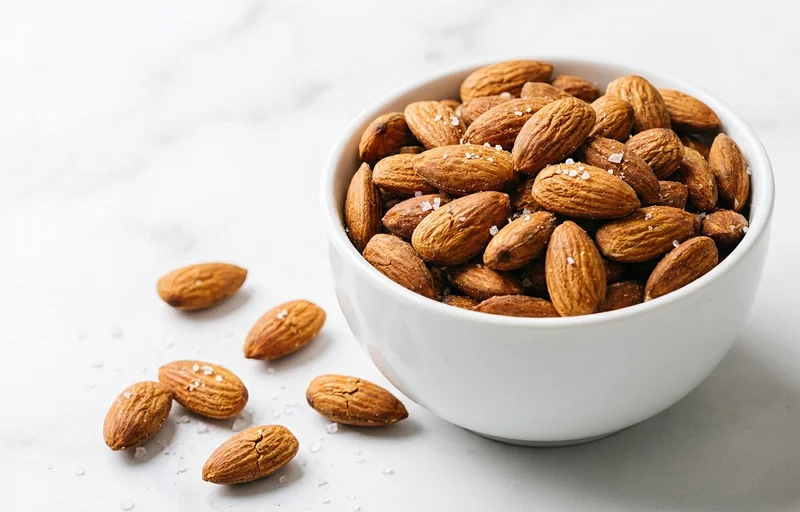
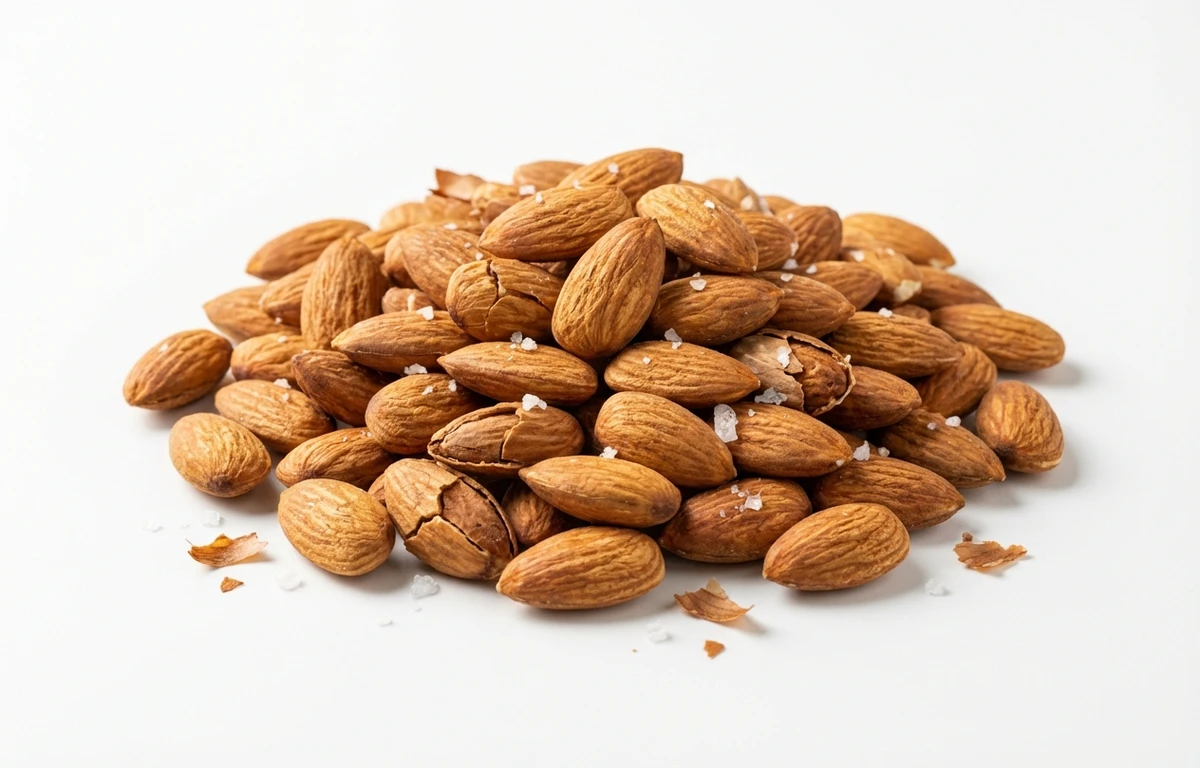
roasted almonds.
VegetarianVeganGluten-freeDairy-freeNut-freePeanut-freeSoy-freeEgg-freeShellfish-freeHoney-freeAlcohol-free
ALSO KNOWN AS
bhuna badamroasted badamdry roasted almondstoasted almondsroasted almond nutstoasted badam
SERVING
CALORIES
598
PROTEIN
21g
CARBS
21.5g
FAT
52.5g
FIBER
10.9g
NUTRITION PROFILE · per 100 g
Everything in this ingredient.
MACRONUTRIENTS
Calories598kcal—
Protein21g42%
Carbohydrates21.5g8%
Fiber10.9g39%
Sugar4.9g10%
Total fat52.5g67%
Saturated fat4.0g20%
Trans fat0g—
Cholesterol0mg0%
Water2.4g—
MINERALS
Sodium1.0mg0%
Potassium705mg15%
Calcium269mg21%
Iron3.7mg21%
Magnesium279mg66%
Phosphorus484mg39%
Zinc3.3mg30%
Copper1.0mg111%
Manganese2.3mg100%
Selenium2.5µg5%
VITAMINS
Vitamin A0µg0%
Vitamin C0mg0%
Vitamin D0µg0%
Vitamin E26.2mg175%
Vitamin K0µg0%
Thiamin (B1)0.20mg17%
Riboflavin (B2)1.1mg85%
Niacin (B3)3.6mg23%
Pantothenic acid (B5)0.50mg10%
Vitamin B60.10mg6%
Folate (B9)50µg13%
Vitamin B120µg0%
%DV based on a 2,000 cal diet. Source: USDA FoodData Central. A dash in the %DV column means there’s no established Daily Value for that nutrient.
MEASUREMENT CONVERSIONS
How much is what.
1 cup144g
1 tablespoon9g
1 teaspoon3g
1 oz28.4g
1 lb453.6g
1 ml0.6g
1 liter600g
1 piece1.2g
HEALTH BENEFITS
Why eat it.
- ✓Excellent source of Vitamin E for skin and cell protection
- ✓High in magnesium which helps regulate blood pressure
- ✓Rich in monounsaturated fats for heart health
- ✓Provides plant-based protein for muscle maintenance
- ✓High fiber content supports digestive health and satiety
COOKING TIPS
In the kitchen.
- 1Add to salads or oatmeal for a crunchy texture and nutty flavor
- 2Crush and use as a gluten-free breading for chicken or fish
- 3Blend into a coarse paste to thicken sauces or make almond butter
STORAGE
Keep it fresh.
- Store in an airtight container to prevent the fats from going rancid
- Keep in a cool, dark, and dry place for up to 6 months
- Refrigerate or freeze in a sealed bag to extend shelf life up to 1 year
FAQ
Frequently asked questions.
How long do roasted almonds last?
Roasted almonds last about 3-6 months in a pantry if kept in an airtight container, or up to a year in the refrigerator.
Are roasted almonds as healthy as raw ones?
Yes, they are very similar nutritionally, though roasting can slightly reduce the content of some heat-sensitive antioxidants.
How can I tell if roasted almonds have gone bad?
Rancid almonds will have a sharp, sour, or paint-like smell and a bitter, unpleasant taste.
Can I freeze roasted almonds?
Yes, freezing is an excellent way to preserve them. Use a freezer-safe bag to prevent moisture from getting in.
What is a good substitute for roasted almonds?
Roasted cashews, walnuts, or pecans are excellent substitutes depending on the desired texture.
Are these almonds salted?
This data refers to plain dry-roasted almonds. Salted versions will have significantly higher sodium content.
Do roasted almonds contain gluten?
No, almonds are naturally gluten-free, but always check packaging for cross-contamination if you have a severe allergy.
How many almonds are in a 100g serving?
There are approximately 80 to 85 medium-sized almonds in a 100g serving.
Can I roast raw almonds at home?
Yes, spread raw almonds on a baking sheet and roast at 350°F (175°C) for 10-12 minutes, stirring halfway through.
RECIPES
Cook with roasted almonds.
2 recipes · sorted by what’s quick