Nut Seed10 recipes
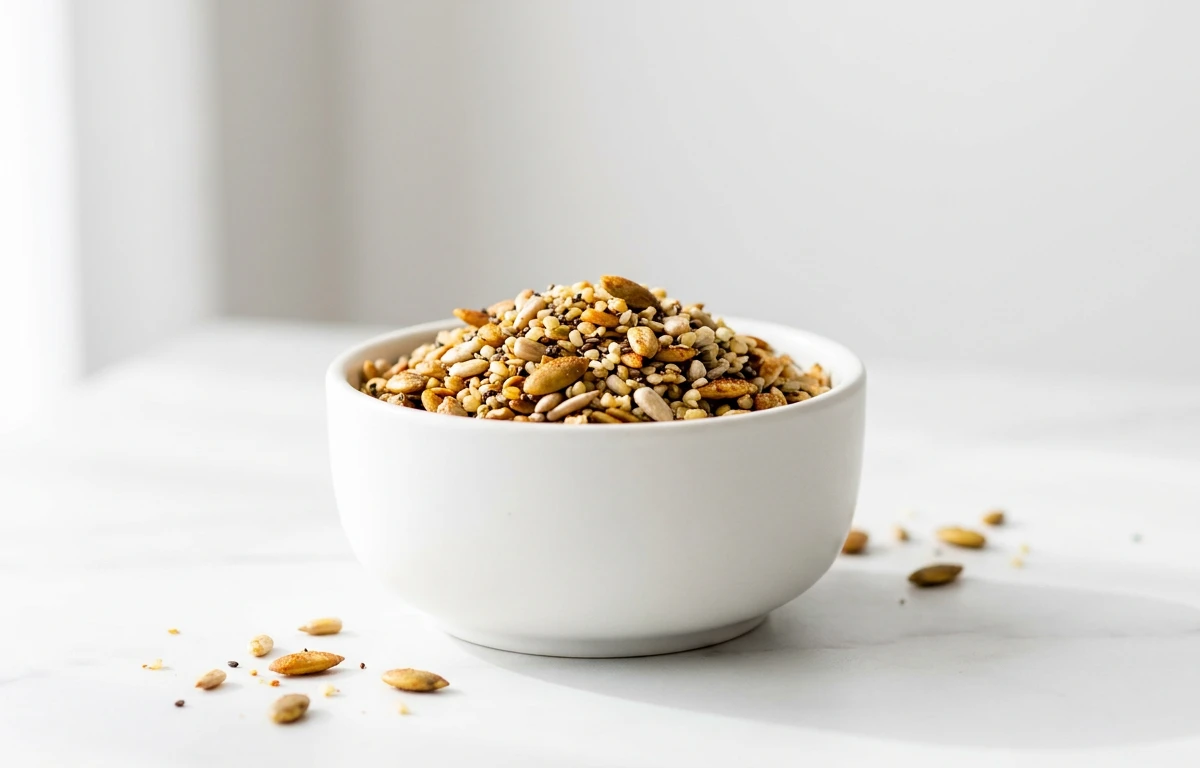
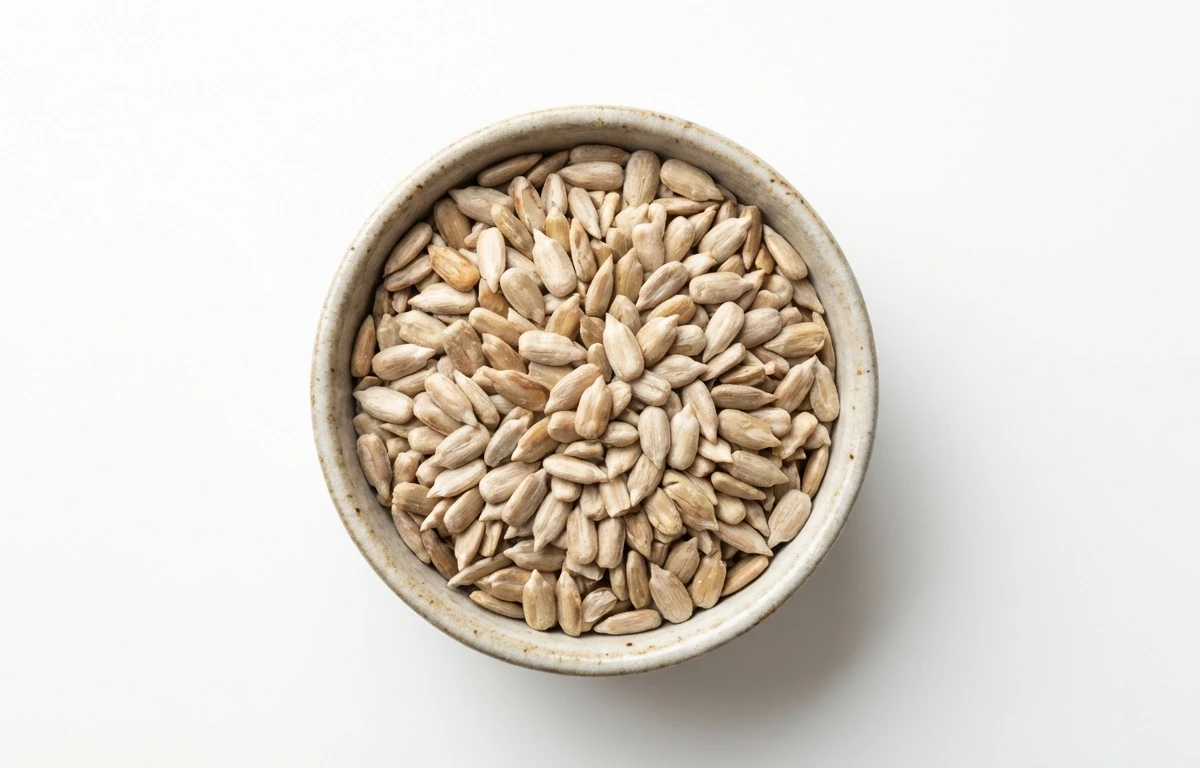
sunflower seeds.
VegetarianVeganGluten-freeDairy-freeNut-freePeanut-freeSoy-freeEgg-freeShellfish-freeHoney-freeAlcohol-free
ALSO KNOWN AS
sunflower kernelsshelled sunflower seedssurajmukhi ke beejpepitas de girasol
SERVING
CALORIES
584
PROTEIN
20.8g
CARBS
20g
FAT
51.5g
FIBER
8.6g
NUTRITION PROFILE · per 100 g
Everything in this ingredient.
MACRONUTRIENTS
Calories584kcal—
Protein20.8g42%
Carbohydrates20g7%
Fiber8.6g31%
Sugar2.6g5%
Total fat51.5g66%
Saturated fat4.5g23%
Trans fat0g—
Cholesterol0mg0%
Water4.7g—
MINERALS
Sodium9.0mg0%
Potassium645mg14%
Calcium78mg6%
Iron5.3mg29%
Magnesium325mg77%
Phosphorus660mg53%
Zinc5.0mg45%
Copper1.8mg200%
Manganese1.9mg83%
Selenium53µg96%
VITAMINS
Vitamin A2.0µg0%
Vitamin C1.4mg2%
Vitamin D0µg0%
Vitamin E35.2mg235%
Vitamin K0µg0%
Thiamin (B1)1.5mg125%
Riboflavin (B2)0.35mg27%
Niacin (B3)8.3mg52%
Pantothenic acid (B5)1.1mg22%
Vitamin B61.3mg76%
Biotin (B7)2.4µg8%
Folate (B9)227µg57%
Vitamin B120µg0%
%DV based on a 2,000 cal diet. Source: USDA FoodData Central. A dash in the %DV column means there’s no established Daily Value for that nutrient.
MEASUREMENT CONVERSIONS
How much is what.
1 cup128g
1 tablespoon8g
1 teaspoon2.7g
1 oz28.4g
1 lb453.6g
1 ml0.5g
1 liter540g
HEALTH BENEFITS
Why eat it.
- ✓Excellent source of Vitamin E, a powerful antioxidant
- ✓Supports heart health through healthy unsaturated fats
- ✓High magnesium content helps maintain healthy blood pressure
- ✓Contains selenium which supports thyroid function
- ✓Rich in fiber which aids in digestive health
COOKING TIPS
In the kitchen.
- 1Toast in a dry skillet over medium heat for 2-3 minutes to enhance nuttiness
- 2Add to salads, yogurt, or oatmeal for a nutritional crunch
- 3Can be ground into a butter as a nut-free alternative to peanut butter
STORAGE
Keep it fresh.
- Store in an airtight container in a cool, dark place for up to 3 months
- Refrigerate to extend shelf life up to 6 months
- Freeze in a sealed bag for up to 1 year to prevent rancidity
FAQ
Frequently asked questions.
How long do sunflower seeds last?
Raw shelled sunflower seeds last about 3 months in the pantry, but up to a year if stored in the freezer.
Can I eat the shells of sunflower seeds?
It is not recommended to eat the shells (hulls) as they are very fibrous and can cause digestive blockages or damage the digestive tract.
What is a good substitute for sunflower seeds?
Pumpkin seeds (pepitas) are the best substitute. Pine nuts or chopped almonds can also work depending on the recipe.
Are sunflower seeds considered a nut?
No, they are seeds from the sunflower plant. However, they are often processed in facilities that handle tree nuts, so check labels for cross-contamination.
How do I know if sunflower seeds have gone bad?
Rancid seeds will have a sour, paint-like, or chemical smell and a bitter, unpleasant taste.
Are sunflower seeds healthy for weight loss?
Yes, in moderation. They are high in fiber and protein which promotes fullness, but they are calorie-dense due to high fat content.
Should I buy raw or roasted sunflower seeds?
Raw seeds retain more nutrients, but roasted seeds have a better flavor profile. Choose unsalted versions to control sodium intake.
How do I toast sunflower seeds?
Place them in a single layer in a dry pan over medium heat, stirring frequently until they turn golden brown and smell fragrant.
RECIPES
Cook with sunflower seeds.
10 recipes · sorted by what’s quick