Spice10 recipes
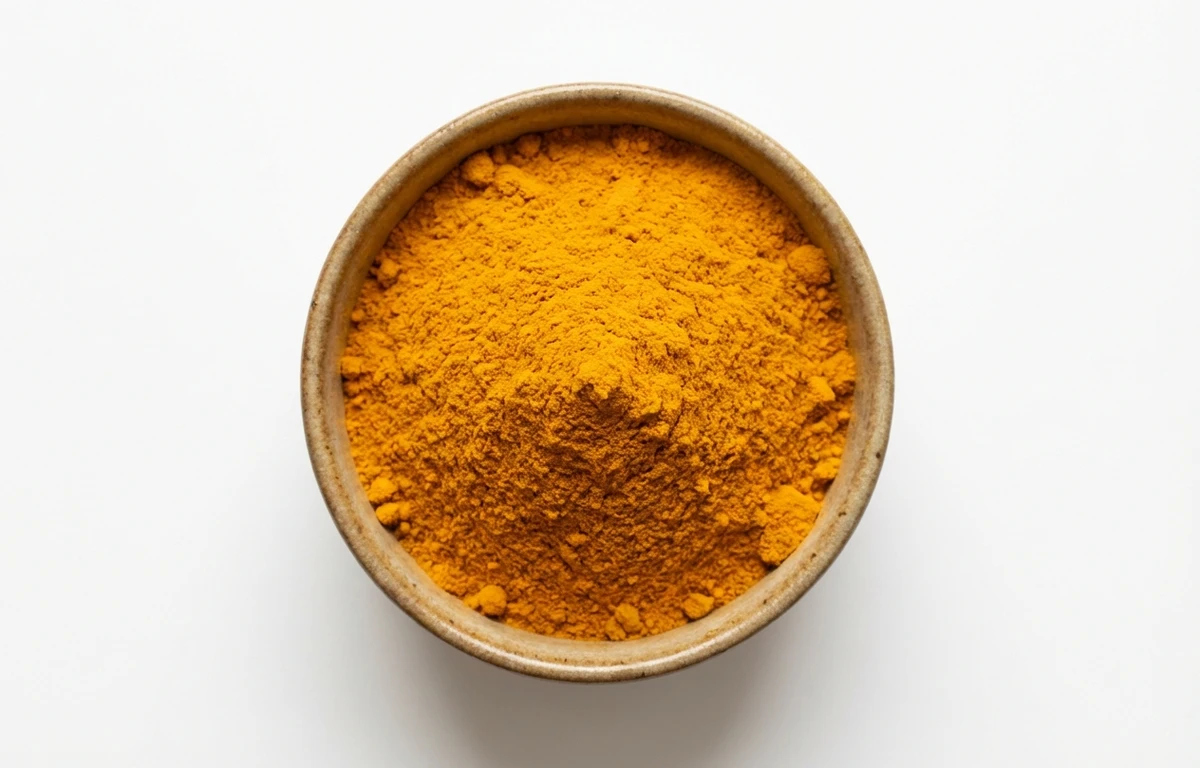
turmeric.
VegetarianVeganGluten-freeDairy-freeNut-freePeanut-freeSoy-freeEgg-freeShellfish-freeHoney-freeAlcohol-free
ALSO KNOWN AS
haldicurcumaindian saffron
SERVING
CALORIES
312
PROTEIN
9.7g
CARBS
67.1g
FAT
3.3g
FIBER
22.7g
NUTRITION PROFILE · per 100 g
Everything in this ingredient.
MACRONUTRIENTS
Calories312kcal—
Protein9.7g19%
Carbohydrates67.1g24%
Fiber22.7g81%
Sugar3.2g6%
Total fat3.3g4%
Saturated fat1.8g9%
Trans fat0g—
Cholesterol0mg0%
Water12.8g—
MINERALS
Sodium27mg1%
Potassium2080mg44%
Calcium168mg13%
Iron55mg306%
Magnesium208mg50%
Phosphorus299mg24%
Zinc4.5mg41%
Copper0.60mg67%
Manganese19.8mg861%
Selenium6.2µg11%
VITAMINS
Vitamin A0µg0%
Vitamin C0.70mg1%
Vitamin D0µg0%
Vitamin E4.4mg30%
Vitamin K13.4µg11%
Thiamin (B1)0.05mg4%
Riboflavin (B2)0.15mg12%
Niacin (B3)1.4mg8%
Vitamin B60.11mg6%
Folate (B9)20µg5%
Vitamin B120µg0%
%DV based on a 2,000 cal diet. Source: USDA FoodData Central. A dash in the %DV column means there’s no established Daily Value for that nutrient.
MEASUREMENT CONVERSIONS
How much is what.
1 cup150g
1 tablespoon9.4g
1 teaspoon3g
1 oz28.4g
1 lb453.6g
1 ml0.6g
1 piece15g
HEALTH BENEFITS
Why eat it.
- ✓Contains curcumin with powerful anti-inflammatory effects
- ✓Strong antioxidant capacity that neutralizes free radicals
- ✓May improve brain function and lower risk of brain diseases
- ✓Supports heart health by improving the function of endothelium
- ✓Aids in digestion and may help manage arthritis symptoms
COOKING TIPS
In the kitchen.
- 1Bloom turmeric in oil or fat at the start of cooking to activate its flavor and curcumin
- 2Always pair with a pinch of black pepper to significantly increase curcumin absorption
- 3Use sparingly as its earthy, slightly bitter flavor can easily overpower a dish
STORAGE
Keep it fresh.
- Store ground turmeric in an airtight container in a cool, dark place
- Keep away from direct sunlight to prevent the color and flavor from fading
- Store fresh turmeric root in the refrigerator wrapped in a paper towel inside a bag
FAQ
Frequently asked questions.
How long does ground turmeric last?
Ground turmeric typically maintains its best quality for 2 to 3 years if stored in a cool, dark place in an airtight container.
Can I freeze fresh turmeric root?
Yes, you can freeze fresh turmeric root for up to 6 months. It is often easier to grate while still frozen.
What is the best substitute for turmeric?
For color, use saffron or annatto. For flavor, a mix of ginger and a small amount of cumin can work, though the taste is unique.
How do I remove turmeric stains from surfaces?
Create a paste of baking soda and water, apply to the stain, let sit for 15 minutes, then scrub. Sunlight can also help fade stains on plastic.
Why should I eat turmeric with black pepper?
Black pepper contains piperine, which has been shown to increase the absorption of curcumin (the active compound in turmeric) by up to 2,000%.
Is turmeric considered a root vegetable?
Technically it is a rhizome, but for culinary and dietary purposes (like Jain or Sattvic diets), it is classified as a root vegetable.
How do I pick high-quality fresh turmeric?
Look for roots that are firm and plump, not shriveled or soft. The skin should be thin and the flesh inside should be a vibrant orange.
What is the ratio for substituting fresh turmeric for powder?
Generally, 1 inch of fresh turmeric root is equivalent to 1 tablespoon of freshly grated turmeric or 1 teaspoon of ground turmeric powder.
RECIPES
Cook with turmeric.
10 recipes · sorted by what’s quick
.webp)
.webp)