
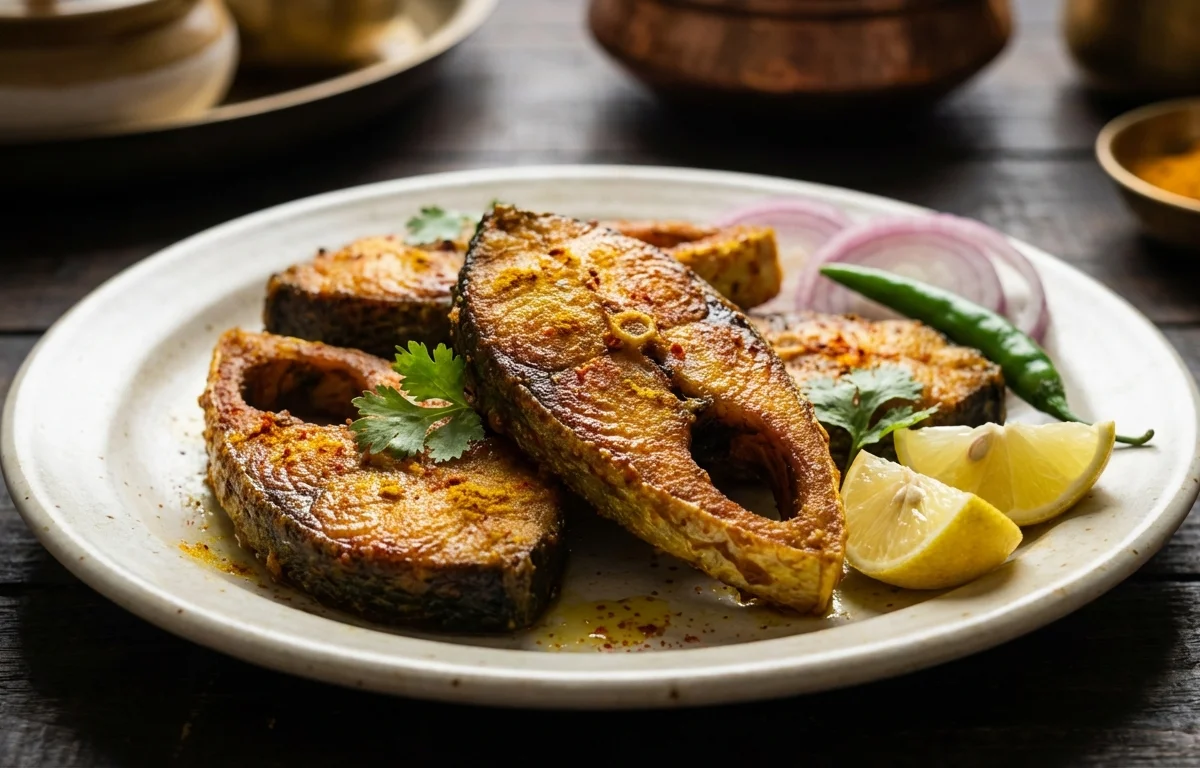
Bengali Maach Bhaja
Crispy, golden pan-fried fish with a turmeric-kissed crust that's simple yet deeply satisfying. A Bengali household staple where fresh fish steaks are lightly marinated with salt and turmeric, then shallow-fried in mustard oil until the skin crackles and the flesh stays tender. Best enjoyed with steaming hot rice and a squeeze of lemon.
For 4 servings
- prep · ~10 min
Marinate the fish steaks.
1.Pat the fish steaks completely dry with a kitchen towel.2.In a mixing bowl, rub the steaks with turmeric powder and salt.3.Let them rest for 10 minutes at room temperature.TIPPatting the fish dry is key — excess moisture will make the fish steam instead of fry. - fry · ~3 min
Heat the mustard oil to smoking point.
1.Pour mustard oil into the non-stick frying pan over medium-high heat.2.Heat until the oil is lightly smoking and the raw pungent smell disappears.3.Reduce the heat to medium.TIPHeating mustard oil to its smoking point removes the sharp raw aroma and gives the fish a distinct Bengali flavor. - fry · ~8 min
Pan-fry the fish steaks.
1.Carefully slide the marinated fish steaks into the hot oil in a single layer.2.Fry for 3-4 minutes on the first side until golden and crispy.3.Gently flip with tongs and fry the second side for another 3-4 minutes.4.Transfer to a paper-lined plate to drain any excess oil.TIPDon't crowd the pan — fry in batches if needed. The fish should sizzle immediately when it hits the oil. - serve
Serve hot with lemon wedges and slit green chilies.
Arrange the crispy fried fish on a serving plate with fresh lemon wedges and slit green chilies on the side. Serve immediately with steamed rice and dal.
What to keep in mind.
6 tips from the recipe — small details that make a real difference to the final dish.
- 1Always pat the fish steaks bone-dry with paper towels to ensure a crisp crust.
- 2Heat the mustard oil until it just begins to smoke to mellow its pungent aroma.
- 3Do not crowd the pan; fry in a single layer so the fish sizzles and browns evenly.
- 4Use a wide, non-stick or well-seasoned cast-iron pan for the best golden crust.
- 5Let the fish rest for 10 minutes after marinating to allow the turmeric and salt to penetrate.
- 6Serve immediately after frying; maach bhaja loses its crunch as it cools.
Adapt it for your goals.
Air-fryer
To reduce oil, cook the marinated fish steaks in an air fryer at 200°C (400°F) for 8–10 minutes, flipping halfway. You'll get a similar crispness with significantly less fat.
low oilLow-oil
Use just 1 tablespoon of mustard oil and cook the fish in a non-stick pan. The crust will be lighter but still flavourful — ideal for those watching their oil intake.
spicySpicy
Add ½ teaspoon of red chili powder or a pinch of cayenne to the turmeric-salt marinade for an extra layer of heat that complements the green chilies on the side.
Why this is on our healthy list.
Rich in Omega-3 Fatty Acids
Rohu is a freshwater fish that provides a good source of anti-inflammatory omega-3s, which support heart and brain health.
High-Quality Lean Protein
Each serving of rohu fish supplies a generous amount of complete protein essential for muscle repair and satiety, with relatively low saturated fat.
Antioxidant from Turmeric
Turmeric contains curcumin, a potent antioxidant that may help reduce inflammation and support overall wellness when consumed regularly.
Low in Carbohydrates
This dish is naturally low in carbs and gluten-free, making it suitable for low-carb or diabetic-friendly meal plans when paired with non-starchy sides.
Frequently asked questions
Yes, other firm freshwater fish like catla, tilapia, or even sea bass work well. Just ensure the steaks are at least 1 inch thick so they don't overcook.



-curry.webp)
.webp)