
Vegetable10 recipes
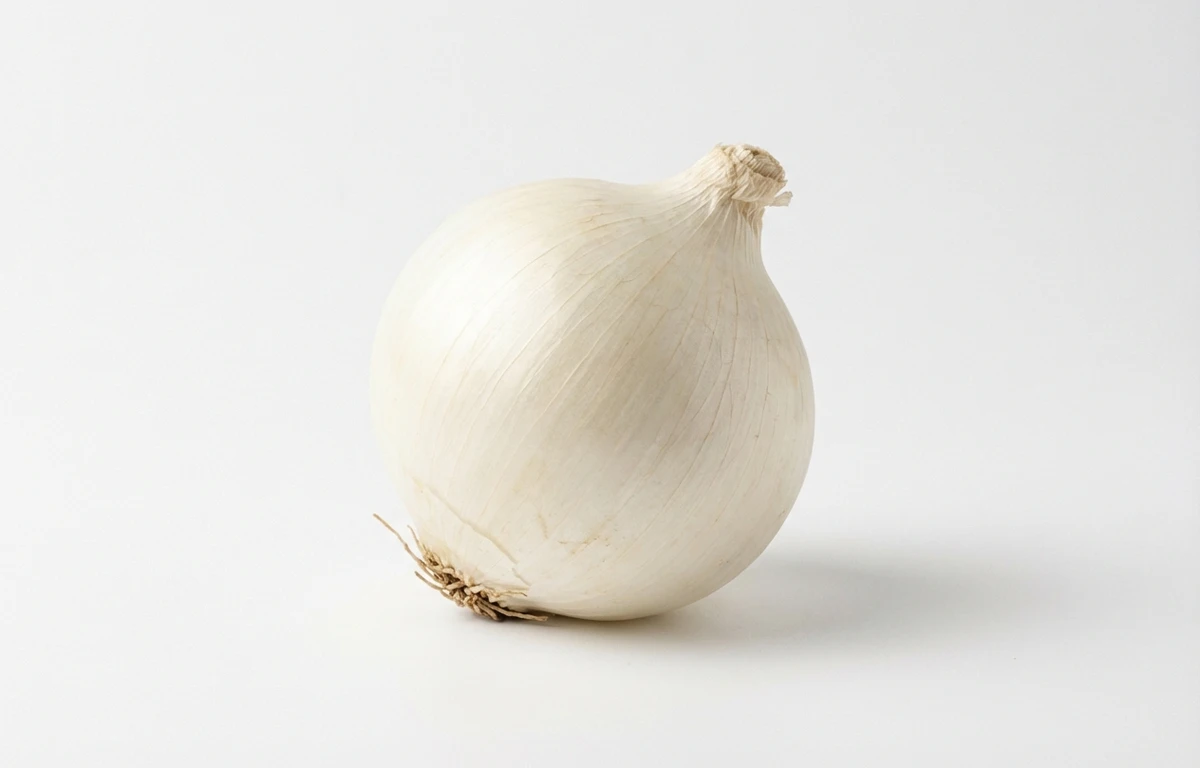
white onion.
VegetarianVeganGluten-freeDairy-freeNut-freePeanut-freeSoy-freeEgg-freeShellfish-freeHoney-freeAlcohol-freeHalalKosher
ALSO KNOWN AS
safed pyazwhite bulb onionMexican white onionallium cepa whitewhite onionraw white onion
SERVING
CALORIES
40
PROTEIN
1.1g
CARBS
9.3g
FAT
0.10g
FIBER
1.7g
This ingredient is flagged as naturally gluten-free. Per 100 g, it provides 0.40 µg of vitamin K.
NUTRITION PROFILE · per 100 g
Everything in this ingredient.
MACRONUTRIENTS
Calories40kcal—
Protein1.1g2%
Carbohydrates9.3g3%
Fiber1.7g6%
Sugar4.2g8%
Total fat0.10g0%
Saturated fat0.04g0%
Trans fat0g—
Cholesterol0mg0%
Water89.1g—
MINERALS
Sodium4.0mg0%
Potassium146mg3%
Calcium23mg2%
Iron0.20mg1%
Magnesium10mg2%
Phosphorus29mg2%
Zinc0.17mg2%
Copper0.04mg4%
Manganese0.13mg6%
Selenium0.50µg1%
VITAMINS
Vitamin A0µg0%
Vitamin C7.4mg8%
Vitamin D0µg0%
Vitamin E0.02mg0%
Vitamin K0.40µg0%
Thiamin (B1)0.05mg4%
Riboflavin (B2)0.03mg2%
Niacin (B3)0.12mg1%
Pantothenic acid (B5)0.12mg2%
Vitamin B60.12mg7%
Folate (B9)19µg5%
Vitamin B120µg0%
%DV based on a 2,000 cal diet. Source: USDA FoodData Central. A dash in the %DV column means there’s no established Daily Value for that nutrient.
MEASUREMENT CONVERSIONS
How much is what.
1 cup160g
1 tablespoon10g
1 oz28.4g
1 lb453.6g
1 piece110g
HEALTH BENEFITS
Why eat it.
- ✓May support heart health by reducing blood pressure
- ✓Provides prebiotic fiber for improved digestive health
COOKING TIPS
In the kitchen.
- 1Soak raw slices in cold water for 15 minutes to reduce their sharp bite for salads
- 2Sauté on low heat to bring out their natural sweetness without browning too quickly
- 3Use white onions specifically for Mexican cuisine and salsas for a cleaner, sharper flavor than yellow onions
STORAGE
Keep it fresh.
- Store in a cool, dry, dark, and well-ventilated place
- Keep away from potatoes as they release moisture and gas that cause onions to spoil
- Once cut, store in an airtight container in the refrigerator for up to 7 days
FAQ
Frequently asked questions.
How long do white onions last?
Whole white onions can last 2 to 3 months when stored in a cool, dry, and dark place with good ventilation.
Can you freeze white onions?
Yes, you can freeze chopped white onions. They will lose their crunch, so they are best used in cooked dishes after thawing.
What is the difference between white and yellow onions?
White onions have a sharper, cleaner flavor and thinner skin. They are crunchier and often used raw in salsas, whereas yellow onions are sweeter when cooked.
How do I pick a good white onion?
Look for onions that feel heavy for their size, are firm to the touch, and have dry, papery skin with no visible sprouts or soft spots.
What can I substitute for white onions?
Yellow onions are the best all-purpose substitute. For raw applications, shallots or red onions can be used, though the flavor profile will change slightly.
Why do white onions make you cry?
When cut, onions release a gas called syn-propanethial-S-oxide, which reacts with the moisture in your eyes to form a mild sulfuric acid.
Are white onions keto-friendly?
In moderation, yes. They contain about 9g of carbs per 100g, so they should be factored into daily carb limits.
How should I prep white onions for salsa?
Finely dice them and rinse under cold water to remove the excess sulfurous compounds, ensuring a crisp texture and clean taste.
Are white onions considered a root vegetable?
Yes, they are bulbs that grow underground, making them a root vegetable and generally avoided in Jain or strict Sattvic diets.
RECIPES
Cook with white onion.
10 recipes · sorted by what’s quick



















