
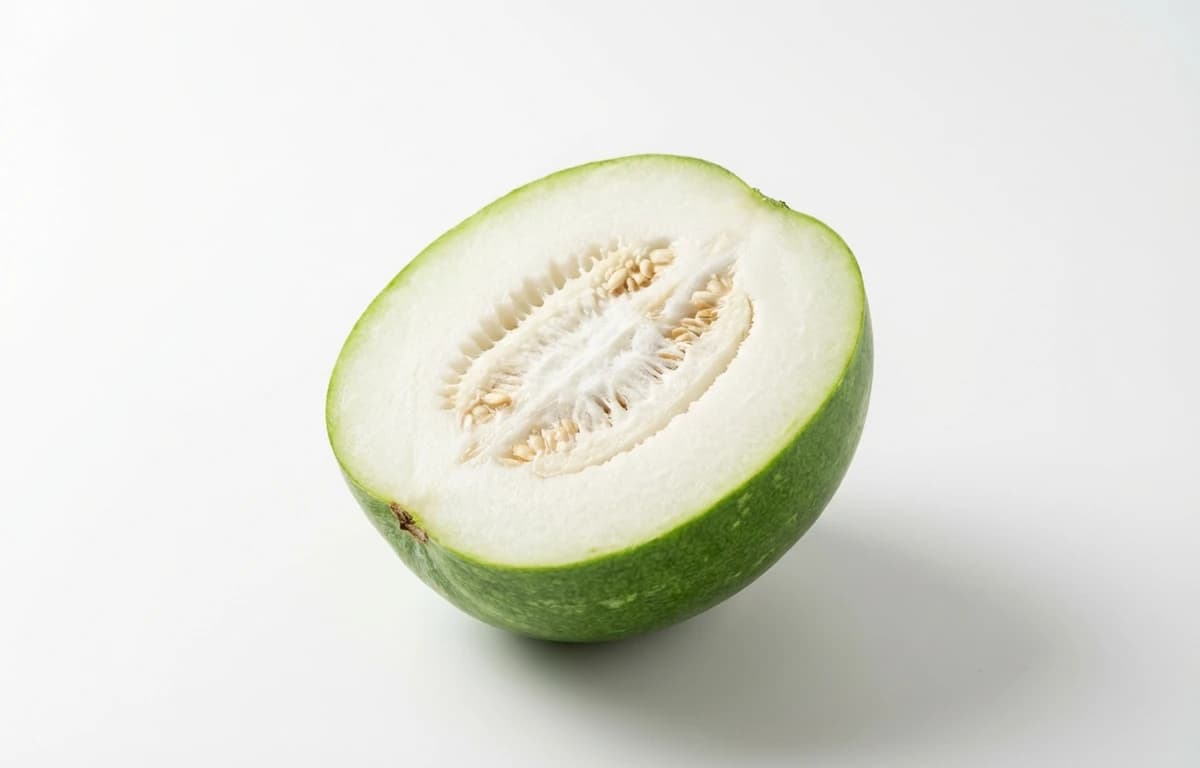
winter melon
Also known as: ash gourd, white gourd
Loading...
Also known as: ash gourd, white gourd
Per 100g
Nutrition data source: USDA FoodData Central
Common measurement equivalents in grams
A light and comforting Vietnamese soup (Canh Bí Đao) featuring tender winter melon, savory minced pork, and umami-rich dried shrimp in a clear, flavorful broth. This classic, refreshing dish is a staple in Vietnamese family meals and is ready in under 40 minutes.
A light, refreshing Vietnamese soup featuring tender winter melon, savory ground pork, and umami-rich dried shrimp. This comforting classic is a staple in family meals, perfect for balancing richer dishes and cleansing the palate.

A rustic and flavorful Assamese delicacy, this duck curry features tender meat slow-cooked with winter melon (ash gourd) and whole black peppercorns. A true taste of Assam's culinary heritage, this dish is known for its unique peppery warmth and rich, hearty gravy.

A rich, aromatic duck curry from Assam, slow-cooked with warming spices and winter melon (ash gourd). This traditional delicacy is known for its unique flavor profile, blending the gaminess of duck with the subtle sweetness of the gourd.
Yes, winter melon is highly nutritious and very low in calories, containing only 13 calories per 100g. It is composed of about 96% water, making it excellent for hydration, and it provides beneficial antioxidants and soluble fiber.
Winter melon is an ideal food for weight management because it is extremely low in calories and fat. Its high water and fiber content help you feel full for longer periods, which can reduce overall calorie intake.
Winter melon has a very mild, neutral flavor similar to the white rind of a watermelon or a cucumber. Because of its subtle taste, it is excellent at absorbing the flavors of soups, broths, and seasonings it is cooked with.
Yes, winter melon is keto-friendly as it contains only 3g of carbohydrates per 100g. Its low carb count and high water content make it a great volume-adding vegetable for those on a ketogenic or low-carb diet.
Winter melon is most commonly simmered in soups, added to stews, or used in stir-fries. Before cooking, you must peel the tough outer skin and remove the seeds; the white flesh will become soft and translucent once fully cooked.
While winter melon is technically safe to eat raw, it is rarely consumed that way due to its firm texture and bland flavor. It is much more common to cook it in savory dishes or process it into juices and sweetened tea.
A whole, uncut winter melon can last for several months if stored in a cool, dry place. Once cut, the melon should be wrapped tightly in plastic wrap and stored in the refrigerator, where it will stay fresh for 4 to 5 days.
winter melon is a versatile ingredient found in cuisines around the world. With 13 calories per 100g and 0.4 grams of protein, it's a nutritious addition to many dishes.
Explore more ingredients in the other category with complete nutrition information.
View all other →Discover 10 recipes featuring winter melon with step-by-step instructions.
Browse recipes →In traditional Chinese and Ayurvedic medicine, winter melon is valued for its 'cooling' properties, which are believed to reduce internal body heat. It is also used as a natural diuretic to help with water retention and to support digestive health.
Yes, the skin of a winter melon is thick, waxy, and too tough to eat. You should use a sharp knife to slice off the green skin and scoop out the inner seeds and pulp before dicing the white flesh for cooking.
Yes, winter melon is a natural vegetable and is inherently vegan and gluten-free. It is a safe and healthy ingredient for individuals with these dietary restrictions or those with celiac disease.