Loading...
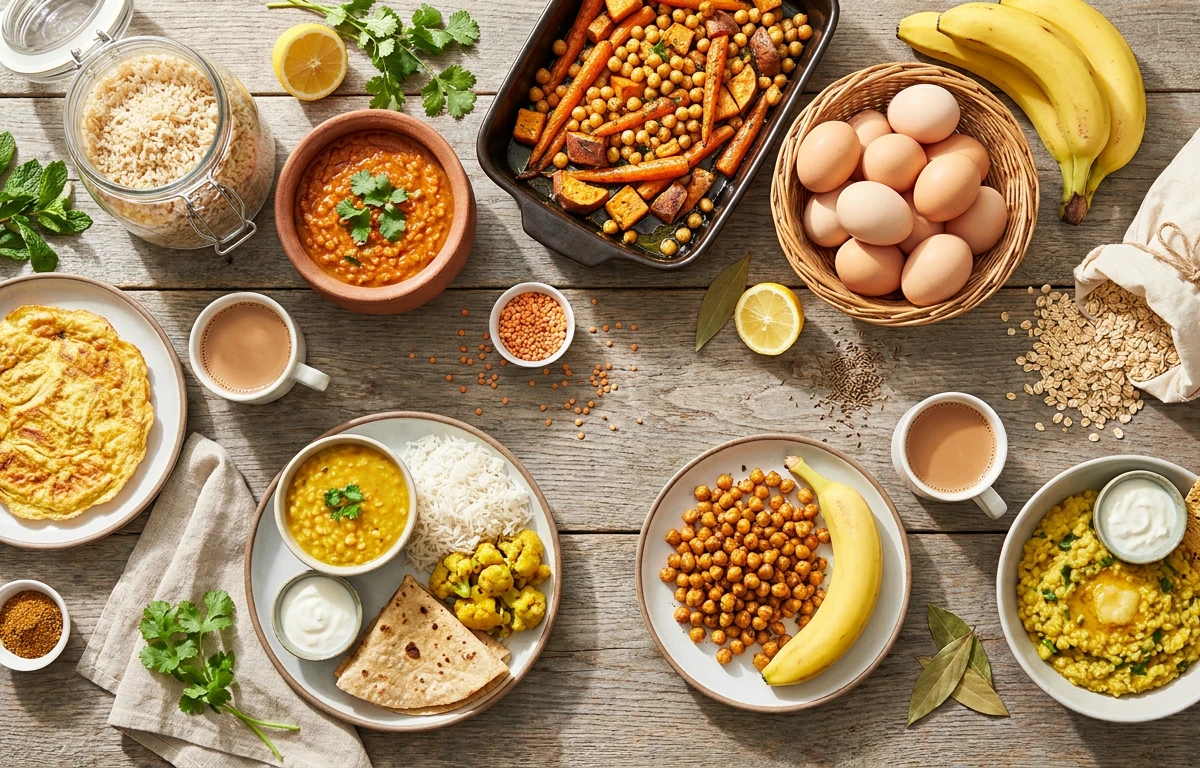
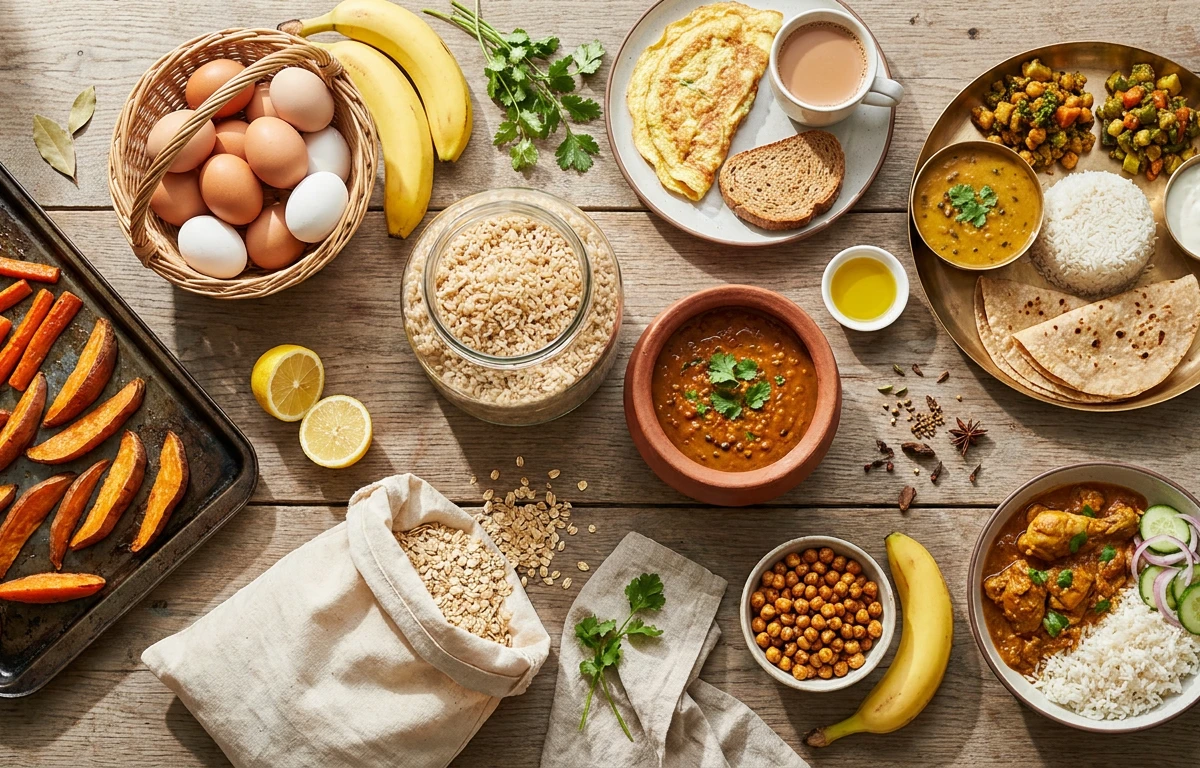
This 14-day Indian budget meal plan targets **₹120-150/day ingredient cost** at 2,000 kcal/day balanced nutrition — daily split 500/600/300/600 across breakfast, lunch, snack, dinner. The plan proves that affordable Indian eating doesn't require sacrificing protein, fibre, or variety — it requires deliberate ingredient choices, bulk-buying staples, and cooking at home for 80%+ of meals. Eggs are the central protein workhorse (2-3/day at ₹7-9 each), with dal at every meal, seasonal vegetables from the local mandi, peanuts and roasted chana for snacks, and dahi for daily gut support.
**Tier-1 vs tier-2/3 city pricing** matters a lot. Mumbai, Bangalore, Delhi NCR, Pune, Hyderabad metros: expect **₹150-180/day** for the same plan. Tier-2 cities (Indore, Lucknow, Coimbatore, Bhubaneswar, Surat): **₹120-150/day**. Tier-3 cities and smaller towns: **₹100-130/day**. The difference is almost entirely vegetable prices (30-50% higher in metros), egg prices (₹2-3/egg cheaper outside metros), and convenience-shop premiums for staples. **Shopping at the local mandi instead of a supermarket cuts vegetable cost by 30-40%**; this single behavioural change determines whether the plan hits its budget target.
**Monthly bulk-buy strategy** is non-negotiable for budget eating. **Atta (5 kg bag, ₹230-290), toor dal (5 kg, ₹650-800), rice (5 kg, ₹350-450), oil (1 L mustard or groundnut, ₹180-240), eggs (30-count tray, ₹190-230), and staple spices** bought once a month from a wholesaler or BigBasket bulk save 20-30% over kirana store small packets. Small packets, ₹20-50 at a time, ultimately cost 40-60% more per kg.
**Cost-vs-nutrition reality check**: a Maggi packet costs ₹14 for ~250 kcal of poor nutrition. An egg + 2 phulka costs ~₹16 for ~350 kcal of complete protein + complex carbs + fibre. **Budget eating isn't cheap eating — it's intelligent eating**. The cheapest visible options (Maggi, biscuits, namkeen) are often the most expensive per-nutrient. This plan deliberately uses ingredients that maximise nutrition-per-rupee, even if individual items cost more than ultra-processed alternatives.
**Vegetarian budget reality**: dropping the daily 2-3 eggs adds **₹30-50/day** to the plan because you need to replace 18-21 g of egg protein with paneer, soya, or extra dal — all of which cost more per gram of protein than eggs. Vegetarian budget eating is achievable at ₹160-180/day with deliberate planning, but ₹150 is a stretch.
**Scaling for a family**: 4-person family (2 adults + 2 kids) at ₹400-500/day total (₹100-125/person) is achievable with the same plan's recipes, scaled up. Per-person cost drops because of bulk-buy efficiency and shared cooking time. A family at ₹15,000-18,000/month groceries (about 8-10% of a ₹150,000-200,000 monthly income) is the realistic Indian working-class budget reference point.
**Consult a registered dietitian** if you have specific health concerns, food allergies, or growth/medical needs. This plan assumes a generally healthy adult; extreme budget restriction during pregnancy, growth years, or illness recovery is not advisable without specialist input.
Click any day to see the full meal breakdown with macros. Days are interchangeable — eat all 14 within 2 weeks in any order.
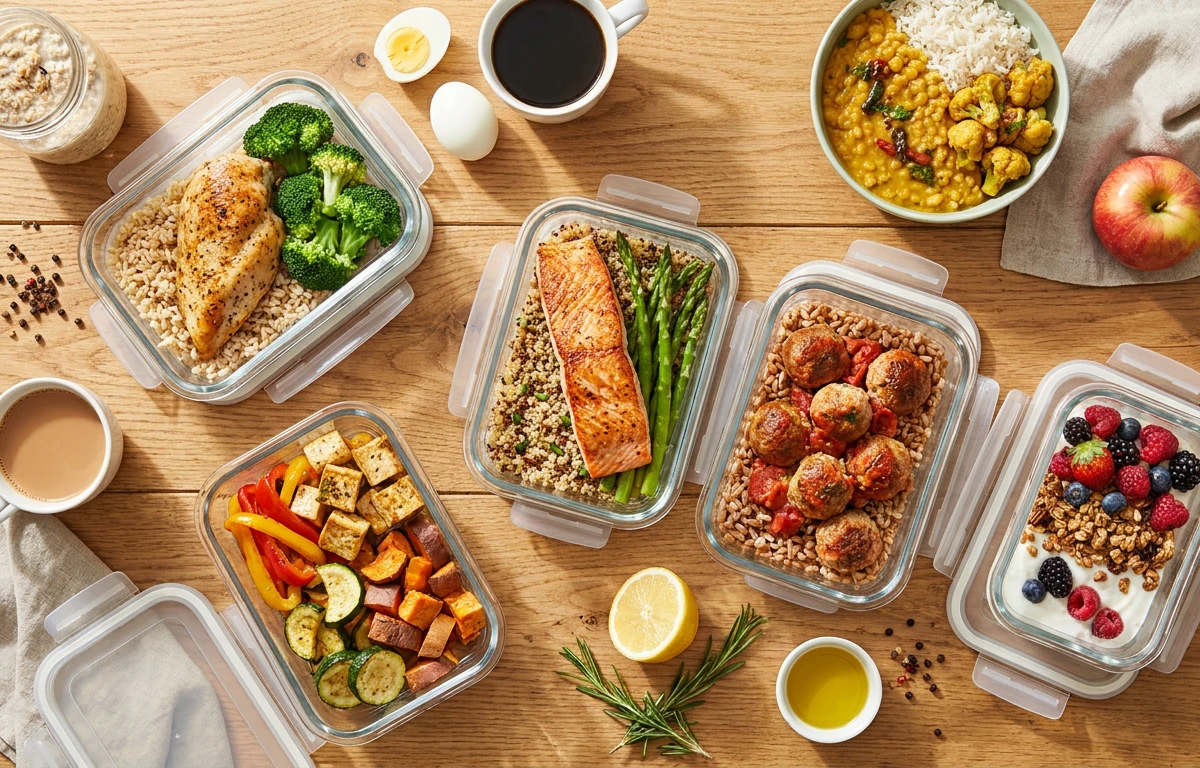
Most of the week’s cooking happens on Sunday. Doing the prep up-front means weekday meals come together in 10 minutes or less.
Eating well on ₹150/day requires home cooking + bulk shopping + skipping restaurants/processed food. The math works: 5kg atta = 30 days roti = ₹250 = ₹8/day. Eggs 2/day = ₹16. Rice + dal + vegetables fills the rest. Quality nutrition does not require expensive ingredients.
Save this plan, generate a custom grocery list, and let us text you the prep schedule for Sunday.