Loading...
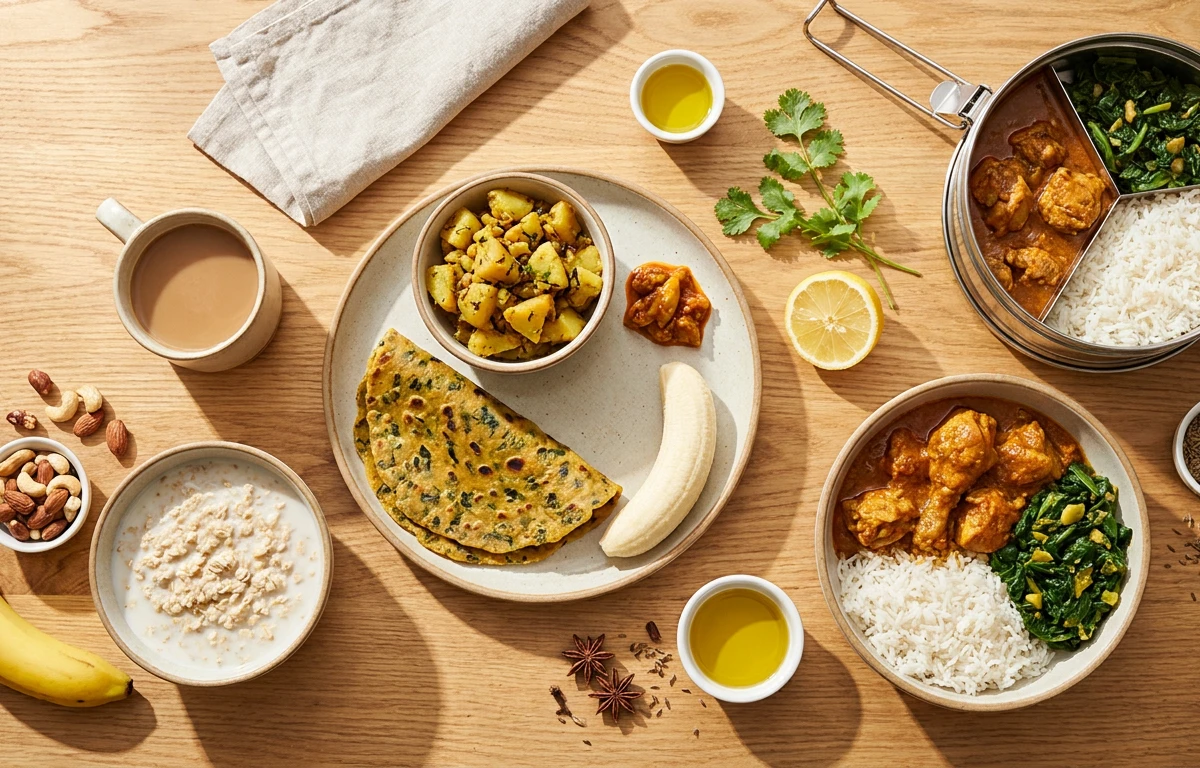
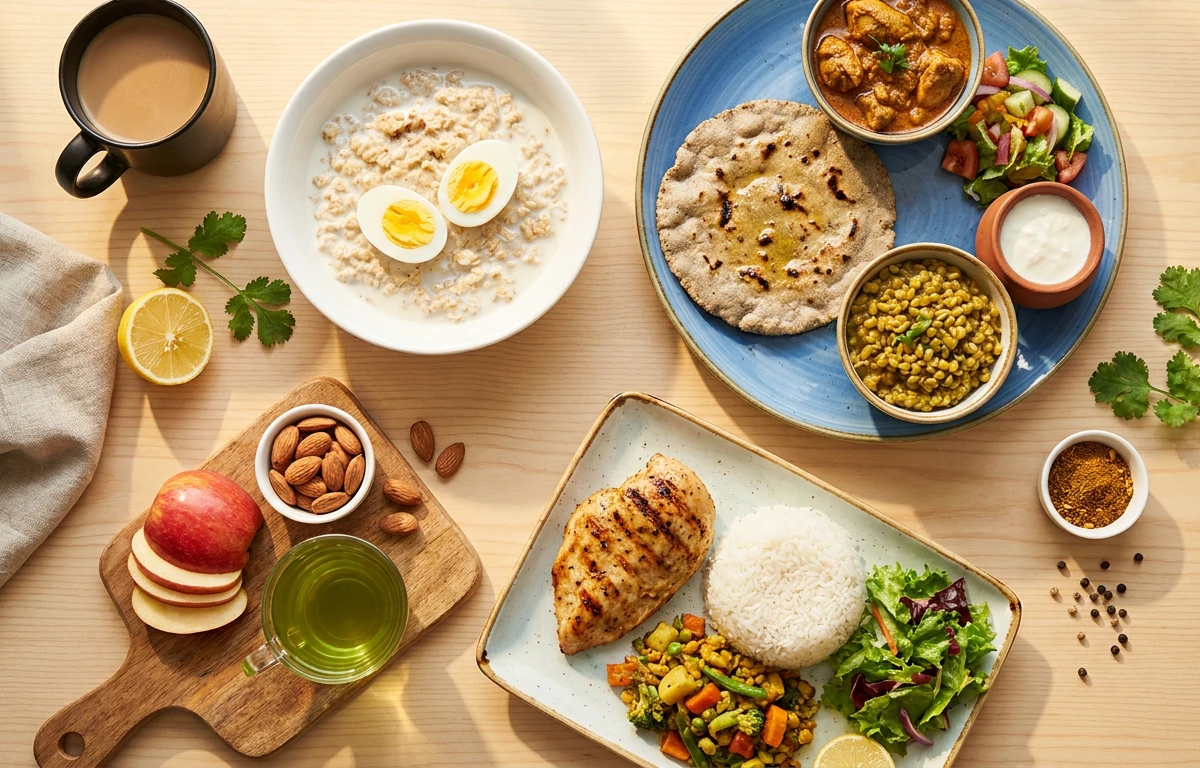
This 14-day Indian office tiffin meal plan is engineered for a specific working reality: **lunch must hold safely at room temperature for 5-7 hours without spoiling**, **stay tasty when cold**, and **survive a commute jostled in a bag**. No microwave access, no insulated heating, no kitchen at work — just an old-school tiffin opened at the desk between 1 and 2 PM. Daily target 2,000 kcal split 500/600/300/600 across breakfast (eaten before leaving home), tiffin lunch, evening snack at office, dinner at home. The plan rotates through six tiffin formats — **theplas, parathas, lemon rice, curd rice, vegetable pulao, and dry chana-rajma preparations** — each chosen because they survive 6-8 hours in a steel dabba without refrigeration.
**Food safety is non-negotiable, especially March-October**. The Indian Council of Medical Research and FSSAI both flag temperatures above 30°C as the **'danger zone'** where bacterial growth doubles every 20 minutes [1][2]. Stuffed parathas with potato or paneer kept in an unrefrigerated tiffin from 7 AM to 1 PM during a Delhi summer is a real food-poisoning risk. The plan deliberately avoids **dairy-based fillings during hot months** (paneer paratha, dahi-based vegetable, mayo anything), **leafy-green-heavy sabzis** (faster spoilage), and **raw chutneys without preservation**. Instead, it leans on **acid-protected and dry preparations** — lemon rice (acid), curd rice with mustard tadka (set fresh, eaten within 5 hours of cold preparation), theplas (low water content), and chickpea/legume dishes (cooked dry, naturally shelf-stable).
**Format choice matters more than recipe**: a **vacuum-insulated steel tiffin** (~₹800-1,200, brands like Milton, Cello, Borosil) keeps food at the temperature it was packed for 4-6 hours — pack lunch warm if you want it warm, cold if you want it cold, both work safely. A **regular three-tier tiffin** keeps food at ambient temperature; this is fine for room-temp preparations only (lemon rice, theplas, dry sabzi). **Do not** use a regular tiffin for hot dal-rice in summer — it sits at danger-zone temperatures for hours.
**Anti-soggy techniques** so your lunch doesn't arrive depressing: pack **wet and dry separately** in different compartments (raita in its own container, sabzi away from roti), **let hot food cool 10 minutes before packing** to reduce condensation, **use a butter paper or banana leaf liner** for chapatis to prevent moisture absorption. Phulkas stay soft if packed warm with a small dot of ghee; theplas tolerate a day without ghee.
**Calorie reality**: 2,000 kcal/day fits a desk-bound 60-75 kg adult with light exercise. If you're walking 8K+ steps and training 3+ days/week, you may need 2,200-2,400 — scale up portion sizes. The evening office snack at 5-6 PM is non-negotiable; **skipping it leads to the 9 PM 'finally home, order food' trap** — the single most common failure mode for working professionals.
**Consult a registered dietitian** if you have specific health concerns or food allergies. The plan assumes a generally healthy working adult.
Click any day to see the full meal breakdown with macros. Days are interchangeable — eat all 14 within 2 weeks in any order.
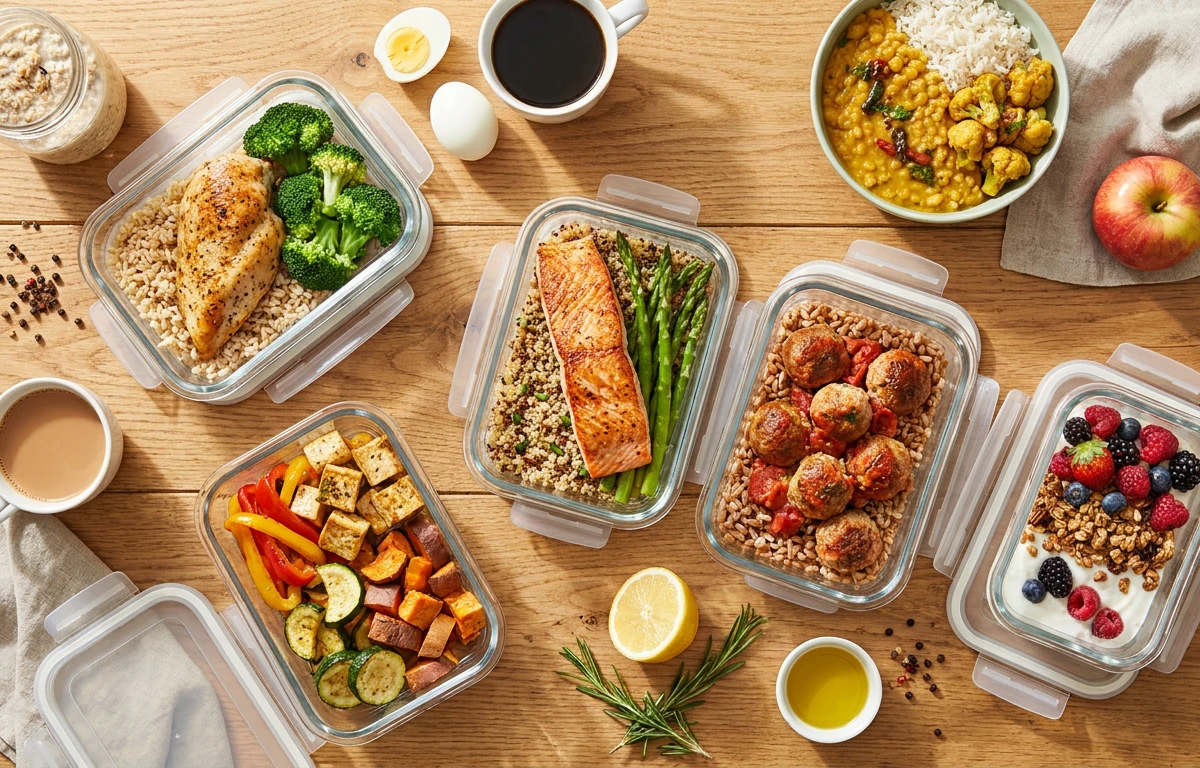
Most of the week’s cooking happens on Sunday. Doing the prep up-front means weekday meals come together in 10 minutes or less.
Tiffin food is a discipline — choosing dishes that travel well, don't get soggy, and stay safe without refrigeration. Pack the night before, use a 3-tier stainless steel dabba, separate wet from dry. After 12 months of office-tiffin discipline, most people save ₹3,000-5,000/month vs takeout.
Save this plan, generate a custom grocery list, and let us text you the prep schedule for Sunday.