Loading...
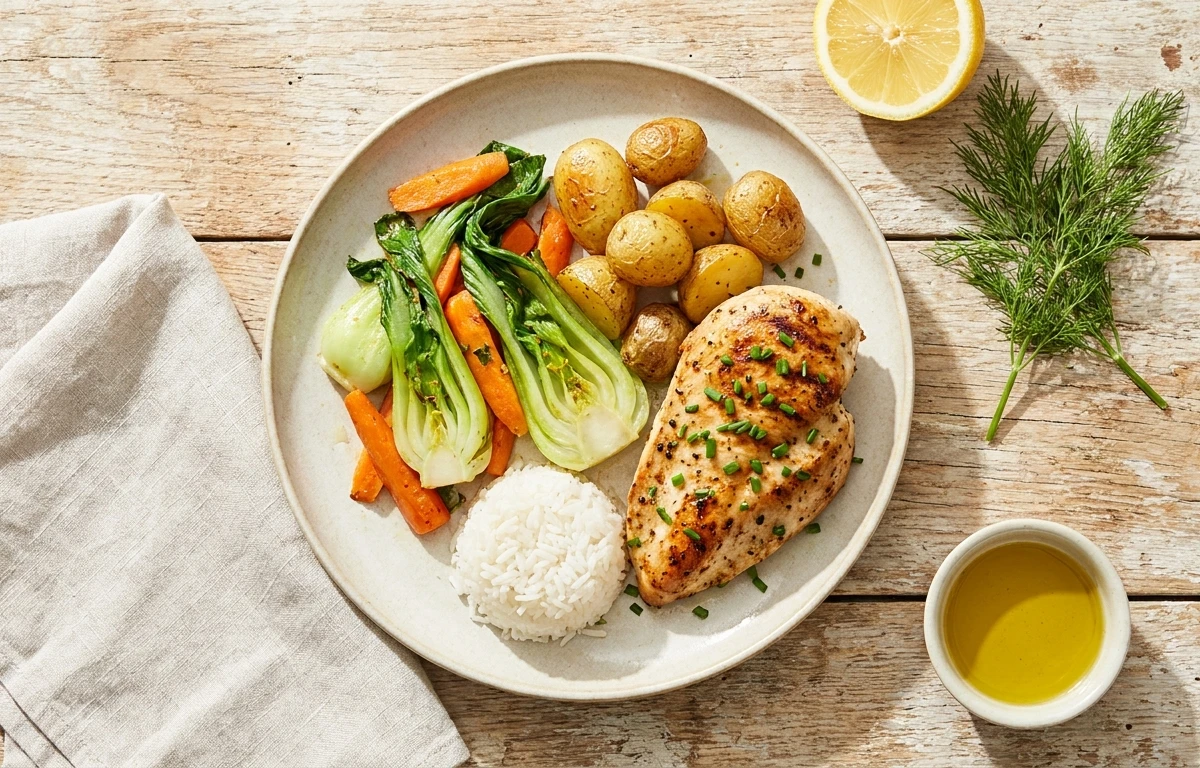
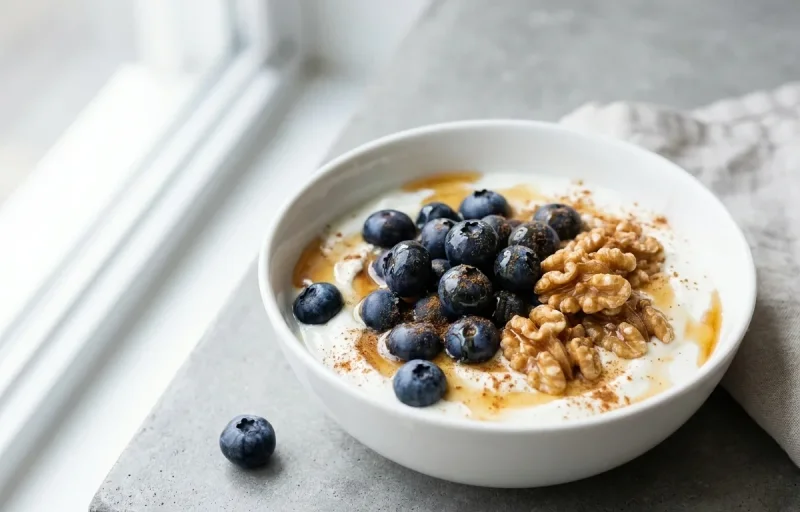
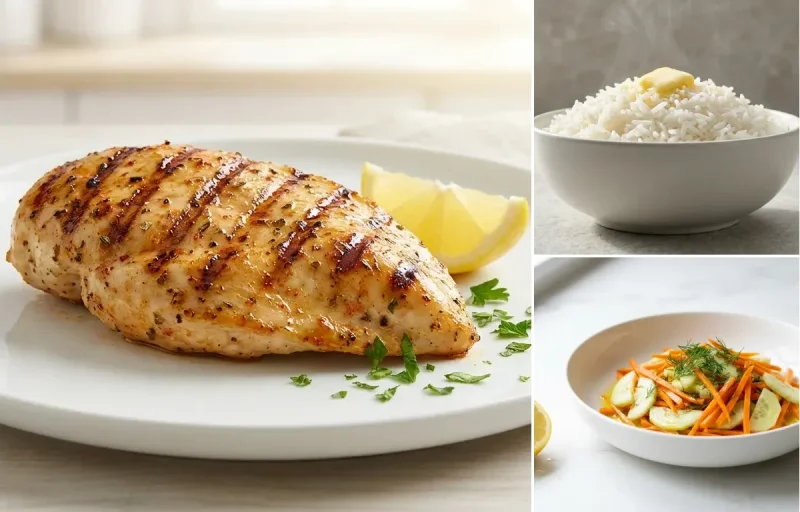
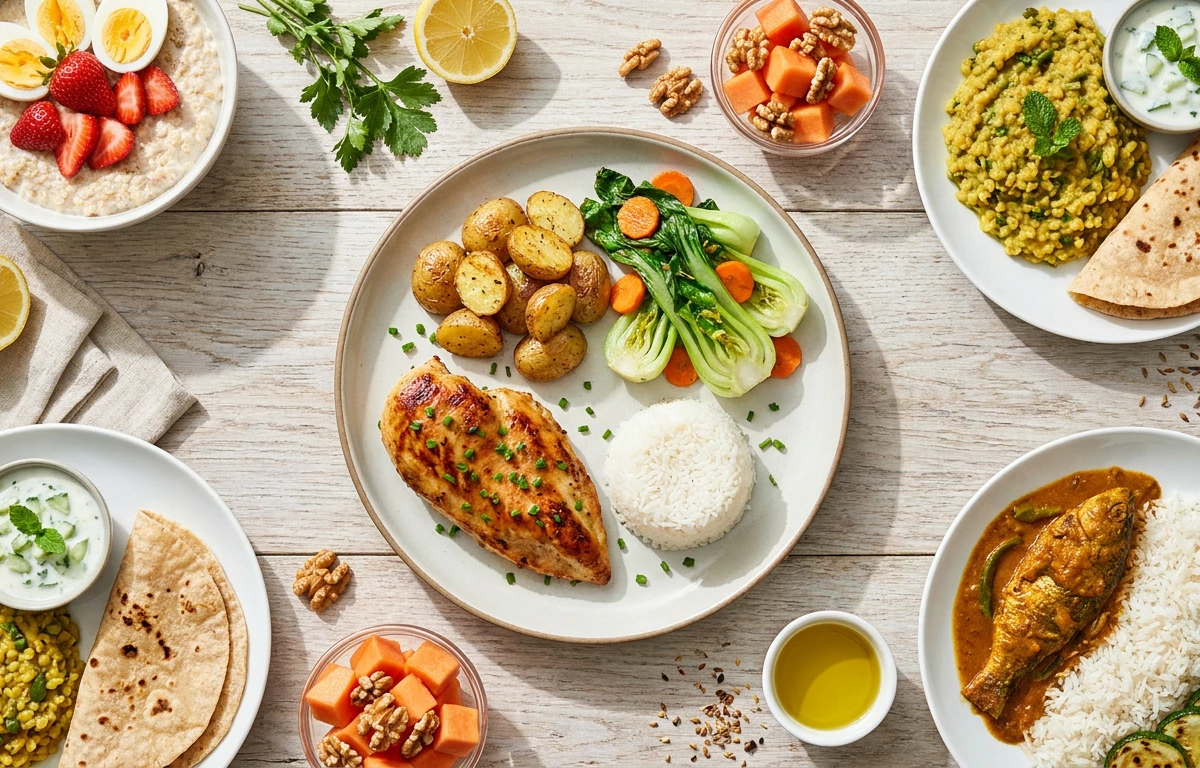
This is the elimination phase of the Low-FODMAP diet for irritable bowel syndrome (IBS) — the protocol developed by Monash University [1] that has the strongest evidence base for IBS symptom reduction (68-76% of IBS patients respond). FODMAPs are fermentable carbohydrates (Fermentable Oligo-, Di-, Mono-saccharides And Polyols) that draw water into the gut and ferment, causing the bloating, gas, and pain characteristic of IBS. The 7 days below eliminate the high-FODMAP foods entirely: no onion, no garlic, no wheat, no lactose (lactose-free dairy is fine), no high-FODMAP fruits (apples, pears, mango, watermelon), no honey, no beans/lentils (in elimination — small chickpea servings are tolerated by some). What's left is carefully chosen: rice, oats (small portion), proteins, lactose-free dairy, and the long list of low-FODMAP vegetables (carrots, cucumber, spinach, peppers, zucchini, kale, eggplant, green beans). The plan is 1,900 kcal/day. Day 1 starts Sunday.

Click any day to see the full meal breakdown with macros. Days are interchangeable — eat all 7 within a week in any order.
Most of the week’s cooking happens on Sunday. Doing the prep up-front means weekday meals come together in 10 minutes or less.
After 7 days, IBS symptoms should improve noticeably if your IBS is FODMAP-responsive [1][2]. The elimination phase is only the first step — at 2-6 weeks, you start the reintroduction phase: adding one FODMAP group back at a time to identify which trigger your symptoms. Work with a registered dietitian trained in FODMAP for the reintroduction phase. The goal is not to eat low-FODMAP forever, but to identify your personal triggers and broaden the diet around them.
Kayte is a nutrition writer, food and recipe content creator, and wellness educator. She bridges evidence-based nutrition science with everyday cooking — translating research into practical recipes, meal ideas, and wellness habits that readers can actually use in their kitchens.
Save this plan, generate a custom grocery list, and let us text you the prep schedule for Sunday.