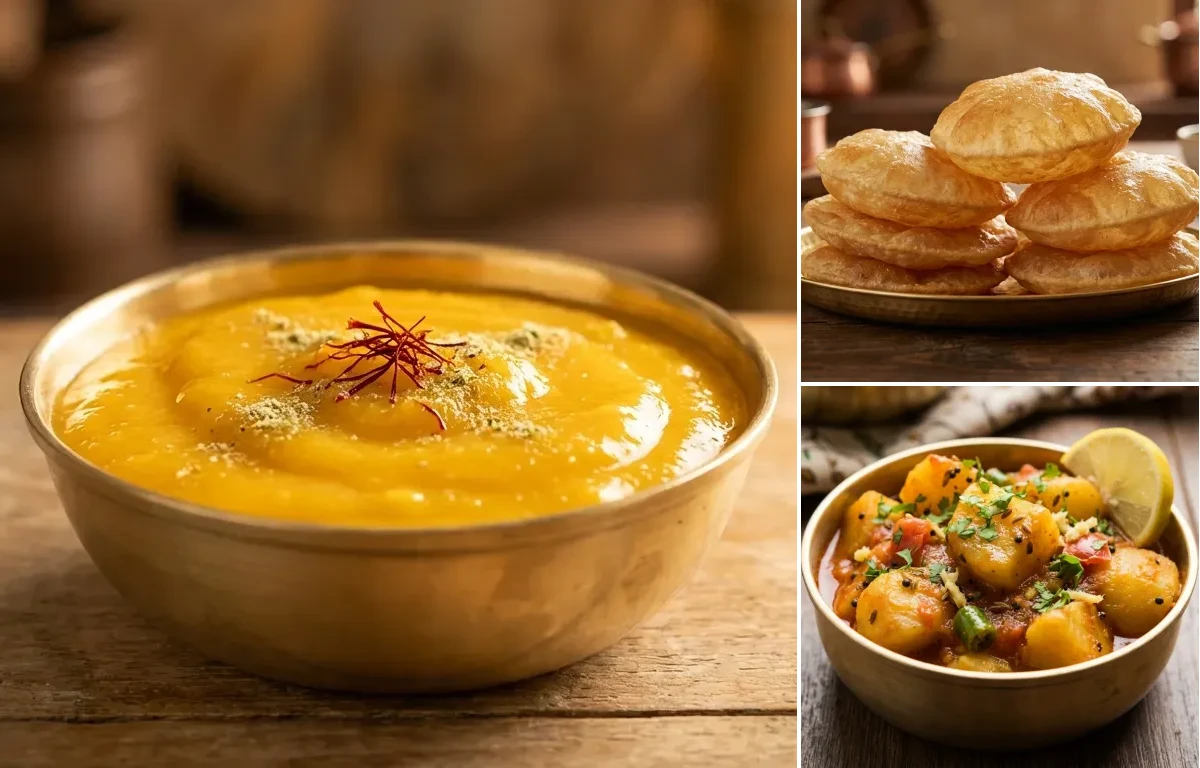
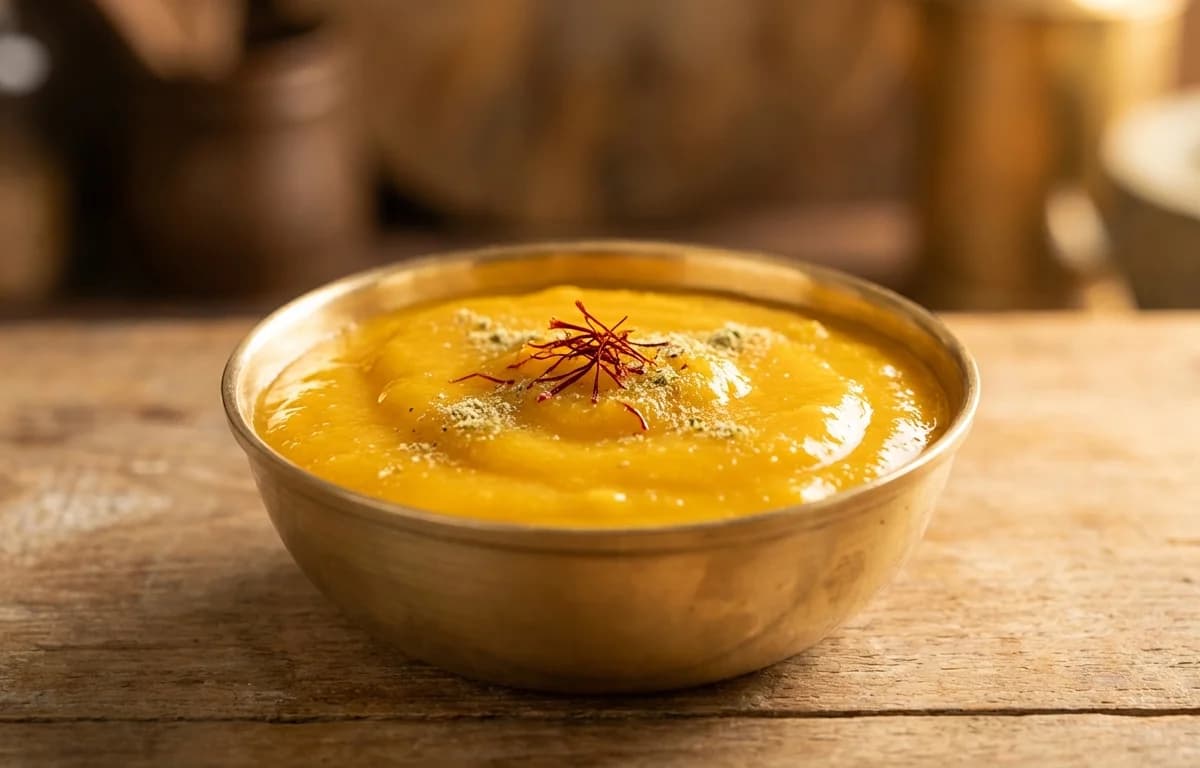
A luscious and smooth Indian mango pulp, bursting with the flavor of fresh seasonal mangoes. This beloved Maharashtrian dessert is often enjoyed with hot puris and is the perfect way to celebrate summer.
Prep15 min
Cook0 min
Servings4
Serving size: 1 serving
146cal
2gprotein
37gcarbs
1gfat
Ingredients
4 large Ripe Alphonso Mangoes (Should be sweet, ripe, and non-fibrous. Kesar mangoes are a great alternative.)
3 tbsp Sugar (Adjust based on the sweetness of the mangoes. You can also use powdered jaggery.)
0.5 tsp Cardamom Powder (Freshly ground is best.)
0.25 tsp Dry Ginger Powder (Optional, but adds a traditional warming flavor that balances the mango.)
0.25 cup Chilled Milk (Use as needed to adjust consistency. For a vegan version, use chilled water or oat milk.)
1 pinch Saffron (For garnish.)
Instructions
1
Prepare the Mangoes
Wash the mangoes thoroughly under cool running water and pat them dry.
Golden, puffy, and irresistibly crisp, these deep-fried Indian breads are a festive favorite. Made from a simple whole wheat dough, they pair perfectly with savory curries like chole or a sweet shrikhand.
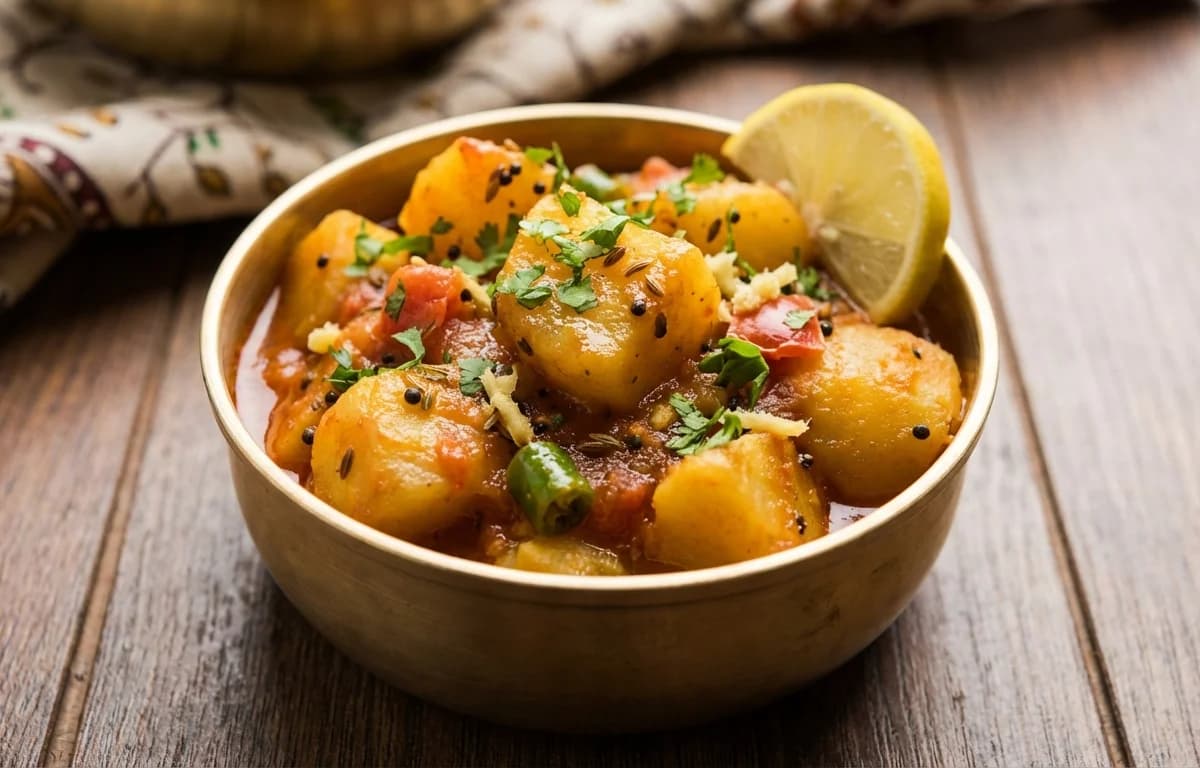
A classic Gujarati comfort food! Tender potatoes cooked in a sweet, tangy, and mildly spiced tomato-based gravy. It's a quick and easy dish that pairs perfectly with rotis or puris.
Prep10 min
Cook20 min
Servings4
Serving size: 1 serving
About Aamras, Puri and Bateta nu Shaak
Creamy Aamras with fluffy puri and tasty potato shaak – a kid-approved, energy-giving comfort meal!
This gujarati dish is perfect for lunch. With 763.81 calories and 13.969999999999999g of protein per serving, it's a nutritious choice for your meal plan.
Other Cuisines to Explore
Discover authentic meals from cuisines around the world.
Gently press and roll the mangoes on a countertop for a minute to loosen the pulp from the skin. This is a traditional technique.
Peel the skin from the mangoes using a sharp knife or peeler.
Carefully slice the mango flesh away from the seed and chop it into rough chunks. Scrape any remaining pulp from the seed.
2
Blend to a Smooth Pulp
Transfer the mango chunks into a high-speed blender.
Add the sugar, cardamom powder, and optional dry ginger powder.
Blend for 1-2 minutes until you achieve a completely smooth, velvety puree without any lumps.
Check the consistency. If the aamras is too thick, add a few tablespoons of chilled milk or water and blend again for 10-15 seconds. Repeat until you reach your desired thickness, which should be like a thick but pourable smoothie.
3
Chill and Serve
Pour the blended aamras into a serving bowl or individual bowls.
Garnish with a few strands of saffron on top.
Cover the bowl and refrigerate for at least 30-60 minutes. Aamras tastes best when served chilled.
Serve cold with hot, fluffy puris for a classic Maharashtrian meal, or enjoy it as a standalone dessert.
426cal
9gprotein
47gcarbs
24gfat
Ingredients
2 cup Atta (Also known as whole wheat flour.)
2 tbsp Rava (Use fine semolina (sooji) for extra crispiness.)
1 tsp Salt (Adjust to taste.)
1 tbsp Ghee (Can be substituted with a neutral oil.)
0.75 cup Lukewarm Water (Add gradually as needed to form a stiff dough.)
3 cup Vegetable Oil (For deep frying. Use a high smoke point oil like canola or sunflower.)
Instructions
1
Prepare the Dough
In a large mixing bowl, combine the atta, rava, and salt. Whisk to mix everything evenly.
Add the ghee to the flour mixture. Using your fingertips, rub the ghee into the flour until it resembles coarse breadcrumbs. This process, known as 'moin', is key for a flaky texture.
Gradually add lukewarm water, a little at a time, while mixing. Knead to form a stiff and firm dough. It should be noticeably tighter than a chapati dough to prevent it from absorbing too much oil during frying.
2
Knead and Rest the Dough
Transfer the dough to a clean work surface and knead for 5-7 minutes until it is smooth and firm.
Cover the dough with a damp cloth or place it in a container with a lid. Let it rest for at least 20-30 minutes. This step is crucial for relaxing the gluten, which makes rolling easier and the puris softer inside.
3
Shape and Roll the Puris
After resting, knead the dough again for one minute to make it smooth.
Divide the dough into 16-20 small, equal-sized balls. Roll each ball between your palms until smooth and crack-free.
Lightly grease your rolling pin and rolling surface with a drop of oil. Avoid using dry flour for dusting, as it can burn in the hot oil and affect its quality and color.
Take one dough ball and roll it into an even circle, about 3-4 inches in diameter and 2-3 mm thick. Ensure the thickness is uniform to help it puff up perfectly.
4
Fry the Puris
Heat the oil for deep-frying in a kadai or deep pan over medium-high heat. The ideal temperature is 180-190°C (355-375°F). To test, drop a tiny piece of dough into the oil; it should sizzle and rise to the top quickly without changing color too fast.
Gently slide a rolled puri into the hot oil. It will sink briefly before floating to the surface.
Using a slotted spoon, gently press down on the center of the puri as it fries. This pressure helps trap steam inside, causing it to puff up beautifully.
Once puffed (this takes about 10-15 seconds), flip it over and fry the other side for another 10-15 seconds until it's a light golden brown.
Fry one or two puris at a time to maintain the oil temperature and avoid overcrowding the pan.
5
Drain and Serve
Remove the fried puri with the slotted spoon, allowing excess oil to drip back into the pan.
Place the puris on a wire rack or a plate lined with paper towels to drain any remaining oil.
Repeat the frying process for all the dough balls.
Serve immediately while hot and puffy with your favorite accompaniments like Aloo Sabzi, Chole, or Shrikhand.
500 g Potatoes (about 3-4 medium, peeled and cubed into 1-inch pieces)
2 medium Tomatoes (finely chopped or pureed)
2 tbsp Vegetable Oil
1 tsp Mustard Seeds
1 tsp Cumin Seeds
0.25 tsp Asafoetida (Also known as Hing. Use gluten-free variety if needed.)
1 inch Ginger (peeled and finely grated)
2 medium Green Chili (finely chopped, adjust to taste)
0.5 tsp Turmeric Powder
1 tsp Red Chili Powder (adjust to spice preference)
1.5 tsp Coriander Cumin Powder (Also known as Dhana Jeeru)
0.5 tsp Garam Masala
1 tsp Jaggery (powdered, or substitute with sugar)
1 tbsp Lemon Juice (freshly squeezed)
1.5 cup Water
1 tsp Salt (or to taste)
2 tbsp Coriander Leaves (freshly chopped, for garnish)
Instructions
1
Prepare the Tempering (Tadka)
Heat oil in a 3-liter pressure cooker over medium heat.
Once the oil is hot, add the mustard seeds and allow them to splutter completely, which takes about 30 seconds.
Add the cumin seeds and asafoetida (hing). Sauté for another 15-20 seconds until the cumin seeds sizzle and become fragrant.
2
Sauté Aromatics and Masala
Add the grated ginger and chopped green chilies. Sauté for about 30-40 seconds until the raw aroma disappears.
Stir in the chopped tomatoes and cook for 3-4 minutes, until they turn soft and mushy.
Add the turmeric powder, red chili powder, and coriander-cumin powder. Mix well and cook for 1 minute, until the oil starts to separate from the masala.
3
Pressure Cook the Potatoes
Add the cubed potatoes and salt to the cooker. Stir gently for a minute to coat the potatoes evenly with the masala.
Pour in 1.5 cups of water and give it a final mix.