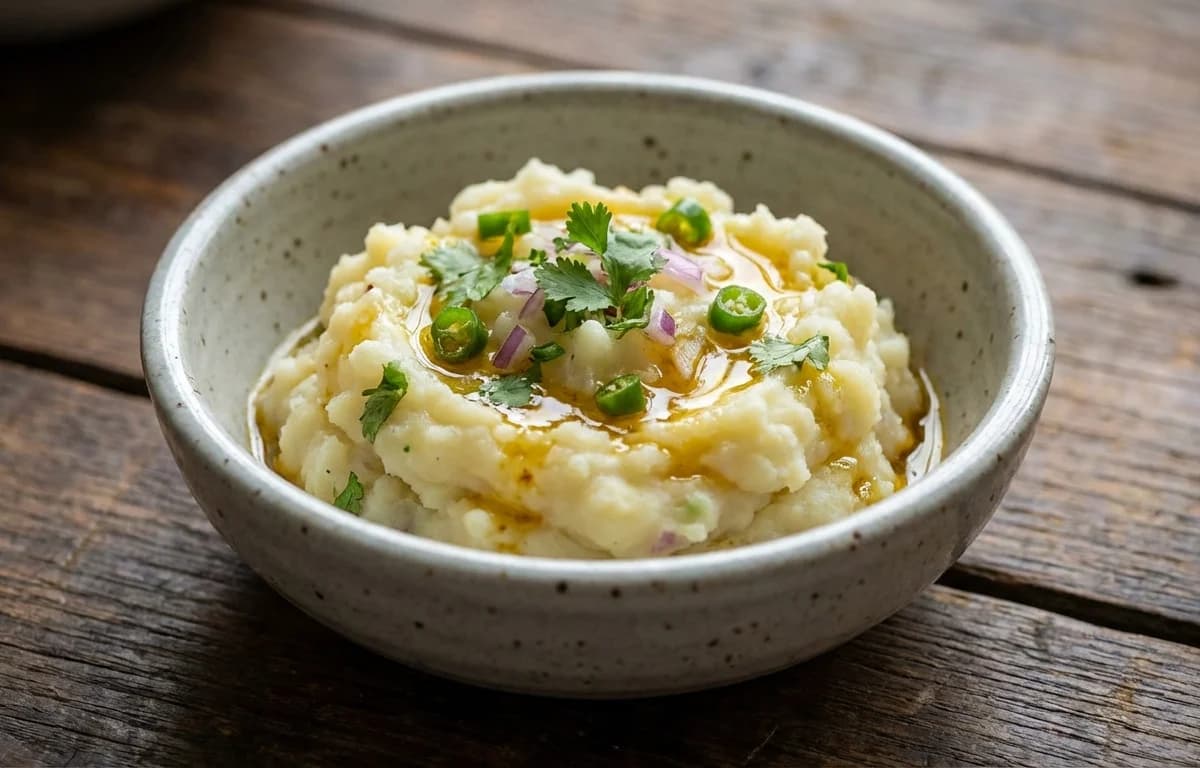
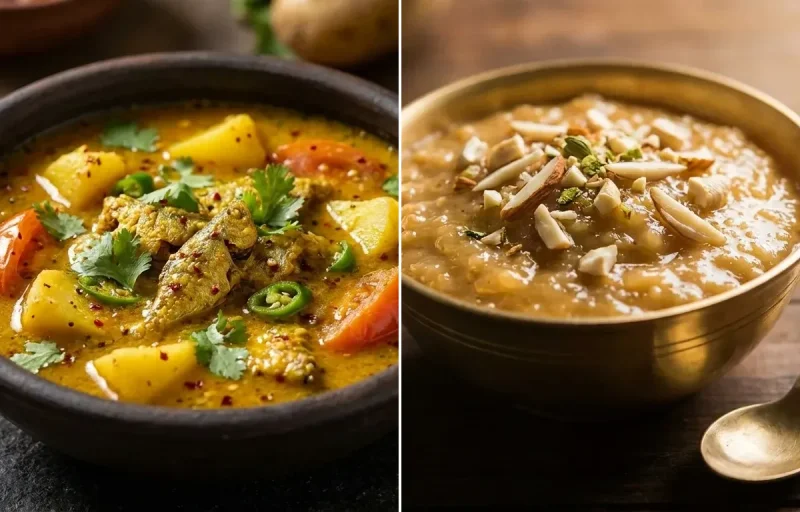
A classic Bengali comfort food, this simple mashed potato dish is flavored with pungent mustard oil, sharp onions, and fiery green chilies. It's the perfect accompaniment to steamed rice and dal, ready in under 20 minutes.
Prep5 min
Cook15 min
Servings4
Serving size: 1 serving
171cal
3gprotein
25gcarbs
7g
Ingredients
500 g Potato (About 4 medium, starchy potatoes like Jyoti or Russet)
1 tsp Salt (For boiling potatoes)
1 medium Red Onion (Finely chopped)
2 pcs Green Chili (Finely chopped, adjust to your spice preference)
2 tbsp Coriander Leaves (Freshly chopped, for garnish)
Instructions
1
Cook the Potatoes
Wash the potatoes thoroughly. Place them in a pot, cover with water, and add 1 tsp of salt. Bring to a boil and cook for 15-20 minutes until they are fork-tender.
Alternatively, place the potatoes in a pressure cooker with 1 cup of water and cook for 3-4 whistles on medium heat. Let the pressure release naturally.
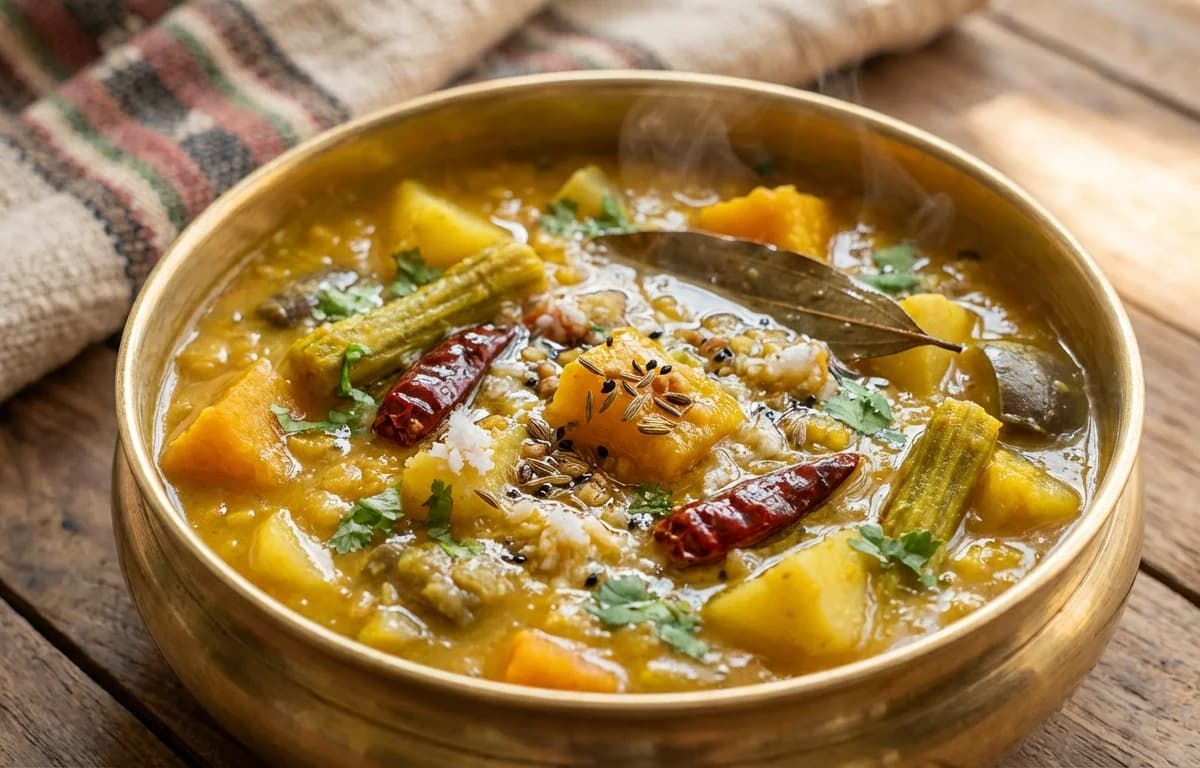
A comforting one-pot lentil and vegetable stew from Odisha. This wholesome dish combines toor dal with a medley of vegetables, seasoned with a unique five-spice tempering and a hint of roasted coconut.
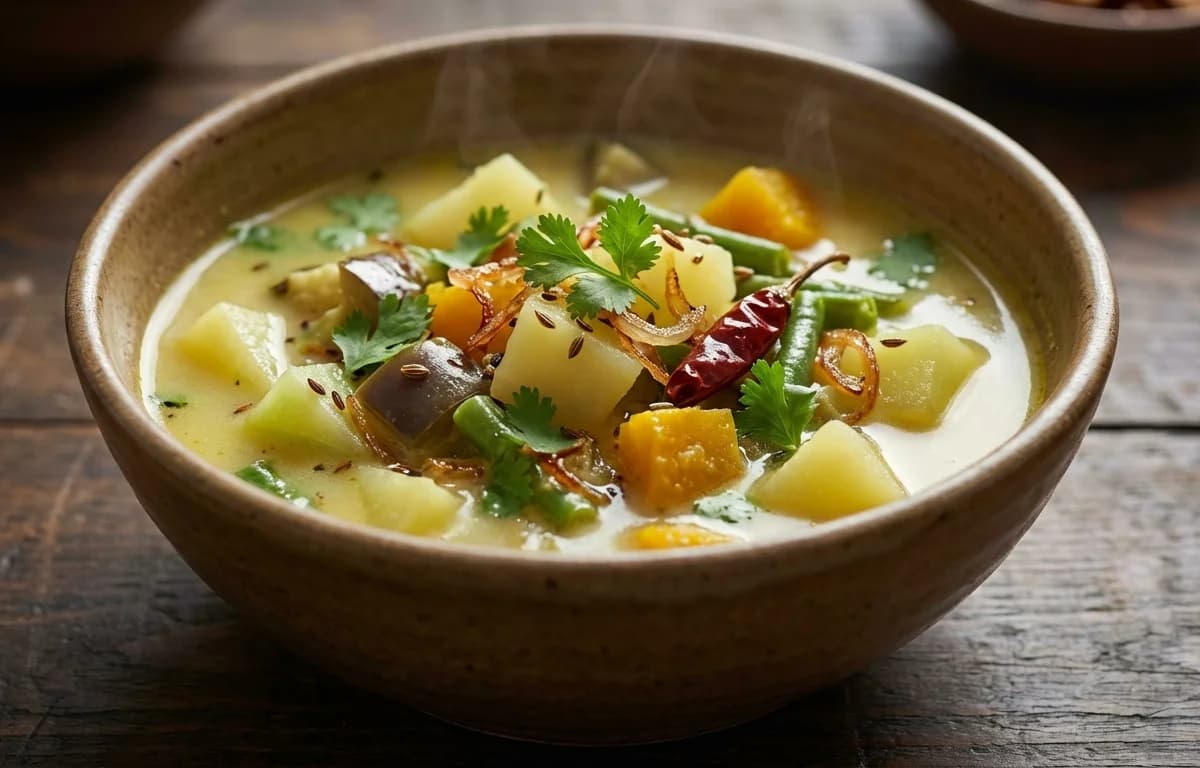
A wholesome and comforting vegetable stew from Odisha, lightly spiced and finished with a splash of milk. This healthy dish is packed with mixed vegetables and is perfect with hot rice or rotis.
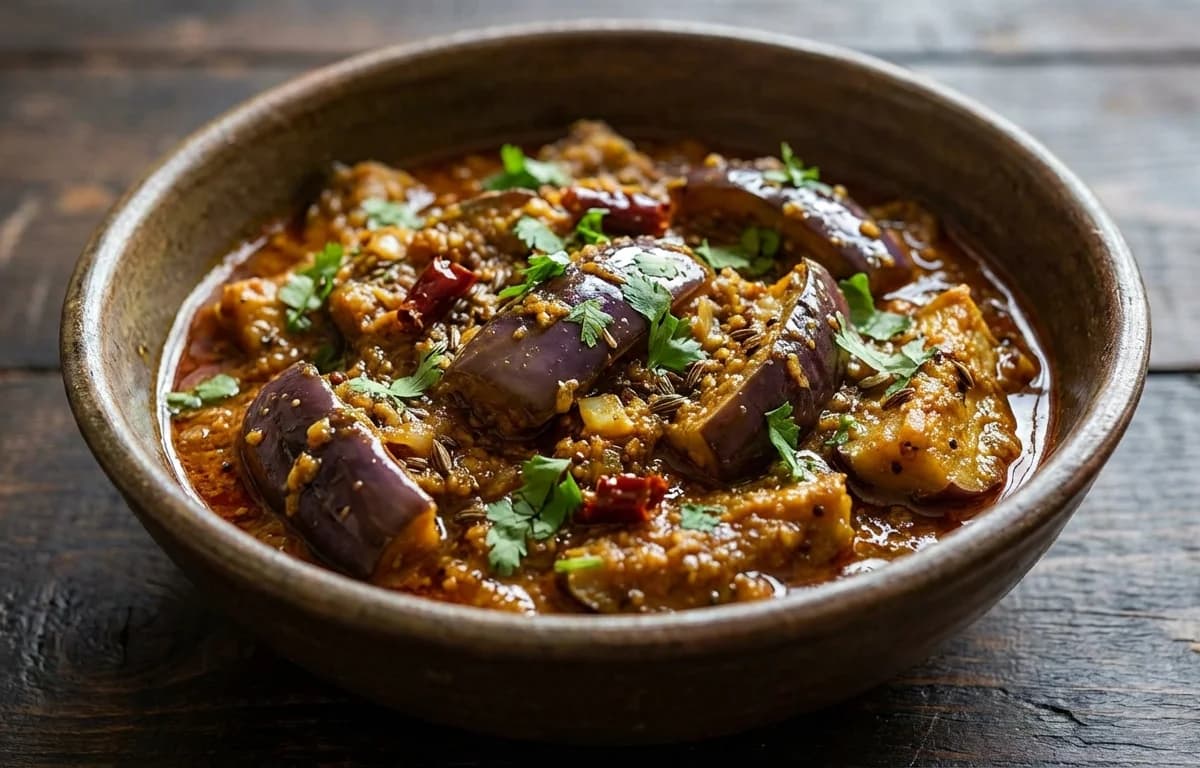
A quintessential Odia delicacy where tender fried eggplant is bathed in a pungent, savory gravy made from ground mustard seeds. This dish offers a unique sharp flavor that pairs beautifully with steamed rice.
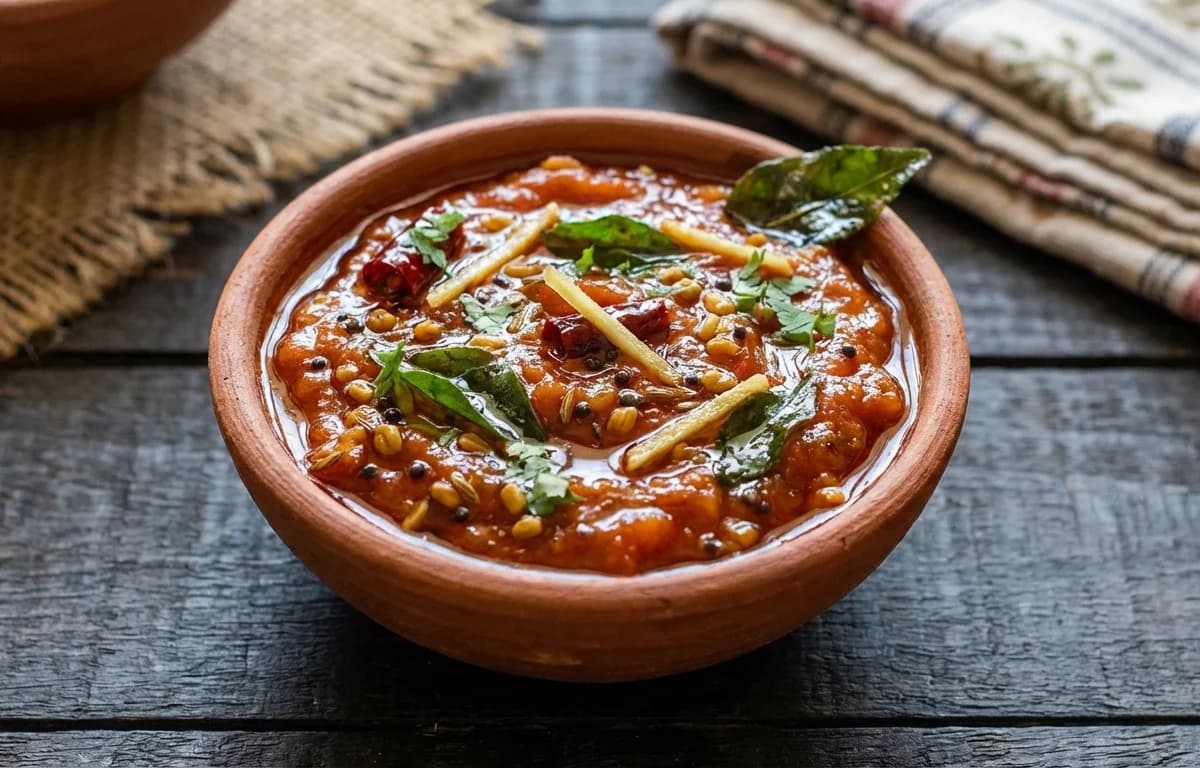
A delightful sweet and tangy tomato relish from Odisha, spiced with panch phoron and sweetened with jaggery. This classic Odia side dish, known as 'khata', pairs perfectly with dal, rice, and everything in between.
Prep10 min
Cook20 min
Servings4
Serving size: 1 serving
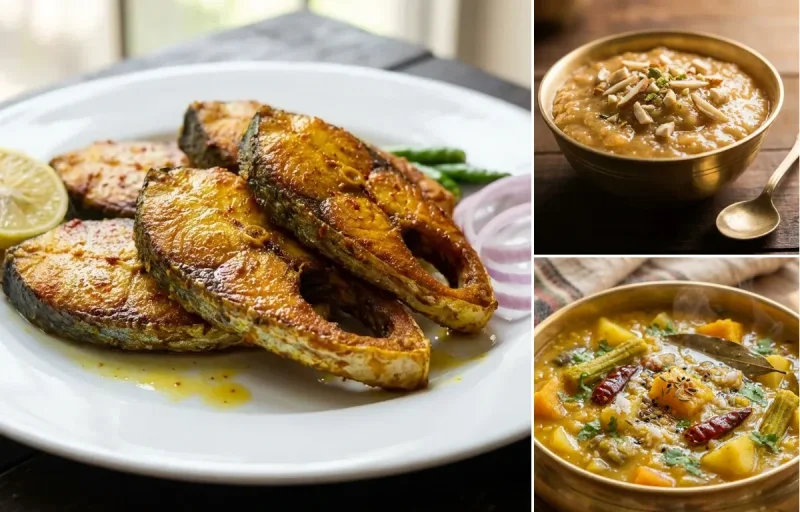
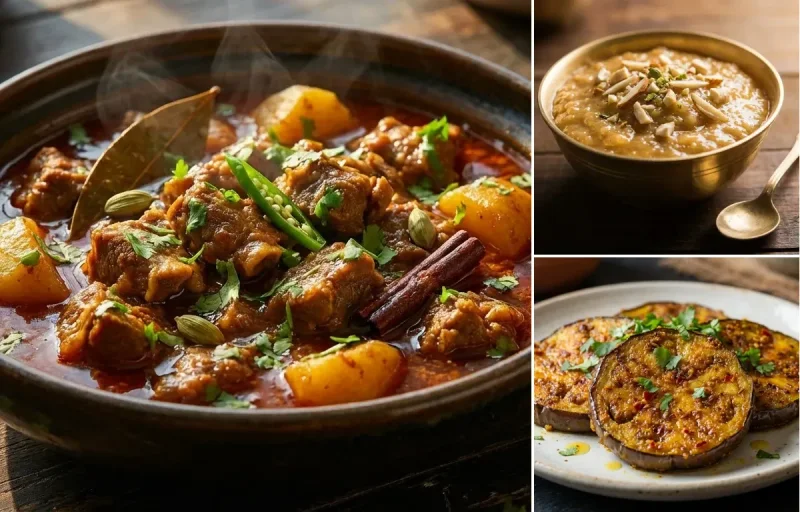
About Aloo Bhate, Odia Dalma, Vegetable Santula, Baigana Besara and Tomato Khata
Fiber-rich Dalma and Santula with tangy Tomato Khata. A perfectly spiced, gut-friendly feast!
This odia dish is perfect for lunch. With 1110.44 calories and 25.34g of protein per serving, it's a nutritious choice for your meal plan.
Other Cuisines to Explore
Discover authentic meals from cuisines around the world.
Once cooked, carefully drain the hot water. While the potatoes are still hot, peel off the skins. The skin should come off easily.
Transfer the hot, peeled potatoes to a large mixing bowl. Using a fork or a potato masher, mash them to a coarse, slightly chunky consistency. Avoid over-mashing or using a blender, which can make them gummy.
3
Mix the Flavorings
To the warm mashed potatoes, add the finely chopped red onion, green chilies, and salt to taste.
Drizzle the pungent mustard oil over the mixture. The heat from the potatoes will slightly temper the oil and release its sharp aroma.
Using your hands (the traditional way) or a spoon, gently mix everything together until just combined. Do not overmix.
4
Garnish and Serve
Garnish with freshly chopped coriander leaves.
Serve immediately with hot steamed rice (gorom bhaat) and a simple dal like Masoor Dal for a classic Bengali comfort meal.
4
Serving size: 1 serving
314cal
13gprotein
48gcarbs
9gfat
Ingredients
1 cup Toor Dal (also known as arhar dal)
4 cup Water (for cooking)
0.5 cup Pumpkin (peeled and cubed)
0.5 cup Potato (peeled and cubed)
0.5 cup Raw Banana (peeled and cubed)
0.5 cup Brinjal (cubed)
1 medium Tomato (chopped)
1 inch Ginger (grated)
0.5 tsp Turmeric Powder
1.25 tsp Salt (or to taste)
2 tbsp Ghee
1 tsp Pancha Phutana (Odia five-spice blend)
2 pcs Dried Red Chilli (broken in half)
1 pcs Bay Leaf
0.25 tsp Hing (Asafoetida)
2 tbsp Fresh Coconut (grated)
2 tbsp Coriander Leaves (chopped, for garnish)
Instructions
1
Prepare Dal and Vegetables
Rinse the toor dal thoroughly under running water until the water runs clear.
Soak the dal in sufficient water for 30 minutes, then drain completely.
Wash and chop all the vegetables (pumpkin, potato, raw banana, brinjal) into 1-inch cubes.
2
Pressure Cook the Dalma
In a pressure cooker, combine the drained dal, all chopped vegetables, chopped tomato, grated ginger, turmeric powder, and salt.
Pour in 4 cups of fresh water and give it a good stir.
Secure the lid and pressure cook on medium heat for 3-4 whistles, or for about 15 minutes, until the dal is completely soft.
Allow the pressure to release naturally before opening the cooker.
3
Prepare Garnish and Tempering (Chhunka)
While the dal is cooking, place the grated coconut in a small, dry pan. Roast over low heat for 2-3 minutes until it's lightly golden and aromatic. Set aside.
In the same pan or a separate tadka pan, heat the ghee over medium heat.
In a medium-sized pot or pressure cooker, combine the cubed raw papaya, potato, brinjal, french beans, and pumpkin.
Add the grated ginger, crushed garlic, slit green chillies, turmeric powder, and salt.
Pour in 2 cups of water. Stir everything to combine.
Cover the pot and bring to a boil. Cook on medium heat for 15-18 minutes, or until all vegetables are fork-tender. If using a pressure cooker, cook for 2 whistles.
2
Thicken and Add Milk
Once the vegetables are soft, use the back of a ladle to gently mash a few pieces of potato and pumpkin against the side of the pot. This will naturally thicken the stew.
Reduce the heat to low, pour in the milk, and stir gently. Let it simmer for 2-3 minutes. Do not let it come to a rolling boil after adding milk.
Turn off the heat and cover the pot.
3
Prepare the Tempering (Chhunka)
Heat ghee in a small pan (tadka pan) over medium heat.
500 g Eggplant (cut into 1.5-inch thick rounds or long wedges)
2 tbsp Yellow Mustard Seeds
1 tbsp Black Mustard Seeds
1 tsp Cumin Seeds (for the paste)
6 cloves Garlic Cloves (peeled)
2 pcs Green Chili (adjust to your spice preference)
0.33 cup Mustard Oil (divided)
1 tsp Panch Phoran (Odia five-spice blend)
2 pcs Dried Red Chili (broken in half)
1 medium Tomato (finely chopped)
0.75 tsp Turmeric Powder (divided)
1.25 tsp Salt (or to taste)
1.25 cup Water (adjust for desired consistency)
2 tbsp Coriander Leaves (chopped, for garnish)
Instructions
1
Prepare Eggplant and Mustard Paste
Wash and cut the eggplant into 1.5-inch pieces. In a bowl, toss the eggplant with 1/2 tsp salt and 1/4 tsp turmeric powder. Set aside for 15 minutes to release moisture.
In a separate small bowl, soak the yellow mustard seeds, black mustard seeds, cumin seeds, garlic cloves, and green chilies in 1/4 cup of warm water for at least 15 minutes. This step is crucial to reduce bitterness.
Transfer the soaked ingredients to a grinder or blender. Blend into a very fine, smooth paste, adding a little more water if necessary to facilitate grinding.
2
Shallow Fry the Eggplant
Heat about 1/4 cup of mustard oil in a wide pan or kadai over medium-high heat until it is fragrant and just begins to smoke.
Carefully place the marinated eggplant pieces in the hot oil in a single layer. Avoid overcrowding the pan; fry in batches if needed.
Shallow-fry for 3-4 minutes per side, until they are golden brown and tender. Remove with a slotted spoon and set aside on a plate.
3
Prepare the Besara Gravy
In the same pan, use the remaining oil (add more if needed to have about 2 tbsp). Heat it over a medium flame.
Add the bay leaf and dried red chillies. Sauté for 30 seconds.
Add the pancha phutana and allow the seeds to crackle and splutter, which should take about 30-45 seconds.
Finally, add the hing, give it a quick stir for 5 seconds, and immediately turn off the heat to prevent it from burning.
4
Combine and Finish
Open the pressure cooker. Using the back of a ladle, gently mash some of the dal and vegetables against the side of the pot to create a creamy, cohesive texture.
Pour the hot tempering (chhunka) over the cooked dalma.
Add the roasted coconut and freshly chopped coriander leaves.
Stir everything together well. Place the cooker back on low heat and let the dalma simmer for 2-3 minutes to allow the flavors to meld beautifully.
Check for seasoning and add more salt if needed. Serve hot with steamed rice.
Once the ghee is hot, add the panch phoron and dried red chillies. Allow the spices to crackle and become fragrant, which should take about 30-40 seconds.
Add the finely chopped onion and sauté for 4-5 minutes, stirring occasionally, until it turns golden brown.
4
Combine and Serve
Immediately pour the hot tempering over the boiled vegetable stew. You will hear a satisfying sizzle.
Gently stir to incorporate the tempering throughout the stew.
Garnish with freshly chopped coriander leaves. Let it rest for 5 minutes for the flavors to meld.
Serve hot with steamed rice or fresh rotis.
Add the panch phoran and dried red chilies. Allow them to crackle for about 30 seconds to release their aroma.
Add the finely chopped tomatoes and cook for 4-5 minutes, stirring occasionally, until they turn soft and mushy.
Lower the heat completely. Add the prepared mustard paste, the remaining 1/2 tsp turmeric powder, and salt. Sauté for only 1-2 minutes, stirring constantly, until the raw smell of the paste disappears. Do not overcook, as this will make the gravy bitter.
4
Combine and Simmer
Pour in 1 to 1.25 cups of water and mix well, gently scraping the bottom of the pan to release any flavorful bits.
Bring the gravy to a gentle simmer over medium heat.
Carefully slide the fried eggplant pieces into the simmering gravy.
Cover the pan and let it simmer on low heat for 5-7 minutes. This allows the eggplant to absorb the flavors of the gravy as it thickens slightly.
5
Garnish and Serve
Turn off the heat. Garnish generously with freshly chopped coriander leaves.
Let the Baigana Besara rest for 5-10 minutes before serving to allow the flavors to meld.
Serve hot with steamed rice for an authentic Odia meal.
Bring the mixture to a gentle boil, then reduce the heat to low.
Let it simmer uncovered for 8-10 minutes, or until the khata thickens to a glossy, jam-like consistency. It will continue to thicken as it cools.
4
Finish and Serve
Turn off the heat and stir in the roasted cumin powder for a final touch of aroma.
Allow the Tomato Khata to cool to room temperature before serving.
Serve as a delicious side dish with rice and dal, roti, or parathas.