Tomato Khata
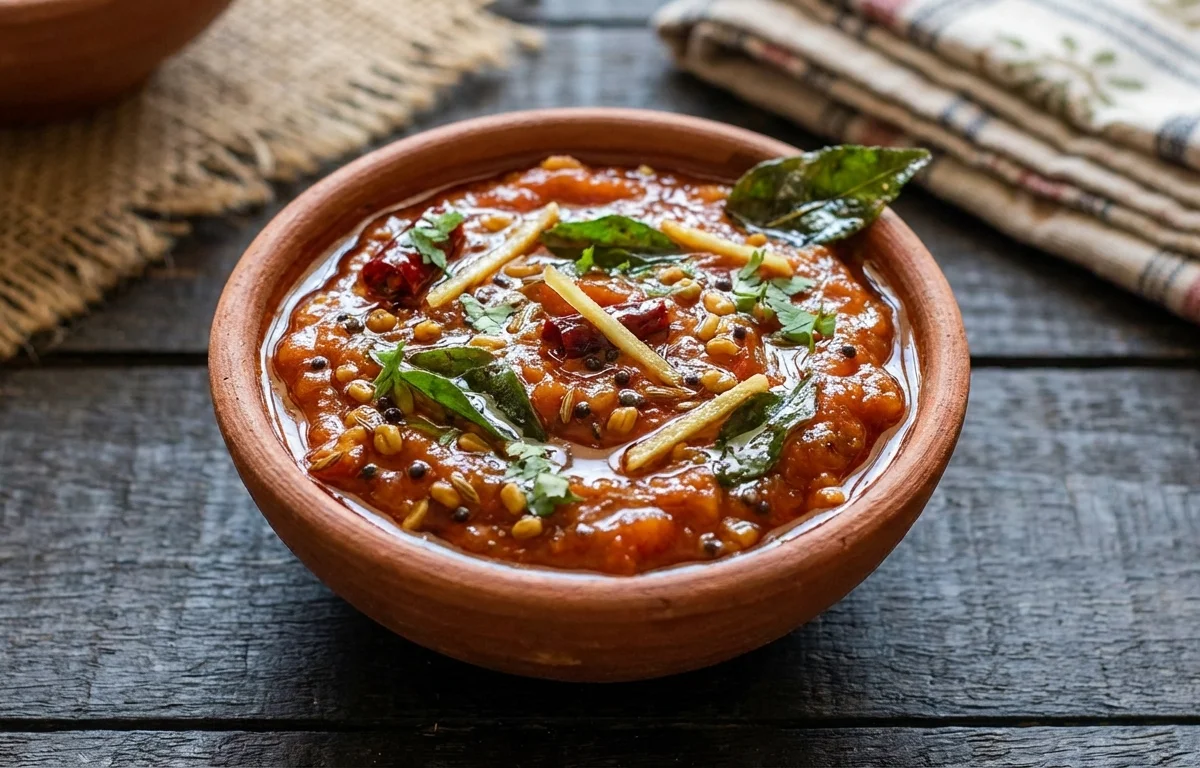
A sweet, tangy and lightly spiced tomato relish from Odisha, this simple khata cooks down fresh tomatoes with mustard, curry leaves and jaggery until glossy and spoonable. It pairs especially well with rice-based meals.
For 4 servings
- prep
Chop the tomatoes and measure the ingredients.
Wash the tomatoes and chop them into small pieces so they break down quickly while cooking. Keep the jaggery grated and the tempering ingredients ready by the stove.
- temper · ~1 min
Make the tempering.
1.Heat oil in a pan over medium heat.2.Add mustard seeds and let them splutter.3.Add dried red chili and curry leaves.4.Cook for a few seconds until fragrant.TIPKeep the heat moderate so the mustard seeds crackle without burning the chili. - saute · ~8 min
Cook the tomatoes with turmeric and salt.
1.Add the chopped tomatoes to the pan and mix well.2.Add turmeric powder and salt.3.Cook over medium heat until the tomatoes turn soft and pulpy.4.Stir now and then so the mixture does not catch at the bottom. - simmer · ~8 min
Add jaggery and simmer the khata.
Pour in the water and add the jaggery. Mix well and simmer until the jaggery melts and the khata turns glossy, slightly thick, and spoonable.
TIPStop cooking while it is still a little loose; it thickens more as it cools. - rest · ~5 min
Let the khata cool for a few minutes.
- serve
Serve the tomato khata.
Serve warm or at room temperature alongside rice, dalma, khichdi, or a simple Odia meal.
What to keep in mind.
7 tips from the recipe — small details that make a real difference to the final dish.
- 1Chop the tomatoes small so they collapse faster and give a smoother khata.
- 2Let the mustard seeds fully splutter before adding chili and curry leaves, or the tempering will taste raw.
- 3Use ripe, slightly sweet tomatoes for the best balance with the jaggery.
- 4Stir more often once the jaggery goes in, because the mixture can catch as it thickens.
- 5Take it off the heat when it looks a little loose; tomato khata thickens noticeably on cooling.
- 6If your tomatoes are very tart, add a little extra jaggery at the end rather than early on.
- 7This keeps well in the fridge for a few days and often tastes even better after the flavors settle.
Adapt it for your goals.
Low-sugar
Reduce the jaggery for a sharper, more savory khata that pairs especially well with rich dal and rice.
spicierSpicier
Add one more dried red chili or a pinch of chili powder if you want more heat against the sweet-tangy base.
gingerGinger
Add a little finely chopped ginger to the tempering for a warmer, slightly sharper Odia-style flavor.
chunkyChunky
Keep the tomato pieces slightly larger and cook a bit less if you prefer a relish with more texture.
Why this is on our healthy list.
Tomato-Rich Side Dish
Tomatoes bring beneficial plant compounds and make this relish a flavorful way to include more vegetables in the meal.
Lightly Oiled Preparation
Only a small amount of oil is used for tempering, so the dish stays relatively light while still carrying spice flavor well.
Digestive Spice Tempering
Mustard seeds, curry leaves, and dried red chili add aroma and complexity without needing heavy ingredients or rich gravies.
Frequently asked questions
Fresh ripe tomatoes are best for the bright, sweet-tart taste, but canned chopped tomatoes can work in a pinch. Simmer a bit longer to reduce extra moisture.