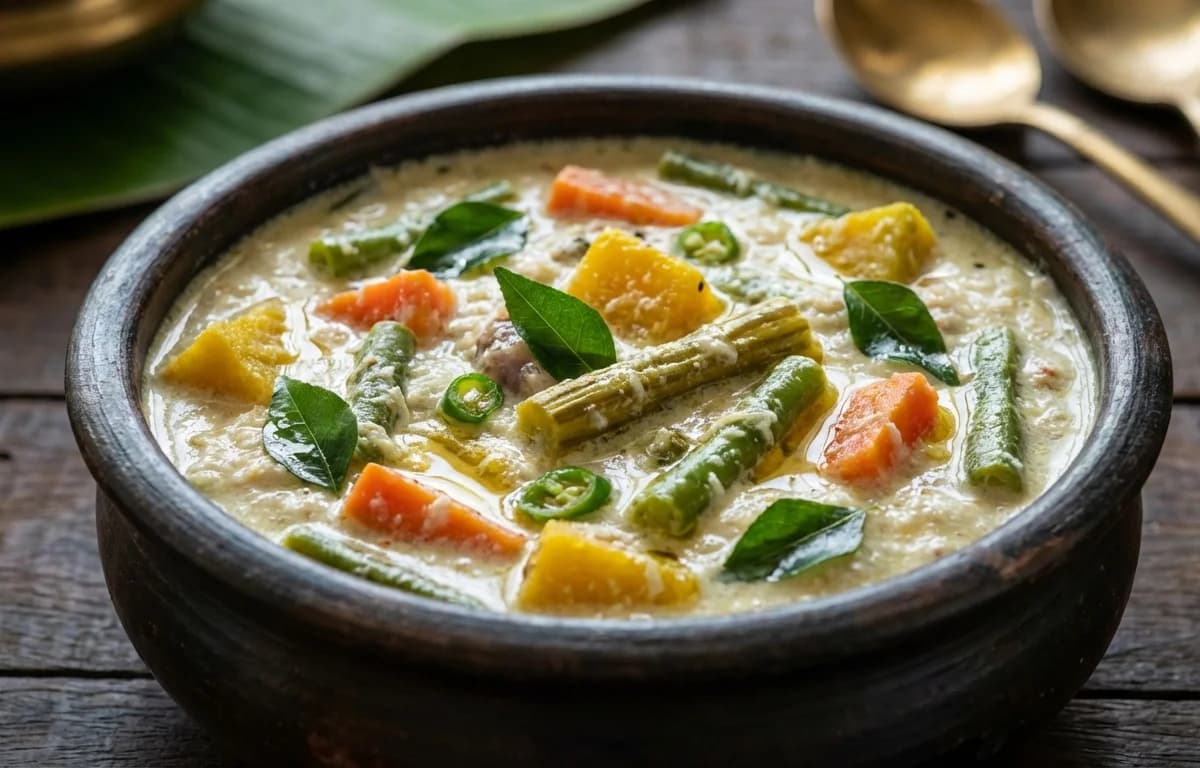
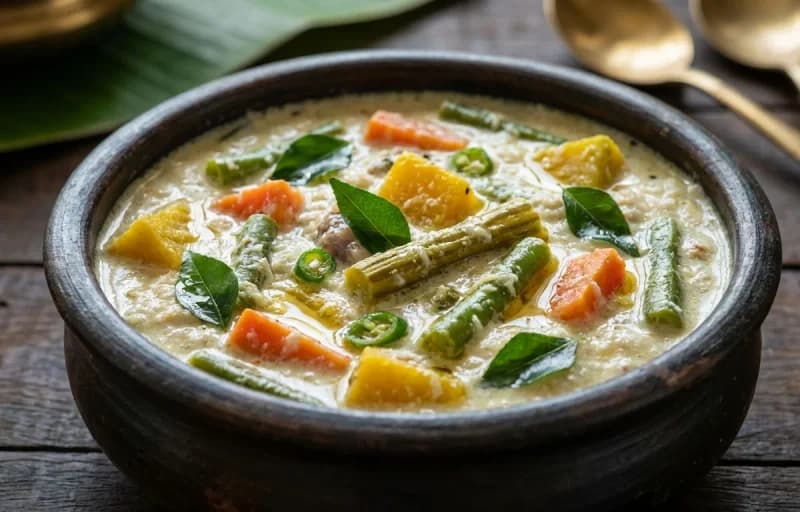
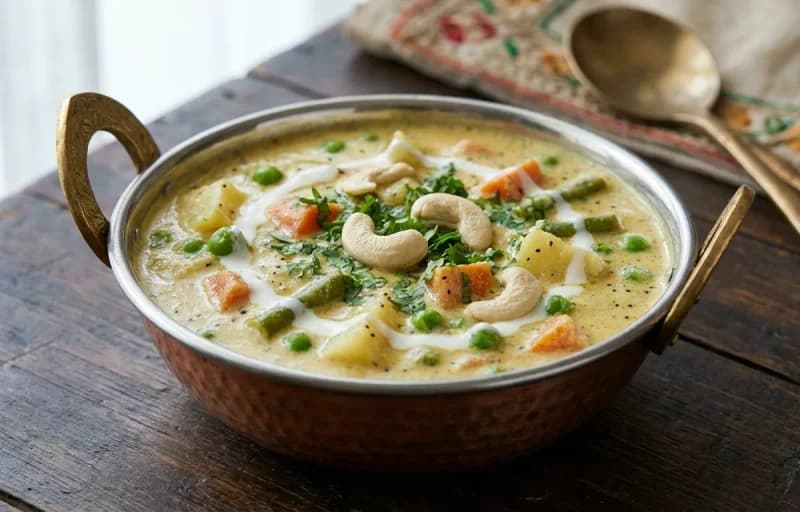
A traditional Kerala delight, Avial is a thick stew of mixed vegetables cooked in a creamy coconut and tangy yogurt sauce. Finished with a drizzle of coconut oil, it's a star dish in any South Indian feast.
Prep25 min
Cook25 min
Servings4
Serving size: 1 serving
219cal
4gprotein
28gcarbs
12gfat
Ingredients
100 g Elephant Foot Yam (Peeled and cut into 2-inch batons)
1 medium Raw Banana (Peeled and cut into 2-inch batons)
1 pc Drumstick (Cut into 2-inch pieces)
1 medium Carrot (Peeled and cut into 2-inch batons)
75 g French Beans (Trimmed and cut into 2-inch pieces)
100 g Ash Gourd (Peeled and cut into 2-inch batons)
1 cup Grated Coconut (Freshly grated and tightly packed)
3 pc Green Chili (Adjust to your spice preference)
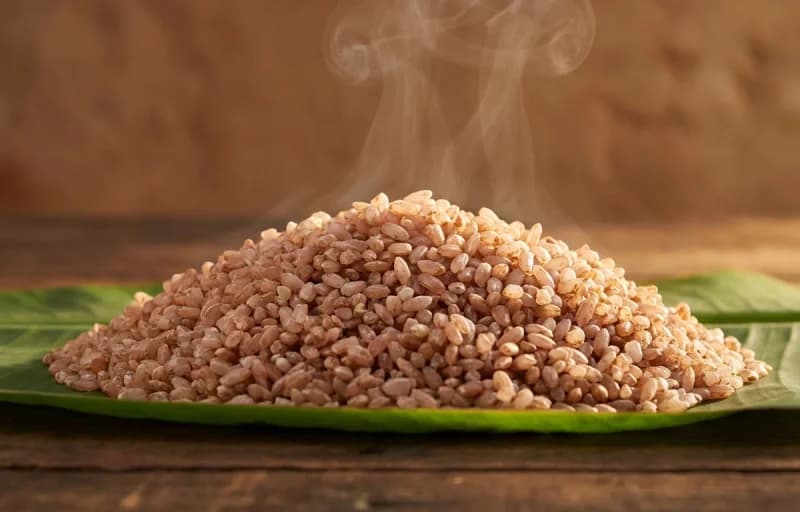
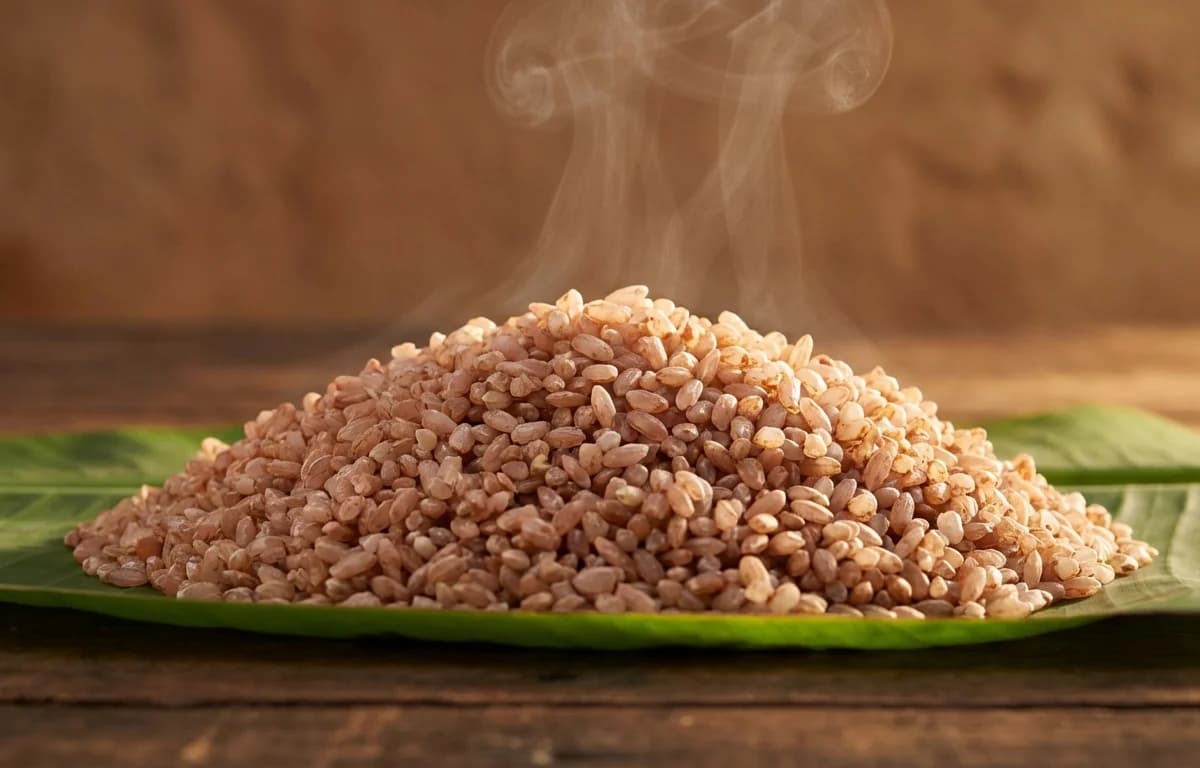
A staple in Kerala, this nutritious red parboiled rice has a unique earthy flavor and firm texture. Perfectly cooked, it's the ideal accompaniment to South Indian curries like sambar and avial.
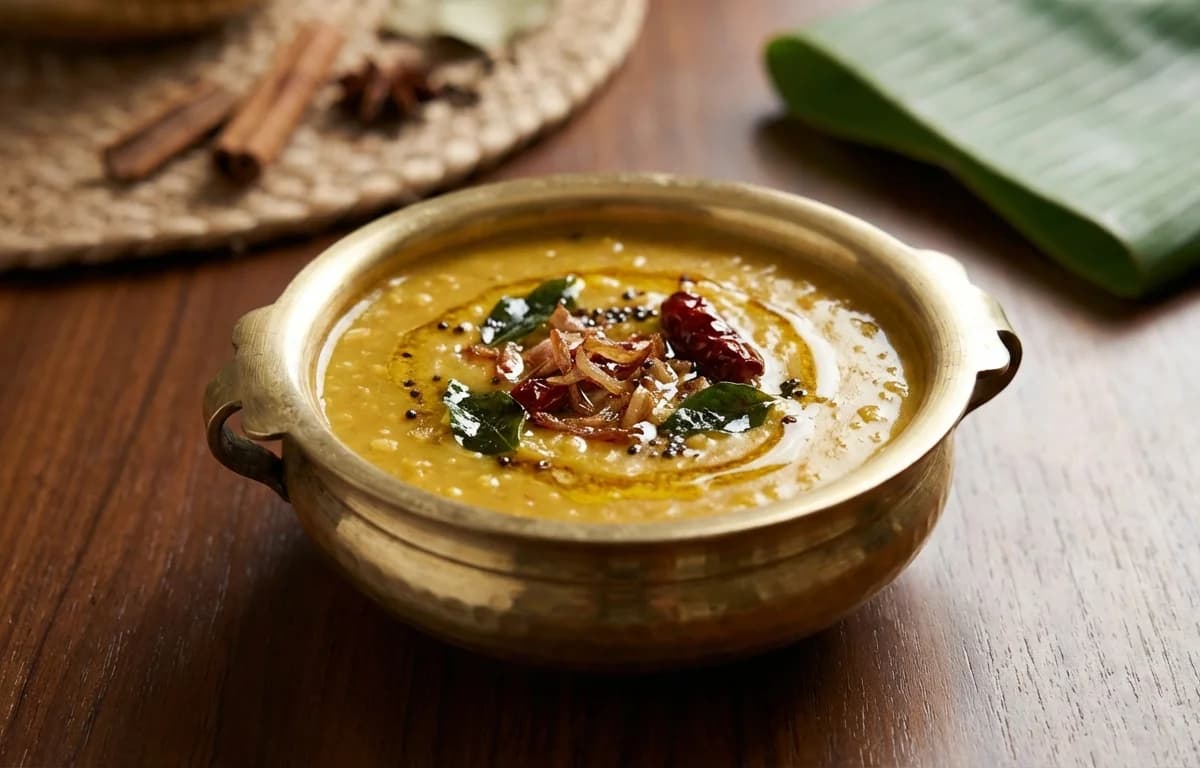
A quintessential Kerala comfort food, this simple moong dal curry is cooked with a fragrant, freshly ground coconut paste and tempered with shallots and curry leaves. Known as 'Parippu Curry', it's a mild, creamy, and essential first course in a traditional Sadhya feast, typically served with rice and a dollop of ghee.
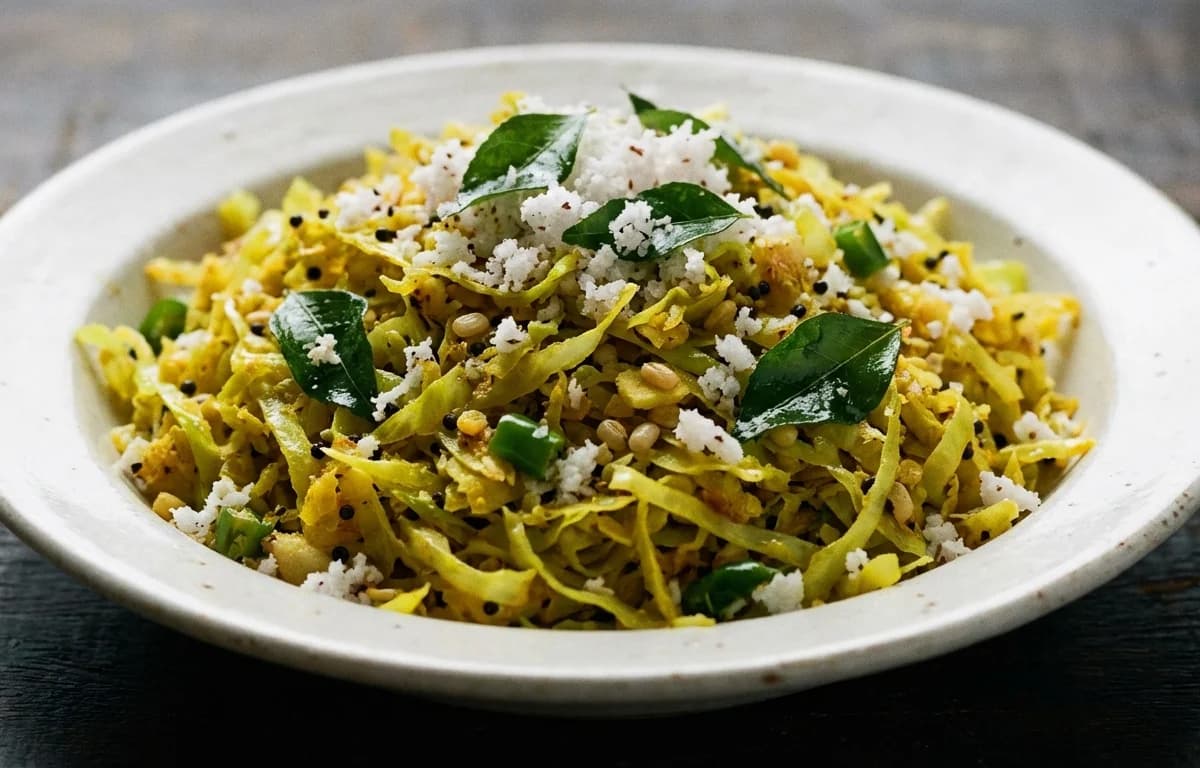
A classic Kerala stir-fry made with finely shredded cabbage, grated coconut, and fragrant spices. This simple, healthy side dish comes together quickly and pairs perfectly with rice and sambar for an authentic South Indian meal.
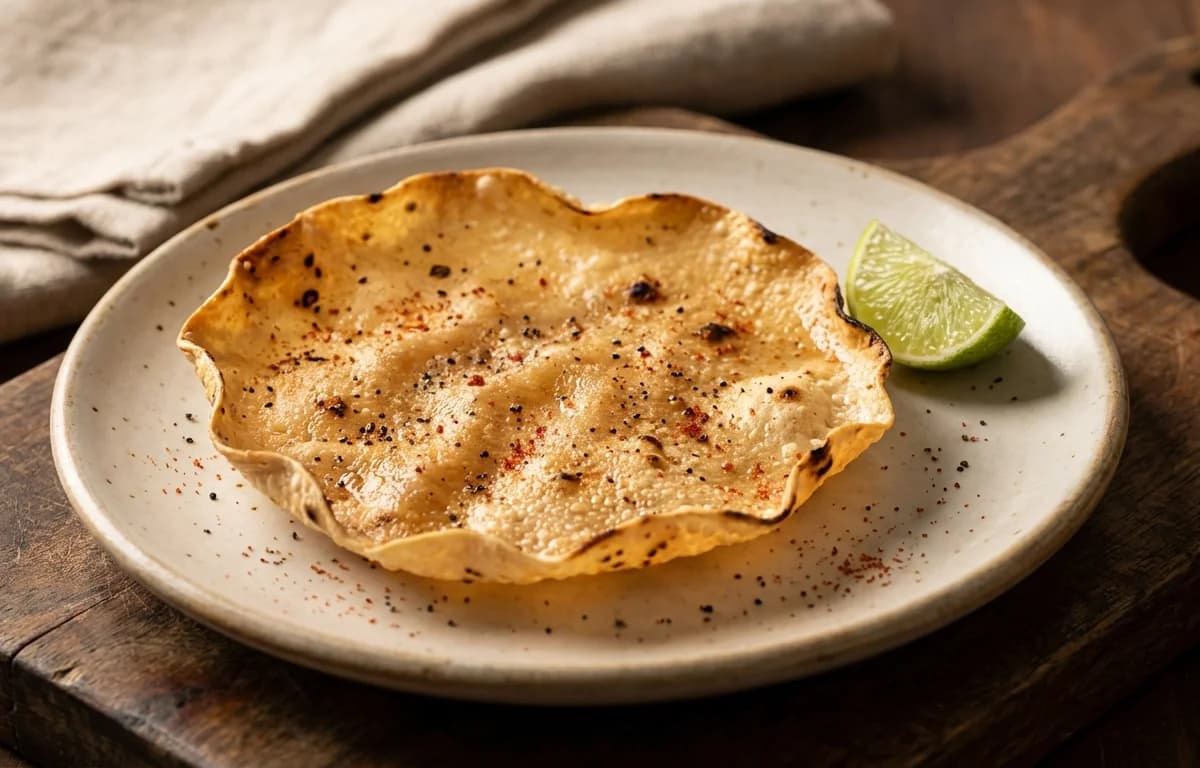
A classic Indian accompaniment, these lentil crisps are roasted directly over a flame until blistered and smoky. Ready in seconds, it's the perfect crunchy side for any dal, rice, or curry meal.
About Avial, Matta Rice, Parippu Curry, Cabbage Thoran and Roasted Papad
Aromatic Avial and protein-packed parippu with Matta rice – a fiber-rich, soul-satisfying feast for all!
This south_indian dish is perfect for lunch. With 1100.29 calories and 33.12g of protein per serving, it's a nutritious choice for your meal plan.
1 tsp
Cumin Seeds
0.5 tsp Turmeric Powder
0.5 cup Curd (Slightly sour, whisked well)
1 sprig Curry Leaves (About 10-12 fresh leaves)
1 tbsp Virgin Coconut Oil (For drizzling at the end)
1 tsp Salt (Adjust to taste)
0.5 cup Water (For cooking vegetables)
Instructions
1
Prepare the Coconut Paste
In a blender or mixie jar, combine the fresh grated coconut, green chilies, and cumin seeds.
Pulse 3-4 times without adding any water to create a coarse, crumbly mixture. Avoid grinding it into a smooth paste. Set this aside.
2
Cook Vegetables in Stages (15-18 minutes)
In a heavy-bottomed pot or kadai, place the harder vegetables: yam and drumstick.
Add 1/2 cup of water, turmeric powder, and salt. Cover and cook on medium heat for about 7-8 minutes until they are partially cooked.
Next, add the semi-hard vegetables: carrot, raw banana, and beans. Stir gently, cover, and continue to cook for another 5-6 minutes.
Finally, add the softest vegetable, ash gourd. Mix gently, cover, and cook for 3-4 minutes until all vegetables are tender but still hold their shape and have a slight bite.
3
Combine with Coconut Paste (2-3 minutes)
Add the prepared coarse coconut paste to the cooked vegetables.
Gently mix until the vegetables are evenly coated. Ensure there is minimal water left in the pot.
Cook on low heat for 2-3 minutes, allowing the raw flavor of the coconut to dissipate and the flavors to meld.
4
Add Yogurt and Finishing Touches (10-15 minutes resting)
Turn off the heat completely. Let the pot cool for 1-2 minutes. This is a crucial step to prevent the yogurt from curdling.
Pour in the well-whisked curd and mix gently until everything is well combined.
Drizzle the virgin coconut oil over the top and scatter the fresh curry leaves.
Immediately cover the pot with a lid and let it rest for at least 10-15 minutes. This allows the final aromas to infuse deeply into the dish. Do not stir after adding oil and leaves until ready to serve.
5
Serve
After the resting period, give the Avial one final gentle stir.
Serve warm as a key component of a Sadya (traditional feast) or as a side dish with steamed rice and sambar.
4
Serving size: 1 serving
246cal
5gprotein
53gcarbs
2gfat
Ingredients
1.5 cup Matta Rice (Also known as Kerala Red Rice or Rosematta Rice)
4 cup Water (For pressure cooking)
0.5 tsp Salt (Optional, to taste)
Instructions
1
Rinse and Soak the Rice
Place the matta rice in a large bowl. Rinse it under cold running water 4-5 times, rubbing the grains gently between your palms, until the water runs mostly clear.
Add fresh water to the bowl to cover the rice by at least 2 inches. Let it soak for a minimum of 30 minutes, or up to 2 hours for a softer texture.
After soaking, drain the water completely using a colander.
2
Pressure Cook the Rice
Transfer the drained rice to a 3-liter or larger pressure cooker.
Add 4 cups of fresh water and the optional salt. Stir once.
Secure the lid of the pressure cooker and place the weight on the vent. Cook on high heat until you hear the first whistle.
After the first whistle, reduce the heat to low and let it simmer for 10-12 minutes.
Turn off the heat and allow the pressure to release naturally. This can take 15-20 minutes. Do not attempt to quick-release the pressure.
3
Fluff and Serve
Once the pressure has completely subsided, carefully open the cooker lid.
The rice should be perfectly cooked and absorbed all the water. Gently fluff the grains with a fork or a spatula.
Serve hot with your favorite Kerala curries like Sambar, Avial, or Pulissery.
1 cup Moong Dal (Also known as Cherupayar Parippu)
3 cup Water (For cooking the dal)
0.5 tsp Turmeric Powder
0.75 cup Grated Coconut (Fresh or thawed frozen)
0.5 tsp Cumin Seeds
2 cloves Garlic Cloves
2 pcs Green Chilli (Slit lengthwise, adjust to your spice preference)
1 tsp Salt (Adjust to taste)
2 tbsp Coconut Oil (Essential for authentic flavor)
1 tsp Mustard Seeds
4 pcs Shallots (Thinly sliced, also known as Chuvannulli)
2 pcs Dried Red Chilli (Broken into halves)
1 sprig Curry Leaves (About 10-12 leaves)
1 tbsp Ghee (Optional, for serving)
Instructions
1
Roast and Cook the Dal
In a heavy-bottomed pan or directly in the pressure cooker, dry roast the moong dal on low-medium heat for 3-4 minutes until it turns a light golden color and becomes aromatic. Be careful not to burn it.
Wash the roasted dal thoroughly under running water. Transfer it to a pressure cooker.
Add 3 cups of water and the turmeric powder. Secure the lid and pressure cook for 3-4 whistles (about 10-12 minutes) or until the dal is completely soft and mushy. Let the pressure release naturally.
2
Prepare the Coconut Paste
While the dal is cooking, combine the grated coconut, cumin seeds, garlic cloves, and green chilies in a small blender or grinder jar.
Add 1/4 cup of water and grind to a very smooth, fine paste. Set aside.
3
Combine and Simmer the Curry
Once the pressure has released, open the cooker. Using the back of a ladle or a whisk, mash the cooked dal well until it reaches a creamy, smooth consistency.
Place the cooker back on the stove over low heat. Add the ground coconut paste and salt to the mashed dal. Mix everything thoroughly.
Prepare the coconut mixture. In a small grinder, combine the grated coconut, shallots, green chilies, ginger, garlic, cumin seeds, and turmeric powder. Pulse 2-3 times to get a coarse, crumbly mixture. Avoid over-grinding it into a fine paste. Set aside.
2
Temper the spices. Heat coconut oil in a wide pan or kadai over medium heat. Once hot, add the mustard seeds and allow them to splutter completely. Add the urad dal and sauté until it turns a light golden brown. Finally, add the broken dried red chilies and curry leaves, and sauté for another 30 seconds until fragrant.
3
Cook the cabbage. Add the finely shredded cabbage and salt to the pan. Mix everything well to ensure the cabbage is evenly coated with the tempering spices.
4
Steam the cabbage. Sprinkle 2 tablespoons of water over the cabbage, cover the pan with a lid, and reduce the heat to low-medium. Cook for 5-7 minutes, or until the cabbage is tender but still retains a slight crunch.
5
Add the coconut mixture. Uncover the pan, add the ground coconut mixture, and stir gently to combine everything well.
6
Finish the dish. Continue to cook uncovered for another 3-4 minutes, stirring occasionally. This step helps evaporate any excess moisture and cooks the raw coconut mixture. Turn off the heat once the thoran is dry.
If the curry seems too thick, add up to 1/2 cup of hot water to reach your desired consistency. It should be thick but pourable.
Allow the curry to come to a gentle simmer and cook for 5-7 minutes, stirring occasionally. Do not let it come to a rolling boil, as this can cause the coconut paste to curdle.
4
Prepare the Tempering (Tadka)
In a small pan (tadka pan), heat the coconut oil over medium heat.
Once the oil is hot, add the mustard seeds and wait for them to splutter completely.
Add the sliced shallots and sauté for 2-3 minutes until they turn golden brown and fragrant.
Add the broken dried red chilies and curry leaves. Sauté for another 30 seconds until the leaves are crisp and aromatic.
5
Finish and Serve
Immediately pour the hot tempering over the simmering parippu curry.
Gently stir to combine. Turn off the heat, cover the pot, and let it rest for at least 5 minutes to allow the flavors to meld together.
Serve hot with steamed rice, pappadam, and a generous dollop of ghee on top.
Serve immediately. Cabbage Thoran is best served hot as a side dish with steamed rice, sambar, or rasam.