
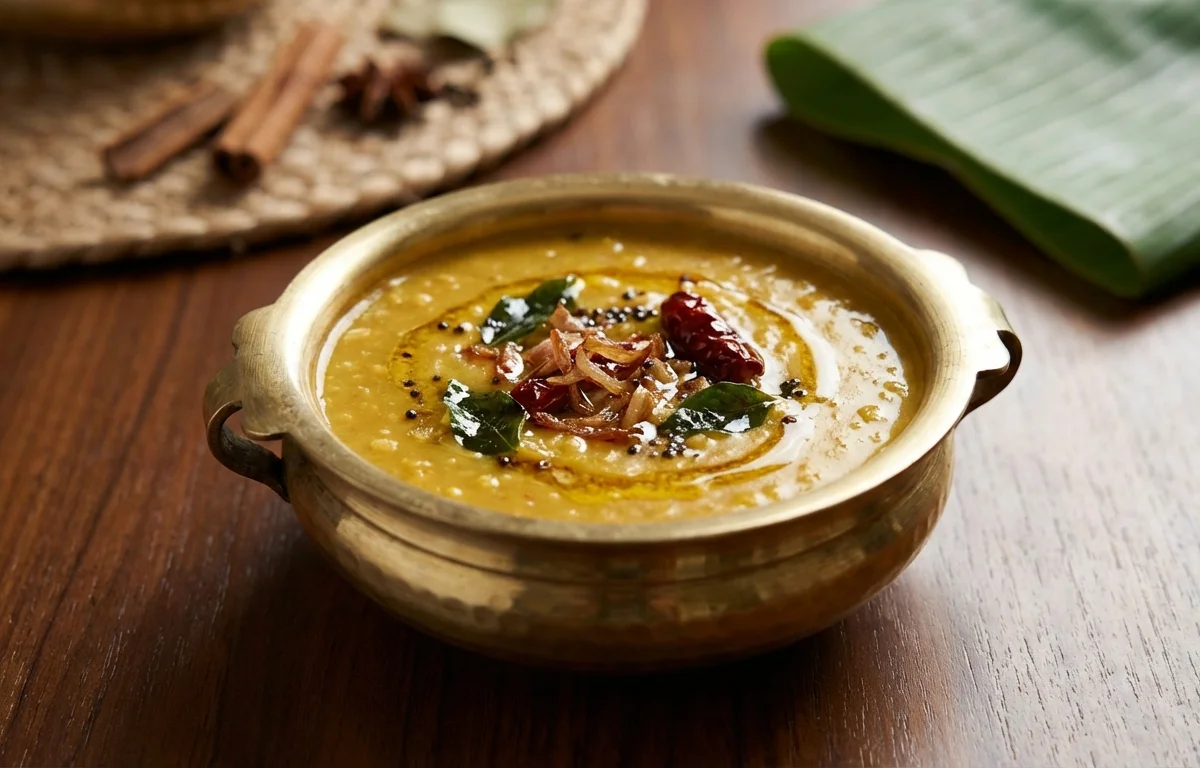
Parippu Curry
A comforting Kerala-style lentil curry made with moong dal, coconut, and mild spices. It cooks into a soft, creamy dish with a gentle tempering of mustard seeds, shallots, and curry leaves that makes it deeply satisfying with rice.
For 4 servings
- prep · ~3 min
Grind the coconut paste.
1.Add coconut, green chili, and cumin seeds to a small grinder jar.2.Pour in a little water for grinding.3.Grind to a smooth, thick paste and set aside. - pressure cook · ~15 min
Cook the dal until soft.
1.Add moong dal, water, turmeric powder, and salt to a pressure cooker.2.Cook for 2 to 3 whistles until the dal turns soft and mushy.3.Let the pressure drop naturally before opening the cooker. - mix · ~3 min
Stir in the coconut paste.
Mash the cooked dal lightly, then mix in the ground coconut paste. Add a splash of water if the curry looks too thick, and stir until smooth.
- simmer · ~4 min
Simmer the curry briefly.
Set the cooker or pan over low heat and simmer the curry for 3 to 4 minutes, stirring now and then, until the raw smell of the coconut-chili paste fades.
TIPKeep the heat low after adding coconut so the curry stays smooth and does not split. - temper · ~4 min
Make the tempering.
1.Heat coconut oil in a small pan over medium heat.2.Add mustard seeds and let them splutter.3.Add dried red chili, curry leaves, and shallot.4.Cook until the shallot turns lightly golden and fragrant. - assemble · ~1 min
Pour the tempering over the curry.
Pour the hot tempering over the simmered dal and mix gently. Let it sit for 1 minute so the flavors settle into the curry.
- serve
Serve hot with rice.
What to keep in mind.
6 tips from the recipe — small details that make a real difference to the final dish.
- 1Cook the moong dal until it is very soft and mashable; parippu curry should be creamy, not grainy.
- 2Grind the coconut with just enough water to make a thick paste so the curry stays rich instead of watery.
- 3After adding the coconut paste, keep the heat low and do not boil hard or the curry can turn slightly split.
- 4Fry the shallots in the tempering until lightly golden, not deeply brown, so they stay sweet and balanced.
- 5Pour the tempering over the curry while it is still sizzling for the best aroma from the mustard, curry leaves, and coconut oil.
- 6If making ahead, loosen the curry with a little hot water before reheating because moong dal thickens as it sits.
Adapt it for your goals.
No-onion
Skip the shallots in the tempering for a simpler temple-style version that still gets fragrance from mustard seeds, red chili, and curry leaves.
spicierSpicier
Add an extra green chili to the coconut paste or one more dried red chili in the tempering for a sharper heat.
thickerThicker
Use slightly less water while cooking the dal and mash it more thoroughly for a denser curry that sits well with rice and ghee.
thin saaru styleThin-saaru-style
Add more hot water after simmering to make a looser parippu curry, ideal for mixing generously into hot Kerala red rice.
Why this is on our healthy list.
Plant Protein from Moong Dal
Moong dal brings plant-based protein and makes the curry filling while still feeling light and easy to eat.
Good Source of Fiber
The lentils and coconut contribute fiber, which supports satiety and gives the dish more staying power with rice.
Gentle, Easygoing Ingredients
With mild spices, soft-cooked moong dal, and a short ingredient list, this curry is comforting and not overly heavy.
Frequently asked questions
Yes. Cook the washed moong dal in a pot with water, turmeric, and salt until very soft, then mash and continue with the recipe.



.webp)
.webp)