
Matta Rice
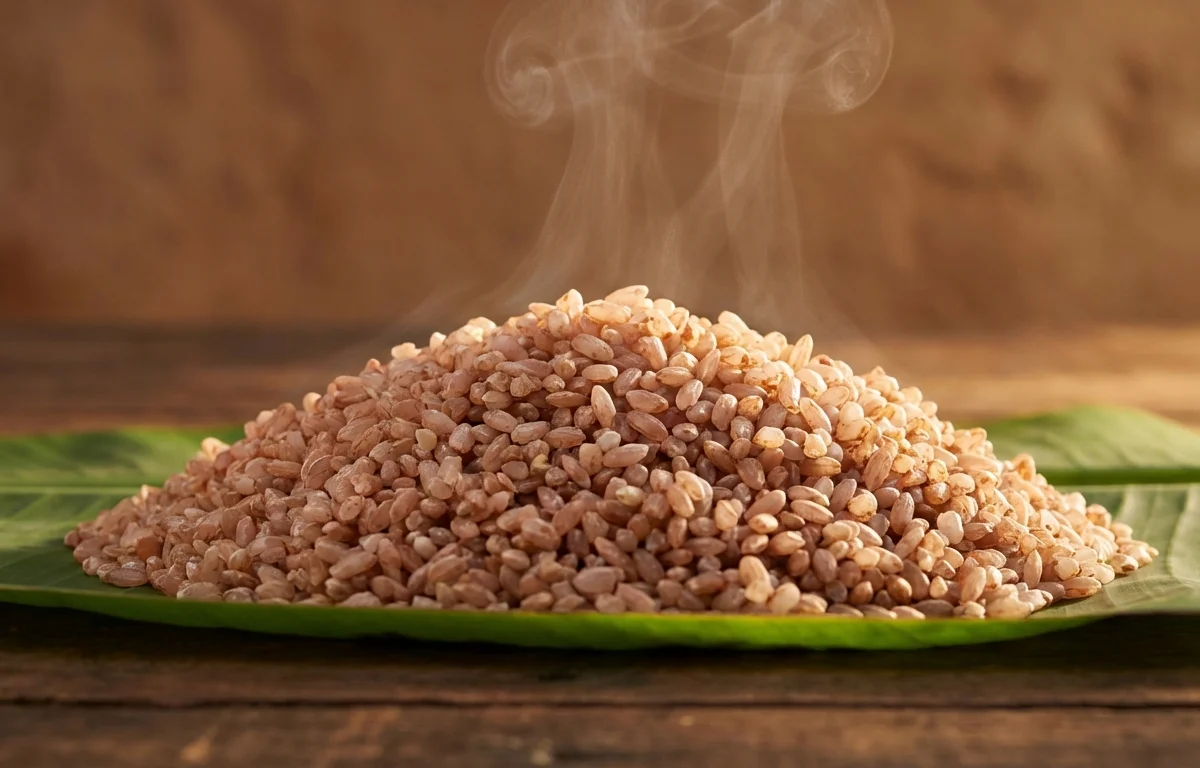
Nutty, chewy Kerala matta rice with its signature rosy-brown color and hearty bite. This simple staple cooks up fluffy and satisfying, making it a perfect partner for curries, fish, thoran, and everyday meals.
For 4 servings
- prep · ~30 min
Wash and soak the rice.
Rinse the matta rice several times until the water looks much clearer. Soak it in fresh water for 30 minutes, then drain well.
TIPSoaking helps the grains cook more evenly and shortens the cooking time. - boil · ~30 min
Boil the rice in water.
1.Bring 5 cups water to a rolling boil in a pot.2.Add the drained matta rice and salt.3.Cook uncovered over medium heat until the grains are tender but still hold their shape, about 25 to 30 minutes.4.Stir once or twice while cooking so the rice does not stick to the bottom.TIPMatta rice stays pleasantly chewy, so do not expect the soft texture of regular white rice. - boil · ~2 min
Drain the excess water.
When the rice is cooked through, pour off the extra cooking water carefully and let the rice sit in the pot for 2 minutes.
- serve
Fluff and serve the matta rice hot.
What to keep in mind.
7 tips from the recipe — small details that make a real difference to the final dish.
- 1Rinse until the water runs noticeably clearer; matta rice sheds extra starch and bran dust.
- 2Soaking for 30 minutes helps the thick grains cook through evenly without splitting.
- 3Use a roomy pot, since matta rice expands well and the water can bubble up while boiling.
- 4Taste a grain around the 25-minute mark; it should be tender with a distinct chewy center.
- 5Drain as soon as the grains are done, or the rice can turn heavy from sitting in hot water.
- 6Let the drained rice rest covered for 2 minutes before fluffing so surface moisture redistributes.
- 7Leftover matta rice keeps well for the next day and reheats best with a splash of water.
Adapt it for your goals.
Pressure-cooker
Use a pressure cooker if you want a quicker weekday version; it softens the sturdy grains faster than open-pot boiling.
kanji styleKanji-style
Cook with extra water and keep the starchier liquid for a softer, porridge-like Kerala rice meal.
no saltNo-salt
Skip the pinch of salt if serving with salty fish curry, pickle, or other strongly seasoned sides.
Why this is on our healthy list.
Whole-Grain Goodness
Matta rice retains its bran layer, giving the dish more natural fiber and a heartier texture than polished white rice.
Steady, Filling Base
Its chewy texture and robust grain make it satisfying, so it works well as a substantial base for curries and vegetable sides.
Naturally Simple
This dish uses just rice, water, and a little salt, making it a plain, minimally processed staple for everyday meals.
Frequently asked questions
This rice is dense and sturdy, so boiling it like pasta helps it cook through evenly while keeping the grains separate and fluffy.



.webp)
.webp)