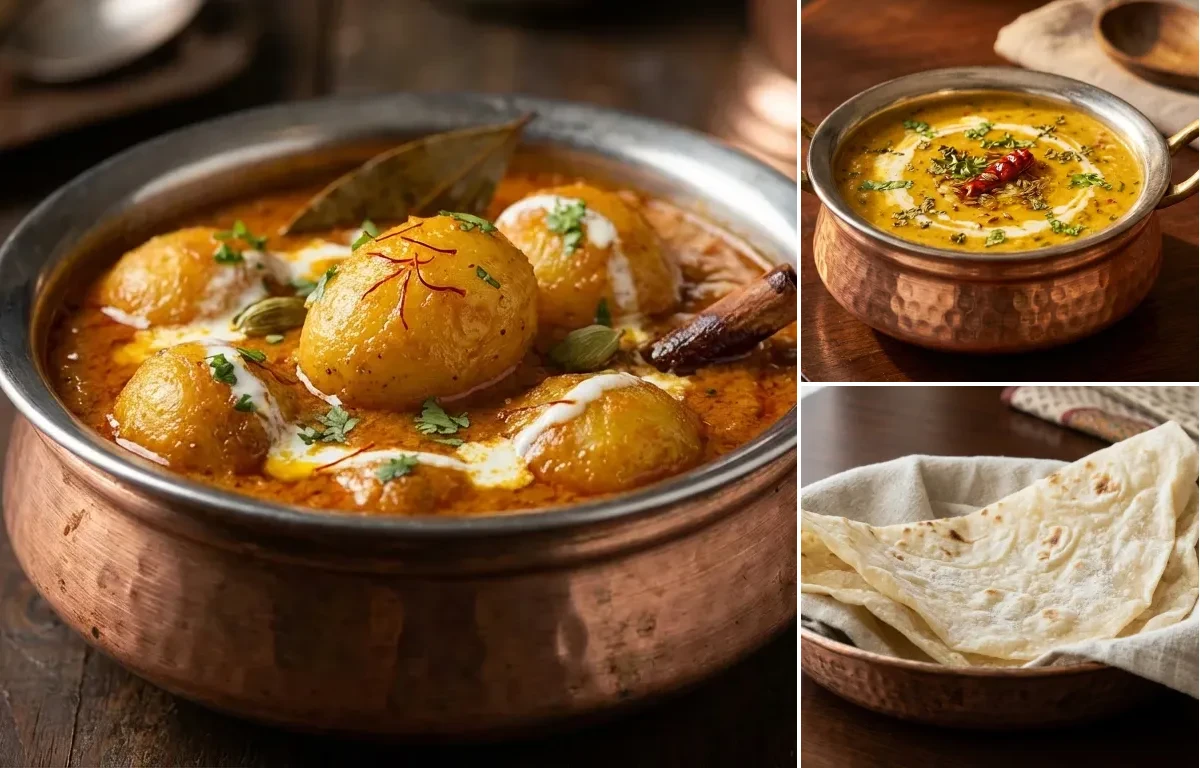
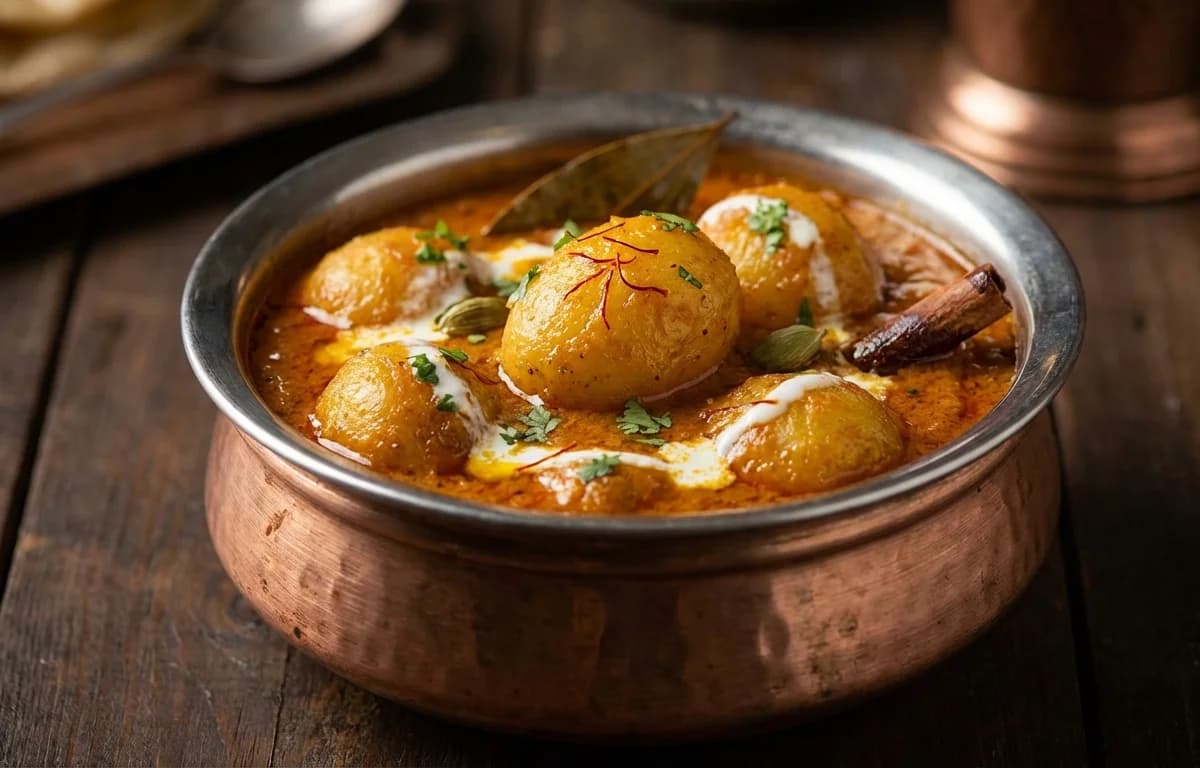
A classic from the royal kitchens of Lucknow. Baby potatoes are fried golden and simmered in a rich, creamy gravy made with yogurt, cashews, and fragrant spices. This dish is slow-cooked using the 'dum' technique for an incredible depth of flavor.
Prep25 min
Cook50 min
Soak30 min
Servings4
Serving size: 1 serving
464cal
8gprotein
36gcarbs
Ingredients
500 g Baby Potatoes (About 20-24 potatoes)
2 cup Vegetable Oil (For deep frying)
1 cup Yogurt (Whisked until smooth)
0.25 cup Cashew Nuts (Soaked in warm water for 30 minutes)
1 tbsp Poppy Seeds (Soaked in warm water for 30 minutes)
3 tbsp Ghee
2 medium Onion (Boiled and ground to a smooth paste)
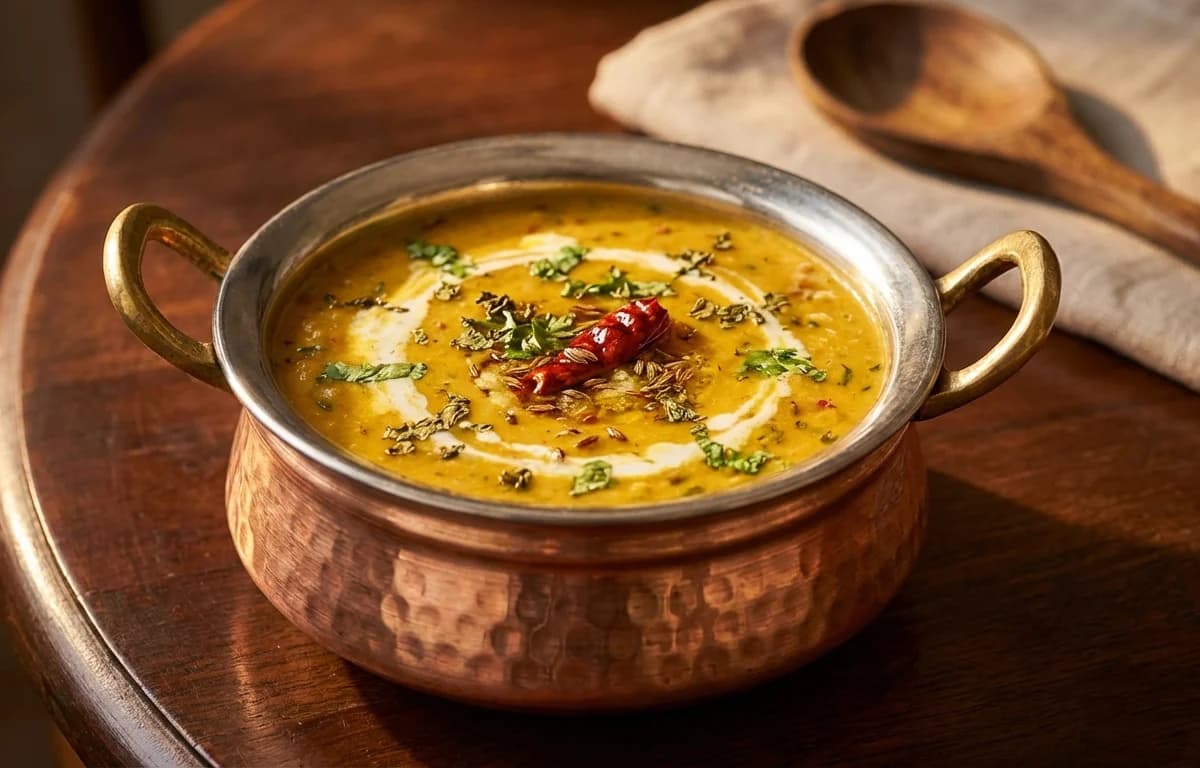
A rich and creamy Mughlai lentil dish made with toor dal, yogurt, and a blend of aromatic spices. Its royal flavor and velvety texture make it a perfect centerpiece for a special meal, paired with naan or rice.
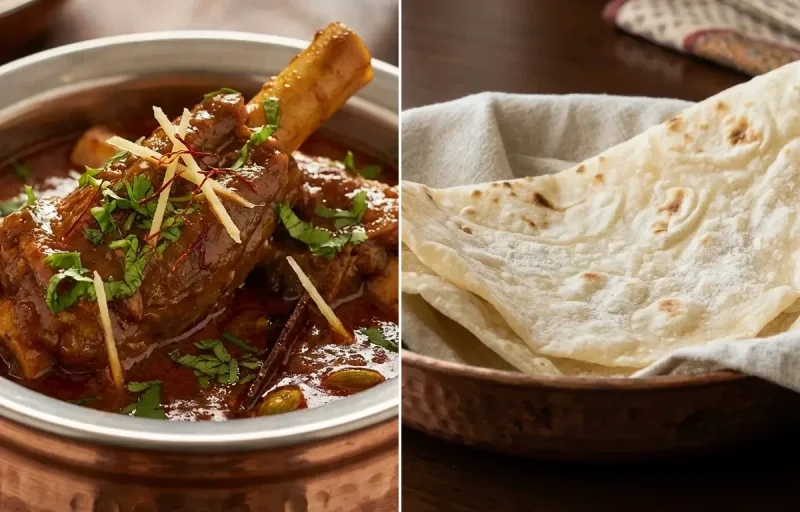
Experience the magic of ultra-thin, soft, and foldable flatbreads, reminiscent of a handkerchief. This Mughlai specialty is perfect for scooping up rich curries and kebabs, and surprisingly fun to make at home.
Prep20 min
Cook20 min
Servings4
Serving size: 1 serving
About Awadhi Dum Aloo, Sultani Dal and Roomali Roti
Melt-in-mouth Awadhi Dum Aloo, protein-packed Sultani Dal, and light Roomali Roti. An aromatic, soul-satisfying meal!
This awadhi dish is perfect for dinner. With 1114.87 calories and 30.31g of protein per serving, it's a nutritious choice for your meal plan.
Other Cuisines to Explore
Discover authentic meals from cuisines around the world.
Wash the baby potatoes thoroughly. Boil them in salted water for 10-12 minutes until they are about 80% cooked (a knife should go in with slight resistance).
Drain the potatoes and let them cool slightly. Once cool enough to handle, peel the skins off.
Using a fork or a skewer, prick each potato multiple times all over. This is a crucial step to allow the gravy to penetrate.
2
Fry the Potatoes
Heat the oil in a kadai or deep pan over medium-high heat.
Carefully slide the pricked potatoes into the hot oil. Fry in batches if necessary to avoid overcrowding.
Fry for 8-10 minutes, turning occasionally, until they are evenly golden brown and have a slightly crisp outer layer.
Remove the potatoes with a slotted spoon and place them on a plate lined with paper towels to drain excess oil. Set aside.
3
Prepare the Gravy Pastes
Drain the soaked cashews and poppy seeds. Add them to a blender with 2-3 tablespoons of water.
Blend until you have a completely smooth, fine paste. Scrape down the sides to ensure no bits are left. Set aside.
If you haven't already, boil the onions until soft, then blend them into a smooth paste.
4
Cook the Gravy Base
In a heavy-bottomed pot or handi, heat the ghee over medium heat.
Add the whole spices: bay leaf, cinnamon stick, green cardamom, and cloves. Sauté for about 30-45 seconds until they become fragrant.
Add the boiled onion paste and cook for 6-8 minutes, stirring frequently, until it turns a light golden brown and the moisture evaporates.
Add the ginger-garlic paste and sauté for another 1-2 minutes until the raw aroma disappears.
5
Build the Rich Gravy
In a separate bowl, whisk the yogurt with all the powdered spices: Kashmiri red chili powder, turmeric powder, coriander powder, and fennel powder.
Reduce the heat to low. Slowly pour the yogurt-spice mixture into the pot, stirring continuously and vigorously for 2-3 minutes to prevent it from curdling.
Once the yogurt is incorporated, increase the heat to medium-low and cook for 5-6 minutes until the masala thickens and you see ghee separating at the edges.
Stir in the cashew-poppy seed paste. Cook for another 3-4 minutes, stirring constantly as it can stick to the bottom.
Pour in 1 cup of warm water, add salt and sugar. Stir well to combine everything and bring the gravy to a gentle simmer.
6
Dum Cook the Aloo
Gently add the fried baby potatoes to the simmering gravy.
Sprinkle the garam masala over the top. Drizzle in the saffron-infused milk and the kewra water. Stir gently to coat the potatoes without breaking them.
Cover the pot with a tight-fitting lid. To create a traditional 'dum' seal, you can place a heavy weight on the lid or seal the edges with a simple dough made from flour and water.
Reduce the heat to the absolute lowest setting. Let the dish cook on 'dum' for 15-20 minutes. This slow-cooking process allows the potatoes to absorb all the aromatic flavors of the gravy.
7
Garnish and Serve
Turn off the heat and let the pot rest, sealed, for at least 5-10 minutes before opening.
Carefully open the lid. Garnish with fresh cream if desired.
Serve hot with naan, sheermal, or jeera rice.
4
Serving size: 1 serving
321cal
14gprotein
39gcarbs
13gfat
Ingredients
1 cup Toor Dal (Also known as split pigeon peas)
3 cup Water (For pressure cooking the dal)
0.5 tsp Turmeric Powder
1 tsp Salt (Divided, or to taste)
1 cup Curd (Use full-fat and whisked until smooth)
1 tbsp Besan (Chickpea flour, acts as a stabilizer)
1 tsp Kashmiri Red Chili Powder (For color and mild heat)
2 tbsp Coriander Leaves (Freshly chopped, for garnish)
Instructions
1
Cook the Dal (15-20 minutes)
Rinse the toor dal under running water until the water runs clear. Soak it in fresh water for at least 30 minutes.
Drain the soaked dal and transfer it to a pressure cooker. Add 3 cups of water, turmeric powder, and 0.5 tsp of salt.
Secure the lid and pressure cook on medium heat for 4-5 whistles, or until the dal is completely soft and mushy (about 15 minutes).
Allow the pressure to release naturally. Open the cooker and use a whisk or an immersion blender to mash the dal until it's smooth and creamy. Set aside.
2
Prepare the Yogurt Base (3 minutes)
In a medium bowl, add the whisked curd.
Add besan, Kashmiri red chili powder, coriander powder, and garam masala to the curd.
Whisk vigorously until the mixture is completely smooth and free of lumps. This step is crucial to prevent the curd from splitting when cooked.
3
Prepare the Tempering (Tadka) (8-10 minutes)
Heat ghee in a heavy-bottomed pan or kadai over medium heat.
In a large mixing bowl, whisk together 1.5 cups of all-purpose flour, 0.5 cup of atta, and salt.
Add the vegetable oil and rub it into the flour with your fingertips until the mixture resembles fine breadcrumbs.
Gradually pour in the warm milk and warm water, mixing continuously to form a very soft, pliable, and slightly sticky dough. You may not need all the water.
2
Knead and Rest the Dough
Transfer the dough to a lightly oiled surface and knead for 10-12 minutes until it becomes extremely smooth, soft, and elastic. It should spring back when gently pressed.
Place the dough in a greased bowl, cover with a damp cloth or plastic wrap, and let it rest for at least 60 to 90 minutes. This step is crucial for relaxing the gluten, which makes stretching possible.
3
Prepare the Cooking Surface
Invert a large kadai (Indian wok) or a convex tawa over your stove burner.
Heat the inverted kadai on a medium-high flame for 5-7 minutes until it's very hot. To test if it's ready, sprinkle a few drops of water on the surface; they should sizzle and evaporate almost instantly.
4
Divide and Shape the Dough
After resting, gently knead the dough for another minute.
Divide the dough into 8 equal-sized balls. Keep the dough balls covered with a damp cloth to prevent them from drying out.
5
Stretch the Roti
Take one dough ball and dust it generously with all-purpose flour. Roll it out with a rolling pin into a thin circle, about 6-7 inches in diameter.
Gently lift the rolled dough and drape it over the knuckles of both hands. Carefully rotate the dough, allowing gravity to stretch it further until it becomes paper-thin and translucent. Be gentle to avoid tearing.
6
Cook the Roti
Quickly and carefully, drape the stretched roti over the hot inverted kadai.
Cook for about 30-45 seconds, or until you see small bubbles forming on the surface.
Using a pair of tongs, flip the roti and cook the other side for another 20-30 seconds. The roti should be cooked through but remain soft and pale, without any dark brown spots.
7
Fold and Serve
Remove the roti from the kadai and place it on a clean cloth or plate.
Immediately fold it in half, and then in half again to resemble a handkerchief.
Brush with a little ghee if desired. Place the folded roti in a casserole dish or wrap it in a kitchen towel to keep it warm and soft while you cook the rest.
Once the ghee is hot, add the cumin seeds, hing, and dried red chilies. Sauté for 30-40 seconds until the seeds splutter and become aromatic.
Add the finely chopped onion and sauté for 5-7 minutes, stirring occasionally, until it turns a deep golden brown.
Add the ginger-garlic paste and slit green chilies. Cook for another minute until the raw aroma disappears.
4
Combine and Simmer (8-10 minutes)
Reduce the heat to the lowest setting. Slowly pour the prepared yogurt mixture into the pan, stirring continuously and briskly.
Continue to stir and cook the yogurt masala on low heat for 2-3 minutes until it thickens slightly and you see ghee separating at the edges.
Carefully pour this entire tempering mixture into the pressure cooker with the cooked dal.
Add the remaining 0.5 tsp of salt and the crushed kasuri methi. Stir well to combine.
Bring the dal to a gentle simmer over low heat. Let it cook for 5-7 minutes, allowing the flavors to meld. Do not boil vigorously. Adjust consistency with a little hot water if it's too thick.
5
Finishing Touches (2 minutes)
Turn off the heat. Gently stir in the fresh cream for a final touch of richness and a velvety texture.
Garnish with freshly chopped coriander leaves.
Serve the Sultani Dal hot with naan, roti, or steamed basmati rice.