
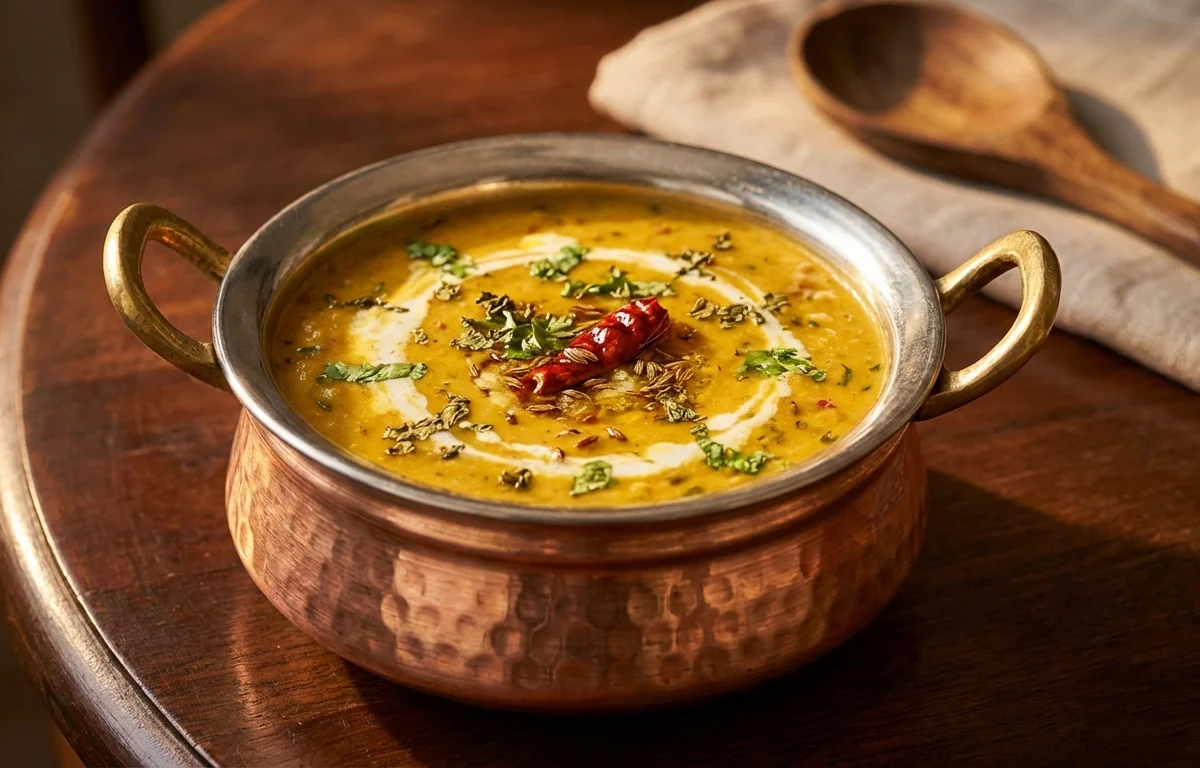
Sultani Dal
A rich, velvety dal made from whole black gram cooked slow and finished with cream, yogurt and a gentle tempering of cumin and garlic. This Mughlai classic has a deep earthy flavour with a creamy, slightly tangy finish. Serve with naan or rice for a comforting meal.
For 4 servings
- prep
Soak the black gram overnight.
Wash the whole black gram thoroughly and soak in enough water to cover by 2 inches. Leave for 8 hours or overnight. Drain before cooking.
TIPSoaking softens the lentils and cuts down the cooking time significantly. - pressure cook · ~20 min
Pressure cook the dal.
Transfer the soaked and drained black gram to a pressure cooker with 3 cups of water and a pinch of salt. Cook on medium heat for 5-6 whistles or until the lentils are soft and mash easily. Let the pressure release naturally.
TIPNatural pressure release keeps the dal creamier than quick release. - temper · ~10 min
Make the tempering.
1.Heat ghee in a heavy-bottomed pan over medium heat.2.Add cumin seeds and let them crackle and turn golden (30 sec).3.Add chopped garlic and sauté until light golden and fragrant (1 min).4.Add chopped onions and cook until deeply golden brown (7-8 min). - saute · ~9 min
Build the dal base.
1.Add grated ginger and slit green chilies to the pan. Sauté for 30 seconds.2.Pour in the tomato puree, turmeric powder, and red chili powder.3.Cook, stirring often, until the tomato puree thickens, darkens, and releases ghee from the sides (5-6 min).4.Lower the heat and stir in the whisked yogurt gently. Cook for 2 minutes until the mixture is glossy.TIPKeep the heat low when adding yogurt and stir continuously to prevent curdling. - simmer · ~25 min
Simmer the dal until creamy.
1.Add the pressure-cooked black gram to the pan along with 1 cup of water.2.Mash some of the lentils against the side of the pan with the back of a spoon to thicken the dal.3.Add salt and stir well. Bring to a gentle simmer and cook uncovered for 20-25 minutes, stirring occasionally.4.The dal is ready when it is thick, creamy, and the ghee floats on top.TIPMashing a portion of the lentils releases starch and gives the dal its signature creamy body. - mix · ~2 min
Finish with cream and garam masala.
Stir in the fresh cream and sprinkle garam masala over the top. Swirl gently and let it heat through for 2 minutes without boiling.
- garnish
Garnish with coriander leaves and serve hot.
Ladle the Sultani Dal into bowls, scatter chopped coriander leaves on top, and serve immediately.
TIPA final swirl of cold cream or a tiny pat of butter on top just before serving makes it extra rich.
What to keep in mind.
7 tips from the recipe — small details that make a real difference to the final dish.
- 1Soak the whole black gram for at least 8 hours to ensure even cooking and a creamy texture.
- 2Always add yogurt at low heat and stir continuously to prevent it from splitting.
- 3Mash some of the cooked lentils against the pan wall to naturally thicken the dal without additives.
- 4Let the pressure release naturally after cooking the lentils — the steam finishes the cooking gently.
- 5Cook the onion until deep golden brown for a richer, sweeter flavor base.
- 6For best flavor, temper the cumin and garlic in ghee until the garlic is just golden, not burnt.
- 7Stir in fresh cream and garam masala at the very end, off the boil, to keep the cream from breaking.
Adapt it for your goals.
Vegan
Replace ghee with coconut oil or neutral oil, omit the yogurt and cream, and use full-fat coconut milk for richness. The dal stays creamy and flavorful, perfect for plant-based diets.
higher proteinHigher-protein
Add 1/2 cup of cooked chickpeas or pan-fried paneer cubes in the final simmer for a protein boost, making the dish more satiating for a main course.
Why this is on our healthy list.
High in Plant-Based Fiber
Whole black gram is packed with dietary fiber, which aids digestion and helps maintain steady blood sugar levels.
Rich in Iron
Black gram provides a good source of non-heme iron, important for energy and oxygen transport in the body.
Probiotic-Friendly with Yogurt
The yogurt in this dish introduces live cultures that support gut health when added gently at low heat.
Frequently asked questions
Yes, but split black gram (dhuli urad) cooks faster and produces a thinner, less creamy dal. Reduce pressure cooking to 3-4 whistles and skip the mashing step.


