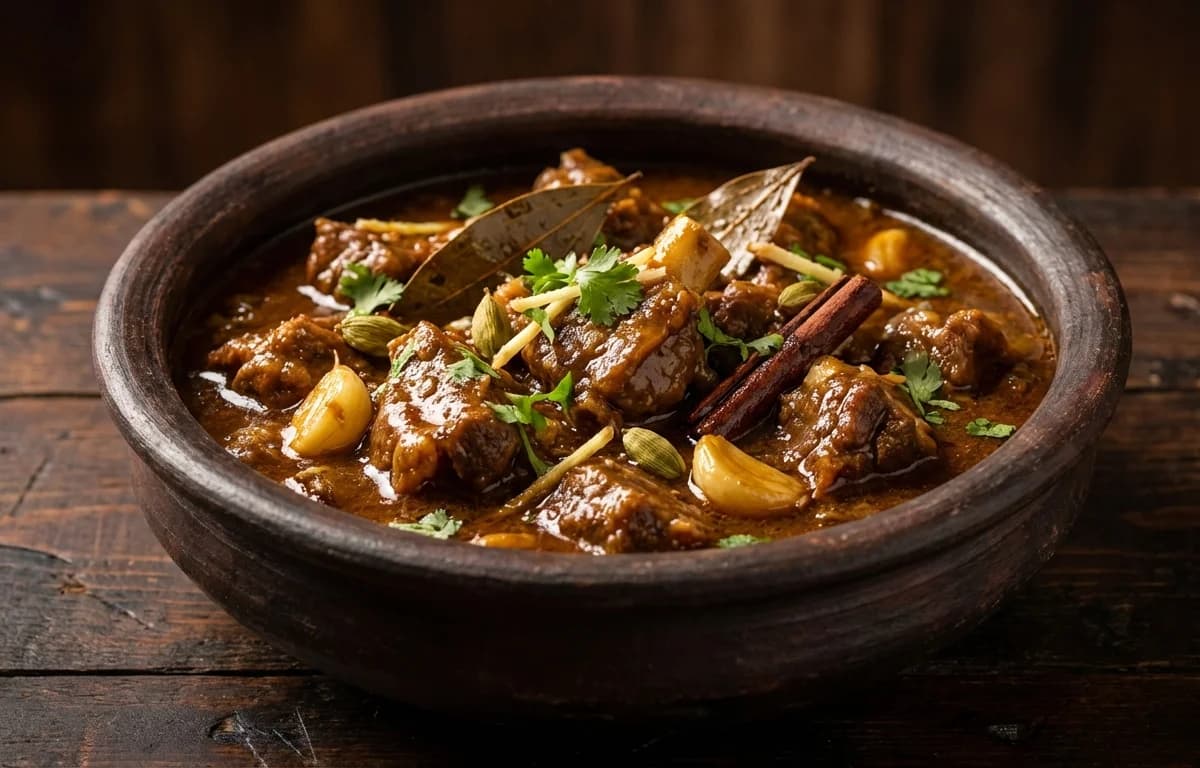
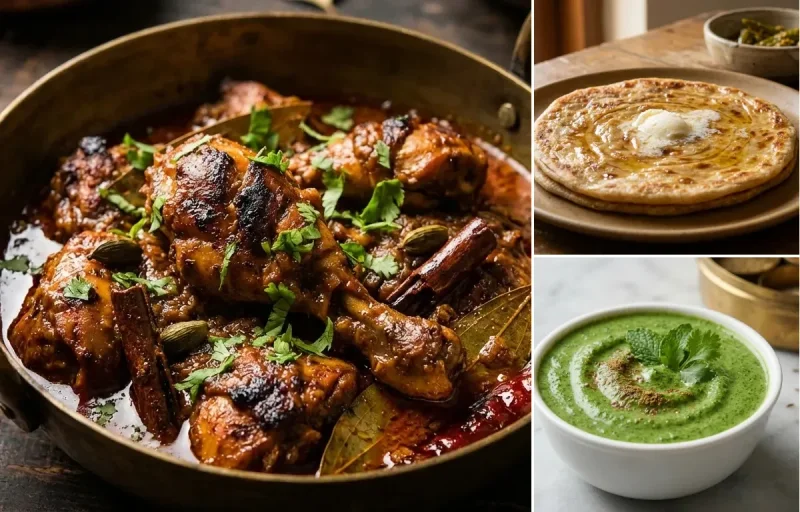
A rustic Bihari classic, this mutton is slow-cooked in a sealed clay pot. Its deep, smoky flavor comes from pungent mustard oil, whole spices, and the meat's own juices, resulting in incredibly tender, fall-off-the-bone mutton in a rich, dark gravy.
Prep30 min
Cook90 min
Servings4
Serving size: 1 serving
774cal
55gprotein
28gcarbs
49g
Ingredients
750 g Mutton (Bone-in, curry cut from the shoulder or leg)
4 medium Onion (About 500g, thinly sliced)
0.75 cup Mustard Oil (Essential for authentic flavor)
2 tbsp Ginger Garlic Paste
1 whole Garlic Bulb (Unpeeled, with the top 1/4 inch sliced off)
4 pcs Green Chili (Slit lengthwise)
1 tsp Turmeric Powder
1.5 tsp Red Chili Powder (Adjust to your spice preference)
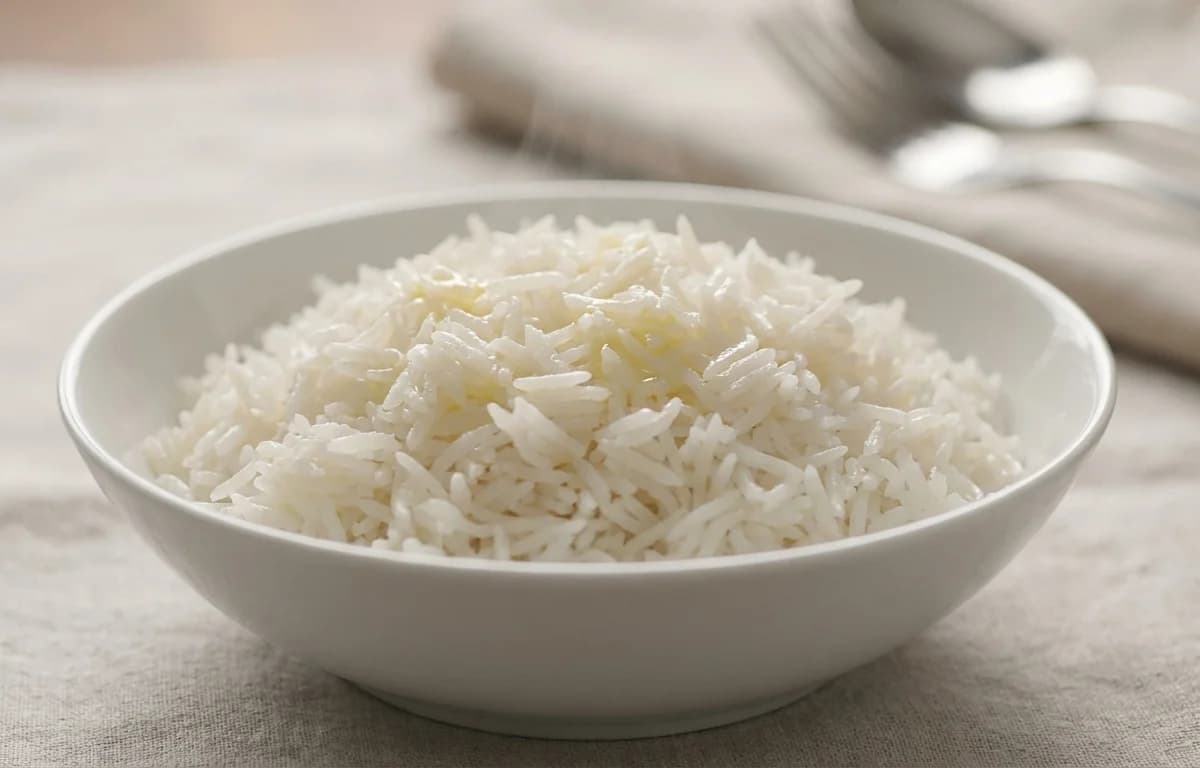
Perfectly fluffy, long-grained basmati rice with a delicate aroma. This simple, foolproof recipe gives you separate, non-sticky grains every time, making it the perfect base for any curry or dal.
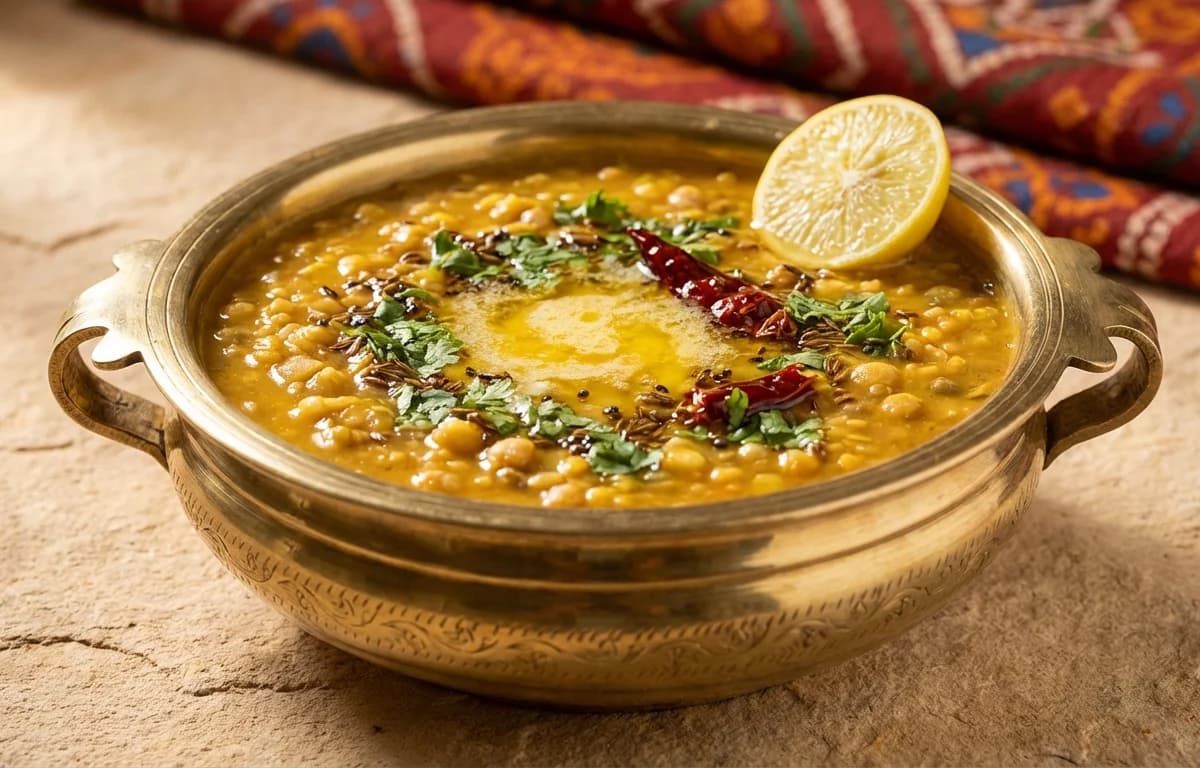
A wholesome and aromatic blend of five lentils, this traditional Rajasthani curry is a protein-packed delight. Its unique texture and rich flavors, finished with a sizzling ghee tempering, make it a perfect companion for baati or steamed rice.
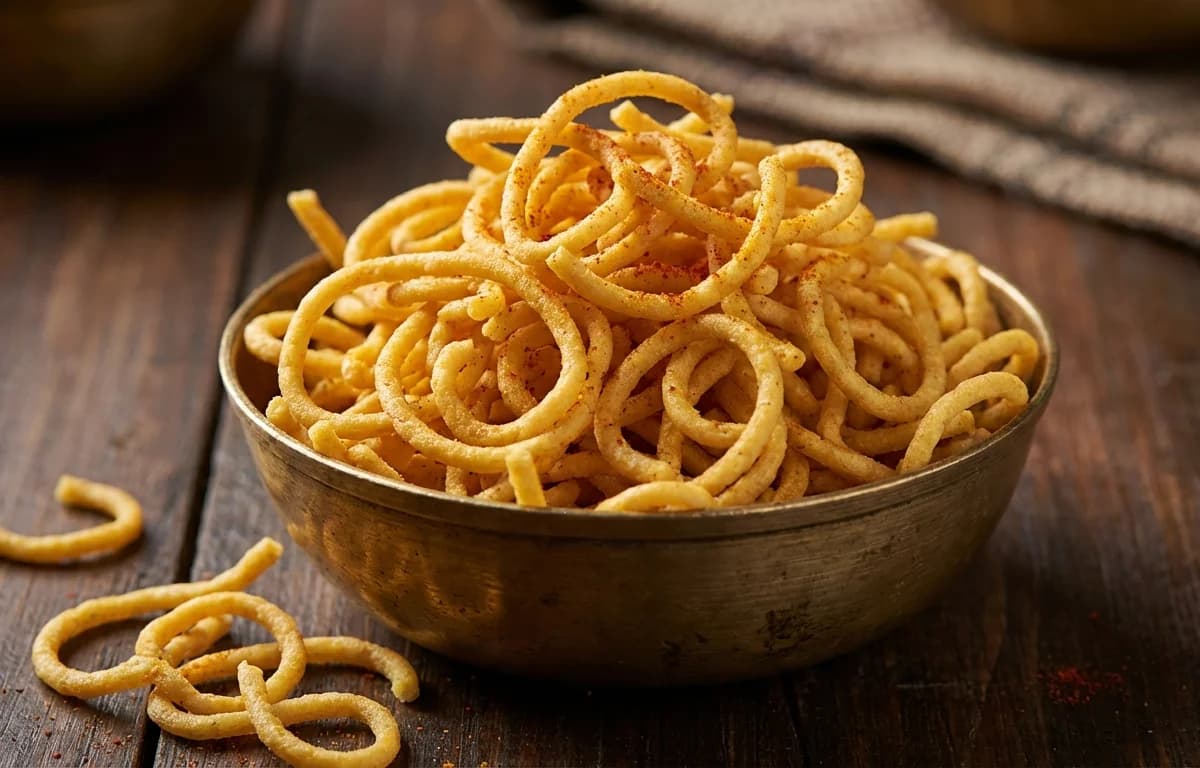
A classic Indian savory snack, these crispy, golden noodles are made from mashed potatoes and chickpea flour. Perfectly spiced and deep-fried to perfection, it's an addictive tea-time favorite.
Prep20 min
Cook25 min
Servings8
Serving size: 1 serving
About Champaran Mutton, Steamed Basmati Rice, Dal Panchmel and Aloo Bhujia
Melt-in-mouth Champaran Mutton with aromatic dal & rice. A soul-satisfying, protein-packed feast!
This bihari dish is perfect for lunch. With 1495 calories and 78g of protein per serving, it's a nutritious choice for your meal plan.
Other Cuisines to Explore
Discover authentic meals from cuisines around the world.
2 tbsp Coriander Leaves (Freshly chopped, for garnish)
Instructions
1
Marinate the Mutton
In a large mixing bowl, combine the mutton pieces, thinly sliced onions, ginger-garlic paste, slit green chilies, and mustard oil.
Add all the powdered spices: turmeric powder, red chili powder, coriander powder, garam masala, and salt.
Using your hands, mix everything thoroughly until each piece of mutton is well-coated. For best results, cover and let it marinate for at least 1 hour at room temperature, or up to 4 hours in the refrigerator.
2
Layer the Ingredients in the Pot
Choose a heavy-bottomed pot with a tight-fitting lid, such as a clay handi or a Dutch oven.
Add all the whole spices to the bottom of the pot: bay leaves, dried red chilies, cinnamon stick, green and black cardamoms, cloves, and black peppercorns.
Transfer the entire marinated mutton and onion mixture into the pot, spreading it evenly over the whole spices.
Place the whole garlic bulb in the center, nestling it into the mutton mixture. Do not add any water.
3
Seal the Pot for 'Dum' Cooking
In a small bowl, mix the atta with a little water at a time to form a stiff, pliable dough.
Roll the dough into a long, thick rope.
Firmly press the dough rope all around the rim of the pot. Place the lid on top and press down hard to create a completely airtight seal. Ensure there are no gaps.
4
Slow Cook the Mutton
Place the sealed pot on the stove over a medium-high flame for the first 5-7 minutes. This helps to build up steam inside.
Reduce the heat to the absolute lowest setting possible. Let it cook undisturbed for 90 minutes.
Every 20-25 minutes, carefully hold the pot with thick kitchen towels or oven mitts and give it a vigorous shake for 15-20 seconds. This prevents the contents from sticking to the bottom and ensures even cooking.
5
Rest and Serve
After 90 minutes, turn off the heat. Let the pot rest, still sealed, for at least 15 minutes. This allows the flavors to settle and the pressure to release naturally.
Carefully use a knife or spoon to break the hardened dough seal and open the lid. Be cautious of the hot steam that will escape.
Gently stir the curry. The mutton should be incredibly tender and the onions melted into a thick, dark gravy.
Garnish with fresh coriander leaves and serve hot with steamed rice, litti, or roti.
4
Serving size: 1 serving
262cal
5gprotein
55gcarbs
1gfat
Ingredients
1.5 cup Basmati Rice (Use good quality, aged basmati rice for best results)
2.25 cup Water (For the absorption cooking method)
0.75 tsp Salt (Adjust to taste)
1 tsp Ghee (Optional, for flavor and to prevent sticking)
Instructions
1
Rinse and Soak the Rice (35 minutes)
Place the basmati rice in a large bowl. Add cold water and gently swirl the rice with your fingers. Drain the cloudy water. Repeat this process 3-4 times until the water runs mostly clear. This removes excess starch and prevents stickiness.
Cover the rinsed rice with fresh water and let it soak for 30 minutes. Soaking allows the grains to absorb water, ensuring they cook evenly and elongate beautifully.
After 30 minutes, drain the rice completely using a fine-mesh sieve and set aside.
2
Cook the Rice (15 minutes)
In a medium, heavy-bottomed saucepan with a tight-fitting lid, combine the drained rice, 2.25 cups of fresh water, salt, and ghee (if using).
Bring the mixture to a rolling boil over medium-high heat, uncovered.
As soon as it boils, give it one gentle stir, then immediately reduce the heat to the lowest possible setting. Cover the saucepan tightly with the lid.
Let the rice simmer for 12-15 minutes, or until all the water has been absorbed. Do not lift the lid during this time to prevent steam from escaping.
3
Rest and Fluff (10 minutes)
Turn off the heat but leave the saucepan on the stove, still covered. Let the rice rest and steam for 10 minutes. This step is crucial for finishing the cooking process and achieving a perfect texture.
After resting, remove the lid. Use a fork to gently fluff the rice, separating the long, delicate grains.
Serve hot as a perfect accompaniment to curries, dals, or grilled dishes.
2 tbsp Moong Dal (Split and skinned yellow lentils)
2 tbsp Urad Dal (Split and skinned black gram)
2 tbsp Masoor Dal (Red lentils)
4 cup Water (For pressure cooking the dal)
3 tbsp Ghee (Divided use)
1 tsp Cumin Seeds
0.5 tsp Mustard Seeds
0.25 tsp Hing (Asafoetida)
1 pcs Onion (Medium, finely chopped)
1 inch Ginger (Fresh, grated)
4 cloves Garlic (Minced)
2 pcs Green Chili (Slit lengthwise)
2 pcs Tomato (Medium, finely chopped)
0.5 tsp Turmeric Powder
1 tsp Red Chili Powder (Adjust to taste)
1.5 tsp Coriander Powder
0.5 tsp Garam Masala
1.5 tsp Salt (Adjust to taste)
2 pcs Dried Red Chilies (Broken in half, for tempering)
1 tbsp Lemon Juice (Freshly squeezed)
2 tbsp Coriander Leaves (Freshly chopped, for garnish)
Instructions
1
Prepare and Cook the Lentils
Rinse all five lentils together in a colander under cool running water until the water runs clear.
Transfer the rinsed lentils to a large bowl and soak in ample water for at least 30-60 minutes. If time permits, soaking for 2 hours is ideal, especially for the chana dal.
Drain the soaking water completely. Add the lentils to a pressure cooker along with 4 cups of fresh water, turmeric powder, and 1 tsp of salt.
Secure the lid and pressure cook on medium-high heat for 4-5 whistles. Turn off the heat and allow the pressure to release naturally, which takes about 10-15 minutes.
2
Prepare the Masala Base
While the lentils cook, heat 2 tbsp of ghee in a heavy-bottomed pan (kadai) over medium heat.
Once the ghee is hot, add cumin seeds and mustard seeds. When they begin to crackle, add the hing and sauté for a few seconds.
Add the finely chopped onion and cook, stirring occasionally, until it becomes soft and translucent, about 5-7 minutes.
Stir in the grated ginger, minced garlic, and slit green chilies. Sauté for another minute until the raw aroma disappears.
Add the chopped tomatoes and cook until they break down and become soft and pulpy, about 5-6 minutes.
500 g Potatoes (About 3 medium starchy potatoes like Russet)
1.5 cup Besan (Also known as gram flour)
2 tbsp Rice Flour (Adds extra crispiness)
2 tbsp Vegetable Oil (For the dough)
0.5 tsp Turmeric Powder
1 tsp Red Chili Powder (Adjust to your spice preference)
0.25 tsp Hing (Asafoetida)
1 tsp Amchur Powder (Dried mango powder)
1 tsp Chaat Masala
0.5 tsp Garam Masala
1.25 tsp Salt (Adjust to taste)
Instructions
1
Prepare the Potatoes
Boil the potatoes in water until they are fork-tender, about 15-20 minutes.
Once cooked, drain the water and peel the potatoes while they are still warm.
Grate the warm potatoes using a fine grater or pass them through a potato ricer. This is crucial to ensure there are absolutely no lumps.
Spread the grated potato on a plate and allow it to cool completely to room temperature.
2
Make the Bhujia Dough
In a large mixing bowl, combine the cooled mashed potatoes, besan, rice flour, turmeric powder, red chili powder, hing, amchur powder, chaat masala, garam masala, and salt.
Add 2 tablespoons of oil to the mixture.
Knead everything together to form a soft, smooth, and pliable dough. Do not add any water; the moisture from the potatoes should be sufficient. The dough should not be sticky or stiff.
3
Set Up for Frying
Heat the oil for deep frying in a kadai or a deep, heavy-bottomed pan over medium heat. The oil should be around 175°C (350°F).
Add the red chili powder, coriander powder, and the remaining 0.5 tsp of salt. Mix well and cook the masala for 2-3 minutes, until you see the ghee separating at the edges.
3
Combine and Simmer the Dal
Once the pressure has released, carefully open the cooker. Use a whisk or the back of a ladle to gently mash the lentils to achieve a creamy, cohesive consistency.
Pour the cooked dal into the pan with the prepared masala. Stir everything together until well combined.
If the dal seems too thick, add 0.5 to 1 cup of hot water to adjust the consistency to your liking.
Bring the dal to a gentle simmer and let it cook on low heat for 5-8 minutes. This allows the lentils to absorb the flavors of the masala.
Stir in the garam masala, mix well, and turn off the heat.
4
Prepare the Final Tempering (Tadka)
In a small tadka pan, heat the remaining 1 tbsp of ghee over medium heat.
Add the broken dried red chilies and cook for 20-30 seconds until they darken slightly and become aromatic. Be careful not to burn them.
Immediately and carefully pour this sizzling tempering over the prepared dal. You will hear a satisfying sizzle.
5
Garnish and Serve
Stir in the fresh lemon juice and garnish generously with chopped coriander leaves.
Serve Dal Panchmel hot with traditional Rajasthani baati, roti, paratha, or steamed basmati rice.
Grease the inside of a sev maker (sev press) and the disc with the smallest holes with a little oil to prevent sticking.
Divide the dough into two or three portions and shape one portion into a log. Place it inside the sev maker and secure the lid.
4
Fry the Aloo Bhujia
To test the oil, drop a tiny piece of dough into it. If it sizzles and rises to the surface quickly without browning too fast, the oil is ready.
Hold the sev maker over the hot oil and press the handle, moving in a circular motion to create a large, nest-like shape of bhujia. Do not overcrowd the pan.
Fry for about 1-2 minutes on one side, until the sizzling sound reduces and the bottom is firm.
Carefully flip the bhujia nest and fry the other side for another 1-2 minutes until it is light golden and crisp.
Using a slotted spoon, remove the bhujia from the oil and place it on a wire rack or a plate lined with paper towels to drain excess oil.
Repeat the process with the remaining dough, frying in batches.
5
Cool and Store
Allow the fried bhujia to cool completely to room temperature. It will become even crispier as it cools.
Once fully cooled, gently break the bhujia nests into smaller, bite-sized pieces.
Store the Aloo Bhujia in a clean, dry, airtight container. It will stay fresh and crispy for up to 3 weeks.
Champaran Mutton Curry Recipe - North Indian Lunch