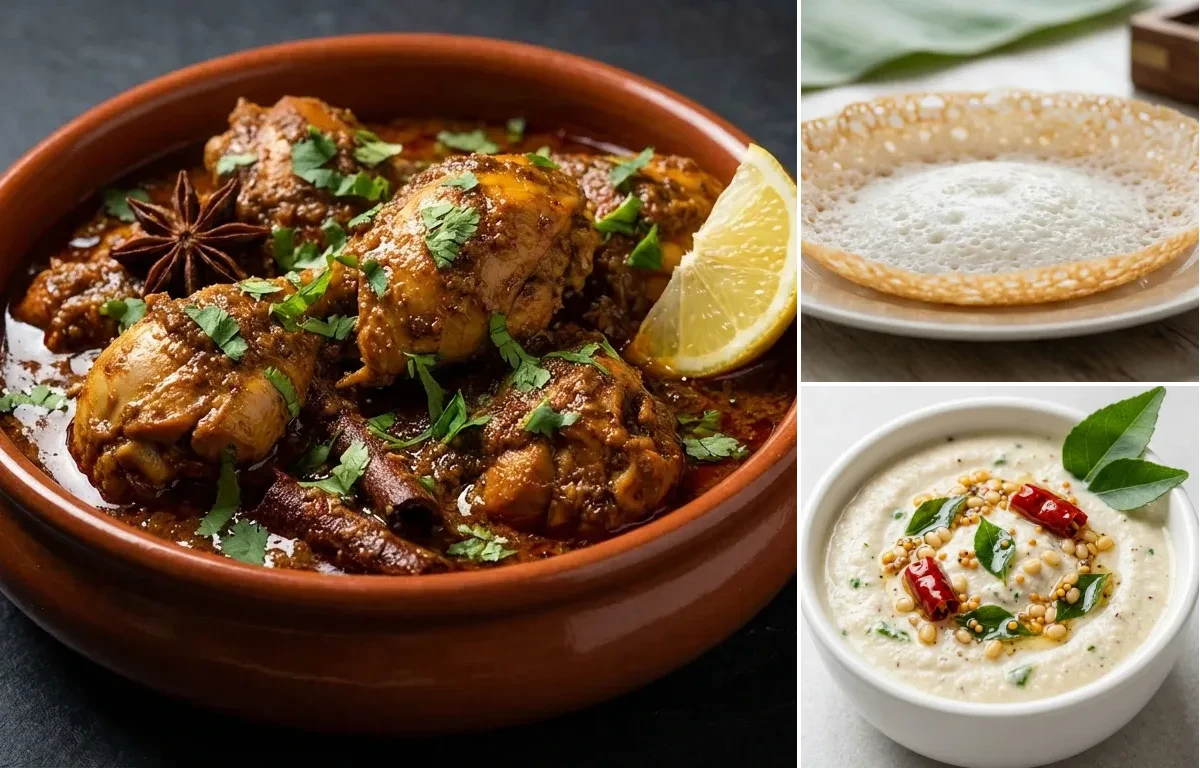
A fiery and aromatic chicken curry from the Chettinad region of Tamil Nadu. This dish is famous for its complex flavor profile, derived from a freshly ground spice mix featuring star anise and the unique kalpasi (black stone flower).
Prep20 min
Cook45 min
Servings4
Serving size: 1 serving
478cal
38gprotein
19gcarbs
29g
Ingredients
2 tbsp Coriander Seeds
1 tsp Cumin Seeds
1 tsp Fennel Seeds
1 tsp Black Peppercorns
7 pcs Dry Red Chilies (Use a mix of Kashmiri and Guntur for color and heat)
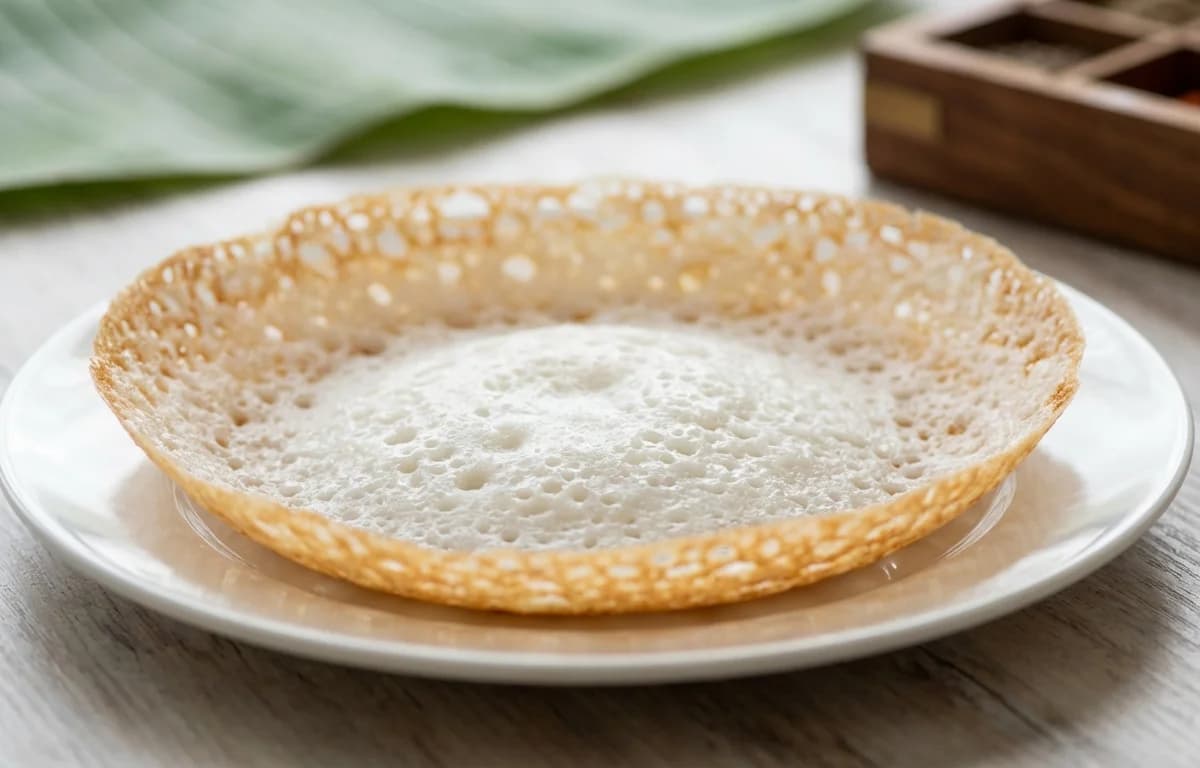
Soft, lacy pancakes from Kerala with crispy edges and a spongy center. This fermented rice and coconut classic is naturally vegan and gluten-free, pairing wonderfully with vegetable stew or egg curry.
A creamy, savory, and slightly tangy South Indian staple. This fresh coconut chutney is the perfect accompaniment for idli, dosa, vada, and upma. Made with freshly grated coconut and aromatic spices, it's finished with a classic tempering (tadka) that elevates its flavor.
Prep10 min
Cook5 min
Servings4
Serving size: 1 serving
About Chicken Chettinad, Kerala Appam and Coconut Chutney
This chettinad dish is perfect for dinner. With 1019.0799999999999 calories and 49.17g of protein per serving, it's a nutritious choice for your meal plan.
Other Cuisines to Explore
Discover authentic meals from cuisines around the world.
3 tbsp Grated Coconut (Unsweetened, fresh or desiccated)
750 g Chicken (Bone-in, curry cut pieces)
3 tbsp Gingelly Oil (Also known as Indian sesame oil)
1 tsp Mustard Seeds
1 sprig Curry Leaves
300 g Onion (About 2 medium, finely chopped)
2 tbsp Ginger-Garlic Paste
250 g Tomatoes (About 2 medium, puréed)
0.5 tsp Turmeric Powder
1.5 tsp Salt (Or to taste)
360 ml Warm Water (About 1.5 cups)
3 tbsp Coriander Leaves (Freshly chopped, for garnish)
1 tbsp Lemon Juice (Optional)
Instructions
1
Prepare the Chettinad Masala
Place a heavy-bottomed pan on low-medium heat. Add all ingredients for the masala except the grated coconut.
Dry roast for 3-4 minutes, stirring constantly, until the spices release a rich aroma and turn a shade darker. Ensure they do not burn.
Add the grated coconut and continue to roast for another 1-2 minutes until it is fragrant and lightly golden.
Remove the mixture from the pan and allow it to cool completely. Once cooled, transfer to a spice grinder or blender and grind to a fine powder.
2
Sauté the Aromatics
In the same pan or a kadai, heat the gingelly oil over medium heat. Once hot, add the mustard seeds and wait for them to splutter.
Add the sprig of curry leaves and sauté for 30 seconds until they turn crisp.
Add the finely chopped onions and sauté for 8-10 minutes, stirring occasionally, until they are soft and golden brown.
Stir in the ginger-garlic paste and cook for 2 minutes until the raw aroma disappears.
3
Build the Curry Base
Add the tomato purée to the pan. Cook for 5-7 minutes, stirring, until the mixture thickens and you see oil separating at the edges.
Reduce the heat to low. Add the turmeric powder and the freshly ground Chettinad masala powder. Stir and cook for 1-2 minutes until fragrant.
Add the chicken pieces and salt. Increase the heat to medium and mix thoroughly, ensuring each piece is coated with the masala. Sauté for 5-7 minutes until the chicken is sealed and no longer pink.
4
Simmer the Curry
Pour in the warm water and stir well to combine everything, scraping any bits from the bottom of the pan.
Bring the curry to a rolling boil, then reduce the heat to low.
Cover the pan with a lid and let it simmer gently for 20-25 minutes, or until the chicken is cooked through and tender. Stir every 5-7 minutes to prevent sticking.
5
Finish and Serve
Once the chicken is cooked, uncover the pan. The gravy should be thick and aromatic. Taste and adjust the salt if necessary.
Turn off the heat. Stir in the optional lemon juice for a hint of brightness.
Garnish generously with freshly chopped coriander leaves.
Let the curry rest for at least 15 minutes before serving to allow the flavors to meld and deepen. Serve hot with steamed rice, parotta, idiyappam, or dosa.
Servings4
Serving size: 1 serving
378cal
8gprotein
68gcarbs
8gfat
Ingredients
1.5 cup Raw Rice (Pachari or any short-grain variety works best)
2 tbsp Urad Dal
0.25 cup Cooked Rice (Leftover plain white rice is ideal for softness)
1 cup Grated Coconut (Fresh or frozen (thawed))
2 tsp Sugar (Helps with fermentation and browning)
0.25 tsp Instant Yeast
1 tsp Salt (Adjust to taste)
1.5 cup Water (For grinding, add more if needed)
1 tbsp Vegetable Oil (For greasing the pan)
Instructions
1
Soak Rice and Dal
Rinse the raw rice and urad dal together under cool running water until the water runs clear.
Place them in a large bowl and cover with at least 3 inches of fresh water.
Let them soak for 5 to 6 hours.
2
Grind the Batter
Drain the soaking water completely from the rice and dal.
Transfer the soaked grains to a high-speed blender.
Add the grated coconut, cooked rice, and 1 cup of water.
Blend on high speed for 3-4 minutes, scraping down the sides occasionally, until you have a completely smooth, fine batter. There should be no grit when you rub it between your fingers.
Add the remaining 1/2 cup of water, or more as needed, to achieve a smooth, flowing consistency, slightly thinner than pancake batter.
3
Ferment the Batter
Pour the batter into a large, non-reactive bowl (ensure it's only half-full to allow room for rising).
1 cup Fresh Coconut (Grated and tightly packed. Frozen can be used after thawing.)
2 tbsp Pottukadalai (Also known as roasted chana dal or chutney dal.)
2 pcs Green Chili (Adjust to your spice preference.)
0.5 inch Ginger (Peeled and roughly chopped.)
1 tsp Tamarind Paste (Or a small marble-sized piece of whole tamarind, deseeded.)
0.5 tsp Salt (Adjust to taste.)
0.5 cup Water (Use as needed for grinding to desired consistency.)
2 tsp Coconut Oil (For tempering. Ghee or another neutral oil can be used.)
0.5 tsp Mustard Seeds
1 tsp Urad Dal (Split and skinned black gram lentils.)
2 pcs Dry Red Chili (Broken into halves.)
1 sprig Curry Leaves (About 10-12 leaves.)
1 pinch Asafoetida (Also known as hing. Optional but recommended.)
Instructions
1
Grind the Chutney Base (5 minutes)
In a blender or mixie jar, combine the fresh grated coconut, pottukadalai (roasted chana dal), green chilies, chopped ginger, tamarind paste, and salt.
Add 1/4 cup of water to begin.
Blend in short bursts, scraping down the sides as needed, until you get a thick, smooth paste. Avoid over-blending to prevent the coconut from releasing excess oil.
Add more water, one tablespoon at a time, and blend briefly until you reach your desired consistency. Transfer the chutney to a serving bowl.
2
Prepare the Tempering (Tadka) (5 minutes)
Heat the coconut oil in a small tadka pan over medium heat. Test if the oil is hot enough by dropping in one mustard seed; it should sizzle immediately.
Add the mustard seeds and allow them to splutter completely, which takes about 30 seconds.
Lower the heat, then add the urad dal. Sauté for 30-40 seconds, stirring continuously, until it turns a pale golden brown.
Quickly add the broken dry red chilies, fresh curry leaves, and a pinch of asafoetida. Stir for another 15-20 seconds until the curry leaves become crisp and fragrant. Immediately remove from heat to prevent burning.
Stir in the sugar, salt, and instant yeast until well combined.
Cover the bowl with a lid or plastic wrap and place it in a warm, draft-free spot for 8 to 12 hours, or overnight.
The batter is ready when it has doubled in volume, is light and airy, and has a pleasant, slightly sour fermented aroma.
4
Cook the Appams
After fermentation, gently stir the batter once or twice. Do not overmix, as this will deflate the air bubbles that make the appam spongy.
Heat an appam pan (appachatti) over medium heat. Lightly grease it with a few drops of oil using a paper towel.
Pour one ladleful (about 1/3 cup) of batter into the center of the hot pan.
Immediately lift the pan off the heat and, holding both handles, gently swirl it in a circular motion to spread the batter thinly along the sides, leaving a thicker, spongy center.
Place the pan back on the stove, reduce the heat to low-medium, cover with a lid, and cook for 2-3 minutes.
The appam is done when the center is cooked through and full of tiny holes, and the edges are golden brown and crispy. Do not flip the appam.
Carefully remove the appam from the pan using a spatula.
5
Serve
Repeat the process with the remaining batter, greasing the pan lightly between appams if necessary.
Serve the hot, fresh appams immediately with your favorite curry, such as Kerala Vegetable Stew (Ishtu) or Egg Curry.
Combine and Serve (5 minutes rest)
Pour the hot, sizzling tempering directly over the ground chutney in the bowl.
Gently mix the tempering into the chutney. Do not overmix.
Let the chutney rest for at least 5 minutes to allow the flavors to meld together.
Serve fresh with hot idlis, dosas, vadas, or uttapam.