
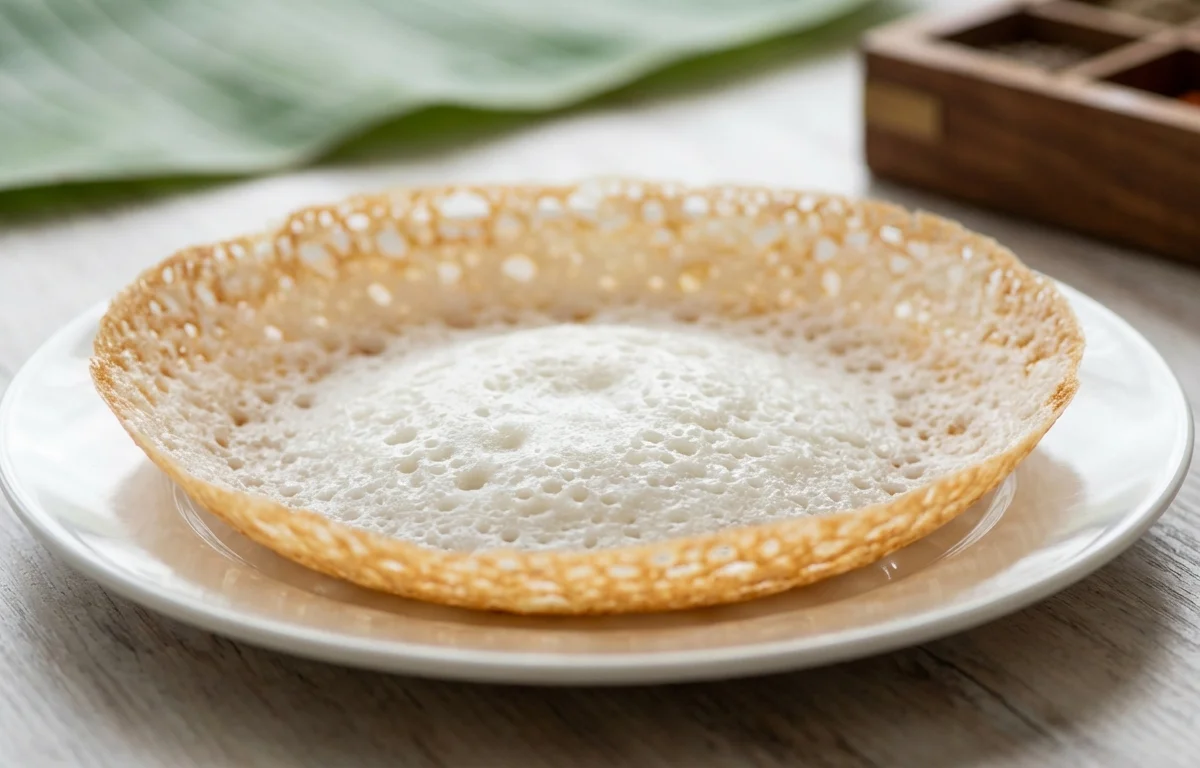
Kerala Appam
Lacy, bowl-shaped rice hoppers with crisp edges and a soft, fluffy center. This Kerala favorite gets its gentle tang from fermentation and tastes wonderful with vegetable stew, egg curry, or coconut milk.
For 8 servings
- prep · ~240 min
Soak the rice.
Wash the raw rice well and soak it in enough water for 4 hours. Drain completely before grinding.
TIPWell-soaked rice grinds smoother and gives appam its soft center. - mix · ~8 min
Grind the batter.
1.Add the soaked rice to a blender jar with grated coconut and cooked rice.2.Pour in water little by little and grind to a very smooth, pourable batter.3.Add sugar, instant yeast, and salt, then blend once more to mix evenly. - rest · ~480 min
Ferment the batter.
Transfer the batter to a large bowl, cover loosely, and leave it in a warm spot for 8 hours until airy and slightly risen.
TIPThe bowl should have extra room because the batter expands as it ferments. - mix · ~1 min
Adjust the batter before cooking.
Stir the fermented batter gently. If it looks too thick, add a little water to get a thin batter that coats the pan easily but still leaves a soft center.
- fry · ~20 min
Cook the appam.
1.Heat an appam pan over medium heat and grease it very lightly with oil.2.Pour a small ladle of batter into the center.3.Lift the pan by the handles and swirl quickly so the batter coats the sides in a thin layer.4.Cover and cook until the edges turn lacy and crisp and the center is set and fluffy, 2 to 3 minutes.5.Do not flip. Remove the appam and repeat with the remaining batter.TIPKeep the heat at medium so the edges crisp without browning too fast. - serve
Serve the appam hot.
What to keep in mind.
8 tips from the recipe — small details that make a real difference to the final dish.
- 1Drain the soaked rice fully before grinding so the batter does not turn watery and lose its bowl shape.
- 2Grind until completely smooth; any graininess makes the center less fluffy and the edges less delicate.
- 3Use a large bowl for fermentation, because appam batter rises and gets airy as the yeast works.
- 4After fermenting, stir the batter gently so you keep the trapped air that helps create a soft center.
- 5The correct batter should be thin enough to race up the sides of the pan, but slightly thicker in the middle.
- 6Grease the appam pan very lightly; too much oil prevents the batter from gripping the sides and forming lacy edges.
- 7Cover while cooking so the center steams and sets without needing to flip the appam.
- 8Appam is best eaten hot, but leftover batter can be refrigerated overnight and thinned slightly before the next batch.
Adapt it for your goals.
Toddy-style
Replace the yeast with fermented coconut toddy if available for a more traditional aroma and deeper natural tang.
thin crispThin-crisp
Add a little extra water before cooking for appams with extra-fine, crisp edges and a lighter center.
no yeastNo-yeast
Skip instant yeast and ferment longer in a warm place for a slower, more natural sourness.
coconut milkCoconut-milk
Blend in a little coconut milk instead of some water for richer flavor and a softer, more fragrant middle.
Why this is on our healthy list.
Naturally Fermented Batter
The fermented rice batter is lighter in taste and develops gentle complexity through the resting process.
Moderate Added Fat
Only a small amount of oil is used for greasing the pan, so the appam itself is not heavily fried.
Plant-Based Energy
Rice provides easy-to-digest carbohydrates, while coconut contributes richness and satisfying texture.
Frequently asked questions
The batter was likely too thick, the pan not hot enough, or the pan had too much oil. The batter must spread thinly up the sides to form lace.



.webp)


.webp)