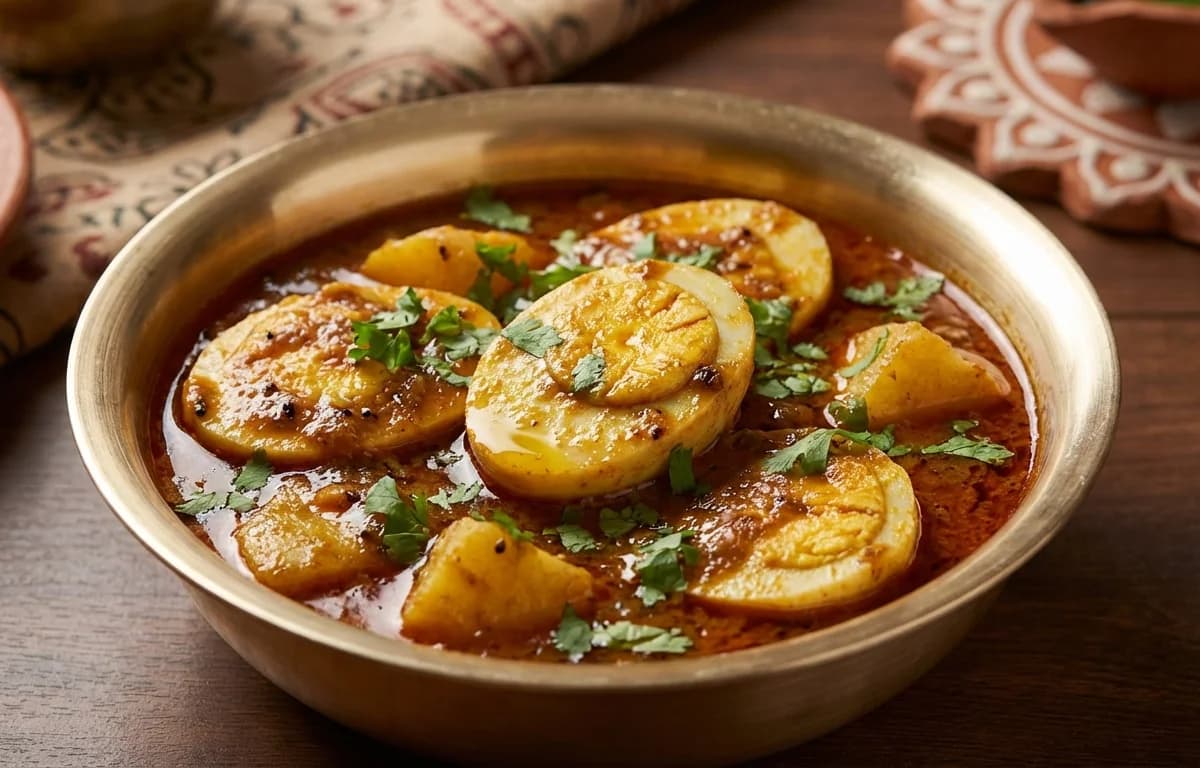
A quintessential Bengali comfort food, Dimer Dalna features hard-boiled eggs and tender potatoes simmered in a fragrant, lightly spiced onion-tomato gravy. This soulful curry, with its delicate balance of sweet and savory notes, is the perfect accompaniment to steamed rice or luchi.
Crispy, golden-fried potato slices seasoned with turmeric and a hint of nigella seeds. This simple Bengali comfort food is the perfect sidekick to dal and steamed rice, ready in under 30 minutes.
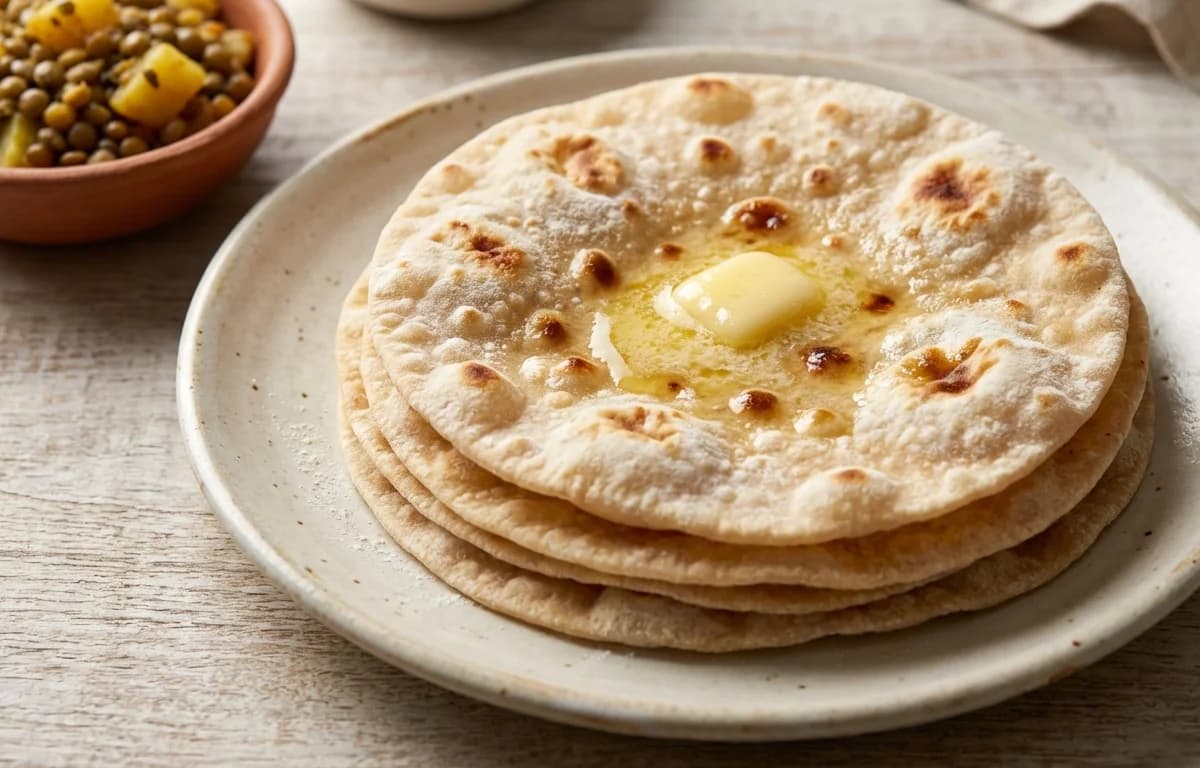
A staple in every Bengali household, these soft, unleavened whole wheat flatbreads are perfect for scooping up curries and dals. They puff up beautifully on an open flame, creating a light, airy texture that is both comforting and delicious.
Homestyle egg curry with crispy aloo bhaja and soft rotis – a protein-packed and soul-satisfying dinner!
This bengali dish is perfect for dinner. With 644.52 calories and 21.03g of protein per serving, it's a nutritious choice for your meal plan.
fat
1 cup Tomato Puree (from 2 medium tomatoes)
0.5 tsp Turmeric Powder
1 tsp Kashmiri Red Chilli Powder (for color, adjust to taste)
1 tsp Cumin Powder
1 tsp Coriander Powder
1 tsp Salt (adjust to taste)
0.5 tsp Sugar
1.5 cup Warm Water
0.5 tsp Garam Masala Powder
1 tsp Ghee (optional)
2 tbsp Coriander Leaves (chopped, for garnish)
Instructions
1
Boil and Prepare Eggs & Potatoes
Place eggs in a saucepan and cover with water. Bring to a boil and cook for 10-12 minutes to hard-boil them.
In a separate pot, boil the halved potatoes until they are fork-tender, about 15 minutes.
Drain the water, let them cool slightly, then peel both the eggs and potatoes.
Gently prick the surface of the peeled eggs with a fork or toothpick. This crucial step helps them absorb the gravy and prevents them from bursting during frying.
2
Shallow Fry Eggs & Potatoes
Heat 3 tbsp of mustard oil in a kadai or deep pan over medium-high heat until it is lightly smoking.
Carefully add the boiled potatoes and fry for 3-4 minutes, turning occasionally, until they are light golden brown.
Add the pricked eggs to the pan along with a pinch of turmeric powder. Sauté for another 2-3 minutes until the eggs develop a slightly crisp, golden skin. Be cautious as they may splutter.
Remove the fried eggs and potatoes with a slotted spoon and set them aside.
3
Temper Spices and Sauté Aromatics
In the same oil, reduce the heat to medium. Add the bay leaf, cinnamon stick, green cardamoms, and cloves. Sauté for about 30 seconds until they become fragrant.
Add the finely chopped onion and cook for 7-8 minutes, stirring frequently, until it turns soft and golden brown.
Add the ginger-garlic paste and slit green chillies. Sauté for another minute until the raw aroma disappears.
4
Cook the Masala Base
Add the tomato puree to the pan. Stir in the turmeric powder, Kashmiri red chilli powder, cumin powder, coriander powder, and salt.
Mix everything well and cook the masala on medium-low heat for 6-7 minutes.
Continue to stir occasionally until the masala thickens and you see oil separating from the sides of the mixture.
5
Simmer the Curry
Pour in 1.5 cups of warm water and add the sugar. Stir to combine and bring the gravy to a rolling boil.
Gently slide the fried potatoes and eggs into the bubbling gravy.
Reduce the heat to low, cover the pan with a lid, and let the curry simmer for 8-10 minutes. This allows the potatoes and eggs to absorb all the flavors.
6
Finish and Serve
Turn off the heat. Stir in the garam masala powder and the optional ghee for a rich aroma.
Garnish with freshly chopped coriander leaves.
Let the Dimer Dalna rest for 5 minutes before serving. This helps the flavors to meld together beautifully.
Serve hot with steamed rice or luchi.
135cal
3gprotein
24gcarbs
4gfat
Ingredients
500 g Potatoes (About 3 medium, starchy potatoes like Russet or Idaho work best)
4 tbsp Mustard Oil (Essential for the authentic Bengali flavor)
0.5 tsp Nigella Seeds (Also known as Kalo Jeera)
2 pcs Green Chilies (Slit lengthwise, adjust to your spice preference)
0.5 tsp Turmeric Powder (For color and flavor)
1 tsp Salt (Adjust to taste)
Instructions
1
Prepare the Potatoes (10 minutes)
Peel the potatoes and slice them into very thin, uniform rounds (about 1-2mm thick). A mandoline slicer is highly recommended for consistency.
Place the sliced potatoes in a bowl of cold water for 5 minutes to remove excess starch. This is key to achieving crispiness.
Drain the potatoes completely and pat them thoroughly dry with a clean kitchen towel or paper towels. Ensure there is no moisture left.
2
Season the Potatoes (1 minute)
In a large, dry bowl, combine the potato slices, turmeric powder, and salt.
Gently toss with your hands to ensure every slice is evenly coated with the spices.
3
Fry the Aloo Bhaja (12-14 minutes)
Heat the mustard oil in a wide, heavy-bottomed pan or kadai over medium-high heat until it is fragrant and just begins to smoke lightly.
Reduce the heat to medium. Carefully add the nigella seeds and slit green chilies. Let them sizzle for about 15-20 seconds until aromatic.
Add the seasoned potato slices to the pan, spreading them into a single, even layer. Do not overcrowd the pan; fry in two batches if necessary.
Fry for 12-14 minutes, flipping the slices gently every 3-4 minutes. Allow them to develop a deep golden-brown color and become crisp.
Do not cover the pan at any stage, as the steam will make the potatoes soggy.
4
Serve Immediately
Once the potatoes are crispy and cooked through, use a slotted spoon to remove them from the pan, allowing excess oil to drain.
Serve hot as a side dish with steamed rice and dal for a classic Bengali meal.
1 tsp Vegetable Oil (Optional, for a softer dough)
Instructions
1
Prepare the Dough
In a large mixing bowl (gamla), combine 2 cups of atta and 0.5 tsp of salt. Mix well.
If using, add 1 tsp of vegetable oil and rub it into the flour with your fingertips until it resembles coarse breadcrumbs.
Gradually pour in the warm water, a little at a time, mixing with your other hand to bring the flour together.
Once a shaggy dough forms, begin to knead. Continue kneading on a clean, flat surface for 8-10 minutes, pushing with the heel of your hand and folding. The final dough should be soft, smooth, and pliable, but not sticky.
2
Rest the Dough
Form the dough into a ball, place it back in the bowl, and cover it with a damp kitchen towel or a lid.
Let the dough rest for a minimum of 30 minutes. This step is crucial as it allows the gluten to relax, resulting in softer rutis.
3
Divide and Roll
After resting, knead the dough again for 1 minute.
Divide the dough into 8 equal-sized portions and roll them into smooth balls (lechi).
Take one ball, flatten it between your palms, and dip it lightly in the dry atta for dusting.
Place it on a rolling board (chakla) and use a rolling pin (belan) to roll it into a thin, even circle about 6-7 inches in diameter. Apply gentle, even pressure and dust with more flour if it starts to stick.
4
Cook the Ruti
Heat a flat griddle (tawa) over medium-high heat. The tawa should be hot before you start.
Place the rolled ruti onto the hot tawa. Cook for about 15-20 seconds, until you see small bubbles appear on the surface.
Flip the ruti using tongs. Cook the second side for about 30-40 seconds, until light brown spots (chiti) appear.
Using tongs, carefully lift the ruti off the tawa and place it directly on a medium-high open flame. It should puff up into a ball almost instantly.
Quickly flip it to cook the other side on the flame for just a couple of seconds.
Remove the puffed ruti and place it in a casserole or a container lined with a clean cloth to keep it soft.
5
Repeat and Serve
Repeat the rolling and cooking process for all the remaining dough balls.
For extra flavor, you can brush the hot rutis with a little ghee.
Serve immediately with your favorite dal, tarkari (vegetable curry), or mangsher jhol (meat curry).