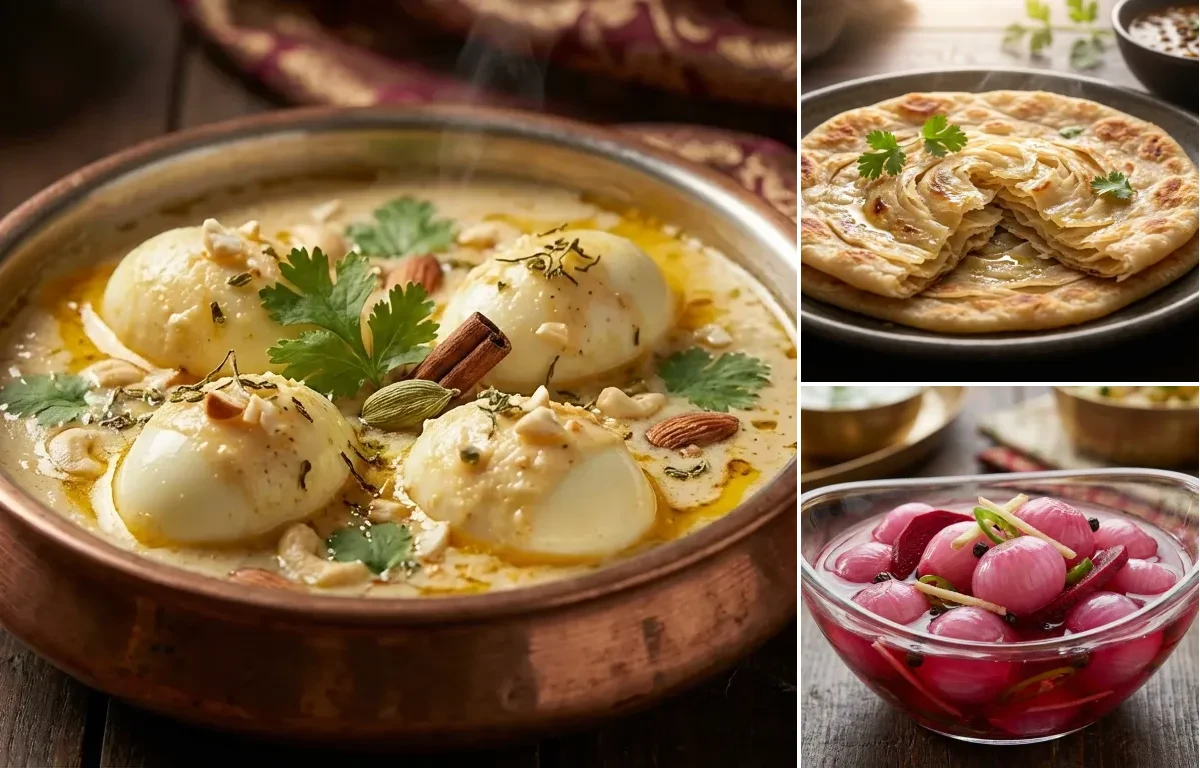
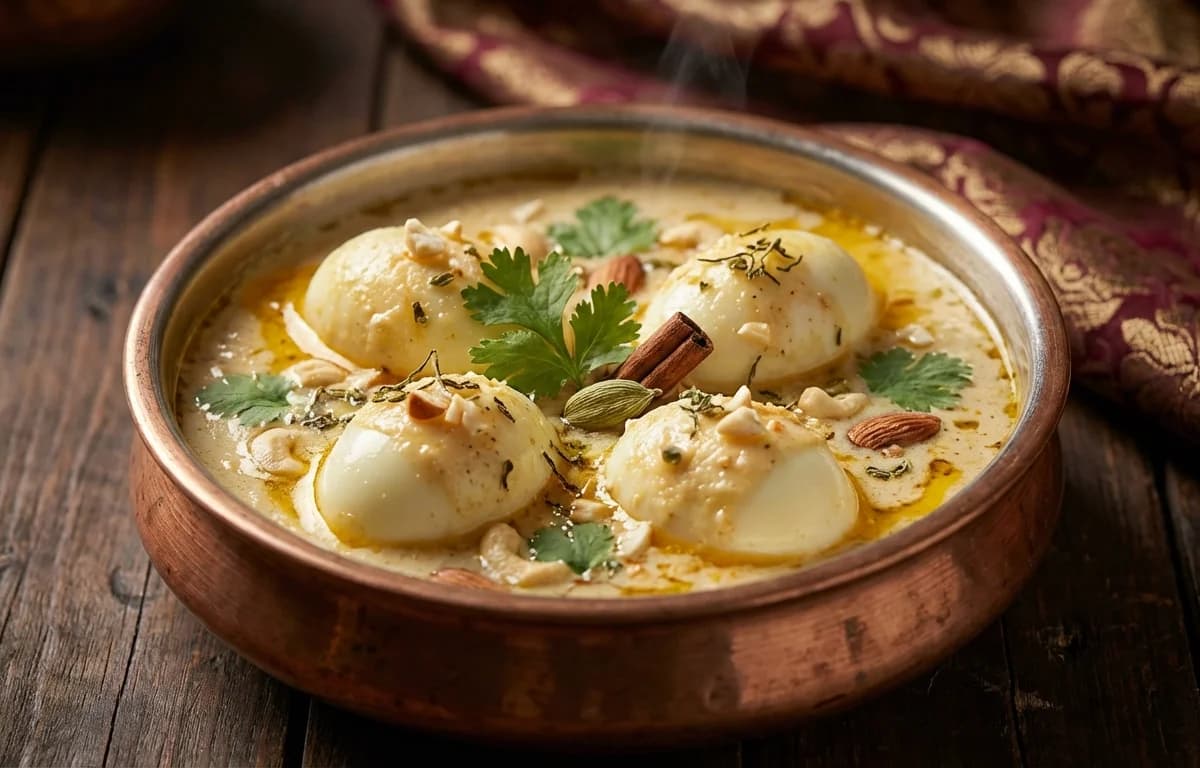
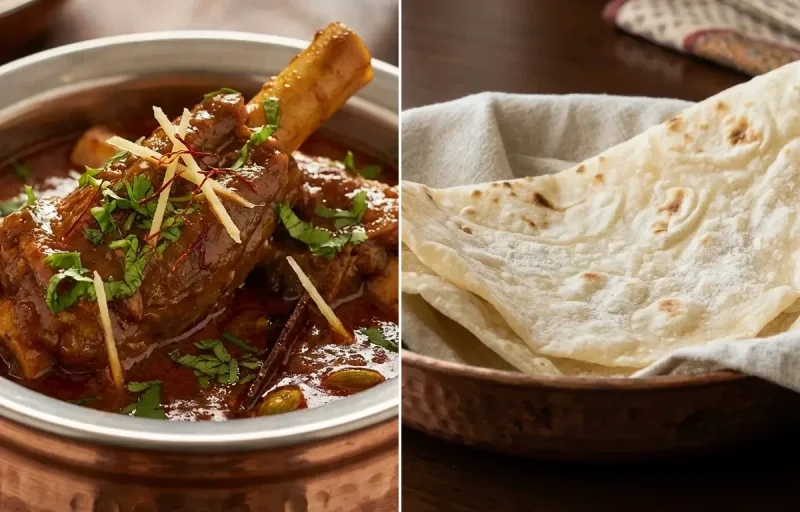
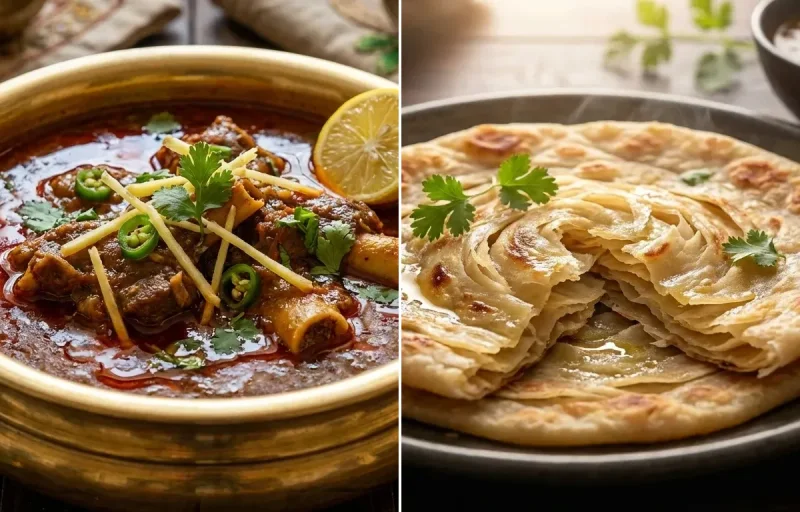
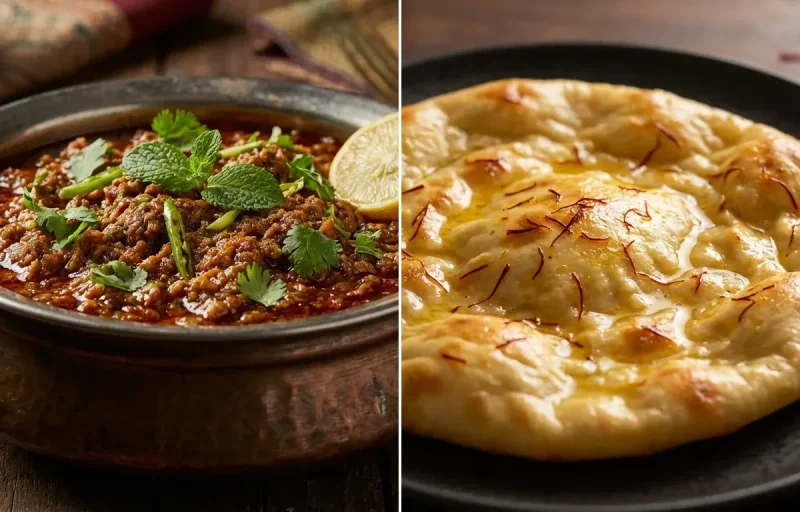
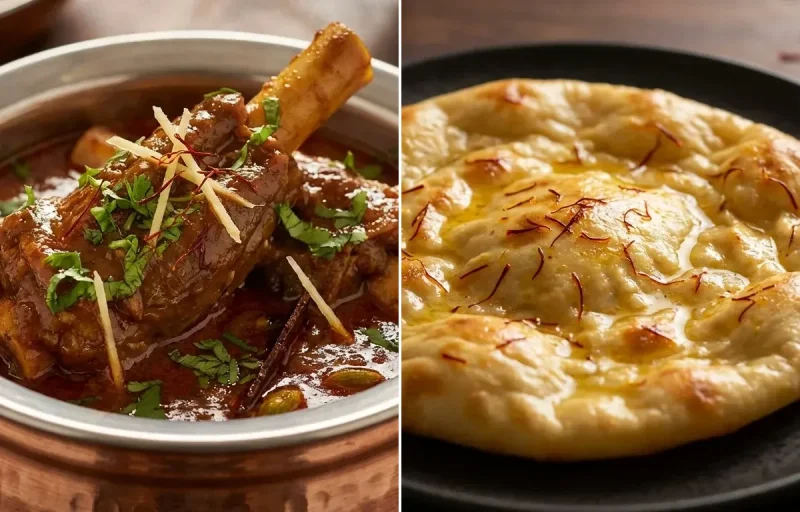
Hard-boiled eggs simmered in a luxurious, creamy gravy made from cashews, yogurt, and aromatic spices. This Mughlai classic is rich, mildly spiced, and perfect with naan or pulao for a special meal.
Prep20 min
Cook30 min
Soak15 min
Servings4
Serving size: 1 serving(2 eggs and about 1 cup of korma gravy)
341cal
17gprotein
13gcarbs
Ingredients
8 pc Egg (large, hard-boiled and peeled)
2 medium Onion (thinly sliced)
15 pc Cashews (whole, unsalted)
10 pc Almonds (blanched and peeled)
0.75 cup Curd (plain, full-fat, whisked until smooth)
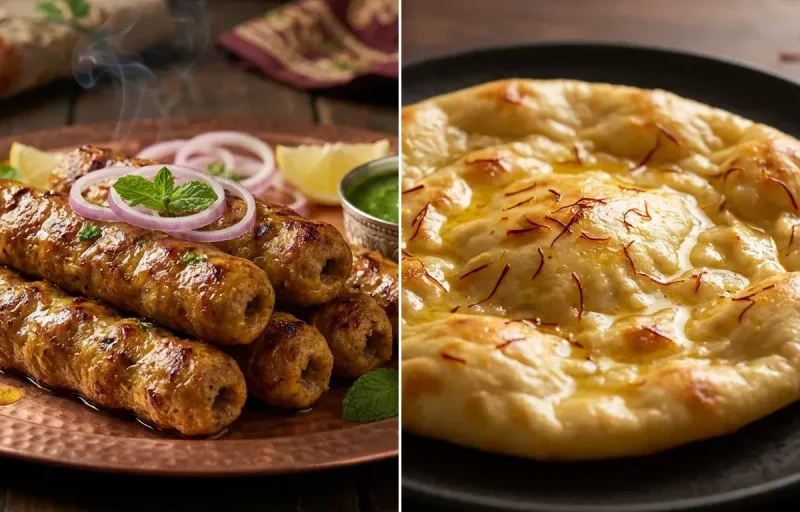
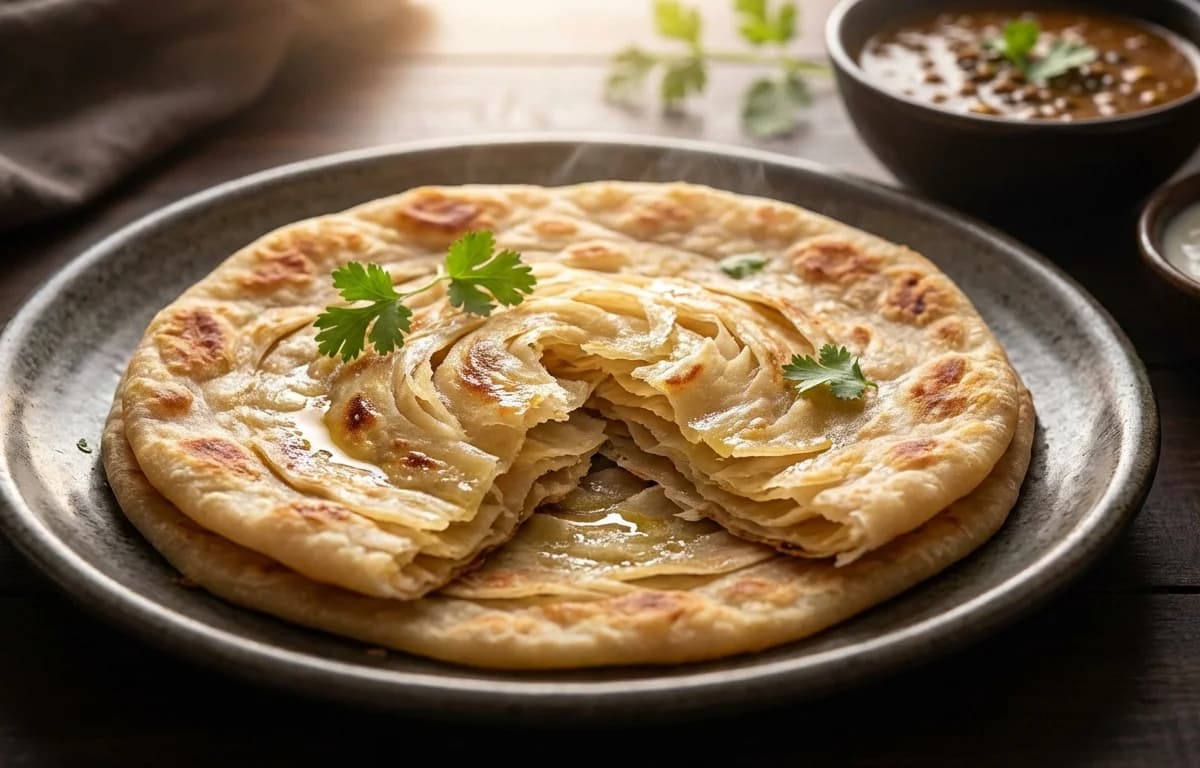
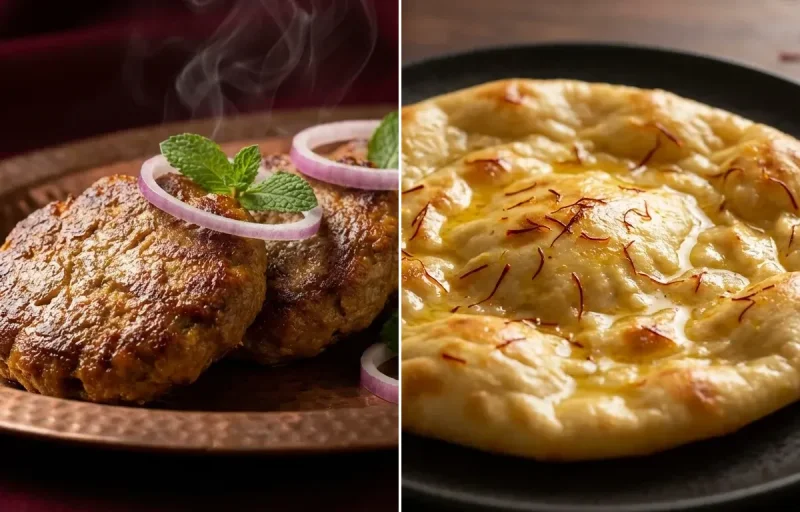
A classic Awadhi flatbread, famously cooked on an inverted griddle (ulta tawa). This paratha is wonderfully soft with a slightly crisp exterior and a unique dome shape, making it the perfect vessel for scooping up rich curries like Galouti Kebab or Korma.
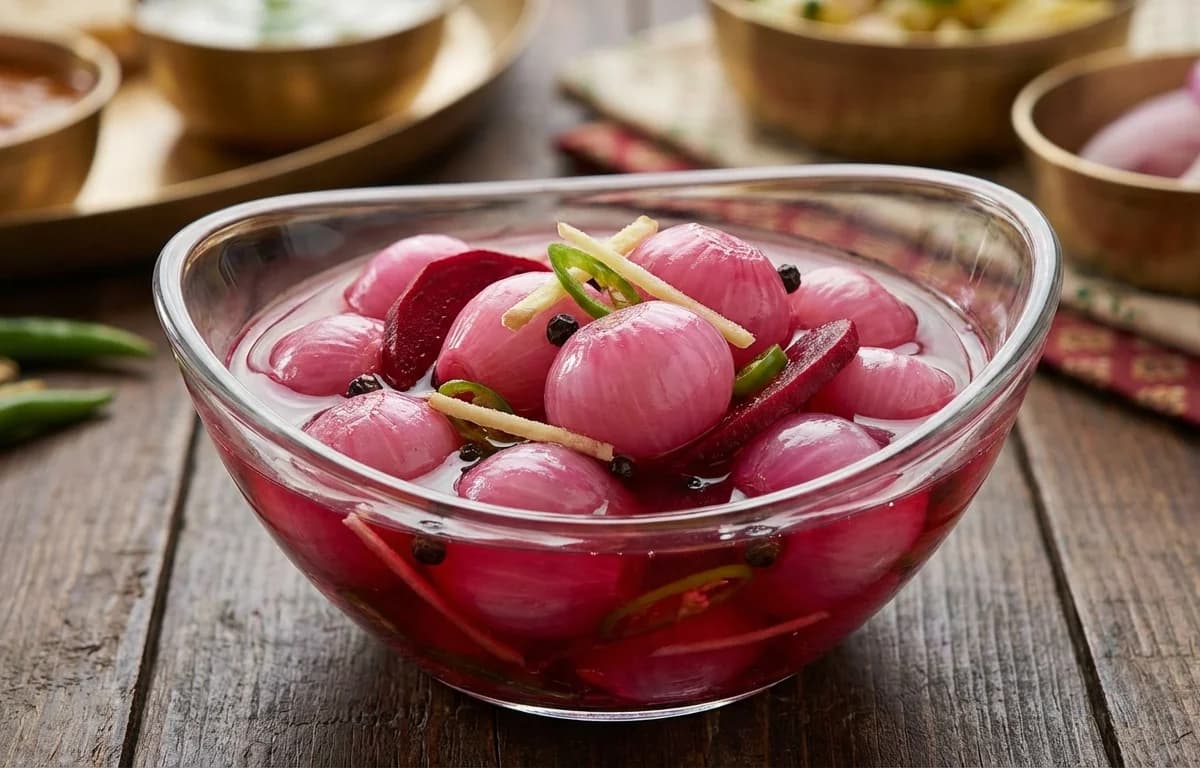
Crisp, tangy pickled pearl onions soaked in a sweet and sour vinegar brine. This classic Indian restaurant-style condiment adds a refreshing crunch to rich curries and tandoori dishes.
Prep15 min
Cook5 min
Ferment1440 min
Servings
About Egg Korma, Ulte Tawa Paratha and Sirke Wale Pyaaz
Creamy, protein-packed anda korma with homestyle paratha. A perfectly spiced, soul-satisfying comfort food feast!
This awadhi dish is perfect for dinner. With 691.5899999999999 calories and 25.34g of protein per serving, it's a nutritious choice for your meal plan.
Other Cuisines to Explore
Discover authentic meals from cuisines around the world.
0.5 tsp Kewra Water (optional, for authentic aroma)
1.25 tsp Salt (or to taste)
1.5 cup Water (plus more for soaking nuts)
2 tbsp Coriander Leaves (freshly chopped, for garnish)
Instructions
1
Preparation
Hard-boil the eggs for 10-12 minutes. Transfer to an ice bath, then peel them carefully. Prick each egg a few times with a fork or toothpick and set aside. This helps them absorb the gravy.
Soak the cashews and almonds in 1/2 cup of hot water for 15-20 minutes. If using almonds with skin, blanch and peel them before soaking.
Whisk the curd in a bowl until it is completely smooth and free of lumps. Set aside.
2
Make the Birista and Korma Paste
Heat 2 tablespoons of ghee in a heavy-bottomed pan or kadai over medium heat. Add the thinly sliced onions.
Fry the onions, stirring frequently, for 12-15 minutes until they are uniformly deep golden brown and crisp (this is called 'birista'). Do not burn them. Remove the fried onions with a slotted spoon and spread them on a plate to cool.
In a blender jar, add the cooled fried onions, the soaked cashews and almonds (along with their soaking water), and grind to a very smooth, fine paste. Add a splash of extra water if needed to facilitate grinding.
3
Cook the Gravy Base
In the same pan, heat the remaining 1 tablespoon of ghee. Add the whole spices: bay leaf, cinnamon stick, green cardamoms, and cloves. Sauté for 30-40 seconds until they become fragrant.
Add the ginger-garlic paste and cook for about a minute until the raw aroma disappears.
Add the prepared onion-nut paste to the pan. Cook on low-medium heat, stirring continuously, for 5-7 minutes until the paste thickens and you see ghee separating from the sides.
Add the spice powders: turmeric, Kashmiri red chili, and coriander powder. Sauté for another minute until well combined and fragrant.
4
Build the Korma Gravy
Reduce the heat to the absolute lowest setting. Slowly add the whisked curd, a little at a time, while stirring constantly. This is crucial to prevent the curd from splitting.
Once the curd is fully incorporated, increase the heat to low-medium and cook for 3-4 minutes until the oil starts to surface again.
Pour in 1.5 cups of warm water and add salt. Stir well to combine. Bring the gravy to a gentle simmer.
5
Simmer and Finish
Gently slide the pricked, hard-boiled eggs into the simmering gravy.
Cover the pan and let the korma cook on low heat for 8-10 minutes. This allows the eggs to absorb the rich flavors of the gravy.
Turn off the heat. Stir in the garam masala, crushed kasuri methi, and the optional kewra water for that classic Mughlai fragrance.
Garnish with freshly chopped coriander leaves. Let the korma rest for at least 10 minutes before serving to allow the flavors to meld. Serve hot with naan, roti, or pulao.
318cal
8gprotein
51gcarbs
9gfat
Ingredients
2 cup Maida
0.75 cup Warm Milk (Approx. 180ml)
2 tbsp Ghee (For the dough)
1 tsp Sugar
0.75 tsp Salt (For the dough)
0.25 cup Water (For salt water wash)
Instructions
1
Prepare the Dough (10 minutes + 30 minutes resting)
In a large mixing bowl, combine 2 cups of maida, 0.75 tsp salt, and sugar.
Add 2 tbsp of ghee and rub it into the flour with your fingertips until the mixture resembles coarse breadcrumbs. This process is called 'moyan'.
Gradually add the warm milk and knead for 8-10 minutes to form a very soft, smooth, and pliable dough. It should be softer than regular chapati dough.
Cover the dough with a damp cloth and let it rest for at least 30 minutes. This helps the gluten to relax, making the parathas softer.
2
Prepare the Tawa and Salt Water (5 minutes)
Place a heavy-bottomed kadhai or a convex tawa upside down on your stove over medium-high heat. Let it get very hot; you should see faint smoke rising from it.
While the tawa heats, mix 0.5 tsp of salt in 0.25 cup of water in a small bowl. Stir until the salt dissolves completely. This salt water will act as an adhesive.
3
Roll the Parathas (5 minutes)
After the dough has rested, knead it again for one minute.
Divide the dough into 8 equal-sized balls.
Take one ball, dust it lightly with dry maida, and roll it into a thin circle, about 6-7 inches in diameter. Keep the rolled parathas covered to prevent them from drying out.
4
Cook the Paratha (2-3 minutes per paratha)
Take one rolled paratha. Dip your fingers in the salt water and apply a thin, even layer over one entire surface.
Carefully lift the paratha and place the water-coated side down onto the hot inverted tawa. Gently press the edges to ensure it sticks well.
Cook for about 1-2 minutes. You will see bubbles forming on the surface as it cooks.
Using a kitchen towel or oven mitts, carefully lift the tawa by its handle, flip it over, and hold it directly over the open flame, about 4-5 inches away.
Cook the top side by moving the tawa in a circular motion to ensure even cooking. This should take 30-60 seconds, until golden-brown spots appear all over.
Flip the tawa back to its original position on the stove.
5
Finish and Serve
Using a pair of tongs, carefully peel the cooked paratha off the tawa. It should come off easily.
Place the hot paratha on a plate and generously brush it with melted ghee.
Repeat the process for the remaining dough balls. Stack the cooked parathas in a casserole or wrap them in a cloth to keep them soft and warm.
Serve immediately with your favorite rich curry or kebabs.
Peel the pearl onions. To make peeling easier, blanch them in hot water for 2 minutes, then immediately transfer to a bowl of ice-cold water.
Trim the root and stem ends of each onion, keeping them whole.
Make a small, shallow cross-shaped incision on the top of each onion. This helps the brine penetrate deeper for better flavor.
2
Make the Pickling Brine
In a non-reactive saucepan (like stainless steel or enamel), combine the water, white vinegar, sugar, and salt.
Add the julienned ginger, slit green chilies, and black peppercorns.
Bring the mixture to a rolling boil over medium-high heat, stirring occasionally until the sugar and salt dissolve completely. This should take about 3-5 minutes.
3
Assemble the Pickle
Place the peeled pearl onions and the thin slice of beetroot into a clean, sterilized 500ml (16 oz) glass jar.
Carefully pour the hot pickling brine over the onions, ensuring they are fully submerged. Gently tap the jar on the counter to release any air bubbles.
4
Cool, Store, and Serve
Allow the jar to cool to room temperature on the counter, which may take 1-2 hours.
Once completely cool, seal the jar with an airtight lid and place it in the refrigerator.
For the best flavor and crunch, let the onions pickle for at least 24 hours before serving. The flavor will continue to develop and intensify over the next few days.