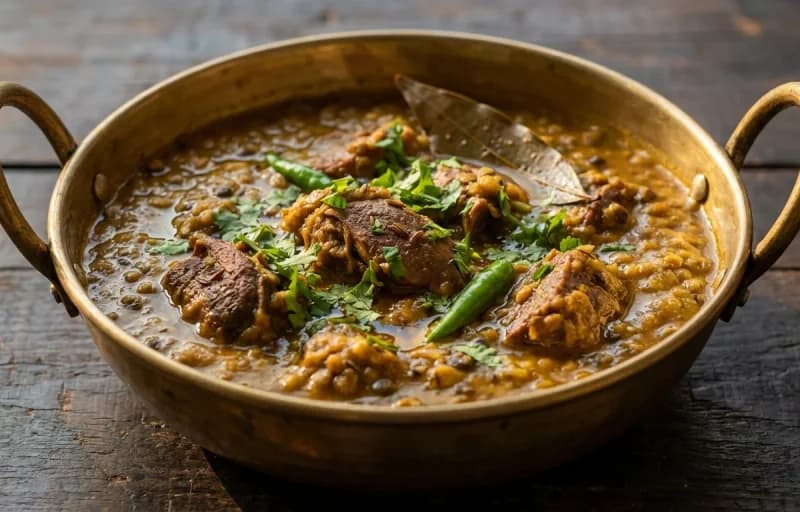
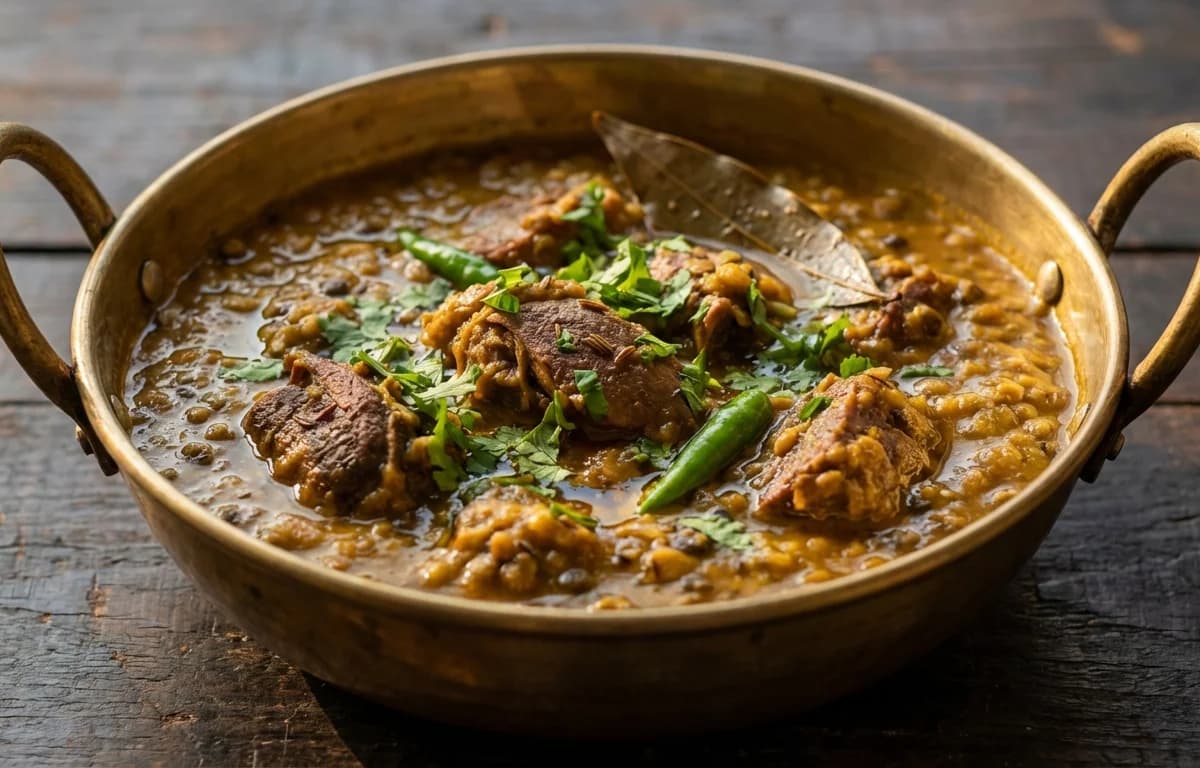
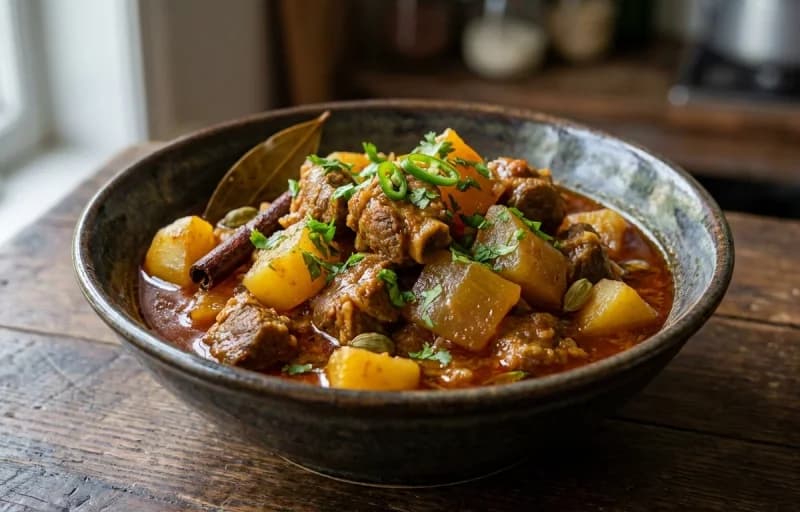
A rich and hearty Assamese delicacy where tender duck meat is slow-cooked with earthy black gram lentils. This unique curry, flavored with ginger, garlic, and a hint of spice, offers a deeply satisfying and traditional taste of Assam.
Prep50 min
Cook95 min
Soak30 min
Servings4
Serving size: 1 serving
1095cal
35gprotein
39gcarbs
Ingredients
750 g duck (Curry cut, with skin and bone-in)
1 cup mati dal (Also known as whole black gram or urad dal)
4 tbsp mustard oil (Essential for the authentic flavor)
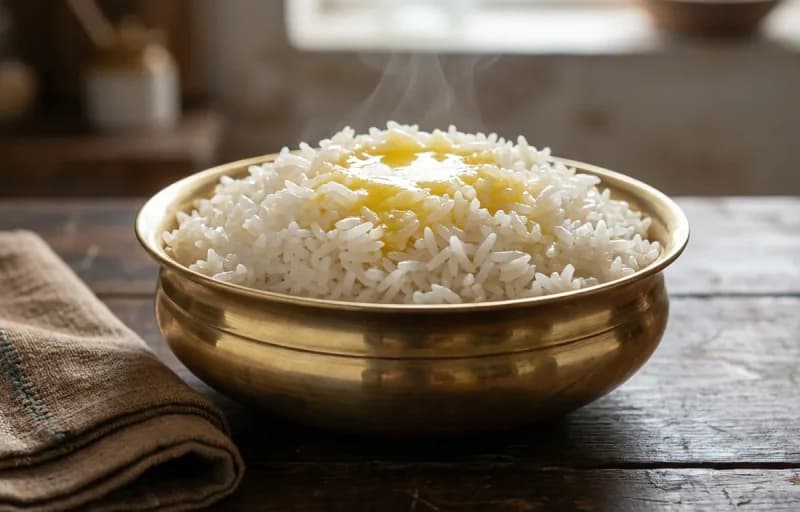
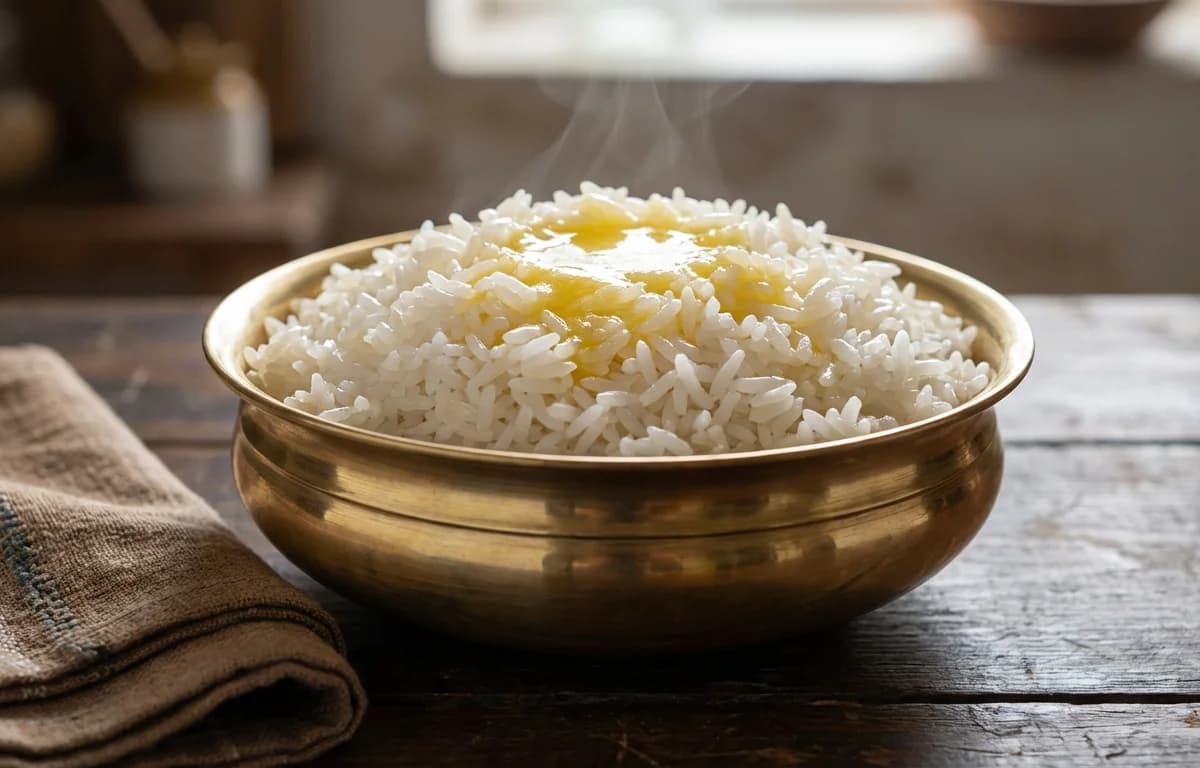
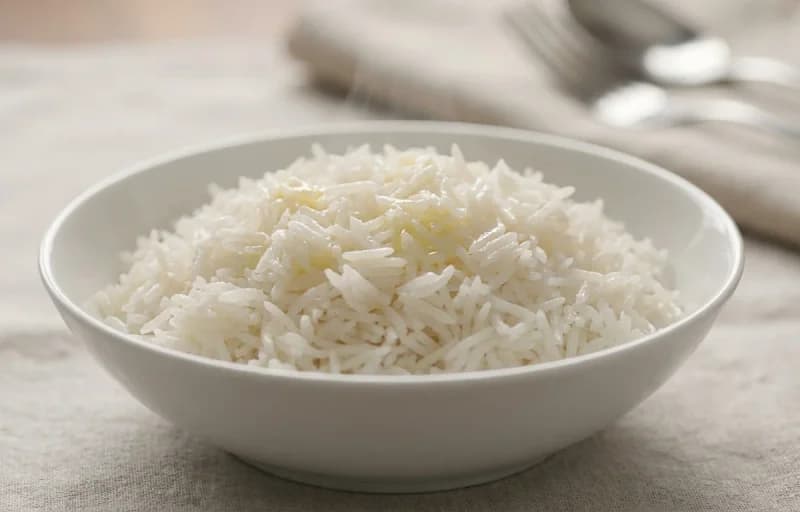
Discover the simple art of cooking Joha rice, a small-grained aromatic jewel from Assam. This naturally fragrant rice cooks up soft and fluffy, making it a perfect, delicate base for rich curries and simple dals. Its unique sweet aroma fills the kitchen as it cooks, promising a delightful meal.
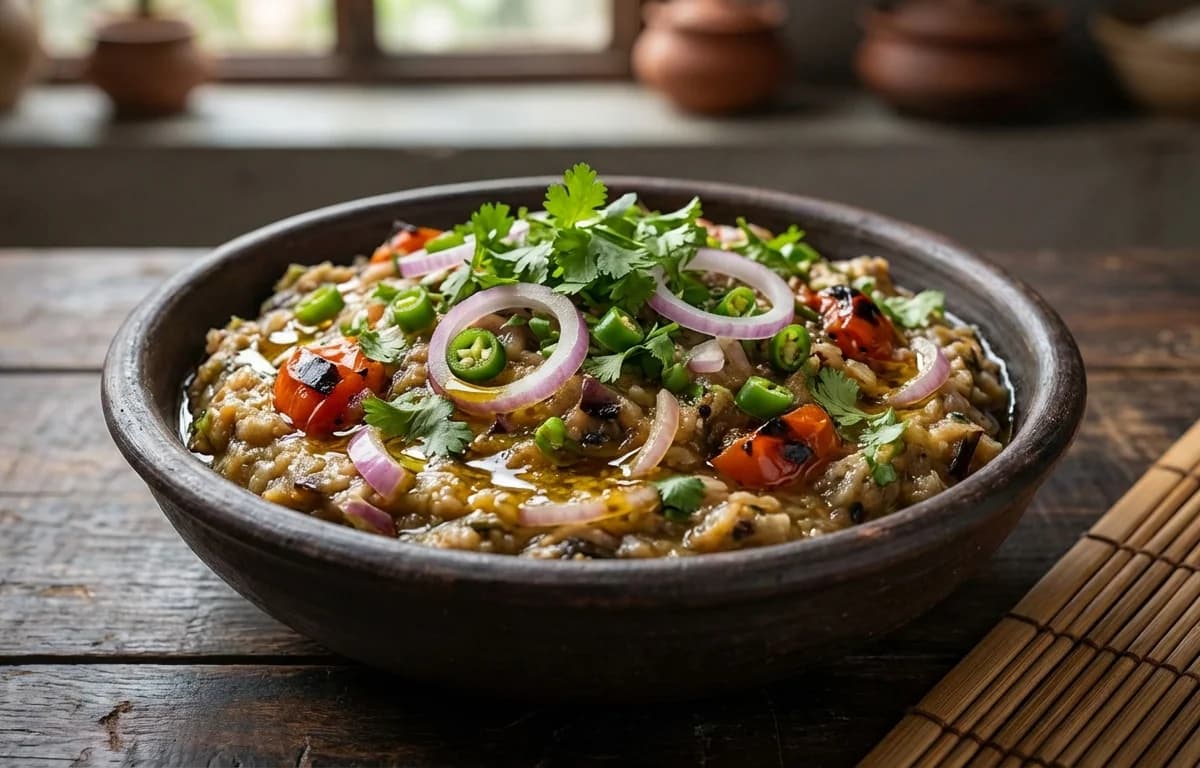
A rustic and smoky mashed eggplant dish from Assam, flavored with pungent mustard oil, raw onions, and fresh chilies. This simple, flavorful side dish comes together quickly and pairs perfectly with steamed rice and dal.
About Haah Aru Mati Dal, Joha Rice and Bengena Pitika
Protein-packed duck curry with aromatic rice and creamy eggplant mash. Soul-satisfying and delicious!
This assamese dish is perfect for lunch. With 1472.17 calories and 42.23g of protein per serving, it's a nutritious choice for your meal plan.
89gfat
1 tsp cumin powder
1 tsp coriander powder
1 tsp black pepper powder (Freshly ground for best flavor)
0.5 tsp garam masala
1.5 tsp salt (Adjust to taste)
6 cup water (2 cups for dal, 4 cups for gravy)
2 tbsp coriander leaves (Freshly chopped, for garnish)
Instructions
1
Prepare the Mati Dal
Rinse the mati dal under running water until the water runs clear. Soak it in ample water for at least 30 minutes.
Drain the dal. Transfer it to a pressure cooker with 2 cups of fresh water, 1/4 tsp of the turmeric powder, and 1/2 tsp of the salt.
Pressure cook on medium heat for 3-4 whistles, or about 15 minutes, until the dal is soft but still holds its shape. Do not let it get mushy. Set aside and let the pressure release naturally.
2
Sear the Duck
Clean the duck pieces thoroughly and pat them completely dry with paper towels. This is crucial for a good sear.
Heat 2 tbsp of mustard oil in a heavy-bottomed pan or kadai over medium-high heat until it just begins to smoke.
Carefully place the duck pieces in the pan, skin-side down, in a single layer. Sear for 4-5 minutes per side until golden brown and crisp. Work in batches if necessary to avoid overcrowding the pan.
Remove the seared duck pieces and set them aside on a plate.
3
Create the Curry Base
In the same pan with the rendered duck fat and remaining oil (add the other 2 tbsp of oil if the pan is dry), add the bay leaves and let them sizzle for 30 seconds.
Add the finely chopped onions and sauté on medium heat for 8-10 minutes, stirring frequently, until they are deep golden brown.
Add the ginger-garlic paste and cook for 2 minutes, stirring constantly, until the raw smell disappears.
Add the chopped tomatoes and slit green chilies. Cook for 5-6 minutes until the tomatoes break down and become pulpy.
4
Combine and Slow Cook
Reduce the heat to low. Add the remaining turmeric powder, cumin powder, coriander powder, black pepper powder, and the remaining 1 tsp of salt. Stir well and cook the masala for 2-3 minutes until oil begins to separate at the edges.
Return the seared duck pieces to the pan. Mix well to coat them thoroughly with the masala.
Pour in the cooked mati dal along with its liquid. Add 4 cups of hot water and stir everything together.
Bring the curry to a boil, then reduce the heat to a low simmer. Cover the pan and cook for 50-60 minutes, stirring occasionally, until the duck is tender and the gravy has thickened to your desired consistency.
5
Finish and Serve
Once the duck is cooked through, sprinkle the garam masala powder over the curry and gently mix it in.
Garnish with freshly chopped coriander leaves.
Let the curry rest, covered, for at least 10 minutes to allow the flavors to meld.
Serve hot with steamed rice for an authentic Assamese meal.
Servings4
Serving size: 1 serving
269cal
5gprotein
57gcarbs
1gfat
Ingredients
1.5 cup Joha Rice (An aromatic short-grain rice from Assam.)
3 cup Water (Use filtered water for the best taste.)
0.5 tsp Salt (Optional, adjust to your taste.)
1 tsp Ghee (Optional, for flavour and to prevent sticking. Use a neutral oil for a vegan option.)
Instructions
1
Rinse and Soak the Rice (Optional but Recommended)
Place the Joha rice in a fine-mesh sieve or a bowl. Rinse it under cold running water, gently swirling with your fingers, until the water runs mostly clear. This removes excess starch and prevents stickiness.
Drain the rice thoroughly. If you have time, soak the rinsed rice in fresh water for 15-20 minutes. Soaking helps the grains cook more evenly and become fluffier.
2
Cook the Rice
Drain the soaked rice completely and transfer it to a heavy-bottomed pot with a tight-fitting lid.
Add 3 cups of fresh water, the optional salt, and ghee.
Place the pot on the stove over high heat and bring the water to a rolling boil.
Once boiling, immediately reduce the heat to the lowest possible setting. Cover the pot with the lid and let it simmer for 12-15 minutes.
Do not lift the lid during this time to ensure the rice steams properly.
3
Rest and Fluff
After 15 minutes, turn off the heat. Let the pot stand, still covered, for at least 10 minutes. This crucial resting period allows the grains to absorb the last of the steam, firm up, and finish cooking.
Remove the lid and gently fluff the rice with a fork or a spatula to separate the grains.
Serve hot as a perfect accompaniment to Assamese curries, dals, or any vegetable dish.
1 large Brinjal (Also known as eggplant, about 400-500g)
1 medium Tomato (Ripe and firm)
1 medium Onion (Finely chopped)
2 pcs Green Chili (Finely chopped, adjust to your spice preference)
3 tbsp Coriander Leaves (Freshly chopped)
2 tbsp Mustard Oil (Use a pungent, cold-pressed variety for authentic flavor)
1 tsp Salt (Adjust to taste)
Instructions
1
Roast the Vegetables
Wash the brinjal (eggplant) and tomato thoroughly and pat them dry.
Make 2-3 deep slits in the brinjal with a knife. This helps it cook evenly and prevents it from bursting.
Lightly grease the skin of the brinjal and tomato with a few drops of oil. This makes peeling easier later.
Place the brinjal and tomato directly on a gas stove flame set to medium. You can also use a grill or a wire rack placed over the flame.
Roast for 10-15 minutes, turning them every few minutes with tongs, until the skin is completely charred and blackened, and the flesh feels soft when poked with a knife.
Remove the roasted vegetables from the flame and place them in a bowl. Cover the bowl for 5 minutes to let them steam, which will further loosen the skin.
2
Peel and Mash
Once cool enough to handle, gently peel off the charred skin from both the brinjal and the tomato. Discard the skins.
Remove and discard the stem of the brinjal.
Place the peeled pulp in a mixing bowl.
Using a fork or a potato masher, mash the pulp together. Aim for a coarse, slightly chunky texture rather than a smooth puree.
3
Combine and Serve
To the mashed vegetable pulp, add the finely chopped onion, green chilies, and fresh coriander leaves.
Pour in the pungent mustard oil and add salt to taste.
Gently mix everything together until just combined. Be careful not to overmix, as this can make the dish watery.
Taste and adjust the salt or chilies if needed.
Serve the Bengena Pitika immediately with hot steamed rice, dal, and a side of roti for a complete Assamese meal.