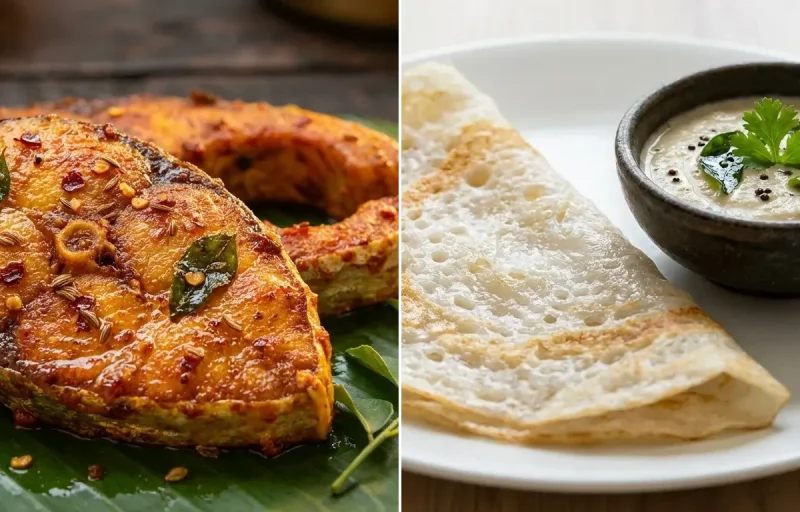
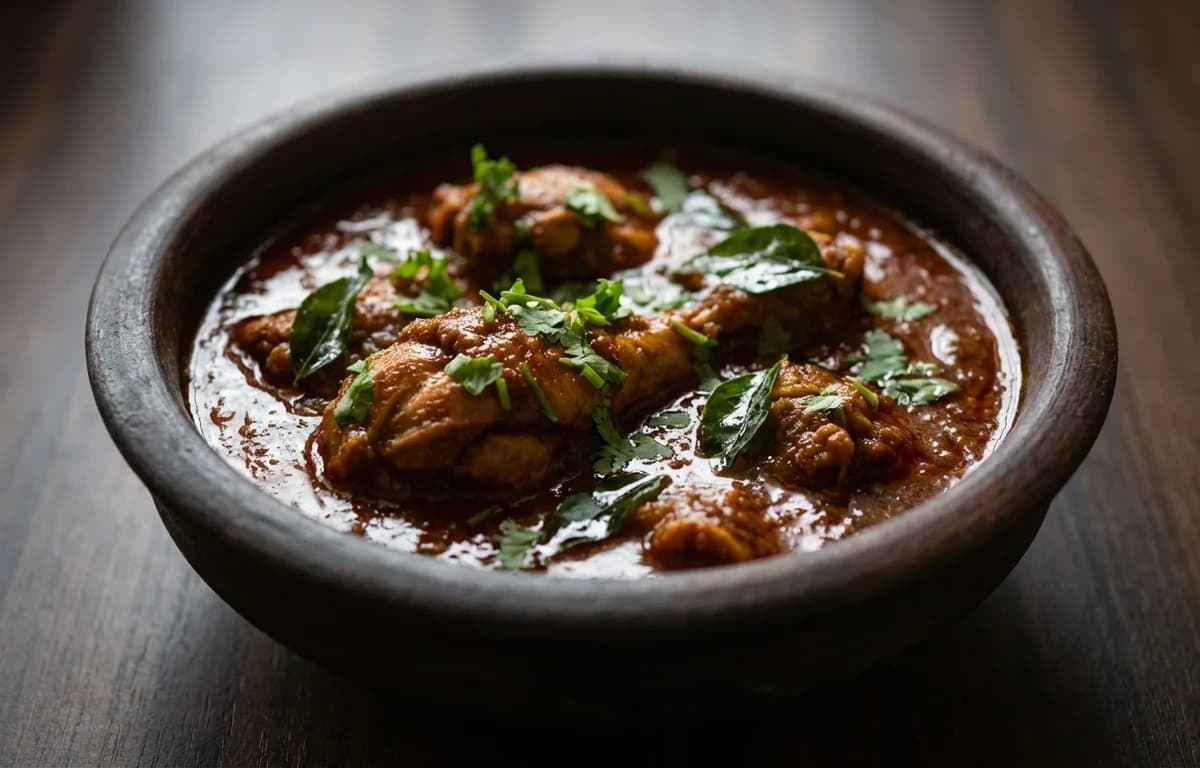
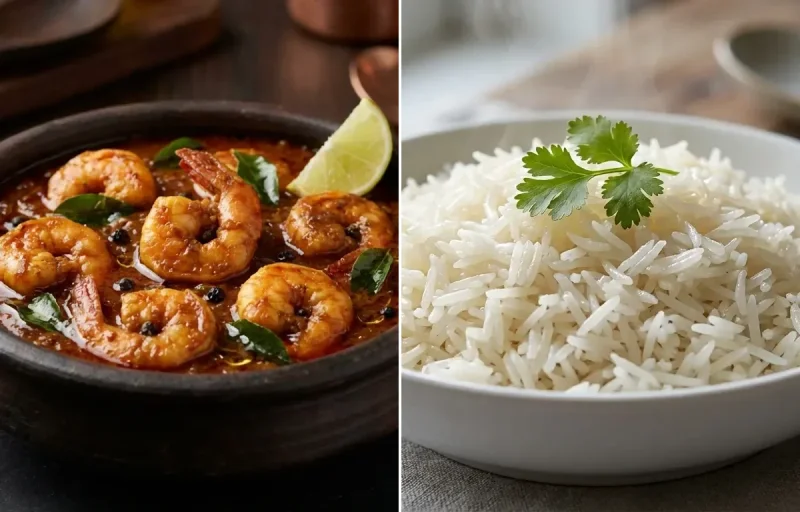
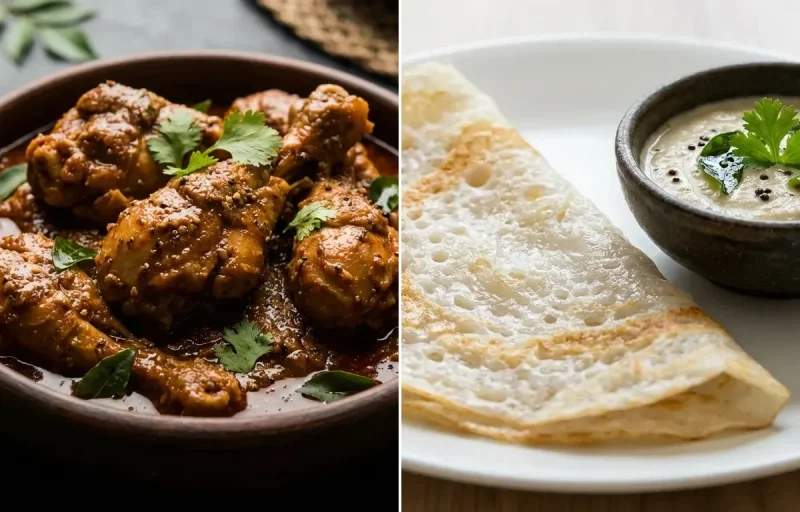
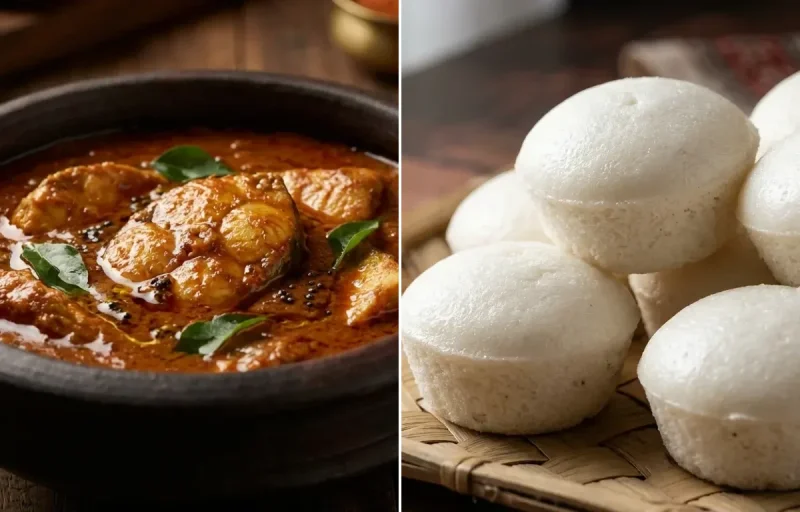
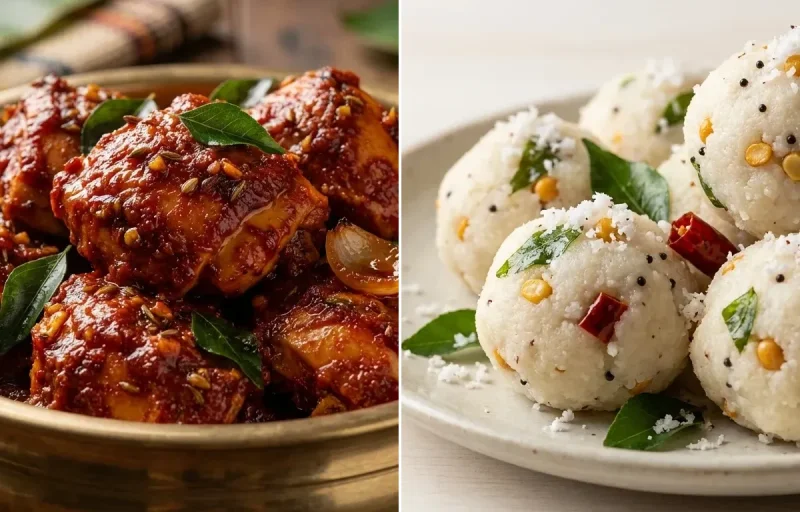
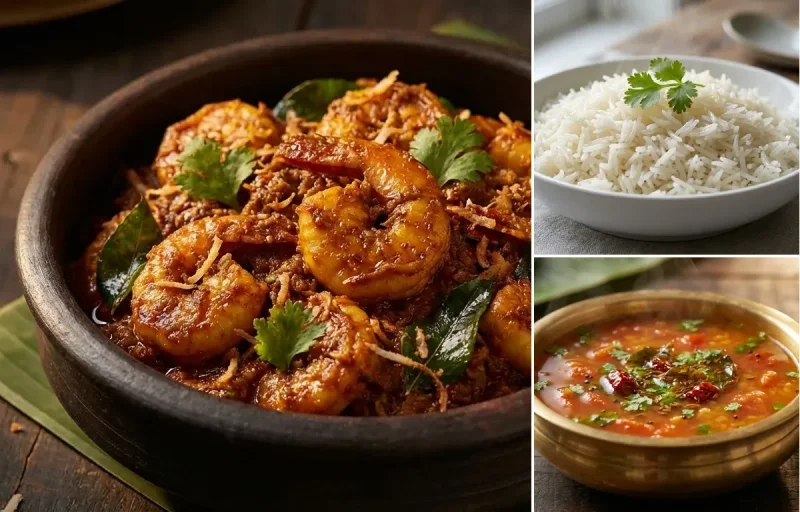
A fiery and tangy chicken curry from the coastal region of Mangalore. This dish gets its bold flavors from roasted red chilies, sour tamarind, and a unique blend of freshly ground spices. It's a true taste of Tulu Nadu cuisine, best enjoyed with neer dosa or steamed rice.
Prep25 min
Cook45 min
Soak20 min
Servings4
Serving size: 1 serving
346cal
25gprotein
15gcarbs
Ingredients
500 g Chicken (Bone-in, curry cut pieces)
0.75 tsp Turmeric Powder (Divided for marinade and masala)
1.5 tsp Salt (Adjust to taste)
8 whole Byadgi Red Chilies (For color and mild heat)
4 whole Guntur Red Chilies (For heat, adjust to preference)
1 tbsp Tamarind (Seedless, about a lime-sized ball)
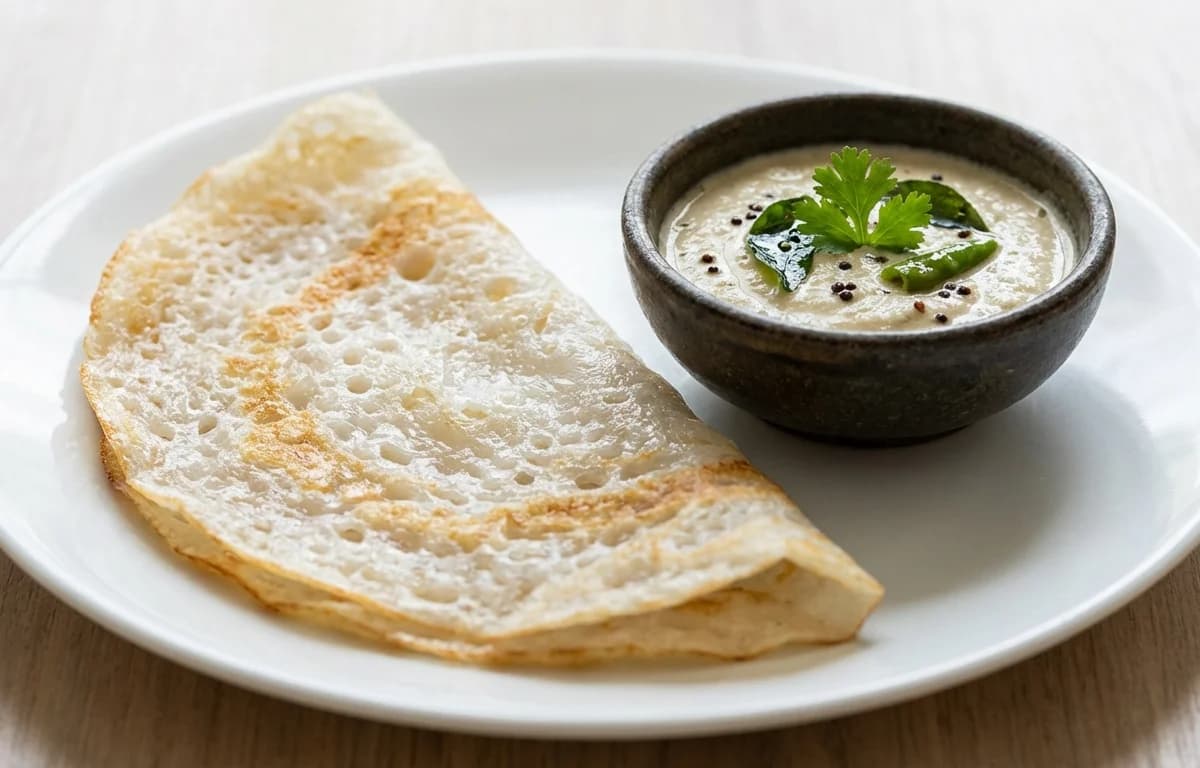
Delicate, lacy rice crepes from Mangalorean cuisine. Made with a thin, watery rice batter, these soft dosas are naturally vegan and gluten-free. The name 'Neer Dosa' literally translates to 'Water Dosa', highlighting the batter's unique consistency. Perfect with coconut chutney or a spicy curry. Note: This recipe requires a minimum of 4 hours of soaking time for the rice, which is not included in the prep time.
Prep15 min
Cook25 min
Soak240 min
About Kori Pulimunchi with Neer Dosa
Tangy, perfectly spiced Kori Pulimunchi with delicate Neer Dosa. A protein-packed meal that's pure joy!
This udupi dish is perfect for lunch. With 691.47 calories and 32.49g of protein per serving, it's a nutritious choice for your meal plan.
Other Cuisines to Explore
Discover authentic meals from cuisines around the world.
3 tbsp Coconut Oil (Preferably cold-pressed for authentic flavor)
2 medium Onion (Finely chopped)
1 sprig Curry Leaves (About 10-12 leaves)
1 tsp Jaggery (Powdered, optional to balance flavors)
2 cup Water (Divided for soaking, grinding, and curry)
2 tbsp Coriander Leaves (Freshly chopped, for garnish)
Instructions
1
Marinate the Chicken
In a medium bowl, combine the chicken pieces with 0.25 tsp of turmeric powder and 0.5 tsp of salt.
Mix thoroughly to ensure each piece is evenly coated.
Cover and set aside to marinate for at least 20 minutes while you prepare the masala.
2
Prepare the Pulimunchi Masala Paste
In a small bowl, soak the Byadgi chilies, Guntur chilies, and tamarind in 0.5 cup of hot water for 15-20 minutes. This will soften them for grinding.
While the chilies soak, heat a small, dry pan over low-medium heat. Add the coriander seeds, cumin seeds, fenugreek seeds, and black peppercorns.
Dry roast the spices for 2-3 minutes, stirring constantly, until they become fragrant and slightly darker. Do not let them burn. Remove from heat and let them cool completely.
In a high-speed blender, combine the soaked chilies and tamarind (with their soaking water), the cooled roasted spices, garlic cloves, ginger, and the remaining 0.5 tsp of turmeric powder.
Blend into a very fine, smooth paste. Add a few tablespoons of extra water if needed to facilitate grinding. The smoothness of the paste is key to the gravy's texture.
3
Sauté the Aromatics
Heat the coconut oil in a heavy-bottomed pan or kadai over medium heat.
Once the oil is hot, add the finely chopped onions and sauté for 8-10 minutes, until they are soft, translucent, and have golden-brown edges.
Add the sprig of curry leaves and continue to sauté for another minute until they turn crisp and aromatic.
4
Cook the Curry
Add the ground pulimunchi masala paste to the pan. Cook for 7-8 minutes, stirring frequently, until the paste darkens in color, the raw smell disappears, and you see oil separating from the sides of the masala.
Add the marinated chicken pieces to the pan. Stir well to coat the chicken completely with the masala. Sear for 3-4 minutes.
Pour in 1.5 cups of water, the remaining 1 tsp of salt, and the optional jaggery. Stir everything together to combine.
Bring the curry to a rolling boil, then reduce the heat to low. Cover the pan with a lid and let it simmer for 20-25 minutes, or until the chicken is tender and cooked through.
Stir occasionally to prevent the curry from sticking to the bottom of the pan.
5
Garnish and Serve
Once the chicken is cooked, check the consistency of the gravy. If it's too thin, simmer uncovered for a few more minutes. If it's too thick, add a splash of hot water.
Turn off the heat and garnish with freshly chopped coriander leaves.
Let the Kori Pulimunchi rest for at least 10 minutes before serving. This allows the flavors to deepen and meld together.
Serve hot with traditional accompaniments like Neer Dosa, Pundi (steamed rice dumplings), or plain steamed rice.
Servings4
Serving size: 1 serving
345cal
7gprotein
71gcarbs
4gfat
Ingredients
2 cup Sona Masuri Rice (Or any other short-grain raw rice like Dosa Rice)
4.5 cup Water (Divided: ~1 cup for grinding and 3.5 cups for thinning the batter)
0.25 cup Fresh Grated Coconut (Optional, for added softness and flavor)
1 tsp Salt (Adjust to taste)
2 tbsp Vegetable Oil (For greasing the tawa)
Instructions
1
Soak the Rice (4-6 hours)
Rinse the rice thoroughly under running water 3-4 times, or until the water runs clear.
Soak the rinsed rice in ample fresh water for a minimum of 4 hours and a maximum of 6 hours. Do not over-soak.
2
Prepare the Batter (10 minutes)
Drain all the water from the soaked rice completely.
Transfer the drained rice and optional grated coconut to a high-speed blender or wet grinder.
Add 1 cup of water and blend for 3-5 minutes until you get a completely smooth, fine paste with no grit. You may need to do this in batches depending on your blender size.
Pour the thick batter into a large mixing bowl. Add the remaining 3.5 cups of water and salt.
Whisk thoroughly to combine. The final batter should be very thin and free-flowing, with the consistency of thin buttermilk or milk. This is the key to lacy dosas.
3
Cook the Neer Dosas (25 minutes)
Heat a non-stick tawa or a well-seasoned cast-iron skillet over medium-high heat. To check if it's ready, sprinkle a few drops of water; if they sizzle and evaporate immediately, the tawa is hot enough.
Lightly grease the hot tawa with a few drops of oil using a paper towel or half an onion.
Stir the batter well from the bottom each time before making a dosa, as the rice flour settles very quickly.
Take a full ladle of batter and pour it quickly onto the hot tawa, starting from the edges and moving towards the center in a circular motion. Do not try to spread it. The batter will naturally form a lacy pattern.
Drizzle a few drops of oil around the edges if desired.
Cover the tawa with a lid and cook for about 60-90 seconds on medium heat. The dosa cooks with the trapped steam and does not need to be flipped.
Once cooked, the edges will begin to lift away from the pan and the surface will look cooked (no raw batter visible).
Gently fold the dosa in half, and then into a quarter (triangle shape). Remove it from the tawa and place it in a casserole to keep warm.
4
Repeat and Serve
Repeat the process for the remaining batter, remembering to stir the batter and lightly grease the tawa before each dosa.
Serve the Neer Dosas immediately while they are hot and soft, with coconut chutney, sambar, or a spicy curry like Mangalorean Chicken Ghee Roast or Vegetable Kurma.