
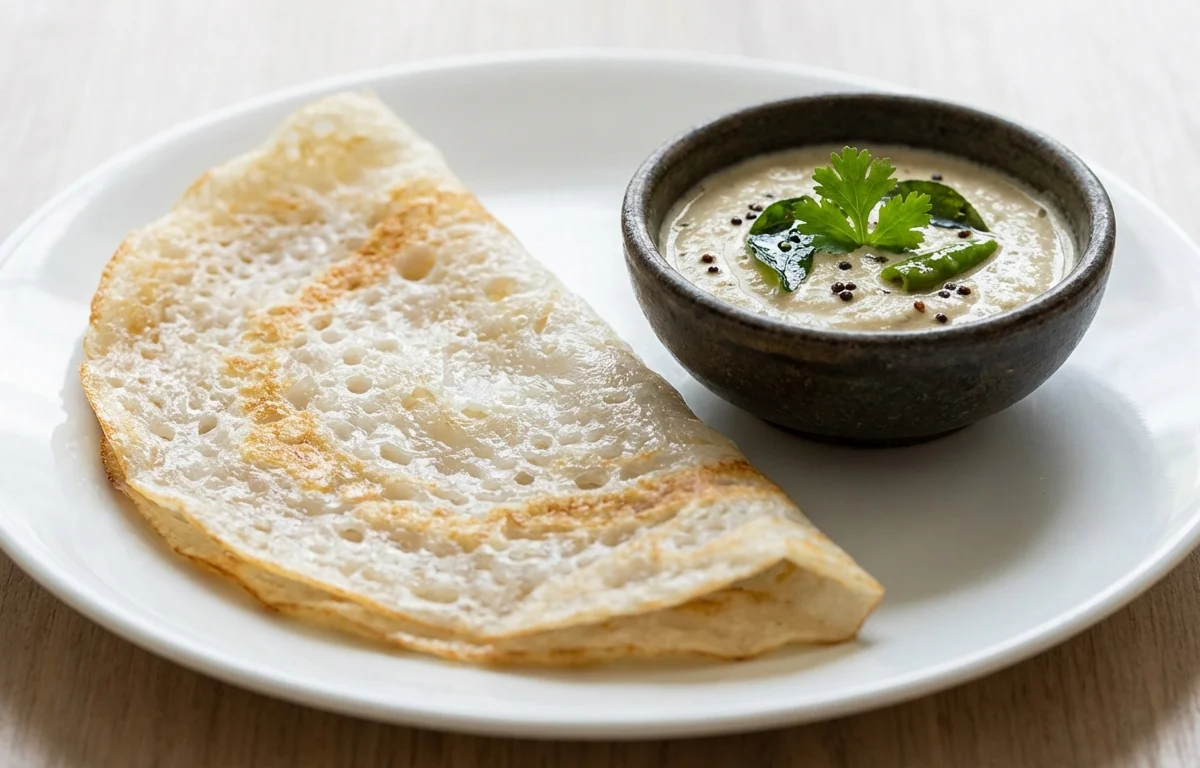
Neer Dosa
Delicate lace-like rice crepes from coastal Karnataka, made with a thin batter and cooked without fermentation. They turn soft, light, and slightly chewy, making them perfect with coconut chutney, vegetable kurma, or chicken curry.
For 8 servings
- prep · ~240 min
Soak the rice.
Wash the rice well until the water runs fairly clear. Soak it in fresh water for 4 hours, then drain completely.
- mix · ~5 min
Grind the batter smooth.
1.Add the soaked rice and fresh coconut to a blender.2.Pour in water as needed for grinding and blend to a very smooth batter.3.Transfer the batter to a bowl and mix in the salt.TIPThe batter should feel completely smooth with no grainy bits, or the dosa may crack. - mix · ~2 min
Thin the batter.
Stir in the remaining water little by little to make a very thin, pourable batter, almost like thin buttermilk. Mix well before every dosa because the rice settles quickly.
- fry · ~2 min
Cook the first dosa.
1.Heat a dosa pan over medium heat and lightly grease it with oil.2.Stir the batter well and pour a ladleful from the outer edge toward the center to form a lacy round.3.Cover and cook until the surface looks set and the edges lift easily.TIPDo not spread the batter with the ladle like regular dosa; just pour it in a quick circular motion. - fry · ~18 min
Make the remaining dosas.
Repeat with the remaining batter, stirring before each dosa and greasing the pan lightly as needed. Neer dosa is usually cooked on one side only and folded while still soft.
- serve
Fold and serve hot.
What to keep in mind.
7 tips from the recipe — small details that make a real difference to the final dish.
- 1Drain the soaked rice fully before grinding, or the batter can become too watery to form the classic lacy holes.
- 2Blend until absolutely smooth; even tiny rice grains can make neer dosa tear or turn brittle.
- 3Keep the batter as thin as buttermilk and stir before every pour, because the rice settles fast at the bottom.
- 4Pour from the outer edge inward in one quick motion; spreading with the ladle will ruin the delicate texture.
- 5Use a well-heated pan on medium heat so the batter sets instantly and creates the signature net-like pattern.
- 6Cover while cooking to trap steam; this keeps the dosa soft enough to fold without cracking.
- 7Neer dosa is best served right off the pan, but you can stack and cover them with a cloth briefly to keep them supple.
Adapt it for your goals.
Coconut-free
Skip the fresh coconut for a plainer, lighter neer dosa if you want a more neutral base for spicy curries.
jaggery sideJaggery-side
Serve with a little grated jaggery and coconut for a traditional sweet pairing when you want a simple breakfast-style version.
brown riceBrown-rice
Use brown rice for a nuttier taste and heartier texture, though the dosa may be slightly less delicate and lacy.
herb infusedHerb-infused
Add a little chopped curry leaf or coriander to the batter for a fresh aromatic note without changing the basic method.
Why this is on our healthy list.
Light and Easy to Digest
Made from a simple rice batter without fermentation or heavy fats, neer dosa is gentle and light when served fresh.
Naturally Gluten Free
This dosa uses rice and coconut instead of wheat, making it suitable for people who avoid gluten-containing grains.
Minimal Oil Cooking
Only a light greasing of the pan is needed, so the dish stays relatively light compared with richer pan-fried breads.
Quick Energy from Rice
Rice provides easily available carbohydrates, making neer dosa a good accompaniment for breakfast or a light meal.
Frequently asked questions
The batter is usually too thick or the pan is not hot enough. Thin it to a buttermilk-like consistency and pour onto a properly heated pan.


