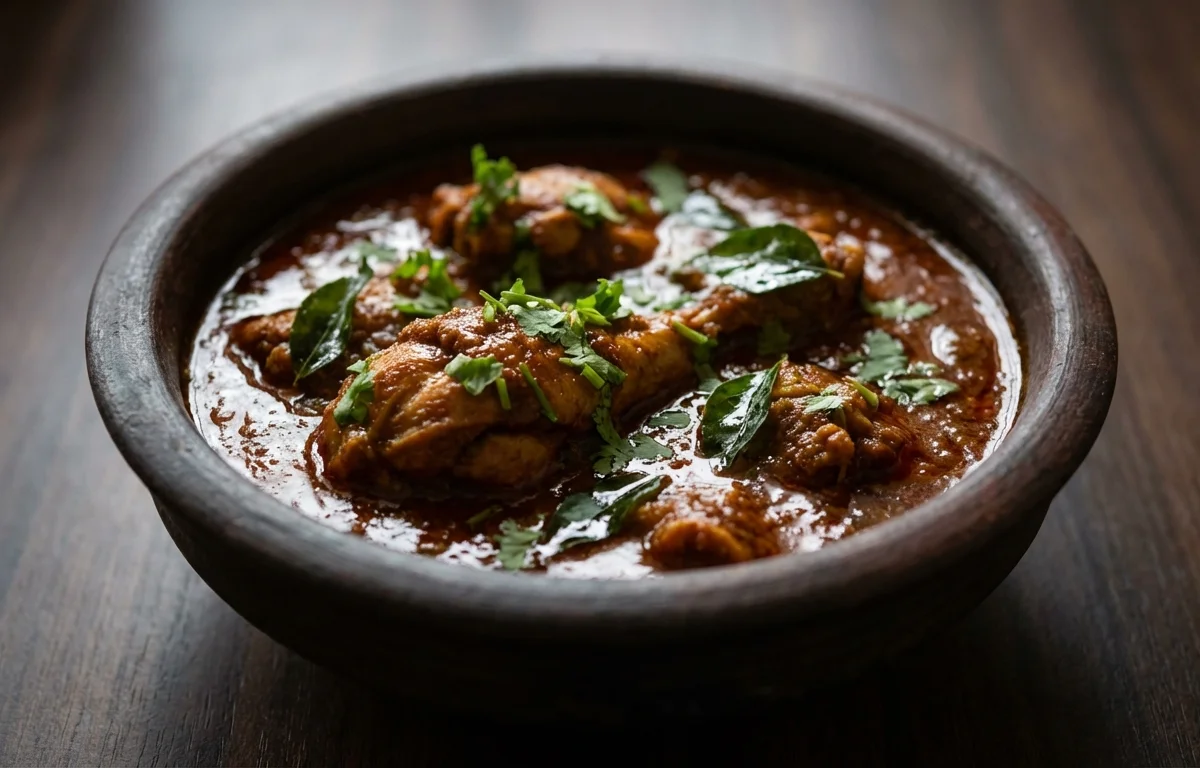
Kori Pulimunchi
A fiery, tangy chicken curry from coastal Karnataka made with roasted red chilies, tamarind, and warm spices. It has a bold, deep flavor that pairs especially well with neer dosa, rice, or simple rotis.
For 4 servings
- prep · ~15 min
Soak the tamarind.
Soak the tamarind in a little warm water for 15 minutes to soften it before grinding.
- roast · ~3 min
Roast the chilies and spices.
1.Heat a dry pan over low heat.2.Roast the byadagi red chilies until crisp and fragrant, about 1 minute.3.Add coriander seeds, cumin seeds, black peppercorns, and fenugreek seeds.4.Roast for 1 to 2 minutes more until aromatic, then cool slightly.TIPKeep the heat low so the chilies darken slightly without turning bitter. - mix · ~3 min
Grind the masala.
1.Add the roasted chilies and spices to a grinder jar.2.Add garlic and the soaked tamarind.3.Pour in 1 cup water.4.Grind to a smooth, thick masala paste. - saute · ~8 min
Cook the onions and curry leaves.
1.Heat coconut oil in a wide pan over medium heat.2.Add sliced onion and curry leaves.3.Cook until the onions soften and turn light golden, 6 to 8 minutes. - saute · ~4 min
Add the chicken and masala.
1.Add the chicken pieces to the pan and mix well.2.Add turmeric powder and salt.3.Pour in the ground masala and coat the chicken evenly.4.Cook for 3 to 4 minutes, stirring often. - simmer · ~25 min
Simmer the curry until the chicken is tender.
Add 1.5 cups water and bring the curry to a gentle boil. Lower the heat, cover, and simmer for 20 to 25 minutes until the chicken is cooked through, tender, and the gravy thickens slightly.
TIPStir once or twice during simmering so the masala does not catch at the bottom. - serve
Serve hot.
Serve Kori Pulimunchi hot with neer dosa, steamed rice, or roti.
What to keep in mind.
7 tips from the recipe — small details that make a real difference to the final dish.
- 1Roast the byadagi chilies on low heat only until crisp; if they blacken, the curry turns harsh instead of deep and smoky.
- 2Grind the masala very smooth so the gravy coats the chicken evenly and doesn't taste gritty.
- 3Let the onions reach light golden, not dark brown; this keeps the tamarind-chili flavour sharp and balanced.
- 4Use a wide pan for simmering so the masala reduces evenly and is less likely to catch at the bottom.
- 5Bone-in chicken gives the gravy more body and flavour during the 20 to 25 minute simmer.
- 6If making ahead, rest the curry for a few hours or overnight; the chili, tamarind, and garlic mellow and deepen beautifully.
- 7Reheat gently with a splash of water, because the gravy thickens as it sits and can become too intense.
Adapt it for your goals.
Less-spicy
Reduce the byadagi chilies slightly and add a bit more onion for a gentler heat while keeping the dish tangy and aromatic.
thicker gravyThicker-gravy
Use less cooking water and simmer uncovered for the last few minutes if you want a more concentrated curry for neer dosa.
bonelessBoneless
Use boneless chicken for easier eating; shorten the simmer so the pieces stay juicy and don't dry out.
seafoodSeafood
Swap chicken for firm fish or prawns for a coastal-style pulimunchi variation; add them later since seafood cooks much faster.
Why this is on our healthy list.
Protein-Rich Main Dish
Chicken makes this curry satisfying and protein-rich, helping turn it into a filling meal with rice, dosa, or roti.
Spice-Driven Flavor Without Cream
The gravy gets its bold taste from chilies, tamarind, garlic, and whole spices rather than heavy cream or butter.
Aromatic Plant Ingredients
Garlic, curry leaves, onion, coriander, cumin, and pepper add layers of flavor along with beneficial plant compounds.
Frequently asked questions
Yes, but byadagi gives the classic deep red color and milder heat. If using hotter chilies, reduce the quantity to keep the curry balanced.