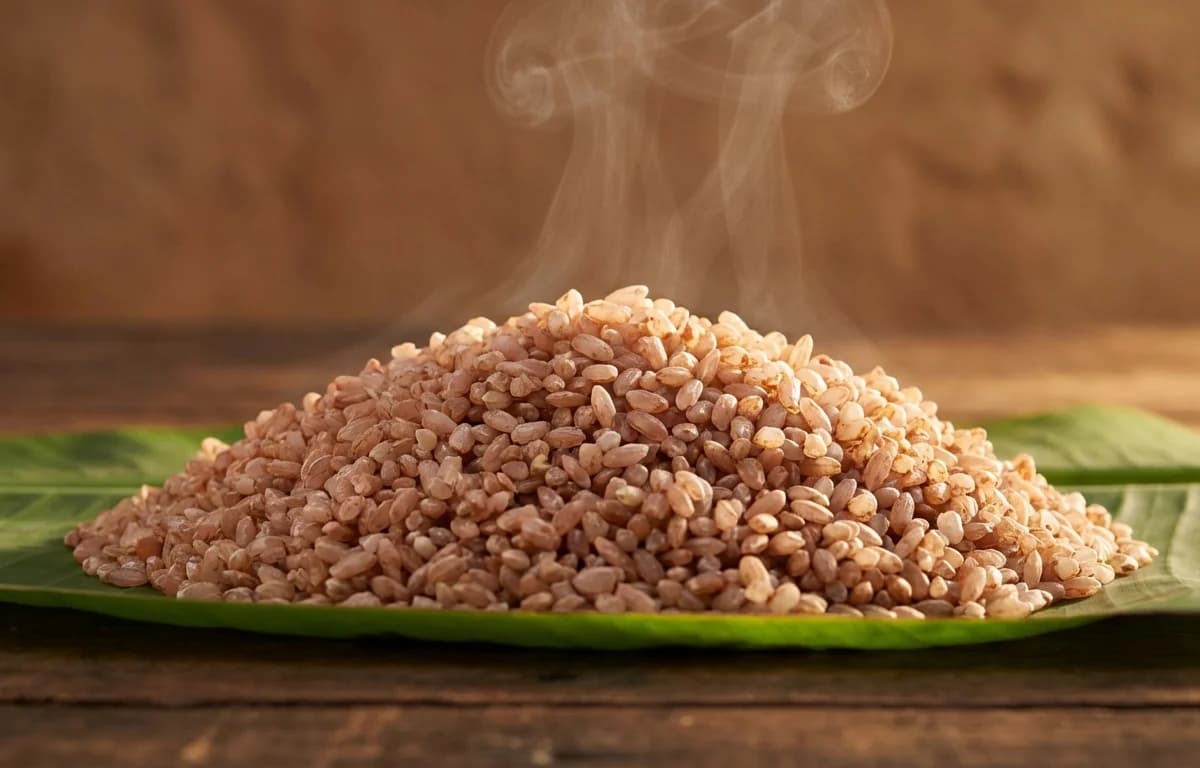
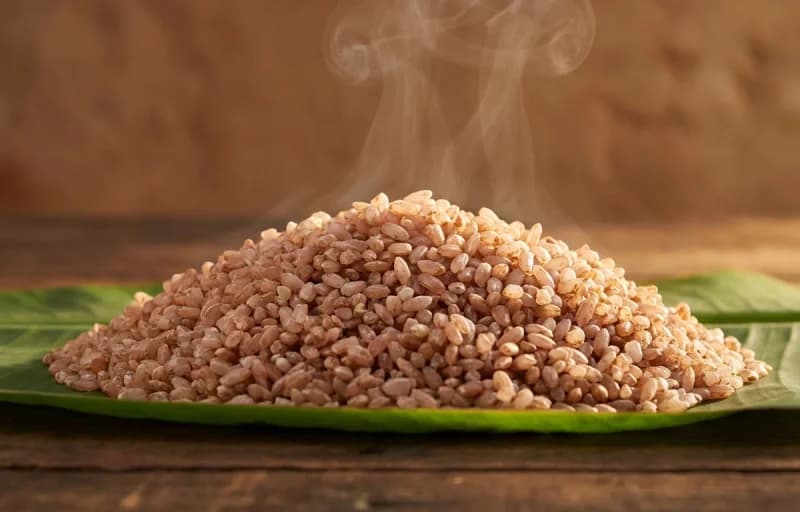
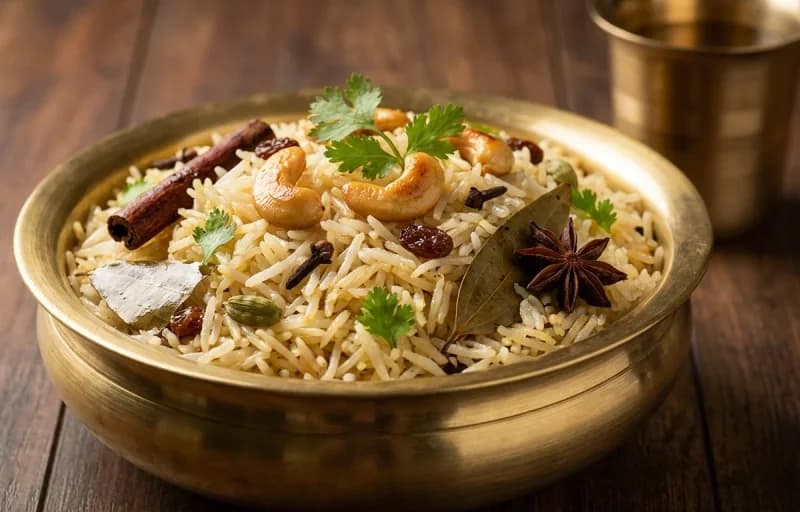
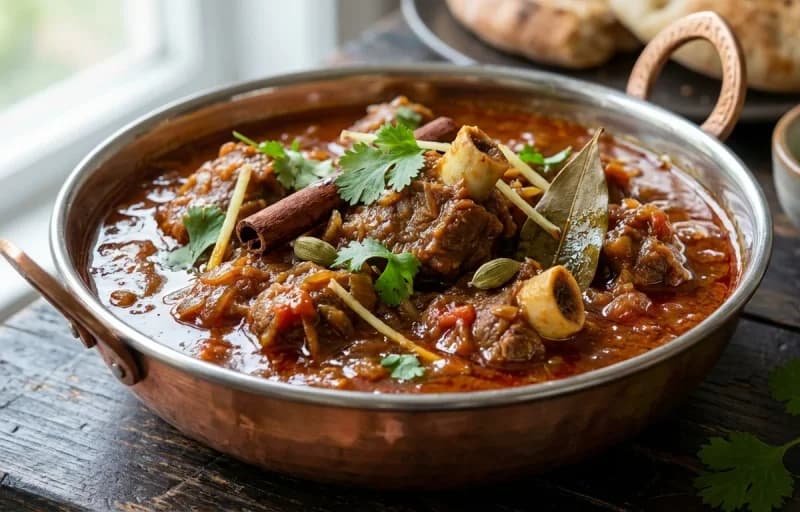
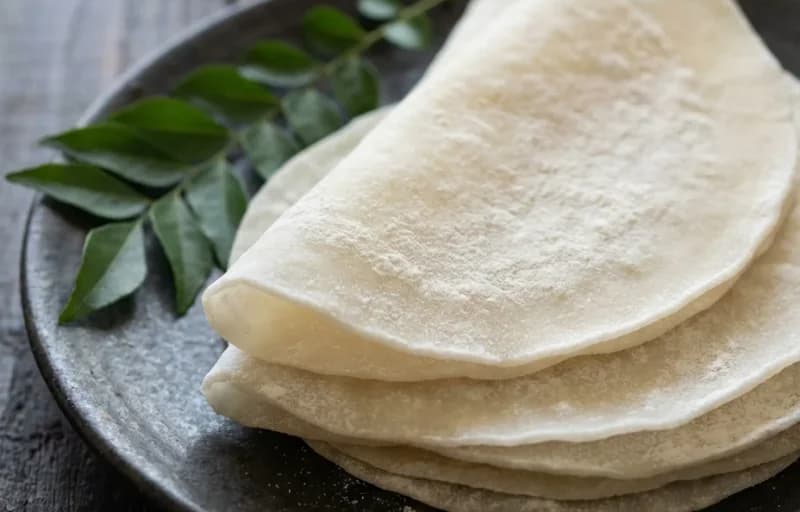
A staple in Kerala, this nutritious red parboiled rice has a unique earthy flavor and firm texture. Perfectly cooked, it's the ideal accompaniment to South Indian curries like sambar and avial.
Prep35 min
Cook25 min
Soak30 min
Servings4
Serving size: 1 serving
246cal
5gprotein
53gcarbs
Ingredients
1.5 cup Matta Rice (Also known as Kerala Red Rice or Rosematta Rice)
4 cup Water (For pressure cooking)
0.5 tsp Salt (Optional, to taste)
Instructions
1
Rinse and Soak the Rice
Place the matta rice in a large bowl. Rinse it under cold running water 4-5 times, rubbing the grains gently between your palms, until the water runs mostly clear.
Add fresh water to the bowl to cover the rice by at least 2 inches. Let it soak for a minimum of 30 minutes, or up to 2 hours for a softer texture.
After soaking, drain the water completely using a colander.
2
Pressure Cook the Rice
Transfer the drained rice to a 3-liter or larger pressure cooker.
Add 4 cups of fresh water and the optional salt. Stir once.
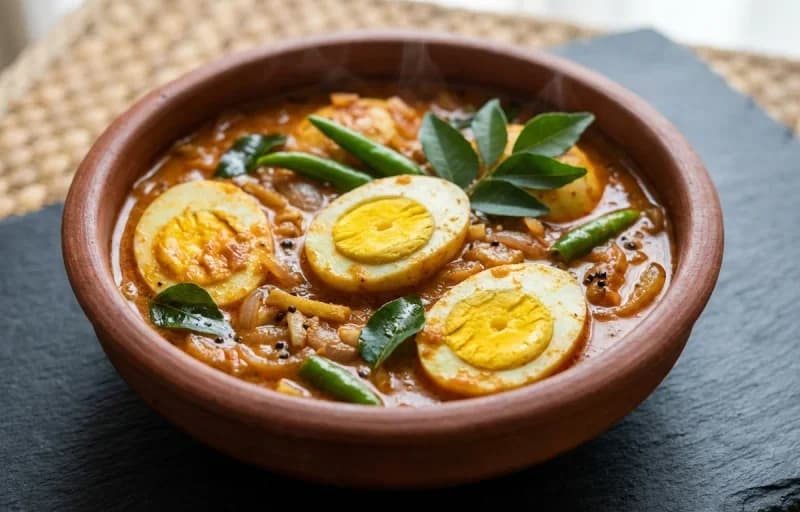
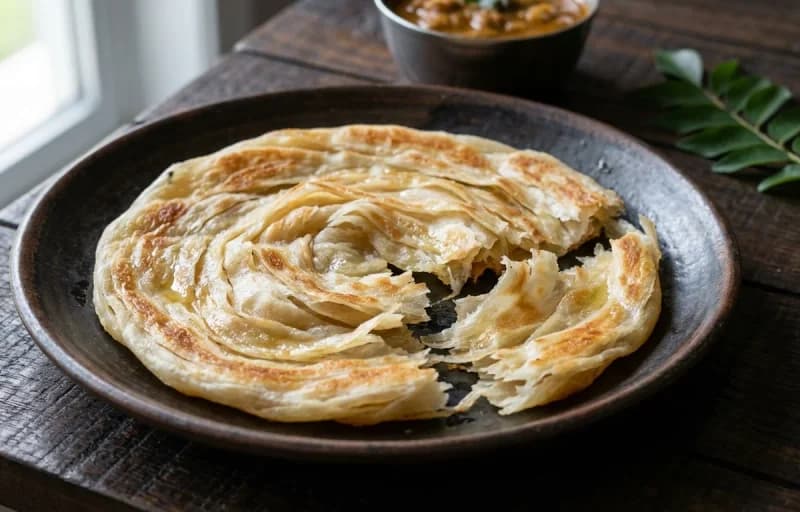
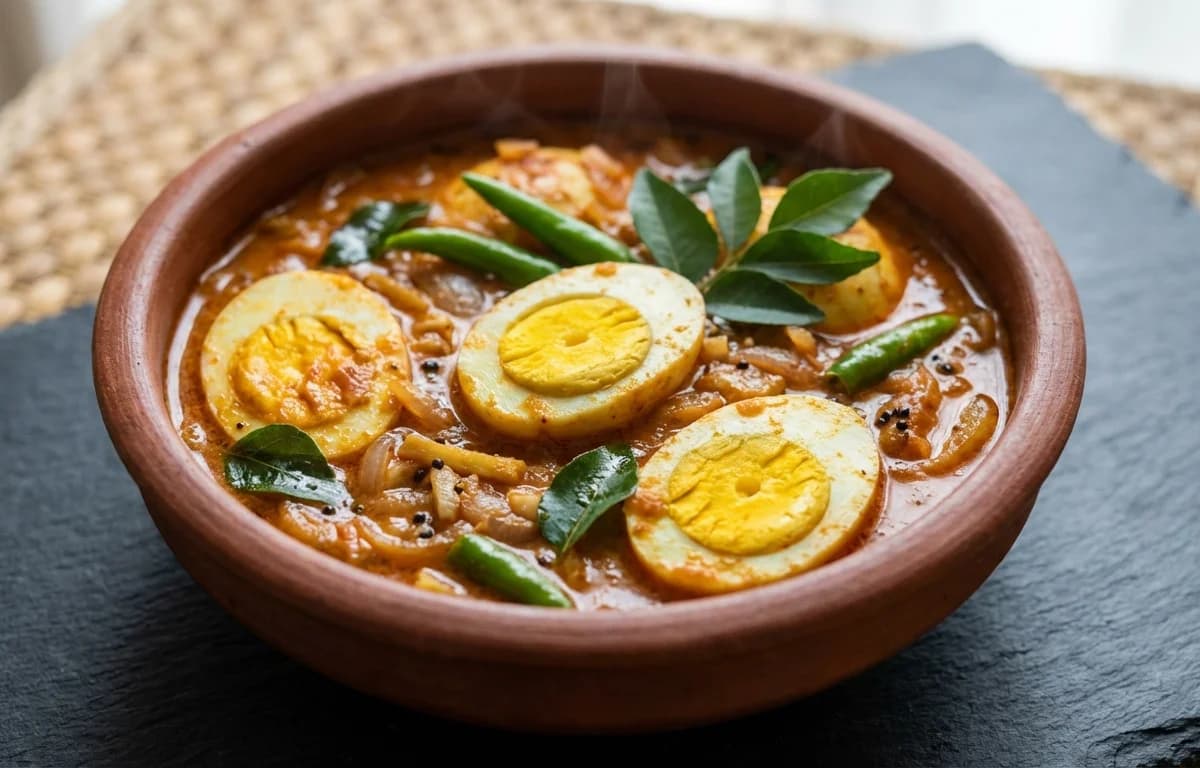
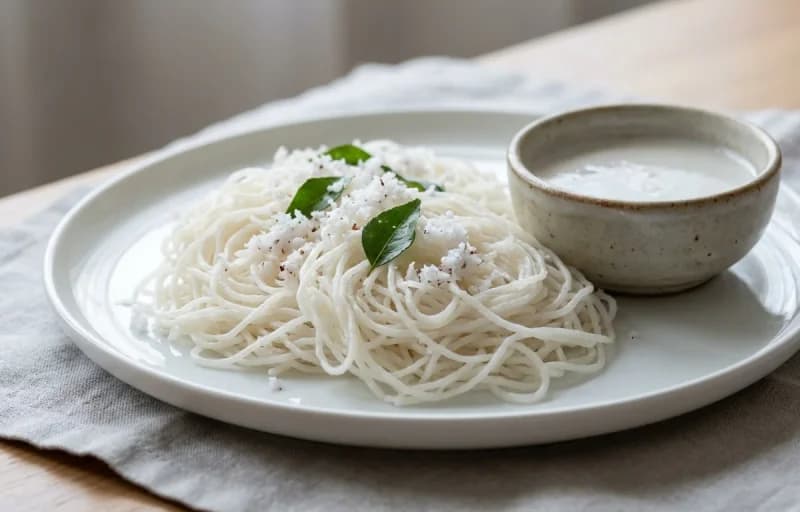
A classic Kerala-style egg curry featuring hard-boiled eggs simmered in a rich and spicy coconut milk gravy. This fragrant dish, often called Nadan Mutta Curry, is a perfect accompaniment to appam, idiyappam, or rice.
Prep15 min
Cook30 min
Servings4
Serving size: 1 serving(1 cup of curry with 1-2 eggs)
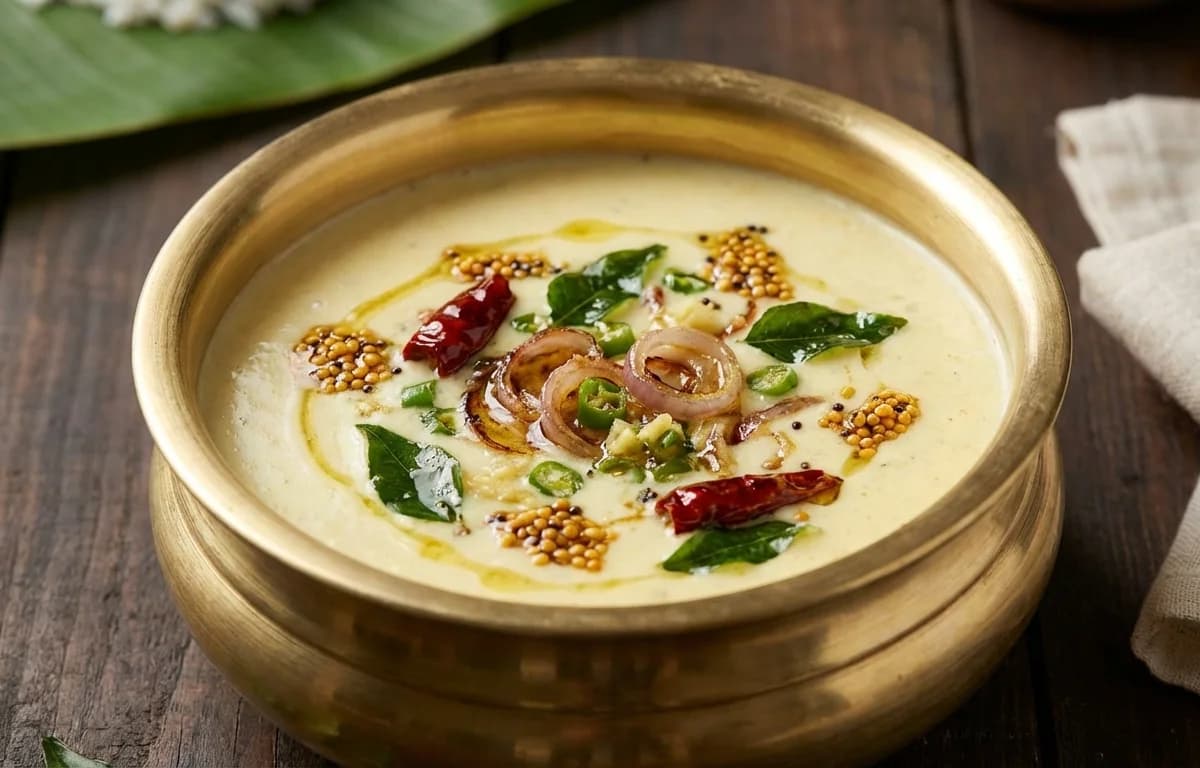
A light and tangy yogurt-based curry from Kerala, delicately spiced with a coconut-cumin paste. This comforting South Indian classic is quick to make and pairs perfectly with steamed rice.
Homestyle Matta Rice with protein-packed Mutta Vevichathu and tangy, gut-friendly Moru Curry!
This kerala dish is perfect for dinner. With 781.31 calories and 22.04g of protein per serving, it's a nutritious choice for your meal plan.
2gfat
Secure the lid of the pressure cooker and place the weight on the vent. Cook on high heat until you hear the first whistle.
After the first whistle, reduce the heat to low and let it simmer for 10-12 minutes.
Turn off the heat and allow the pressure to release naturally. This can take 15-20 minutes. Do not attempt to quick-release the pressure.
3
Fluff and Serve
Once the pressure has completely subsided, carefully open the cooker lid.
The rice should be perfectly cooked and absorbed all the water. Gently fluff the grains with a fork or a spatula.
Serve hot with your favorite Kerala curries like Sambar, Avial, or Pulissery.
338cal
12gprotein
14gcarbs
27gfat
Ingredients
6 pc Egg (large)
3 tbsp Coconut Oil
1 tsp Mustard Seeds
1 sprig Curry Leaves
2 pc Onion (medium, finely sliced)
1.5 tsp Ginger Garlic Paste
2 pc Green Chili (slit lengthwise)
0.5 tsp Turmeric Powder
1.5 tsp Kashmiri Red Chili Powder (adjust to taste)
2 tsp Coriander Powder
2 pc Tomato (medium, finely chopped)
1.25 tsp Salt (or to taste)
1 cup Thin Coconut Milk (second extract)
0.75 tsp Garam Masala
0.5 cup Thick Coconut Milk (first extract)
Instructions
1
Prepare the Eggs
Place eggs in a saucepan, cover with cold water, and bring to a boil. Cook for 10 minutes to hard-boil.
Drain the hot water and immediately place the eggs in a bowl of cold water to stop the cooking process.
Once cool enough to handle, peel the eggs and make 2-3 shallow slits on each one. This helps them absorb the gravy flavors.
2
Sauté Eggs and Prepare Tempering
Heat 1 tablespoon of coconut oil in a wide pan or kadai over medium heat.
Add a pinch of turmeric powder and chili powder. Gently add the slit boiled eggs and sauté for 2-3 minutes until they are lightly golden and blistered. Remove the eggs and set aside.
In the same pan, add the remaining 2 tablespoons of coconut oil. Once hot, add the mustard seeds and allow them to splutter completely.
Add the sprig of curry leaves and sauté for 30 seconds until fragrant.
3
Build the Masala Base
Add the finely sliced onions to the pan and sauté on medium heat for 8-10 minutes, until they turn a deep golden brown. This step is crucial for the color and flavor of the curry.
3 pcs Green Chilli (Slit lengthwise, adjust to taste)
1 inch Ginger (Roughly chopped)
0.5 tsp Cumin Seeds
0.5 tsp Turmeric Powder
1 tsp Salt (Adjust to taste)
1 cup Water (For thinning the yogurt)
2 tbsp Coconut Oil
1 tsp Mustard Seeds
2 pcs Dried Red Chilli (Broken in half)
0.25 tsp Fenugreek Seeds
10 pcs Curry Leaves (Fresh)
3 pcs Shallots (Thinly sliced)
Instructions
1
Prepare the coconut paste. In a small blender, combine the grated coconut, green chilies, chopped ginger, and cumin seeds. Add 3-4 tablespoons of water and grind to a very smooth, fine paste. Set aside.
2
Prepare the yogurt base. In a mixing bowl, add the curd, turmeric powder, and salt. Whisk thoroughly until it is completely smooth and free of lumps. Stir in 1 cup of water to achieve a thin, buttermilk-like consistency.
3
Cook the coconut paste. Transfer the ground coconut paste to a medium saucepan or a traditional 'manchatti' (earthen pot). Cook on low-medium heat for 2-3 minutes, stirring constantly, until the raw aroma of the coconut and spices disappears.
4
Combine and heat the curry. Reduce the heat to the absolute lowest setting. Pour the whisked yogurt mixture into the saucepan with the cooked paste. Stir continuously and gently heat for 3-4 minutes. The curry should become warm and start to steam, but it must NOT boil. Boiling will cause the yogurt to curdle. Once warm, remove from heat.
5
Prepare the tempering (tadka). In a small pan, heat the coconut oil over medium heat. Add the mustard seeds and wait for them to splutter completely. Add the fenugreek seeds and broken dried red chilies, and sauté for 20-30 seconds until fragrant. Add the sliced shallots and cook until they turn a light golden brown. Finally, add the curry leaves and let them crisp up for a few seconds.
6
Finish and serve. Immediately pour the hot tempering over the prepared moru curry. Mix gently. Let it rest for 5 minutes for the flavors to meld. Serve warm with steamed rice.
Add the ginger-garlic paste and slit green chilies. Sauté for another 2 minutes until the raw aroma disappears.
Reduce the heat to low. Add the turmeric powder, Kashmiri red chili powder, and coriander powder. Stir continuously for 1 minute until the spices are aromatic, ensuring they don't burn.
4
Simmer the Gravy
Add the finely chopped tomatoes and salt. Cook for 5-6 minutes, stirring occasionally, until the tomatoes turn soft and mushy, and oil begins to separate from the masala.
Pour in the thin coconut milk, stir well to combine, and bring the mixture to a gentle simmer. Let it cook for 3-4 minutes for the flavors to meld.
5
Finish the Curry
Gently place the sautéed eggs back into the simmering gravy. Cover the pan and cook on low heat for 5-7 minutes, allowing the eggs to absorb the flavors.
Reduce the heat to the absolute lowest setting. Stir in the garam masala and the thick coconut milk.
Gently heat for 1-2 minutes until just warmed through. Do not allow the curry to boil after adding thick coconut milk, as it may curdle.
Turn off the heat, cover, and let the curry rest for at least 10 minutes before serving to allow the flavors to deepen.