
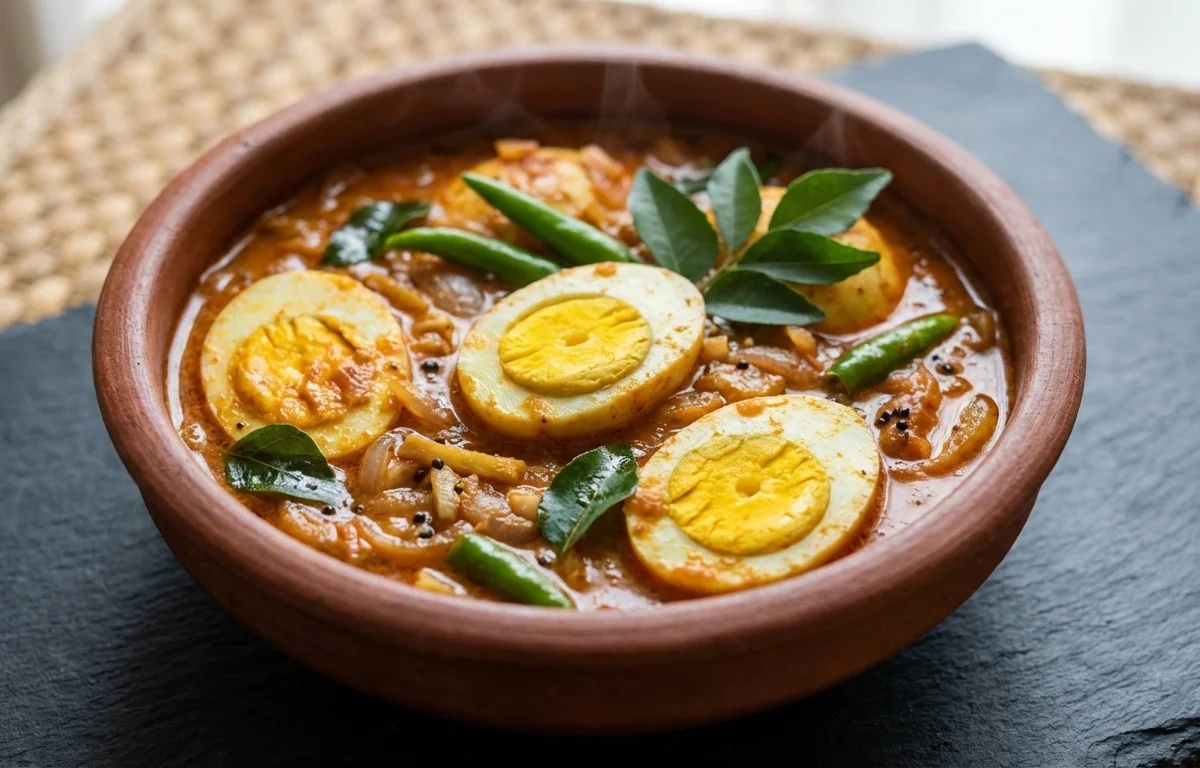
Mutta Vevichathu
Hard-boiled eggs simmered in a rich, deeply spiced Kerala-style coconut gravy. The roasted coconut and aromatic spices give this simple egg curry a smoky, nutty depth that pairs perfectly with appam, puttu, or steamed rice. A comforting dish that transforms humble eggs into something truly special.
For 4 servings
- prep · ~9 min
Boil and shell the eggs.
1.Place eggs in a saucepan and cover with cold water.2.Bring to a rolling boil, then cook for 8-9 minutes.3.Drain hot water, transfer eggs to cold water, and peel once cool. - roast · ~5 min
Dry roast the coconut and spice powders.
1.Heat a heavy-bottomed pan over medium-low heat.2.Add fresh grated coconut and dry roast, stirring constantly, until golden brown (3-4 min).3.Add coriander powder, red chili powder, turmeric powder, and black pepper. Roast for 30 seconds until fragrant.4.Remove from heat and let cool slightly. Grind to a smooth paste with 1/4 cup of water.TIPStir constantly — coconut burns quickly and turns bitter. - temper · ~1 min
Make the tempering.
1.Heat coconut oil in the same pan over medium heat.2.Add mustard seeds and let them splutter (30 sec).3.Add dried red chili and curry leaves. Sauté until fragrant (10 sec). - saute · ~10 min
Sauté aromatics and tomatoes.
1.Add sliced onion, green chili, ginger, and garlic to the tempering.2.Cook until onions turn translucent and light golden (5-7 min).3.Add chopped tomatoes and sauté until soft and mushy (4-5 min). - simmer · ~15 min
Simmer the gravy with eggs.
1.Add the ground coconut-spice paste to the pan along with 3/4 cup water and tamarind paste.2.Add salt and mix well. Bring to a gentle simmer.3.Make shallow slits on the boiled eggs and add them to the gravy.4.Simmer covered on low heat for 10 minutes, allowing flavors to meld.TIPDon't skip the slits — they help the eggs absorb the spicy gravy. - garnish · ~1 min
Finish and serve.
1.Sprinkle garam masala over the curry.2.Drizzle a few drops of coconut oil on top for aroma.3.Serve hot with appam, puttu, or steamed rice.
What to keep in mind.
6 tips from the recipe — small details that make a real difference to the final dish.
- 1Use fresh grated coconut for the best flavor; frozen or dried won't give the same creamy texture.
- 2Roast the coconut on medium-low heat, stirring constantly, until it turns a deep golden brown for maximum nuttiness.
- 3Make shallow slits on the boiled eggs before adding to the gravy — this lets the spicy coconut sauce seep in.
- 4Let the curry rest for 5 minutes after simmering for the flavors to fully meld together.
- 5For a thicker gravy, grind the roasted coconut-spice paste with less water (about 2 tablespoons).
- 6Leftover curry tastes even better the next day — the eggs absorb more flavor overnight.
Adapt it for your goals.
Vegan
Replace the boiled eggs with cubed pan-fried tofu or chickpeas. The roasted coconut gravy is naturally plant-based, so this adaptation keeps the same rich, nutty Kerala flavor while being fully vegan.
low oilLow-oil
Reduce coconut oil to 1 tablespoon and skip the final drizzle. The roasted coconut paste still provides richness, making this a lighter version without losing the dish's soul.
extra spicyExtra-spicy
Increase red chili powder to 2 teaspoons and add 2 more slit green chilies. Perfect for those who love intense heat that cuts through the creamy coconut gravy.
Why this is on our healthy list.
Rich in Protein
Eggs provide high-quality complete protein, essential for muscle repair and satiety.
Good Source of Healthy Fats
Coconut and coconut oil offer medium-chain triglycerides (MCTs), which support energy metabolism.
Anti-Inflammatory Spices
Turmeric, ginger, and black pepper contain compounds that may help reduce inflammation.
Frequently asked questions
Fresh grated coconut yields a creamier, more aromatic gravy. If using desiccated, rehydrate it in warm water for 10 minutes and drain before roasting.



.webp)

.webp)