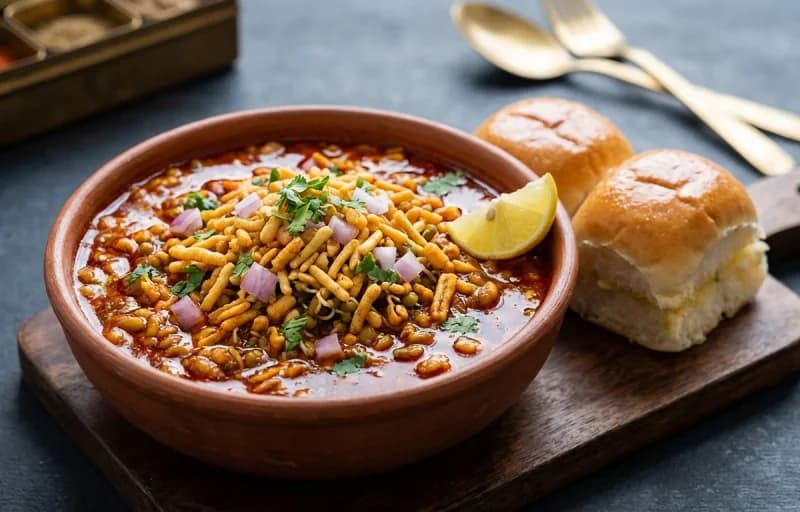
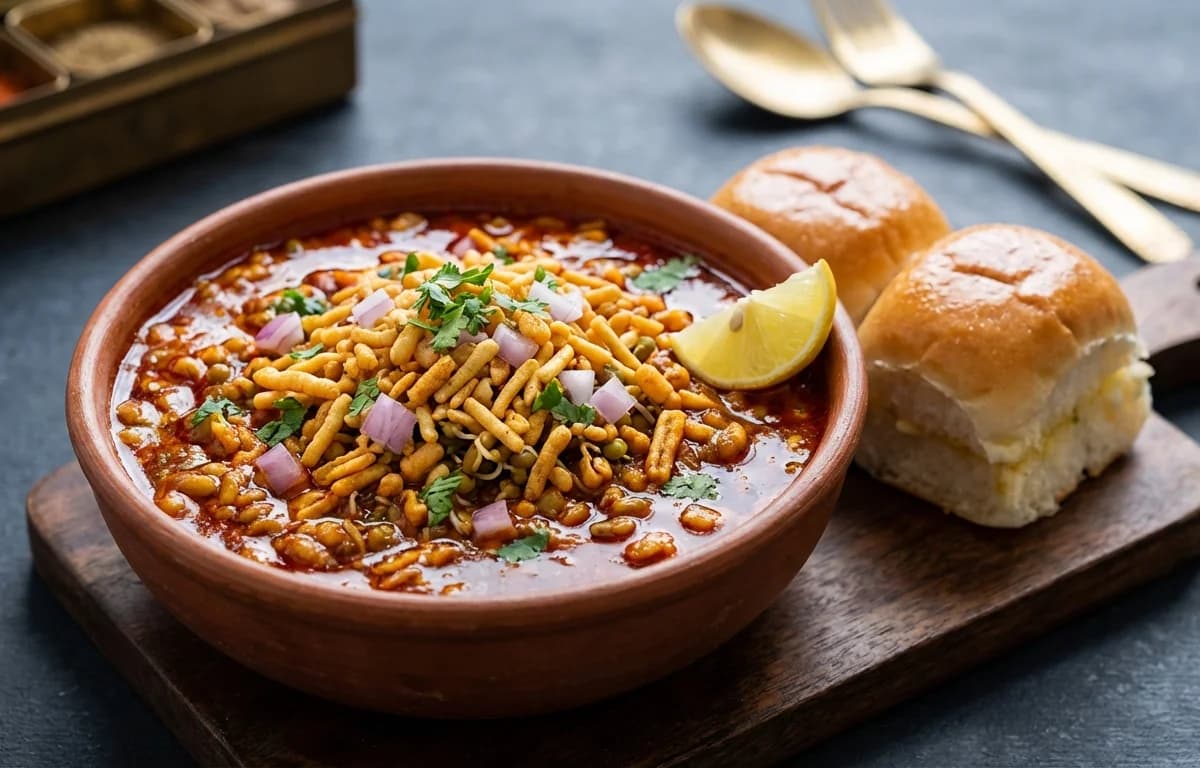
A fiery and flavorful Maharashtrian street food classic! This dish features a spicy sprouted moth bean curry topped with crispy farsan, fresh onions, and a squeeze of lime, all served with soft pav bread.
Prep30 min
Cook45 min
Soak1440 min
Servings4
Serving size: 1 serving(1 bowl of misal with 2 pav)
1225cal
42gprotein
160gcarbs
Ingredients
1.5 cup Moth Beans (To be sprouted ahead of time)
3 medium Onion (1 finely chopped for usal, 1 sliced for kat, 1 finely chopped for garnish)
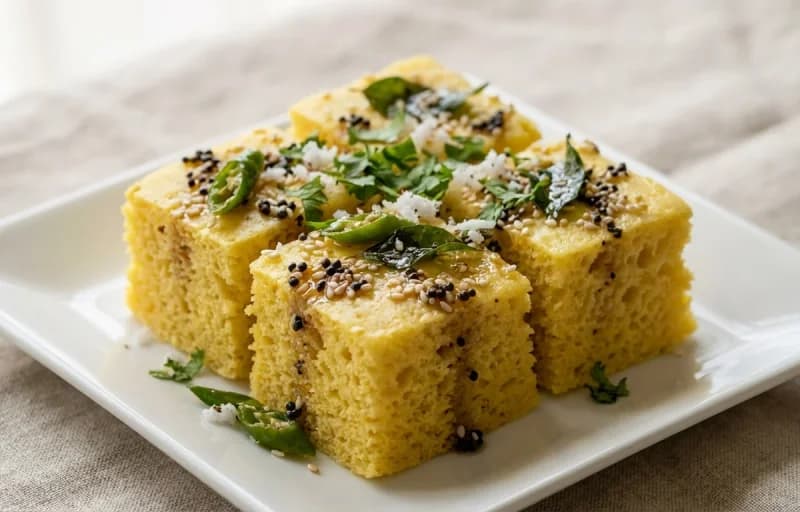
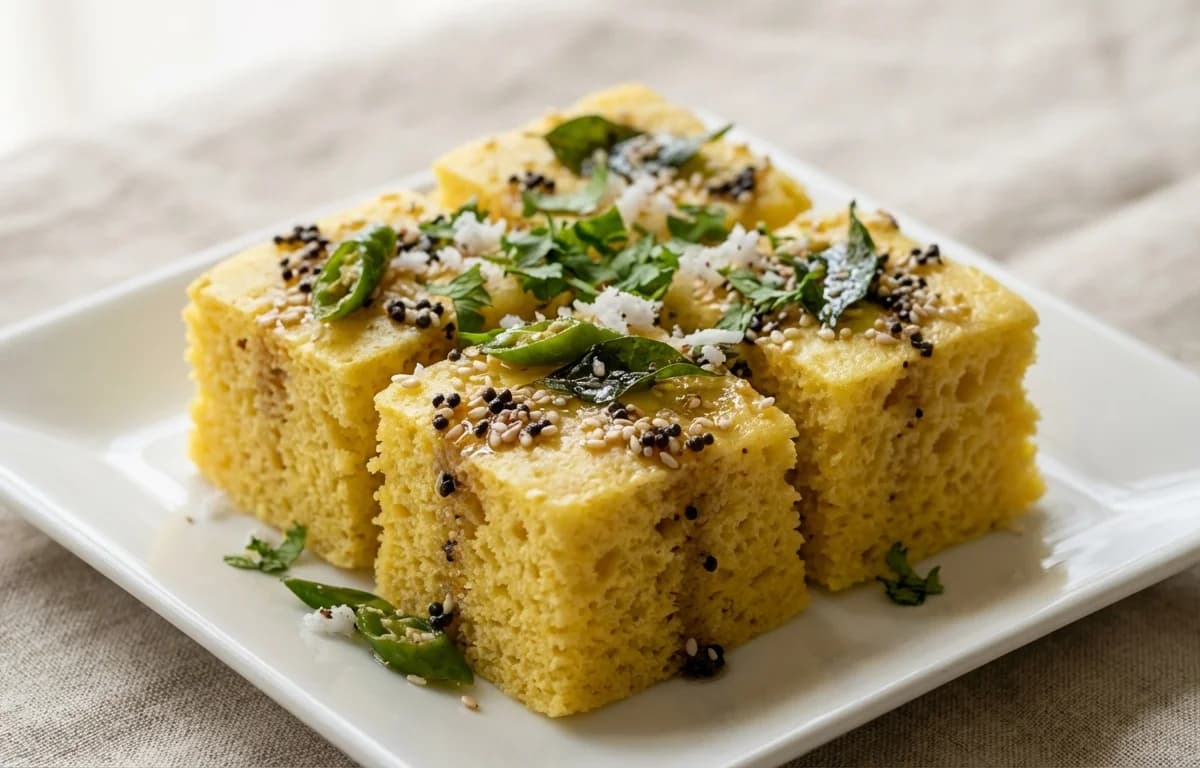
A popular Gujarati snack, these steamed chickpea flour cakes are incredibly soft, spongy, and light. Topped with a savory tempering, they have a delightful sweet and tangy flavor.
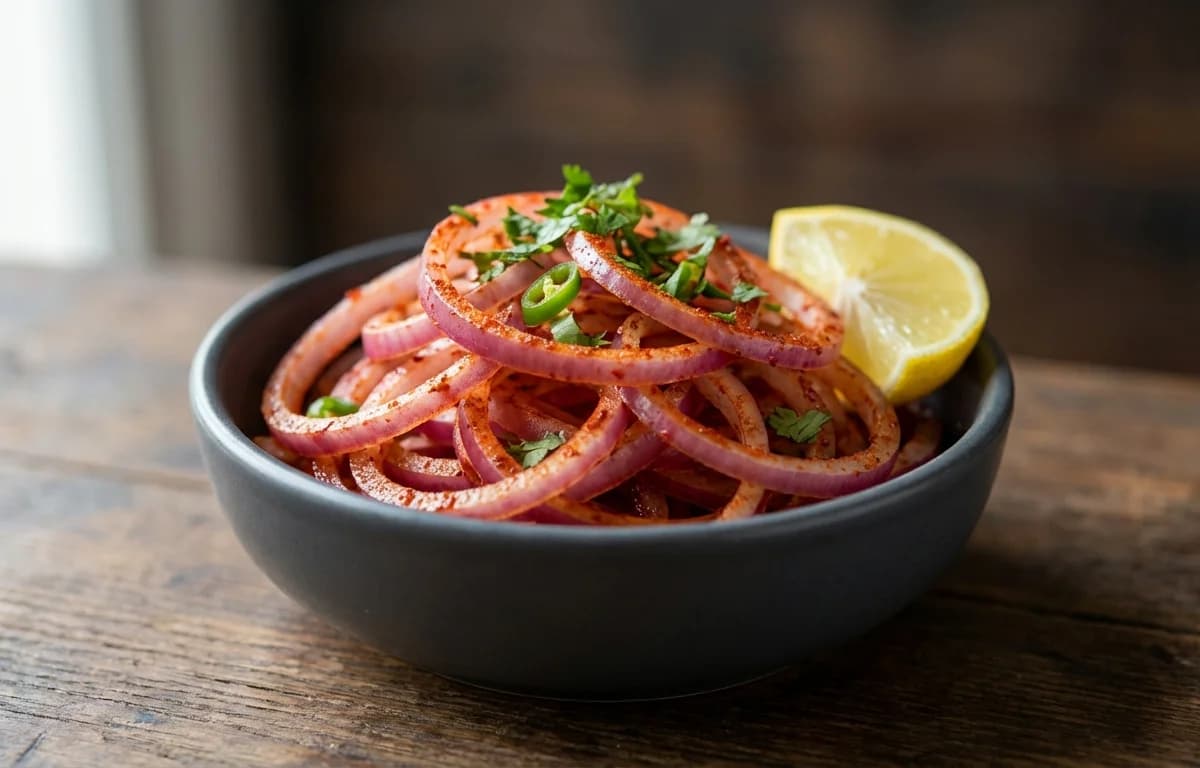
Crisp, tangy onion rings tossed in a zesty mix of Indian spices and lemon juice. This simple North Indian salad is the perfect, refreshing accompaniment to rich curries and grilled meats, ready in minutes.
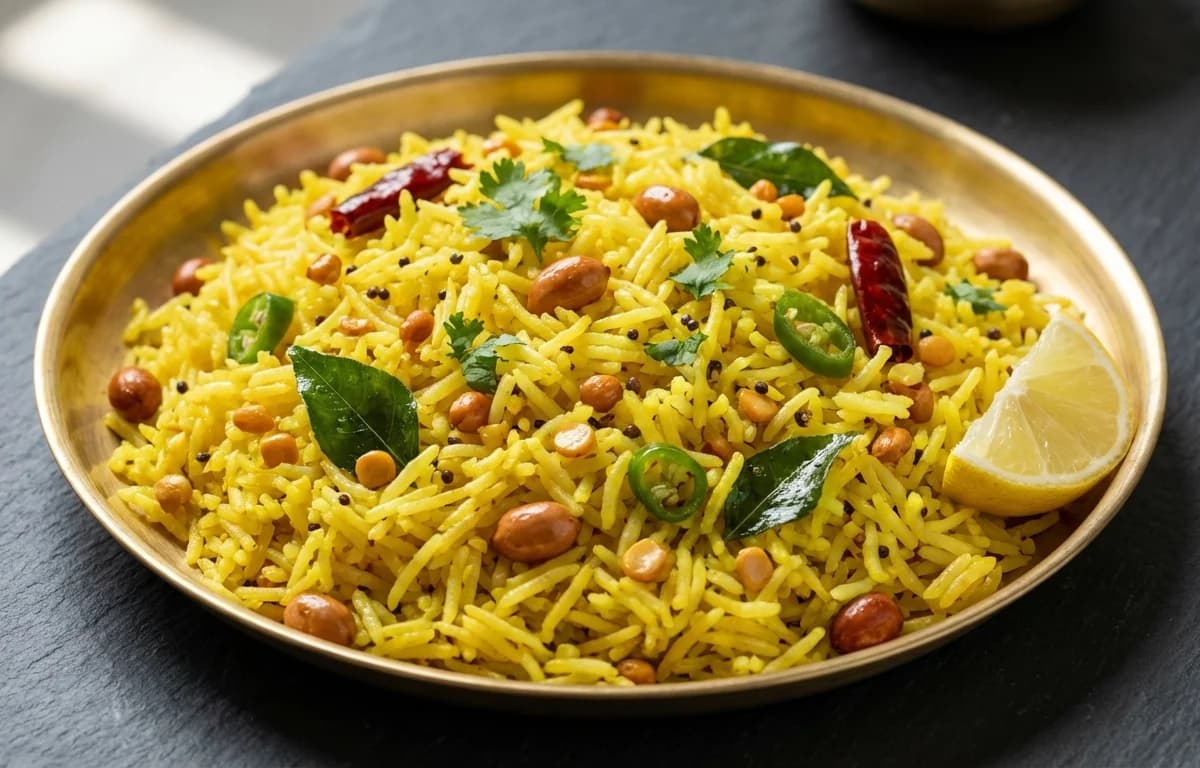
A tangy and flavorful South Indian rice dish made with fluffy rice, a crunchy tempering of lentils and peanuts, and a generous squeeze of fresh lemon juice. A quick and easy meal perfect for lunchboxes or a light dinner.
About Misal Pav, Khaman Dhokla, Lachha Pyaaz and Lemon Rice
Perfectly spiced, energy-giving Misal Pav with crispy farsan – a truly aromatic and soul-satisfying treat!
This indian dish is perfect for lunch. With 1938.7599999999998 calories and 60.9g of protein per serving, it's a nutritious choice for your meal plan.
51gfat
1 tsp Cumin Seeds
10 leaf Curry Leaves
0.25 tsp Asafoetida
0.5 tsp Turmeric Powder
1 tsp Red Chili Powder (For usal, adjust to taste)
2 tbsp Kashmiri Red Chili Powder (For kat, gives color without extreme heat)
2.5 tbsp Misal Masala (Divided: 1.5 tbsp for usal, 1 tbsp for kat)
2 tsp Tamarind Paste
1 tsp Jaggery (Grated, optional)
2 tsp Salt (Or to taste, divided)
6 cup Water (Divided: 4 cups for usal, 2 cups for kat)
8 piece Pav (Soft bread rolls)
2 cup Farsan (Or Misal Sev, for topping)
0.25 cup Coriander Leaves (Finely chopped, for garnish)
1 piece Lemon (Cut into wedges for serving)
Instructions
1
Sprout the Moth Beans (1-2 Days Ahead)
Rinse 1.5 cups of moth beans (matki) thoroughly. Soak them in ample water overnight or for at least 8 hours.
Drain the water completely. Transfer the beans to a sprout maker or tie them loosely in a clean muslin cloth.
Keep the cloth in a warm, dark place for 24-36 hours, sprinkling with water every 12 hours to maintain moisture. Aim for sprouts about 1/2 to 1 inch long.
2
Prepare the Usal (Sprouted Bean Curry)
Heat 2 tbsp of oil in a pressure cooker over medium heat. Add 1 tsp mustard seeds and 1 tsp cumin seeds. Once they splutter, add 1/4 tsp asafoetida and 10 curry leaves.
Add 1 finely chopped onion and sauté for 3-4 minutes until translucent.
Add 1 tbsp ginger-garlic paste and cook for 1 minute until the raw aroma dissipates.
Stir in 1 chopped tomato and cook for 4-5 minutes until it becomes soft and pulpy.
Add the spice powders: 1/2 tsp turmeric powder, 1 tsp red chili powder, and 1.5 tbsp misal masala. Sauté for 1 minute until fragrant.
Add the sprouted moth beans, 1.5 tsp salt, 2 tsp tamarind paste, and 1 tsp jaggery (if using). Mix well to coat the sprouts.
Pour in 4 cups of water. Secure the lid of the pressure cooker and cook on medium-high heat for 2 whistles (approx. 10-12 minutes).
Let the pressure release naturally before opening the lid. The usal is ready.
3
Prepare the Kat/Tarri (Spicy Gravy)
In a pan, dry roast 1/4 cup of grated dry coconut on low heat for 2-3 minutes until golden brown. Remove and set aside.
In the same pan, add 1 tsp of oil and sauté 1 sliced onion for 8-10 minutes until deeply golden brown and caramelized.
Allow the roasted coconut and onion to cool completely. Transfer to a grinder with 4 garlic cloves and 1-inch ginger. Add 2-3 tbsp of water and grind to a very smooth paste.
Heat the remaining 3 tbsp of oil in a separate pot over medium heat. Add the ground paste and sauté for 5-7 minutes, stirring often, until the paste darkens and oil separates at the edges.
Lower the heat and add 2 tbsp Kashmiri red chili powder and 1 tbsp misal masala. Cook for 1 minute, ensuring the spices don't burn.
Pour in 2 cups of hot water and add 1/2 tsp salt. Stir well, bring to a boil, then reduce heat and simmer for 8-10 minutes until a layer of red oil (the 'tarri') floats on top.
4
Assemble and Serve Misal Pav
In a serving bowl, first add a generous ladleful of the prepared usal (moth bean curry).
Top it with a large handful of crispy farsan.
Sprinkle finely chopped raw onion and fresh coriander leaves over the farsan.
Pour the hot, spicy kat/tarri over everything. Adjust the amount based on your spice preference.
Place a lemon wedge on the side of the bowl.
Serve immediately with 2 soft pavs, which can be lightly toasted with butter if desired.
327cal
10gprotein
40gcarbs
15gfat
Ingredients
1.5 cup Besan (sifted)
2 tbsp Suji (fine semolina)
0.5 cup Curd (slightly sour)
1.33 cup Water (1 cup for batter, 1/3 cup for tempering)
1 tsp Ginger Paste
1 tsp Green Chilli Paste
3 tbsp Sugar (1 tbsp for batter, 2 tbsp for tempering)
1 tbsp Lemon Juice (freshly squeezed)
3 tbsp Sunflower Oil (1 tbsp for batter, 2 tbsp for tempering)
0.25 tsp Turmeric Powder
1 tsp Salt (or to taste)
1.5 tsp Eno Fruit Salt (regular, unflavored)
1 tsp Mustard Seeds
0.25 tsp Asafoetida
1 tsp White Sesame Seeds
2 pcs Green Chillies (slit lengthwise)
10 leaves Curry Leaves
2 tbsp Coriander Leaves (finely chopped, for garnish)
2 tbsp Grated Coconut (fresh, for garnish (optional))
Instructions
1
Prepare the Batter: In a large mixing bowl, combine the sifted besan, suji, turmeric powder, and salt. Add the curd, ginger-green chilli paste, 1 tbsp sugar, lemon juice, 1 tbsp oil, and 1 cup of water. Whisk vigorously for 2-3 minutes to form a smooth, lump-free batter. The consistency should be like thick pancake batter. Cover and let it rest for 15 minutes.
2
Set Up Steamer: While the batter rests, pour 2-3 cups of water into a steamer or a large pot with a wire rack. Bring the water to a rolling boil over medium-high heat. Meanwhile, grease an 8-inch round cake tin or thali with a little oil.
3
Activate the Batter: Once the steamer is boiling, add the Eno fruit salt to the rested batter. Gently but quickly mix in one direction for about 30 seconds. The batter will become light, frothy, and almost double in volume. Do not overmix.
4
Steam the Dhokla: Immediately pour the aerated batter into the greased tin, filling it no more than 3/4 full. Place the tin inside the boiling steamer. Cover with a lid (wrap the lid in a kitchen towel to prevent condensation from dripping onto the dhokla). Steam on medium-high heat for 15-20 minutes. Avoid opening the lid for the first 15 minutes.
5
Check for Doneness and Cool: After 15 minutes, insert a toothpick into the center. If it comes out clean, the dhokla is cooked. If not, steam for another 3-5 minutes. Turn off the heat, carefully remove the tin, and let it cool on a wire rack for 10-15 minutes.
6
Prepare the Tempering (Tadka): While the dhokla cools, heat 2 tbsp of oil in a small pan over medium heat. Add the mustard seeds and let them crackle. Add the asafoetida, sesame seeds, slit green chilies, and curry leaves. Sauté for 30 seconds until fragrant. Carefully pour in 1/3 cup of water, add 2 tbsp of sugar, and bring to a boil. Simmer for 1 minute until the sugar dissolves.
1 tsp Kashmiri Red Chilli Powder (Adjust to your spice preference)
1 tsp Chaat Masala
0.5 tsp Salt (Or use a mix of black salt and regular salt)
1 pc Green Chilli (Finely chopped, optional for extra heat)
2 tbsp Coriander Leaves (Freshly chopped, for garnish)
Instructions
1
Prepare the Onions
Peel the red onions and slice them into thin, uniform rings, about 1/8-inch thick. A mandoline slicer works best for this.
Gently separate the slices into individual rings and place them in a large bowl.
2
Soak for Crispness
Add the ice cubes and cold water to the bowl, ensuring all onion rings are fully submerged.
Let the onions soak for 10-15 minutes. This crucial step makes them incredibly crisp and mellows their sharp, pungent flavor.
3
Drain and Dry Thoroughly
Drain the onions completely using a colander.
Spread the onion rings on a clean kitchen towel or paper towels and pat them completely dry. Removing all excess moisture is key to preventing a watery salad.
4
Season and Toss
Transfer the dry onion rings to a clean mixing bowl.
4 cup Cooked Basmati Rice (Preferably cooled or leftover rice)
2 tbsp Sesame Oil (Gingelly oil is traditional)
1 tsp Mustard Seeds
1 tsp Urad Dal (Split black gram)
1 tbsp Chana Dal (Split Bengal gram)
0.25 cup Raw Peanuts
2 pcs Dried Red Chilies (Broken into halves)
2 pcs Green Chilies (Slit lengthwise)
1 sprig Curry Leaves (About 10-12 leaves)
0.25 tsp Hing (Asafoetida)
0.5 tsp Turmeric Powder
3 tbsp Lemon Juice (Freshly squeezed, from 1-2 large lemons)
1 tsp Salt (Adjust to taste)
0.25 tsp Sugar (Optional, to balance tanginess)
2 tbsp Fresh Coriander (Finely chopped, for garnish)
Instructions
1
Prepare the Rice
If using freshly cooked rice, spread it on a large plate or tray to cool down completely. This prevents the grains from breaking and becoming mushy.
Gently fluff the cooled rice with a fork to separate the grains. Set aside.
2
Create the Tempering (Tadka)
Heat sesame oil in a large, heavy-bottomed pan or kadai over medium heat.
Once the oil is hot, add the mustard seeds and allow them to splutter completely, which takes about 30 seconds.
Reduce the heat to low, then add the chana dal and urad dal. Sauté for 1-2 minutes, stirring continuously, until they turn a light golden brown and become aromatic.
Add the raw peanuts and continue to sauté for another 2-3 minutes until they are crunchy and lightly browned.
Add the broken dried red chilies, slit green chilies, and curry leaves. Be careful as the curry leaves will splutter. Sauté for 30 seconds until the leaves are crisp.
3
Combine with Rice
Add the hing and turmeric powder to the pan and stir for 10 seconds.
Assemble and Serve: Once the dhokla has cooled slightly, run a knife along the edges and invert it onto a plate. Cut it into 1-2 inch squares. Pour the hot tempering liquid evenly over the pieces, ensuring it soaks in. Garnish with chopped coriander leaves and optional grated coconut. Let it rest for 10 minutes to absorb the flavors before serving.
Sprinkle with Kashmiri red chilli powder, chaat masala, salt, and the optional finely chopped green chilli.
Pour the fresh lemon juice over the top.
5
Garnish and Serve Immediately
Gently toss everything together with your hands or two forks until the onion rings are evenly coated with the spices.
Garnish with freshly chopped coriander leaves.
Serve immediately to enjoy the best crispy texture.
Immediately add the cooled, fluffed rice, salt, and optional sugar to the pan.
Gently mix everything together, ensuring the tempering is evenly distributed throughout the rice. Be careful not to mash the rice grains. Continue to toss on low heat for 2 minutes until the rice is heated through.
4
Finish and Serve
Turn off the heat completely. Pour the fresh lemon juice over the rice.
Add the chopped fresh coriander.
Give it one final gentle mix to combine. The residual heat will incorporate the flavors.
Serve the Lemon Rice warm, either on its own or with accompaniments like papad, raita, or coconut chutney.